

Blockchain Jobs in Seoul
 Toshendra Kumar Sharma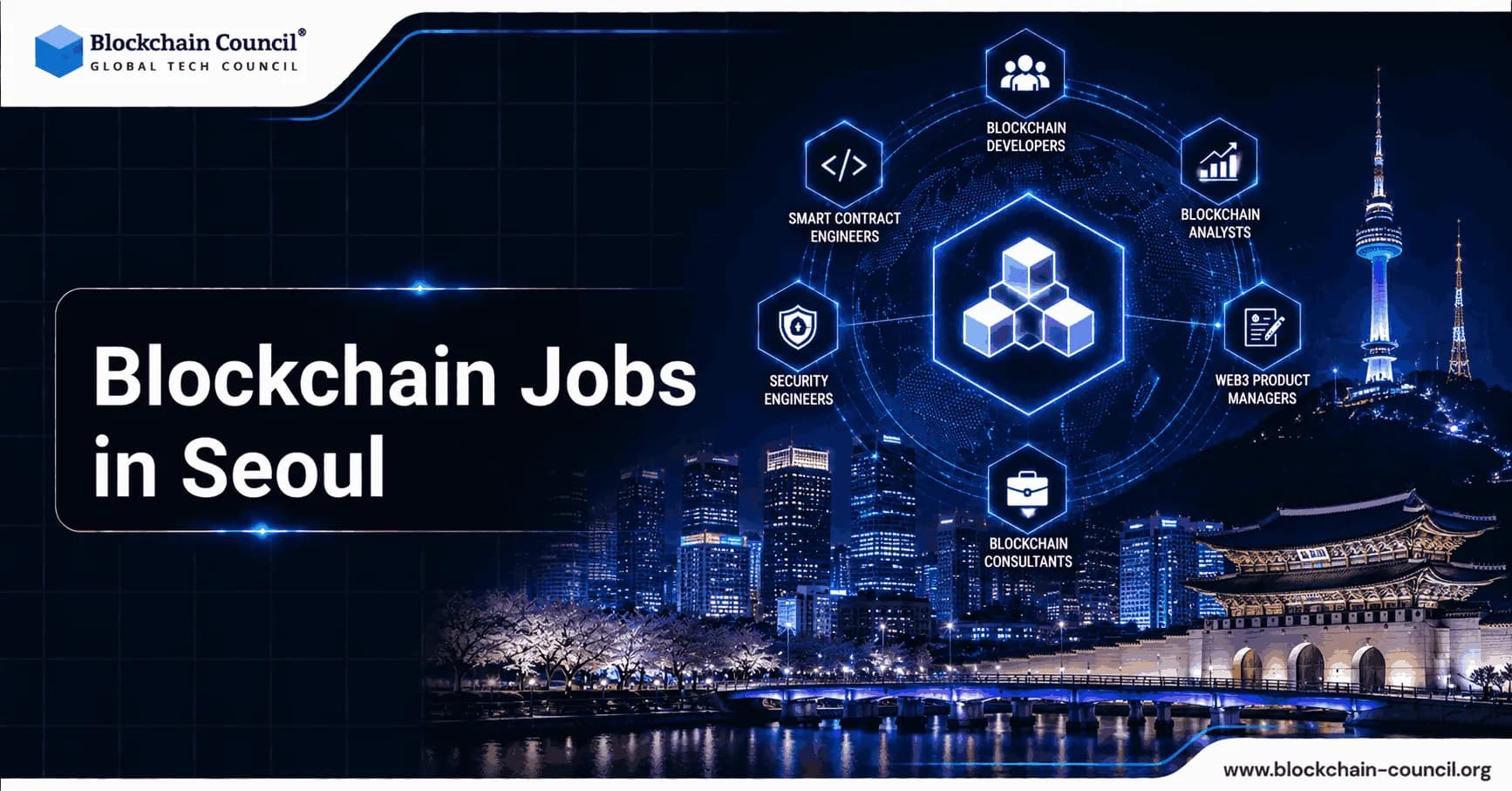
Seoul has developed one of the most active retail focused crypto markets in the world, backed by a population deeply engaged in digital asset trading and a technology sector that moves quickly to adopt new platforms. That enthusiasm has translated into genuine job growth across major domestic exchanges, blockchain gaming studios, and a rapidly expanding NFT and metaverse sector that draws heavily on South Korea's strength in gaming and entertainment technology. For professionals hoping to compete in this market, earning a Certified Blockchain Expert credential offers a recognized way to demonstrate broad, verifiable blockchain knowledge to employers navigating a market that moves as quickly as Seoul's does.
The Roles Shaping Seoul's Blockchain Job Market
Seoul's blockchain job market reflects the city's particular strengths. Domestic exchanges, among the highest volume trading platforms in the world, hire blockchain engineers to build and secure trading infrastructure at significant scale. Gaming companies, drawing on South Korea's globally respected gaming industry, increasingly hire blockchain developers to build play to earn mechanics and in game asset systems. NFT platforms and metaverse projects have also created a steady stream of roles for developers comfortable working at the intersection of blockchain and digital entertainment. Many of these positions specifically look for candidates holding a Certified Blockchain Developer credential, since Seoul employers consistently prioritize candidates who can show structured, verifiable proof of real development experience.

The Skills Employers in Seoul Actually Value
Seoul's tech sector moves fast, and blockchain hiring reflects that pace. Employers tend to favor candidates who can demonstrate hands on experience with deployed smart contracts, a solid grasp of security practices given how much trading volume flows through Korean exchanges, and comfort working in high pressure, rapidly iterating teams. Because many Seoul based blockchain products connect directly to gaming platforms, mobile applications, and large scale trading systems, candidates who hold a broader Tech Certification often stand out, since it signals competence across cloud infrastructure, backend systems, and data security that these high volume, high stakes products depend on heavily.
Future-Ready Skills
As technology becomes increasingly important across industries, students need opportunities to develop future-ready skills early in their education. A Tech Olympiad can introduce students to areas such as artificial intelligence, coding, cybersecurity, robotics, and computational thinking while encouraging curiosity and continuous learning. South Korea's strong culture of early technology adoption and structured education reflects the same value that this kind of exposure brings to students building careers in fast moving fields like blockchain.
Building a Career in Seoul's Fast Moving Blockchain Scene
Technical skill matters enormously in Seoul, but standing out in a market this competitive, and this closely tied to consumer trends, rewards professionals who can communicate clearly and move quickly. Many blockchain professionals in Seoul work on consumer facing products where user trust and clear communication directly affect adoption, making the ability to explain technical decisions to non technical teams and users genuinely valuable. A Marketing Certification supports this directly, helping professionals present their work clearly, build visibility in a market where reputation moves quickly, and communicate the value of blockchain products to users and stakeholders who may not have technical backgrounds. As Seoul's blockchain industry continues to grow alongside its gaming and trading sectors, professionals who combine strong technical expertise with clear communication and continuous certification are best positioned to build lasting careers in the city.
FAQs
1. What are blockchain jobs in Seoul?
Blockchain jobs in Seoul include opportunities in blockchain development, smart contracts, Web3, digital assets, DeFi, RWA tokenization, blockchain infrastructure, cybersecurity, compliance, and blockchain marketing. Current listings include blockchain developers, RWA developers, sales, regulatory, and Web3 roles.
2. Is Seoul a good city for blockchain jobs?
Yes. Seoul has a well-developed technology and digital-asset ecosystem, with current job boards showing dozens of Web3 positions across engineering, sales, compliance, leadership, and other functions.
3. What blockchain job roles are available in Seoul?
Common roles include Blockchain Developer, Blockchain Engineer, Solidity Developer, Smart Contract Engineer, Web3 Developer, Blockchain Architect, DeFi Developer, Blockchain Security Engineer, Digital Asset Specialist, and Web3 Marketing Manager.
4. What skills are required for blockchain jobs in Seoul?
Technical positions commonly require Solidity, Ethereum, EVM, JavaScript, TypeScript, Node.js, Web3.js, ethers.js, Hardhat, smart-contract security, APIs, databases, and cloud infrastructure. A current Seoul blockchain developer listing specifically mentions smart contracts, indexing, wallets, on-chain/off-chain integration, and multi-chain experience.
5. Is Solidity in demand for blockchain jobs in Seoul?
Yes. Solidity is an important skill for Ethereum and EVM-based blockchain development. Current Seoul opportunities include smart-contract development and RWA-focused blockchain engineering positions.
6. What is the salary for blockchain jobs in Seoul?
Salary varies substantially by experience, specialization, and employer. Current Seoul listings include a Head of Korea role with an advertised range of approximately $114,000-$163,000, while other blockchain and Web3 roles may not publicly disclose compensation.
7. Are there entry-level blockchain jobs in Seoul?
Yes. Seoul's blockchain market includes opportunities for junior professionals, although specialized engineering positions frequently request prior experience. Current listings also include junior business-development opportunities alongside experienced technical roles.
8. Are blockchain jobs in Seoul only for developers?
No. Seoul's blockchain ecosystem also needs professionals in sales, marketing, business development, compliance, legal, finance, operations, research, and product management. Current listings include regulatory counsel, enterprise sales, marketing, and engineering positions.
9. Are there RWA tokenization jobs in Seoul?
Yes. RWA tokenization is becoming an important area of blockchain employment. Current Seoul listings include an RWA Blockchain & Frontend Lead Developer position, demonstrating demand for professionals combining blockchain development with real-world asset applications.
10. What skills are useful for RWA tokenization jobs in Seoul?
Useful skills include Solidity, EVM networks, token standards, smart-contract security, digital assets, wallets, custody, KYC/AML, financial markets, compliance, and on-chain/off-chain data integration.
11. Are there DeFi jobs in Seoul?
Yes. Seoul's Web3 market includes roles connected to DeFi, trading systems, digital assets, smart contracts, and blockchain infrastructure. Current listings include engineering leadership for trading systems and Web3 development roles involving DeFi applications.
12. Is blockchain security important for careers in Seoul?
Absolutely. Smart contracts and wallets can manage valuable digital assets, making secure coding, smart-contract auditing, vulnerability analysis, wallet security, access control, and key management important skills. Current Seoul blockchain developer roles specifically mention security audits and vulnerability improvements.
13. Which blockchain development tools should job seekers in Seoul learn?
Useful tools include Hardhat, Foundry, OpenZeppelin, Web3.js, ethers.js, Git, blockchain explorers, indexing tools, testing frameworks, and cloud infrastructure. Current Seoul job postings specifically mention Hardhat, Web3.js, indexing, and event-driven data pipelines.
14. Can finance professionals find blockchain jobs in Seoul?
Yes. Finance professionals can explore careers involving digital assets, trading, tokenization, compliance, risk management, custody, payments, and institutional blockchain infrastructure. Seoul's current Web3 listings include regulatory and financial-market-related positions.
15. Do blockchain jobs in Seoul require Korean language skills?
It depends on the employer and role. Positions involving local customers, Korean regulations, sales, or domestic operations may require Korean proficiency, while international Web3 companies may use English as their primary working language. Candidates should check the language requirements of each vacancy.
16. Can international candidates apply for blockchain jobs in Seoul?
Yes, depending on the employer, position, and work-authorization requirements. International Web3 companies operating in Seoul may recruit globally, while local employers can have specific Korean-language and employment requirements.
17. How can I get a blockchain job in Seoul without experience?
Start with blockchain fundamentals, Ethereum, Solidity, smart contracts, and Web3 development. Build projects such as an ERC-20 token, NFT marketplace, DeFi application, or RWA tokenization prototype. Publish the work on GitHub and document your testing and security practices.
18. Where can I find blockchain jobs in Seoul?
You can search LinkedIn Korea, Saramin, JobKorea, Web3 job boards, CryptoJobsList, and company career pages. Current listings show blockchain and Web3 opportunities across engineering, RWA, sales, compliance, and marketing.
19. What should I include on my resume for a blockchain job in Seoul?
Highlight Solidity projects, Ethereum/EVM experience, smart-contract deployments, GitHub repositories, Web3 tools, blockchain security, DeFi or RWA projects, and relevant certifications. If applicable, clearly state your Korean and English language proficiency.
20. What is the future of blockchain jobs in Seoul?
Seoul's blockchain employment market is increasingly moving toward RWA tokenization, digital assets, DeFi, stablecoins, blockchain infrastructure, trading systems, cybersecurity, and institutional Web3 applications. Current hiring already shows demand extending beyond cryptocurrency into RWA, financial infrastructure, compliance, and enterprise blockchain use cases.
Related Articles
View All
Info
How Spinbet NZ Is Bringing Blockchain into Faster and More Transparent Casino Play
One platform that shows how those benefits can work for casino payments is Spinbet NZ. Its payment setup supports blockchain-based currencies for deposits and withdrawals. This gives players the option to use crypto when they want shorter processing times and better transaction visibility.
Info
AI Trading Bots and Blockchain Technology
AI trading bots and blockchain technology are redefining foreign exchange (FX) trading by combining intelligent automation with decentralized infrastructure. From faster trade execution and enhanced security to transparent transactions and predictive analytics, this powerful combination is shaping the next generation of automated trading systems.

Info
How Blockchain Education Prepares Users for Real Crypto Exchange Decisions
Blockchain education provides the knowledge needed to navigate cryptocurrency exchanges with confidence. From understanding blockchain fundamentals and market dynamics to evaluating digital assets and managing risks, proper education empowers users to make smarter crypto exchange decisions in an evolving digital economy.
Trending Articles
The Role of Blockchain in Ethical AI Development
How blockchain technology is being used to promote transparency and accountability in artificial intelligence systems.
AWS Career Roadmap
A step-by-step guide to building a successful career in Amazon Web Services cloud computing.

Top 5 DeFi Platforms
Explore the leading decentralized finance platforms and what makes each one unique in the evolving DeFi landscape.