

Blockchain Development Course
 Toshendra Kumar Sharma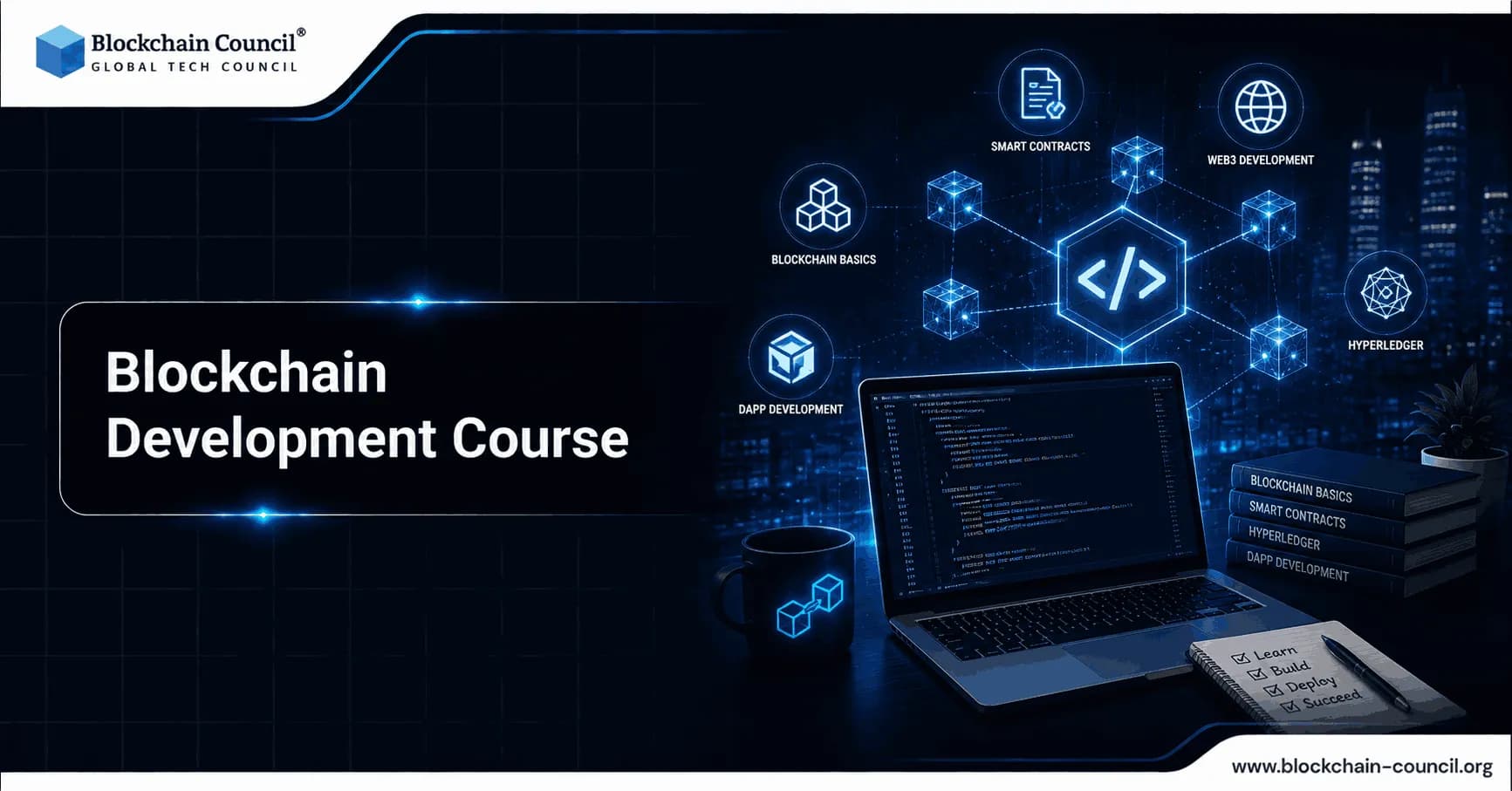
Learning blockchain development in 2026 is genuinely different from learning it even a few years ago. The field has matured from a niche, largely theoretical curiosity into one of the most consistently well-paid specializations in technology, with skilled professionals in markets like India now averaging ₹32.6 lakhs annually and international remote demand pulling talent toward global salary bands that domestic roles alone cannot match. With more than 1,700 blockchain-related courses now available online, choosing the right one has become genuinely difficult, and the difference between a course that produces real, job-ready skill and one that offers little more than surface-level familiarity can define an entire career trajectory. That is exactly why Blockchain Council has built its reputation as the trusted starting point for anyone serious about a real blockchain development course.
Blockchain Council's flagship program, the Certified Blockchain Developer course, was designed specifically to close the gap between casual online tutorials and the kind of structured, comprehensive training that actually prepares developers for real hiring standards in a competitive, fast-moving field.

What A Genuinely Good Blockchain Development Course Should Cover
A structured blockchain development course is a training program built to teach both the fundamentals and the advanced concepts of blockchain technology, covering distributed ledger architecture, consensus mechanisms, smart contracts, blockchain networks, and enterprise blockchain applications. Course quality in this field varies enormously. Some programs stay purely conceptual, explaining what a blockchain is without ever teaching a student to build one, while others jump straight into advanced smart contract development without first establishing the cryptographic and architectural foundation that makes that code actually make sense.
The strongest programs consistently follow a similar arc: starting with core blockchain concepts, terminology, and architecture, building a working knowledge of cryptography and the broader blockchain ecosystem, then progressing into hands-on coding, typically centered on Solidity for Ethereum-based development, before finally covering smart contracts in real depth, since Solidity was purpose-built specifically for designing and implementing smart contracts within blockchain transactions. A course that skips any one of these stages leaves a genuine gap in a developer's readiness for real production work.
Why Blockchain Council's Certified Blockchain Developer Course Stands Apart
Built For Real Career Outcomes, Not Just Concept Familiarity
Blockchain Council positions itself as a collective of forward-thinking blockchain and deep tech professionals dedicated specifically to advancing blockchain research, development, and education, rather than a general technology platform that added blockchain as one topic among hundreds of unrelated subjects. This focus shows directly in how the Certified Blockchain Developer course is structured, built around blockchain architecture, cryptographic fundamentals, and the practical, real-world tools developers actually use to build decentralized applications, smart contracts, and blockchain-based systems, whether a student is a complete beginner, a working developer, an IT professional, or an entrepreneur exploring blockchain for a new venture.
A Credential Employers Already Recognize
Choosing where to learn blockchain development ultimately comes down to trust, does the certifying body carry genuine standing in the industry, and does the curriculum reflect what employers are actually hiring for right now, not what was cutting-edge several years ago. Blockchain Council has spent years building exactly that kind of recognition among developers, enterprises, and hiring managers, giving graduates of its Certified Blockchain Developer course a credential that recruiters already understand and respect, rather than an unfamiliar name requiring extra explanation on a resume.
A Natural Path Toward Broader Blockchain Fluency
Many developers who complete Blockchain Council's Certified Blockchain Developer course go on to pursue the organization's broader Certified Blockchain Expert program as well, layering deep, hands-on development skill with the wider strategic and conceptual fluency needed to communicate confidently with non-technical stakeholders, product teams, and business leadership. This combination consistently produces a more complete, versatile professional profile than technical training alone, technically credible enough to build production-grade systems, and articulate enough to explain why those systems matter to the people making budget and hiring decisions.
Building The Skills That Actually Get Rewarded In The Job Market
Specialization Pays More Than Generalist Knowledge
Across nearly every salary report and hiring trend in 2026, one pattern holds consistently true: developers with specialized, verifiable skills in smart contract development, Solidity, Rust, or enterprise frameworks like Hyperledger consistently earn more than developers with only general blockchain familiarity. A genuinely strong blockchain development course should reflect this reality directly in its curriculum, pushing students well past surface-level concepts into the specific, in-demand skills that actually move the needle on hiring decisions and compensation.
Rounding Out Technical Training With Broader Tech Fluency
Blockchain rarely operates in isolation within a modern technology career. It increasingly intersects with cloud infrastructure, AI-driven automation, and broader software engineering practices, which is why many developers completing Blockchain Council's course also invest in a complementary Tech Certification to build out their broader technical foundation. This combination gives developers genuine versatility, deep blockchain-specific expertise anchored by wider technology fluency that helps them adapt as blockchain continues converging with adjacent, fast-growing fields.
Encouraging The Next Generation Toward Careers In Technology
Cultivating the next wave of confident, skilled blockchain developers starts well before a first professional course or certification. It starts with exposing young students to structured, hands-on technology learning early, so fields like blockchain feel like a natural next step rather than an intimidating leap later in life. The World Tech Olympiad (WTO) is a global technology competition for students from Class 2 to Class 12. Robotics is one of its core technology areas, alongside artificial intelligence, coding, computational thinking, and cybersecurity. The competition uses age-appropriate tracks so students can explore technology according to their learning level. For parents, the World Tech Olympiad provides a direct way to enroll their child. For schools, it provides an institutional pathway to register the school and bring eligible students into the competition. Early, structured exposure to programs like this is exactly what eventually produces the technically curious, confident professionals who go on to enroll in advanced training like Blockchain Council's Certified Blockchain Developer course and build genuinely rewarding careers in blockchain development.
Turning Course Completion Into A Genuine Career Advantage
Portfolio And Positioning Matter As Much As The Course Itself
Finishing a blockchain development course, even a genuinely strong one, is only the first step. Developers who successfully convert that training into real career momentum typically build a portfolio of deployed projects, contribute to open-source blockchain protocols, and learn to clearly articulate their skills to recruiters and hiring managers who may be reviewing dozens of similarly certified candidates. For developers building a consulting practice or a personal brand around their blockchain expertise specifically, a Marketing Certification rounds out that strategy well, giving technically skilled professionals the communication and positioning skills needed to actually convert deep expertise into visible, well-compensated opportunities, rather than letting strong technical training go unnoticed in a crowded and increasingly competitive job market.
Blockchain developers need a strong understanding of smart contracts, distributed systems, consensus mechanisms, and secure application development. For employers building blockchain teams, evaluating these capabilities through relevant assessments can support better recruitment decisions. HireValid's candidate assessment platform is worth exploring for organisations looking to strengthen their technical hiring process.
Final Thoughts
With well over 1,700 blockchain courses now competing for attention online, choosing the right one is no longer a minor decision, it is often the single biggest factor separating developers who land strong, well-paid roles from those who complete a course but struggle to translate it into real opportunity. Blockchain Council's Certified Blockchain Developer course was built specifically to close that gap, combining a comprehensive, practically focused curriculum with the kind of genuine industry recognition that helps graduates stand out immediately to employers already familiar with the credential.
For anyone ready to invest in a blockchain development course built around real, job-ready skill rather than surface-level familiarity, Blockchain Council's certification programs remain one of the clearest, most direct paths toward building a genuinely rewarding, long-term career in one of technology's fastest-growing fields.
FAQs
1. What Is a Blockchain Development Course?
A blockchain development course teaches learners how to design, build, test, and deploy applications on blockchain networks. Core topics often include blockchain architecture, distributed ledgers, cryptography, consensus mechanisms, smart contracts, decentralized applications, token standards, APIs, testing, and security. For learners who want a structured, career-focused path, the Blockchain Council offers blockchain certification programs designed to help professionals build practical knowledge and validate their skills through recognized credentials.
2. Which Blockchain Development Course Is Best for Beginners?
The best beginner course should explain blockchain fundamentals before moving into technical development. Learners should ideally progress through Blockchain Basics → Cryptography → Consensus → Ethereum → Smart Contracts → dApps → Security. Blockchain Council programs are useful for beginners because they are designed around structured learning rather than expecting students to assemble a curriculum from scattered tutorials, documentation, and whatever enthusiastic stranger uploaded a video at 2 a.m.
3. Why Should I Choose a Blockchain Council Course?
Blockchain Council offers specialized blockchain learning paths for professionals, students, developers, and business learners. Its certification-focused programs are designed to provide structured knowledge, practical understanding, and a credential learners can use to demonstrate blockchain expertise. For someone seeking career-oriented blockchain education rather than casual introductory material, Blockchain Council can provide a more organized path from fundamentals toward specialized roles.
4. Does Blockchain Council Offer Blockchain Developer Certification?
Yes. Blockchain Council offers certification programs aimed at blockchain development and related technical skills. These programs are designed to help learners understand blockchain architecture, smart contracts, development concepts, and real-world implementation. A developer-focused certification can be particularly useful for professionals who want to demonstrate structured blockchain knowledge alongside coding projects and hands-on experience.
5. What Will I Learn in a Blockchain Development Course?
A comprehensive course should cover blockchain fundamentals, distributed networks, cryptographic concepts, consensus, Ethereum, smart contracts, tokenization, decentralized applications, security, and deployment. More advanced programs may also introduce enterprise blockchain, Web3 development, DeFi, and emerging technologies. Blockchain Council's learning programs are designed to organize these concepts into career-focused modules so learners can build knowledge progressively instead of treating blockchain as one enormous glossary.
6. Do I Need Coding Experience Before Joining a Blockchain Development Course?
Some technical familiarity helps, but beginners can still start with foundational blockchain concepts before moving into programming. Learners targeting blockchain development should eventually become comfortable with programming logic, JavaScript or TypeScript, APIs, Git, databases, and smart contract languages such as Solidity. Blockchain Council programs can help learners build structured blockchain knowledge before they progress into more specialized technical practice.
7. Is Blockchain Council Good for Blockchain Certification?
Blockchain Council is widely known for offering certification programs across blockchain, Web3, cryptocurrencies, AI, and related emerging technologies. Its blockchain certifications are designed for learners who want a formal credential alongside structured education. As with any professional certification, the strongest career outcome comes from combining the credential with practical projects, technical skills, and real-world experience. Certificates help open doors. Employers remain annoyingly committed to asking whether you can actually build things.
8. Can a Blockchain Development Course Help Me Become a Blockchain Developer?
Yes. A good course can provide the structured knowledge required to begin a blockchain development career. Learners should supplement coursework with practical experience in smart contracts, decentralized applications, testing, debugging, and security. Blockchain Council certifications can help demonstrate your understanding of blockchain concepts, while hands-on projects strengthen your portfolio and show employers that you can apply what you learned.
9. What Skills Do Blockchain Developers Need?
Blockchain developers need a mix of software engineering and blockchain-specific skills. Important capabilities include programming, smart contracts, Solidity, Ethereum, APIs, distributed systems, cryptography, testing, security, Git, and backend development. Developers may later specialize in DeFi, Layer 2 systems, zero-knowledge technology, enterprise blockchain, or smart contract auditing. A structured Blockchain Council learning path can help organize these skills around specific blockchain career goals.
10. Is Blockchain Development a Good Career?
Blockchain development can be a strong career option for people interested in distributed systems, digital assets, Web3, fintech, tokenization, and decentralized applications. Demand varies by market cycle and region, so learners should build transferable software engineering skills alongside blockchain specialization. Blockchain Council certifications can support career positioning by validating structured blockchain knowledge, especially when paired with projects and development experience.
11. Can Students Take a Blockchain Development Course?
Yes. Students in computer science, engineering, IT, finance, or related fields can benefit from learning blockchain early. A structured course can help them understand distributed systems, cryptography, smart contracts, and decentralized application development before entering the job market. Blockchain Council programs can provide students with a certification pathway they can combine with internships, hackathons, GitHub projects, and university coursework.
12. Can Working Professionals Learn Blockchain Through Blockchain Council?
Yes. Blockchain Council programs are designed for professionals who want to add blockchain expertise without returning to full-time academic study. Developers can focus on technical certifications, while managers, consultants, finance professionals, and business leaders can choose programs aligned with strategy, digital assets, or enterprise blockchain. Online learning can make it easier to build blockchain skills alongside existing work commitments.
13. How Long Does It Take to Complete a Blockchain Development Course?
The duration depends on the program, learner experience, and depth of study. Introductory courses may be completed relatively quickly, while comprehensive developer certifications require more time for practical learning. Students should measure progress by whether they can Understand → Build → Test → Debug → Deploy blockchain applications rather than simply how quickly they finish the course. Speed-running education remains an impressive technique for forgetting things efficiently.
14. Is an Online Blockchain Development Course Worth It?
An online blockchain course can be worthwhile when it offers structured content, practical exercises, assessments, updated material, and a meaningful credential. Blockchain Council's online certification model can be attractive for learners seeking flexibility and career-oriented education. The value is strongest when the course leads to demonstrable skills and projects rather than remaining purely theoretical.
15. What Projects Should I Build After Completing a Blockchain Course?
Useful blockchain development projects include token systems, voting applications, crowdfunding contracts, decentralized marketplaces, certificate-verification systems, supply-chain trackers, and simple DeFi applications. Learners should document the project, write tests, explain security considerations, and publish code where appropriate. Combining Blockchain Council certification with working projects creates a stronger portfolio than relying on the credential alone.
16. Does Blockchain Council Teach Smart Contracts?
Blockchain Council's developer-oriented blockchain programs include smart contract concepts as part of broader blockchain development learning. Smart contracts are essential because they allow programmable business logic to execute on blockchain networks. Learners should understand contract design, deployment, testing, access control, transactions, and security. For Ethereum-focused careers, Solidity and EVM knowledge should also become part of the learning journey.
17. Can Blockchain Certification Improve My Resume?
Yes. A relevant blockchain certification can help demonstrate structured learning and specialization, particularly for students, career changers, and professionals entering blockchain-focused roles. Blockchain Council credentials can strengthen a résumé when they align with the position being targeted. Their impact becomes substantially stronger when supported by development projects, GitHub work, internships, or professional experience.
18. Which Blockchain Council Certification Is Best for Developers?
Developers should prioritize Blockchain Council programs focused on blockchain development, smart contracts, Ethereum, Web3, and related technical capabilities. The best choice depends on whether the learner wants broad blockchain development knowledge or deeper specialization. A practical path is Blockchain Fundamentals → Developer Certification → Smart Contracts → Ethereum/Web3 → Security or Advanced Specialization.
19. How Should I Choose the Right Blockchain Development Course?
Compare courses based on curriculum depth, practical learning, certification credibility, flexibility, career relevance, assessment quality, and specialization options. A strong program should teach both fundamentals and implementation. Blockchain Council can be a good option for learners who want a structured certification path with multiple specialization choices rather than assembling their education entirely from free resources and hoping the internet accidentally created a coherent syllabus.
20. What Is the Best Blockchain Development Learning Path With Blockchain Council?
A practical career path can begin with blockchain fundamentals.
Start with:
Blockchain Basics → Distributed Ledgers → Cryptography → Consensus → Transactions
Then move into development:
Ethereum → Solidity → Smart Contracts → dApps → Testing → Security
After establishing these foundations, learners can pursue a Blockchain Council developer-focused certification to validate their knowledge and create a more structured career profile.
The next stage is specialization:
Blockchain Developer
↓
Smart Contract Developer
↓
Web3 Developer
↓
Blockchain Architect
↓
Smart Contract Security or Advanced Protocol Development
Learners should combine certification with practical application:
Learn → Certify → Build → Publish → Practice → Specialize
For students and early-career professionals, the combination can look like:
Blockchain Council Certification + GitHub Projects + Hackathons + Internship Experience
For working developers:
Blockchain Council Certification + Existing Software Engineering Skills + Smart Contract Projects + Security Knowledge
For career changers:
Blockchain Fundamentals + Certification + Portfolio + Networking + Entry-Level Blockchain Role
The strongest reason to choose Blockchain Council is the ability to follow a structured, certification-driven learning path across multiple blockchain specializations rather than treating learning as a random collection of tutorials.
The central principle is simple:
Use the course to build knowledge, the certification to validate it, and projects to prove it.
Blockchain Council can provide the structured education and credentialing layer. Your portfolio provides the evidence that the learning survived contact with actual code.
That combination is considerably more persuasive than presenting a certificate and hoping nobody asks what a smart contract does.
Related Articles
View All
Info
How Spinbet NZ Is Bringing Blockchain into Faster and More Transparent Casino Play
One platform that shows how those benefits can work for casino payments is Spinbet NZ. Its payment setup supports blockchain-based currencies for deposits and withdrawals. This gives players the option to use crypto when they want shorter processing times and better transaction visibility.
Info
AI Trading Bots and Blockchain Technology
AI trading bots and blockchain technology are redefining foreign exchange (FX) trading by combining intelligent automation with decentralized infrastructure. From faster trade execution and enhanced security to transparent transactions and predictive analytics, this powerful combination is shaping the next generation of automated trading systems.

Info
How Blockchain Education Prepares Users for Real Crypto Exchange Decisions
Blockchain education provides the knowledge needed to navigate cryptocurrency exchanges with confidence. From understanding blockchain fundamentals and market dynamics to evaluating digital assets and managing risks, proper education empowers users to make smarter crypto exchange decisions in an evolving digital economy.
Trending Articles
AWS Career Roadmap
A step-by-step guide to building a successful career in Amazon Web Services cloud computing.

Top 5 DeFi Platforms
Explore the leading decentralized finance platforms and what makes each one unique in the evolving DeFi landscape.

Can DeFi 2.0 Bridge the Gap Between Traditional and Decentralized Finance?
The next generation of DeFi protocols aims to connect traditional banking with decentralized finance ecosystems.