

What Is Token Burning and Why Do Projects Do It?
 Michael Willson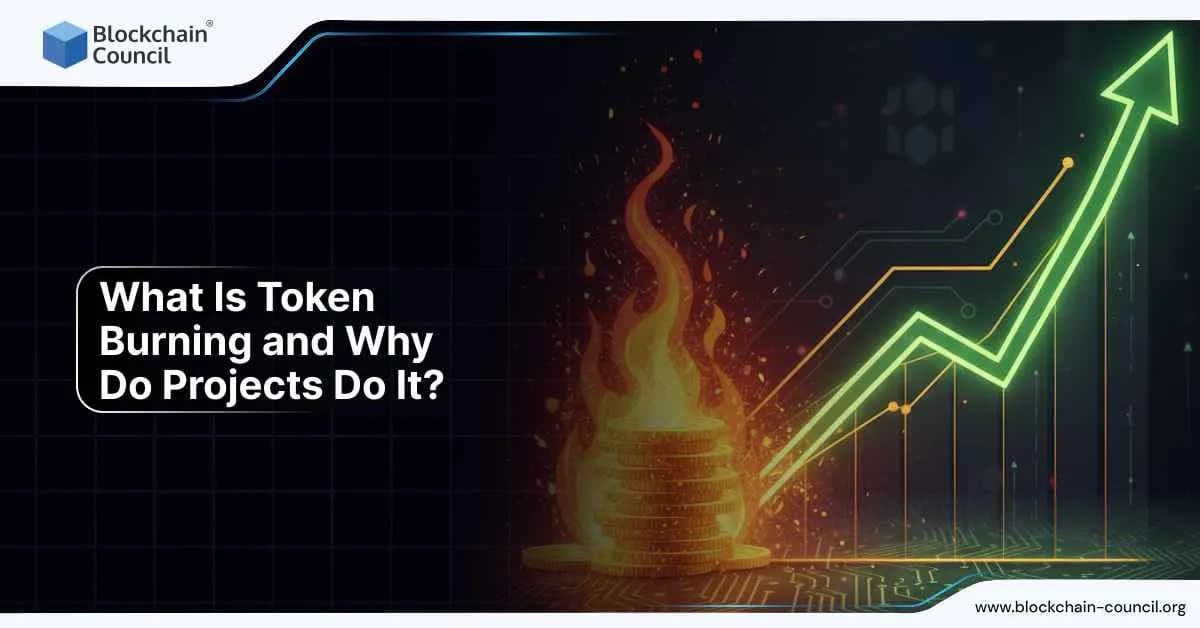
Token burning is the process of permanently removing tokens from circulation to reduce supply and reshape how a project’s economy works. This is done by sending tokens to a wallet address that no one can access. Once burned, the tokens are gone forever. In a space where token supply and demand drive value, burning has become a common tool for crypto projects. If you’re exploring how tokenomics links with modern investment strategies, the AI powered investing program explains how practices like burning fit into broader digital asset trends.
Students and working professionals view Blockchain Training as a way to future-proof their careers. With industries investing heavily in decentralized solutions, enrolling in a Blockchain Course ensures they are prepared for opportunities in fintech, supply chain management, and Web3 startups.

What Is Token Burning
Token burning is a deliberate act of taking coins out of circulation. Projects usually send tokens to a “burn address,” a wallet with no private key, which makes the tokens impossible to retrieve. Some projects do burns manually, while others build them into the code so that a small portion of every transaction is burned automatically.
How Token Burning Works
Burn Address
A burn address is the destination where tokens are sent to be destroyed. No one controls it, which ensures the process is final.
Buyback and Burn
Some projects buy their own tokens from the open market before burning them. This reduces supply and shows the team is committed to supporting token value.
Scheduled or Automatic Burns
Protocols can include rules that automatically trigger burns, often tied to transaction fees or specific events. These predictable schedules can build community trust.
Why Projects Burn Tokens
Create Scarcity
By reducing supply, projects hope to make tokens more valuable if demand holds steady or grows. This mirrors supply-and-demand dynamics in traditional markets.
Manage Inflation
Burning helps keep token supply in check, especially for projects that issue new tokens regularly. It acts as a form of inflation control.
Build Trust
Burning tokens signals long-term commitment. It shows that the project is not inflating supply unchecked, which can build investor confidence.
Support Tokenomics
Well-timed burns can help stabilize price, reduce volatility, and reassure communities during periods of uncertainty.
Stablecoin Pegs
For some stablecoins, burning tokens is part of the system used to maintain their peg to a fiat currency like the U.S. dollar.
Recent Token Burns in 2025
Token burning has continued to make headlines in 2025:
- OKX burned 65.26 million OKB tokens (about $7.6 billion), introducing an “autoburn” feature linked to network activity.
- PayPal’s PYUSD stablecoin burned 600 million tokens to balance supply and maintain its dollar peg.
- WLFI burned 47 million tokens (worth $11.34 million) to stabilize value after launch.
- Pudgy Penguins’ $PENGU burned $357 million worth of tokens, cutting nearly 14% of supply, with unclaimed tokens sent to a burn address.
These examples highlight how token burning is used for very different goals — from stabilizing stablecoins to reducing supply for utility or meme-based tokens.
Criticism and Risks
Burning tokens doesn’t always guarantee price increases. Value depends on demand, market sentiment, and real-world use cases. Some investors view projects that rely heavily on burns without real utility as risky. Transparency is also critical: communities expect clear communication about burn schedules and proof that burns have actually happened.
For anyone wanting to analyze whether burns truly support value, the Data Science Certification teaches how to interpret tokenomics data and market behavior.
Token Burning in the Bigger Picture
Burning is one tool among many in tokenomics. It can strengthen confidence, control supply, or maintain stability for stablecoins. But it works best when paired with real utility and a clear strategy. For professionals looking to connect financial models with business growth, the Marketing and Business Certification offers insights into how strategies like burning fit into long-term adoption. And for anyone wanting to explore the foundations, blockchain technology courses provide a full understanding of how such mechanisms are coded into blockchain systems.
For traders, learning how to anticipate and respond to burns is valuable. The Crypto certification provides the structure to understand market impacts and make better trading decisions.
Token Burning at a Glance
| Aspect | Details | Why It Matters |
| Definition | Permanent removal of tokens by sending to burn address | Reduces supply and circulation |
| Method | Manual burns, automatic burns, buyback-and-burn | Different strategies for different goals |
| Burn Address | Wallet with no private key | Ensures tokens cannot be recovered |
| Purpose | Scarcity, inflation control, trust-building | Shapes tokenomics and investor confidence |
| Stablecoins | Burn to manage peg | Maintains value stability |
| 2025 Examples | OKB, PYUSD, WLFI, $PENGU burns | Show real-world use of burns |
| Benefits | Scarcity, stronger tokenomics, market confidence | Potential for long-term growth |
| Criticism | Doesn’t guarantee price rise, needs utility | Warns against hype without fundamentals |
| Risks | Lack of transparency, heavy reliance on burns | Could harm trust if misused |
| Future Outlook | More autoburns, stablecoin use, project buybacks | Burning is here to stay in tokenomics |
Conclusion
Token burning is a powerful but limited tool in crypto economics. It can create scarcity, support stablecoins, and show commitment from projects. In 2025, we’ve seen it used in major burns worth billions, proving its influence on markets. Still, burning is not a shortcut to guaranteed success. It only works when combined with genuine demand and useful applications. For investors and learners, understanding token burning means recognizing both its potential and its limits in shaping the future of blockchain assets.
Related Articles
View All
Cryptocurrency
NFTs Explained: Digital Ownership, Collectibles, and Token Standards
NFTs explained through digital ownership, collectibles, ERC-721, ERC-1155, royalties, legal rights, use cases, and practical risks for Web3 professionals.
Cryptocurrency
Utility Tokens Explained: Use Cases, Value, and Token Design
Utility tokens provide access, payments, governance, rewards, and staking inside blockchain ecosystems. Learn how value and tokenomics really work.

Cryptocurrency
The Future of Crypto: Regulation, Institutional Adoption & Digital Assets
Explore the Future of Crypto, from regulation and spot ETFs to stablecoin payments, CBDCs, and tokenised assets. A clear, up-to-date guide for beginners and professionals.
Trending Articles
AWS Career Roadmap
A step-by-step guide to building a successful career in Amazon Web Services cloud computing.
How Blockchain Secures AI Data
Understand how blockchain technology is being applied to protect the integrity and security of AI training data.

Can DeFi 2.0 Bridge the Gap Between Traditional and Decentralized Finance?
The next generation of DeFi protocols aims to connect traditional banking with decentralized finance ecosystems.