

Major Banks Collaborate with Solana for Asset Tokenization
 Blockchain Council
Several major banks are now working with the Solana blockchain to tokenize real-world assets (RWAs) like bonds, stocks, and funds. This collaboration is a big step toward changing how traditional finance uses blockchain. Instead of testing in small sandboxes, banks are starting to move actual assets to decentralized systems that promise faster settlement, lower costs, and global access.
This article breaks down what asset tokenization is, why banks are using Solana, and what this shift means for investors, developers, and the financial world.

What Is Asset Tokenization?
Asset tokenization is the process of turning traditional assets—like real estate, equity, or debt—into digital tokens on a blockchain. These tokens represent ownership and can be traded like any other digital asset.
The benefits are clear:
- Faster settlement
- Lower transaction costs
- 24/7 global access
- Clearer audit trails
Why Are Banks Choosing Solana?
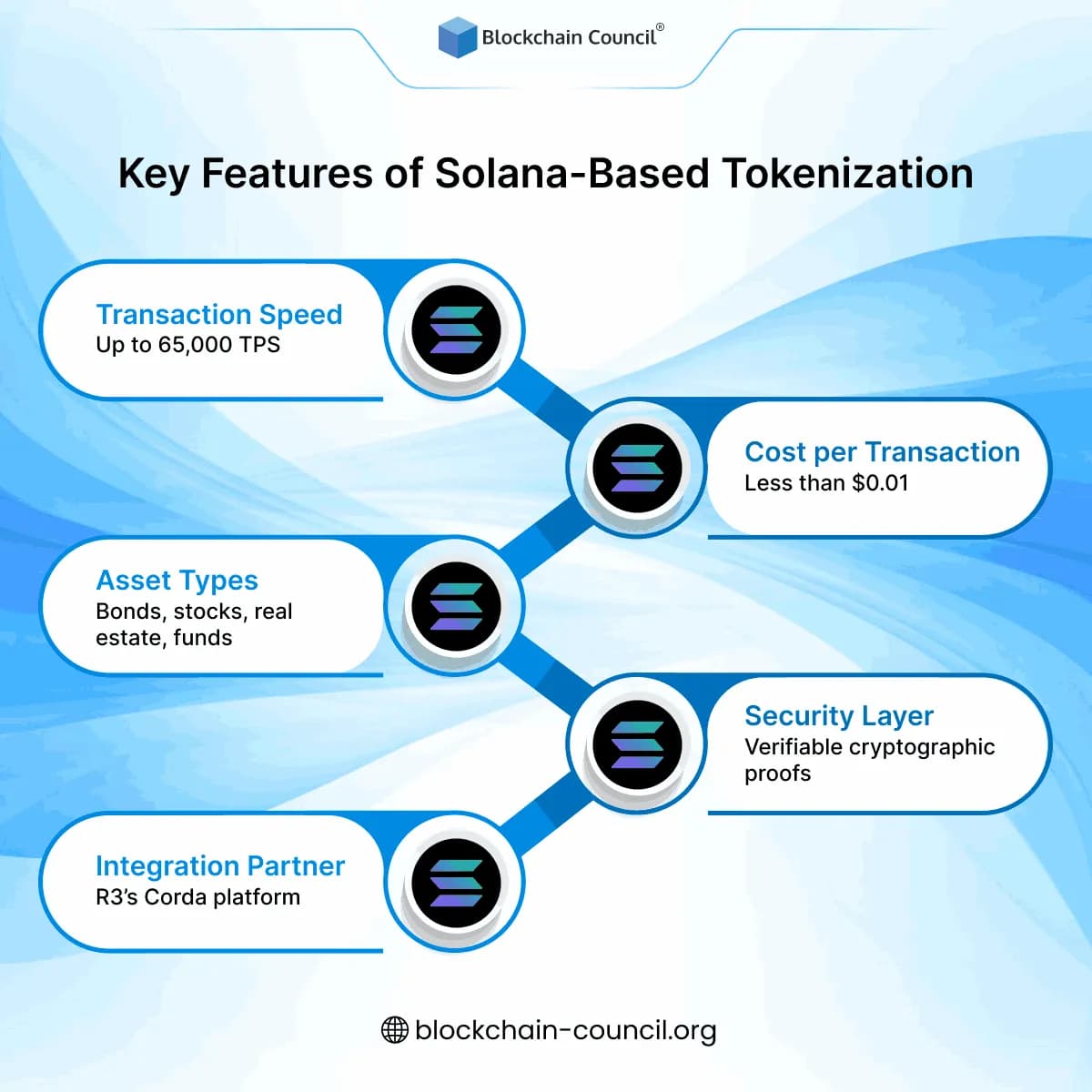
Solana offers high-speed and low-cost transactions, making it ideal for institutional use. It processes over 65,000 transactions per second and has near-zero gas fees. This matters for banks that need speed, stability, and compliance.
R3, a blockchain solutions provider, has now integrated Solana with its Corda platform. This lets big institutions like HSBC and Bank of America tap into Solana’s infrastructure without losing their compliance edge.
Key Features of Solana-Based Tokenization
How This Changes Traditional Asset Management
With tokenization, banks can offer:
- Fractional ownership of large assets
- 24/7 trading with instant settlement
- Lower fees for transactions and custody
- Automated compliance using smart contracts
For example, instead of waiting three days to settle a stock trade, tokenized assets on Solana can settle in seconds—even across borders.
Who’s Involved in the Pilot Programs?
So far, R3 has brought in institutions including:
- HSBC
- Bank of America
- Monetary Authority of Singapore
These players are testing tokenized asset flows like bond issuance, cross-border settlement, and real-time compliance tracking.
This trend is also creating demand for skills in blockchain development and regulation. Professionals looking to contribute in this area can explore a Crypto Certification to get familiar with token economics, smart contracts, and institutional DeFi tools.
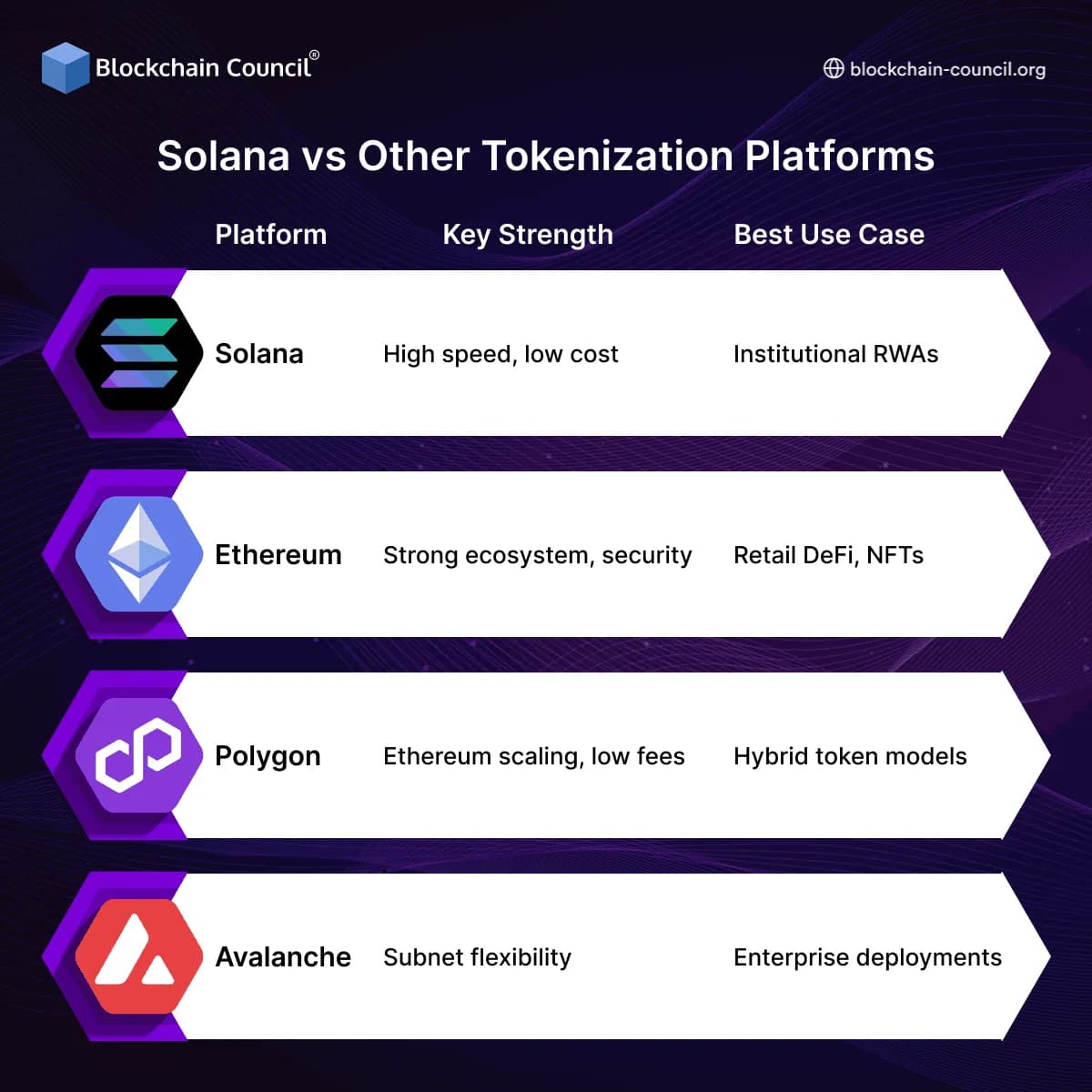
Solana vs Other Tokenization Platforms
What It Means for Developers and Analysts
Developers will now be able to build apps for banks that run on tokenized rails. This includes portfolio tracking tools, compliance dashboards, and real-time analytics. Analysts will also need to work with blockchain data to understand user behavior, volume flows, and asset risk.
A Data Science Certification can help professionals interpret and visualize token activity. Meanwhile, for marketers and strategists, the Marketing and Business Certification gives a competitive edge when launching token-based services or collaborating with institutions.
Final Thoughts
Banks partnering with Solana to tokenize assets is a sign of where finance is headed. It shows confidence in blockchain infrastructure and signals a shift toward real-world use—not just experiments.
As this grows, asset tokenization could open access to investments once limited to institutions. Solana’s speed, scale, and new banking partnerships make it a key player in this transformation.
Related Articles
View All
Cryptocurrency
Crypto Explained: From Bitcoin to the Digital Asset Revolution
Crypto Explained in simple terms. Learn what cryptocurrency is, why Bitcoin was created, how coins differ from tokens, how wallets work, and the key benefits and risks.
Cryptocurrency
How to Become a Certified Crypto Asset Recovery Expert
Learn how to become a certified crypto asset recovery expert through blockchain forensics, AML training, seizure skills, and real case experience.

Cryptocurrency
Career in Crypto Asset Recovery: Skills, Roles, and Opportunities
Explore a career in crypto asset recovery, including key skills, job roles, salary signals, and practical steps to enter blockchain forensics and compliance.
Trending Articles
What is AWS? A Beginner's Guide to Cloud Computing
Everything you need to know about Amazon Web Services, cloud computing fundamentals, and career opportunities.
How to Install Claude Code
Learn how to install Claude Code on macOS, Linux, and Windows using the native installer, plus verification, authentication, and troubleshooting tips.
Blockchain in Supply Chain Provenance Tracking
Supply chains are under pressure to prove not just efficiency, but also authenticity, sustainability, and fairness. Customers want to know if their coffee really is fair trade, if the diamonds are con