
Securing DevOps with Claude AI

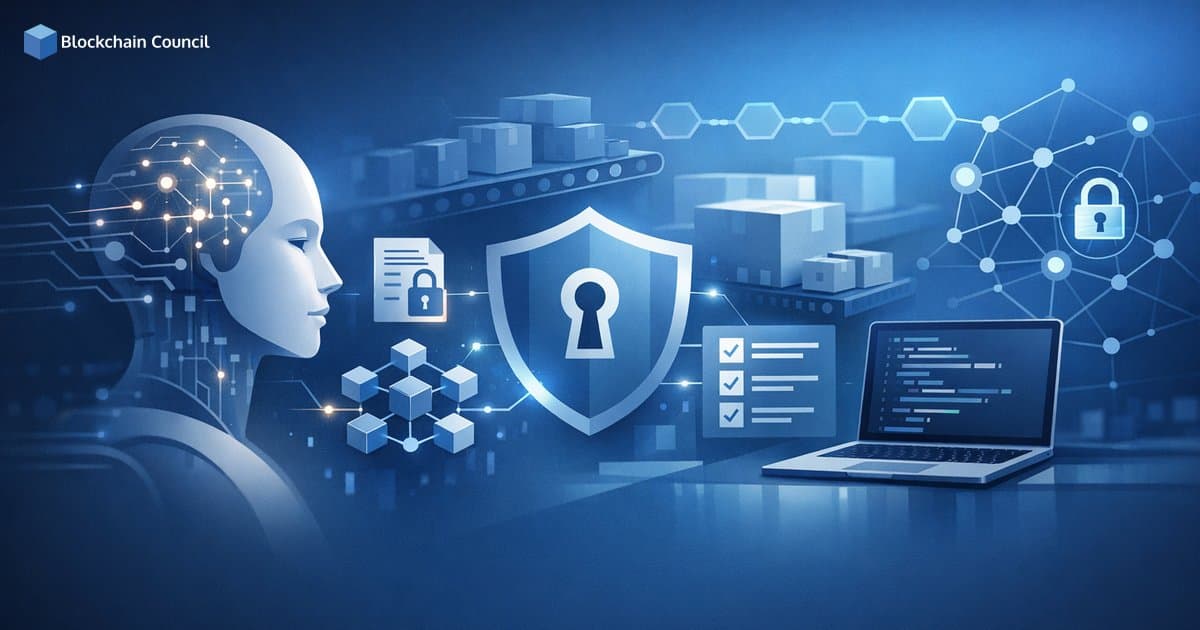
Securing DevOps with Claude AI is becoming a practical approach for teams that need faster releases without weakening application security. In February 2026, Anthropic introduced Claude Code Security in a limited research preview for Team and Enterprise users, positioning it as an AI-native capability that scans codebases for vulnerabilities, proposes patches for human review, and supports DevSecOps workflows across planning, coding, testing, and deployment. Early results reported by Anthropic include more than 500 high-severity vulnerabilities identified in open-source codebases, including issues that reportedly went undetected despite years of traditional review.
This article explains how securing DevOps with Claude AI applies to three high-impact areas: secrets management, policy-as-code with OPA (Open Policy Agent), and software supply chain security workflows. It also outlines adoption considerations for CISOs and platform teams, covering governance, vendor risk, and human-in-the-loop review requirements.

What Claude Code Security Is and Why It Matters for DevSecOps
Claude Code Security is powered by Claude Opus 4.6 and reflects a shift from pattern-based scanning to reasoning-based analysis. Traditional Static Application Security Testing (SAST) tools rely on syntactic and rule-driven matching. That approach works well for known vulnerability patterns, but it struggles with business logic flaws, novel vulnerability chains, and context-dependent security failures. It also tends to produce high false-positive rates, which contributes to alert fatigue and ignored findings.
Claude Code Security addresses these limitations by analyzing code intent, execution paths, and component interactions, then applying multi-stage verification to improve precision. The workflow includes:
Severity ratings and confidence scores to help prioritize remediation
Suggested patches that are reviewed and approved by humans before being applied
Dashboards for triaging findings and managing remediation queues
Within a DevSecOps lifecycle, the capability supports security from planning through deployment:
Plan: security requirements and threat model support
Code: near real-time feedback on vulnerability classes such as injection and XSS
Test: attack simulation and validation concepts
Deploy: configuration risk monitoring
Secrets Management: Preventing Credential Leaks Before They Become Incidents
Secrets exposure remains one of the most common DevOps security failures. It is easy to do accidentally and difficult to prevent through training alone. API keys, database passwords, tokens, and private keys frequently end up in:
Source files (hardcoded constants, example code, test files)
Configuration files (YAML, JSON, env files)
CI logs or debug output
Infrastructure-as-Code templates
Claude Code Security is designed to detect exposed credentials in code and configuration, helping teams block leaks before commits are merged and before artifacts are deployed. The practical value is that secrets detection becomes a guardrail embedded in day-to-day engineering workflows, rather than a periodic audit that uncovers problems after damage is done.
Recommended Workflow: Claude AI Combined with Platform Controls
For production-grade secrets management, Claude-based detection should be layered with standard controls:
Pre-commit and pre-receive checks to stop obvious leaks early
Secret vaults and short-lived credentials, rather than static tokens in config files
Rotation playbooks integrated with incident response procedures
Least-privilege access and scoped tokens, so a single leaked credential does not have catastrophic reach
For teams building secure pipelines, structured certifications in cybersecurity and DevOps can help align engineering and security roles around shared practices and controls.
Policy-as-Code with OPA: Enforcing Security Intent Consistently Across Pipelines
Policy-as-code is the practice of expressing security, compliance, and operational requirements as version-controlled rules that can be evaluated automatically in CI/CD pipelines and runtime admission controls. OPA (Open Policy Agent) is one of the most widely adopted frameworks for this approach, commonly used with Kubernetes admission control, infrastructure governance, and CI policy gates.
Direct, first-class OPA integration for Claude Code Security is not explicitly defined in current public documentation. However, the reasoning-based approach maps well to policy enforcement because policies are inherently contextual. A rule might be simple, but evaluation is often complex due to:
Environment-specific exceptions
Dependency and artifact provenance requirements
Different risk thresholds for internal versus internet-facing services
Compensating controls that change the effective risk profile
Where Claude AI Can Strengthen OPA-Based Workflows
Even where the final enforcement gate remains with OPA, Claude can help teams operate policy-as-code more effectively:
Policy violation triage: interpret why a change violates a policy and propose a safer alternative
Contextual guidance: explain how to satisfy a policy without slowing delivery
Coverage analysis: identify areas where policies are absent or too permissive
Change review support: assess policy updates for unintended side effects before they are applied
A practical architecture keeps OPA as the deterministic enforcement layer, while using Claude for analysis, remediation suggestions, and developer-facing explanations. This combination improves developer experience and reduces the tendency to bypass controls when they feel opaque or unhelpful.
Supply Chain Security Workflows: Dependencies, IaC, and Container Risk
Modern DevOps pipelines assemble applications from open-source packages, container images, CI actions, SDKs, and infrastructure templates. This extends the attack surface well beyond application code. Security teams increasingly treat the software supply chain as a primary risk domain, because a single malicious dependency, compromised build step, or misconfigured IaC resource can affect multiple services simultaneously.
Claude Code Security supports supply chain security through scanning and contextual evaluation across:
Software Composition Analysis (SCA) for vulnerable or risky packages
IaC misconfiguration detection (for example, overly permissive access policies or exposed services)
Container image risk and build pipeline concerns
Malicious dependency detection and analysis of unexpected package behavior
Example Pipeline Workflow for Supply Chain Security
A realistic DevSecOps implementation can combine existing controls with Claude-driven analysis across each pipeline stage:
Pre-merge checks: Claude scans changes for insecure patterns and supply chain red flags, including dependency changes and risky build scripts.
Build stage: enforce locked dependencies, validate checksums where applicable, and run SCA scans; Claude helps interpret and prioritize results.
IaC stage: evaluate Terraform or Kubernetes manifests against OPA policies; Claude explains failures and proposes compliant configurations.
Container stage: scan images for known vulnerabilities and misconfigurations; Claude supports remediation recommendations and safe base image selection.
Release gates: require human approval for fixes and risk acceptance decisions, using severity ratings and confidence signals as inputs.
This approach aligns with the industry direction of unifying IDE-level prevention, post-commit remediation, and supply chain visibility into a single operational workflow.
Why Reasoning-Based Scanning Changes the DevOps Security Equation
Reasoning-based AI security analysis can uncover categories of risk that pattern-matching tools routinely miss:
Business logic flaws that do not match known vulnerability signatures
Complex vulnerability chains spanning multiple components or services
Novel vulnerabilities where no prior rule exists to match against
Anthropic has reported that Claude Opus 4.6 identified more than 500 high-severity vulnerabilities in open-source codebases under responsible disclosure processes. If that output is consistently reproducible at scale, it suggests that AI-assisted analysis can serve as a meaningful complement to traditional AppSec tooling - particularly for reducing false positives and improving prioritization through confidence scoring and contextual evidence.
Governance and Risk Considerations for Enterprises
Security leaders should evaluate AI-native security tooling with the same rigor applied to any platform that touches source code and pipelines. As AI platforms take on broader roles across the security toolchain, organizations must assess vendor risk and operational exposure carefully. Key considerations include:
Data residency and retention: where code and metadata are processed and stored
Access controls: least-privilege scoping for integrations into repos, CI systems, and artifact registries
Prompt injection and manipulation: safeguards to prevent untrusted inputs from influencing the system's outputs
Human-in-the-loop enforcement: ensuring no unreviewed patch can be merged automatically
Sandboxing and agent controls: validating how actions are constrained when Claude operates in automation scenarios
From a skills and governance standpoint, structured training in secure development, ethical hacking, and AI risk management helps cross-functional teams understand both the capabilities and the limitations of AI-driven security tools.
Conclusion: Applying Claude AI to DevOps Security in a Practical, Auditable Way
Securing DevOps with Claude AI is best understood as an accelerator for secure engineering practices, not a replacement for them. Claude Code Security introduces reasoning-based analysis that can reduce false positives, surface business logic vulnerabilities, and extend security attention to secrets management and supply chain risk. Its multi-stage verification, confidence scoring, and mandatory human approval model align with enterprise requirements for auditability and change control.
To adopt it effectively, keep enforcement deterministic (OPA for policy gates, for example), use Claude for contextual analysis and remediation guidance, and layer standard supply chain controls including SCA, signed artifacts, and hardened CI/CD permissions. As AI-driven security matures beyond research preview, the teams best positioned to benefit will be those that integrate AI tools within clear governance frameworks, measurable controls, and developer-friendly workflows.
Related Articles
View All
Claude Ai
Using Claude AI in DevOps Pipelines
Learn how using Claude AI in DevOps pipelines improves CI/CD automation, runbooks, and incident response with safer deployments, SLO-driven operations, and smarter troubleshooting.

Claude Ai
Claude AI for Sr. DevOps Engineers and Devlopers
Learn how Claude AI helps DevOps engineers automate incident triage, response communications, remediation guidance, and postmortems with skills, runbooks, and SLOs.

Claude Ai
Claude AI for DevOps Engineers
Learn how Claude AI supports DevOps with AI by improving IaC, CI/CD, GitOps, and SRE workflows through large-context reasoning, structured automation, and safer operational patterns.
Trending Articles
The Role of Blockchain in Ethical AI Development
How blockchain technology is being used to promote transparency and accountability in artificial intelligence systems.

AWS Career Roadmap
A step-by-step guide to building a successful career in Amazon Web Services cloud computing.
Top 5 DeFi Platforms
Explore the leading decentralized finance platforms and what makes each one unique in the evolving DeFi landscape.