
Infrastructure as Code with Claude AI

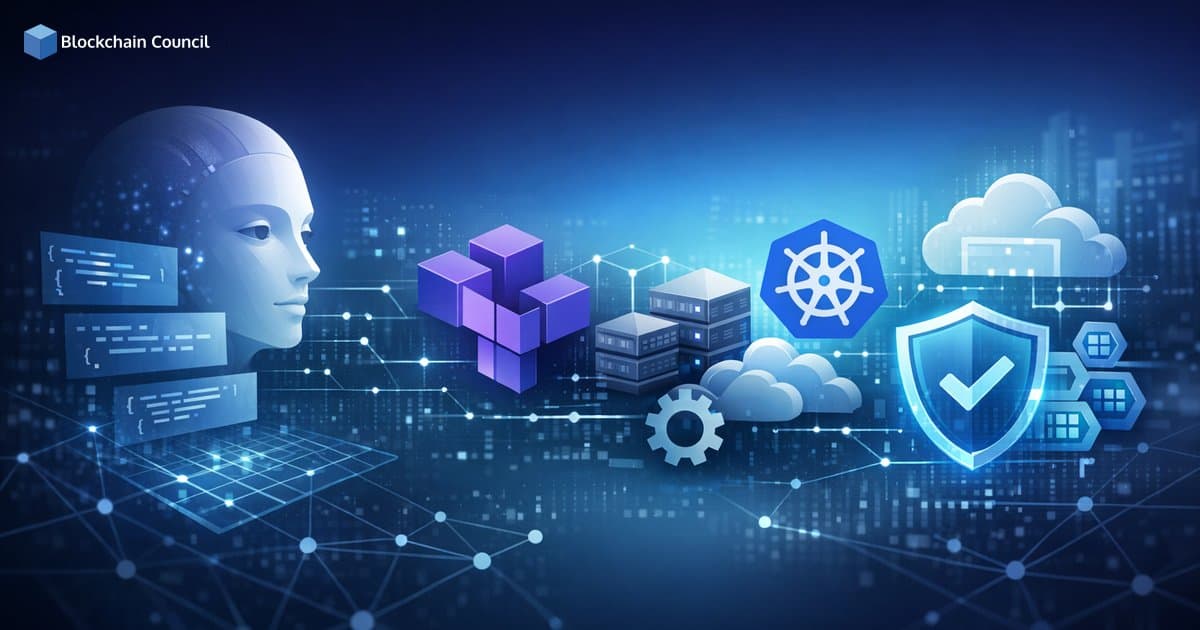
Infrastructure as Code with Claude AI is reshaping how teams build and operate cloud platforms. Instead of hand-writing Terraform HCL or Kubernetes YAML from scratch, engineers can describe infrastructure intent, let Claude generate manifests, and then apply rigorous validation and security controls before deployment. This shift is not only about faster code generation. It is about AI systems reasoning over infrastructure changes, dependencies, and policy constraints in a way that better matches how enterprises actually operate.
Recent developments make this approach increasingly practical. Claude models have expanded their long-horizon capability for agentic work, and newer workflows increasingly run in the background on remote infrastructure rather than in a single interactive local session. At the same time, security and compliance expectations are tightening, with standards bodies focusing on AI agent security and organizations beginning to plan for post-quantum cryptography in long-lived agent contexts.

Why Infrastructure as Code is Moving from Syntax to Intent
Traditional IaC workflows assume humans author the primary configuration artifacts: Terraform modules and Kubernetes manifests. AI-assisted IaC changes that assumption. Instead of treating HCL and YAML as source-of-truth files created by humans, teams can treat them as intermediate representations produced by an AI system from higher-level intent.
This trend is reinforced by emerging approaches across the ecosystem:
Natural language to direct API calls: Some systems convert intent into provider API calls, reducing reliance on intermediate files and plan-apply cycles.
Knowledge-graph reasoning: Infrastructure can be represented as relationships and dependencies rather than text templates, enabling AI to reason about blast radius and coupling.
Golden path tooling: Organizations encode approved infrastructure decisions as tools and interfaces, so AI proposes changes within established guardrails.
A practical implication is that HCL and YAML increasingly resemble assembly language for infrastructure: still important, but less frequently authored directly by humans. The value shifts to describing intent, capturing constraints, and enforcing policy.
What Makes Claude AI Different for IaC Workflows
Claude's recent model capabilities support IaC use cases that were previously difficult to execute reliably, such as reading large repositories and maintaining consistent conventions across modules. One major enabler is expanded context capacity, including a beta context window of up to 1,000,000 tokens for knowledge work and agentic coding. This allows Claude to analyze large infrastructure codebases as a cohesive system, which is critical when Terraform modules, Kubernetes manifests, Helm values, and CI pipelines all influence one another.
Teams are also formalizing how AI agents consume repository context. Agent instruction files such as AGENTS.md and CLAUDE.md are used to encode repo-specific rules and workflows. Research has reported a 28.64% median runtime reduction for AI coding agents when such configuration improves contextual awareness.
Generating Terraform and Kubernetes Manifests with Claude AI
Generating IaC with Claude should not mean pasting prompts and hoping for usable output. A robust approach uses a structured workflow that includes intent capture, constraints, and output formatting rules.
Step 1: Define Infrastructure Intent and Constraints
Before asking Claude to generate code, provide clear inputs:
Platform intent: environment (dev, staging, prod), region, scaling expectations, and availability targets.
Security requirements: network boundaries, secrets handling, encryption needs, and least-privilege expectations.
Operational constraints: naming conventions, tagging, observability standards, and rollout strategy.
Toolchain constraints: Terraform version, providers, Kubernetes version, admission controllers, and CI checks.
Store these rules in a repository file such as AGENTS.md so Claude and other agents consistently apply the same standards across changes.
Step 2: Generate Terraform with Reusable Modules
For Terraform, instruct Claude to:
Prefer existing modules, and only create new modules when necessary.
Separate concerns using modules and environments, for example, root modules per environment.
Use variables, outputs, and provider configuration consistently.
Apply organizational tagging and naming standards.
Claude is most effective when it can see the current module layout and state conventions. With large repositories, teams often rely on retrieval-based approaches that fetch only relevant snippets for each task while maintaining accuracy.
Step 3: Generate Kubernetes Manifests with Security by Default
For Kubernetes YAML, ask Claude to generate manifests that include default production hygiene:
Deployments: resource requests and limits, liveness and readiness probes, and rolling update strategy.
SecurityContext: runAsNonRoot, readOnlyRootFilesystem where feasible, and dropped capabilities.
NetworkPolicy: deny-by-default patterns where appropriate.
ServiceAccount and RBAC: least privilege for the workload.
Ingress: TLS configuration and host rules aligned to your standards.
If your organization uses Helm or Kustomize, Claude can generate those structures as well. The same principle applies: prefer well-defined patterns, avoid one-off templates, and keep values and overlays clean.
Validation: Making AI-Generated IaC Safe to Apply
Claude can draft changes quickly, but validation should remain deterministic and automated. A strong validation pipeline for Terraform and Kubernetes typically includes the following checks.
Terraform Validation Checklist
Formatting and static checks: terraform fmt and terraform validate.
Plan review: terraform plan in CI with clear diffs and policy checks.
Policy as code: Sentinel or Open Policy Agent checks for allowed regions, instance types, encryption, and tagging.
Security scanning: detect misconfigurations such as public buckets, overly permissive security groups, and missing encryption.
Kubernetes Validation Checklist
Schema validation: kubeconform or kubeval against cluster versions.
Policy enforcement: OPA Gatekeeper or Kyverno rules for non-root enforcement, allowed registries, and required labels.
Security checks: detect privileged containers, hostPath mounts, and missing resource limits.
Dry runs and diff: kubectl apply --dry-run=server and diff tooling in CI.
Claude can assist in this phase by generating policy rules for Kyverno or Gatekeeper constraints and by explaining validation failures in plain language. Enforcement, however, should always be handled by your pipeline rather than delegated to the AI.
Securing Infrastructure as Code with Claude AI
AI-assisted IaC introduces specific security considerations: prompt inputs can contain sensitive details, agent execution may span multiple systems, and long-lived contexts can accumulate operational secrets.
Threat Modeling AI-Assisted IaC
Focus on these risk areas:
Secrets exposure: never place plaintext credentials in prompts, manifests, or state files. Use secret managers and external secret operators.
Privilege creep: AI-generated IAM and RBAC configurations may over-grant permissions. Enforce least privilege via policy as code and code review gates.
Supply chain risk: verify container images, Terraform providers, and modules. Pin versions and validate provenance.
Cross-boundary agent calls: as agents operate across clouds or services, accountability for data handling and failure modes can become unclear.
Standards bodies are actively addressing these gaps. NIST launched an AI Agent Standards Initiative focused on industry standards, open-source protocol development, and agent security research, reflecting the need for clearer security ownership when agents act across environments.
Plan for Post-Quantum Security in Long-Lived Contexts
Long-lived AI agent contexts can retain sensitive material across sessions. Security analyses have highlighted a harvest-now-decrypt-later risk, particularly for regulated industries where long-term confidentiality matters. Organizations should begin evaluating post-quantum cryptography options aligned with NIST-standardized algorithms such as ML-KEM and ML-DSA for systems that must remain secure over extended time horizons.
Operationalizing Claude AI for IaC in Enterprises
As models handle longer tasks, organizations are moving from single-user assistants to fleets of background agents. That requires new operational patterns:
Remote agent infrastructure: run multiple Claude Code instances across tasks such as module refactors, CI fixes, and manifest generation.
Repository instructions: maintain AGENTS.md or CLAUDE.md with rules for module structure, naming conventions, and security defaults.
Retrieval workflows: use retrieval-augmented approaches when repositories exceed normal context limits, so only relevant code is pulled into each task.
Governance: require approvals for high-risk changes, enforce policy checks, and log agent actions for auditability.
Enterprise results suggest meaningful productivity gains when AI is embedded into developer workflows. Testing with large developer cohorts has reported productivity improvements of roughly 45% for upgrade and refactoring tasks. Separately, fintech teams have reported faster execution while maintaining the quality controls expected in financial services environments.
Skills to Build: Pairing IaC Fundamentals with AI Governance
To use Infrastructure as Code with Claude AI effectively, teams need both technical and governance skills:
Terraform module design, state management, and policy as code
Kubernetes workload security, RBAC, admission control, and network policies
Secure SDLC practices, supply chain security, and audit logging
AI agent instructions, prompt hygiene, and retrieval workflows
For structured upskilling, consider training paths that map to recognized programs covering Terraform, Kubernetes, DevOps, Cloud Security, and AI. Aligning internal learning to certification roadmaps helps teams build verifiable, consistent expertise across these disciplines.
Conclusion
Infrastructure as Code with Claude AI is evolving from simple code generation to intent-driven infrastructure engineering. The most effective teams treat Terraform and Kubernetes artifacts as outputs of a controlled system: intent and constraints in, validated and policy-compliant manifests out, with automated security guardrails throughout. As agentic workflows become longer running and more autonomous, investing in remote agent infrastructure, repository instruction standards, and forward-looking security practices - including post-quantum planning for sensitive contexts - will determine which organizations can scale safely.
Related Articles
View All
Claude Ai
Claude AI for Writing Clean Code
Learn how Claude AI for writing clean code improves readability, multi-file refactoring, and test-driven iterations using Claude Code workflows and scheduled quality checks.
Claude Ai
Claude Code for VS Code 如何配置第三方API
A practical guide to setting up third-party APIs in Claude Code for VS Code, explained step by step.

Claude Ai
How to Install Claude Code
Learn how to install Claude Code on macOS, Linux, and Windows using the native installer, plus verification, authentication, and troubleshooting tips.
Trending Articles

The Role of Blockchain in Ethical AI Development
How blockchain technology is being used to promote transparency and accountability in artificial intelligence systems.

AWS Career Roadmap
A step-by-step guide to building a successful career in Amazon Web Services cloud computing.

Top 5 DeFi Platforms
Explore the leading decentralized finance platforms and what makes each one unique in the evolving DeFi landscape.