
Email Marketing Automation with Claude AI

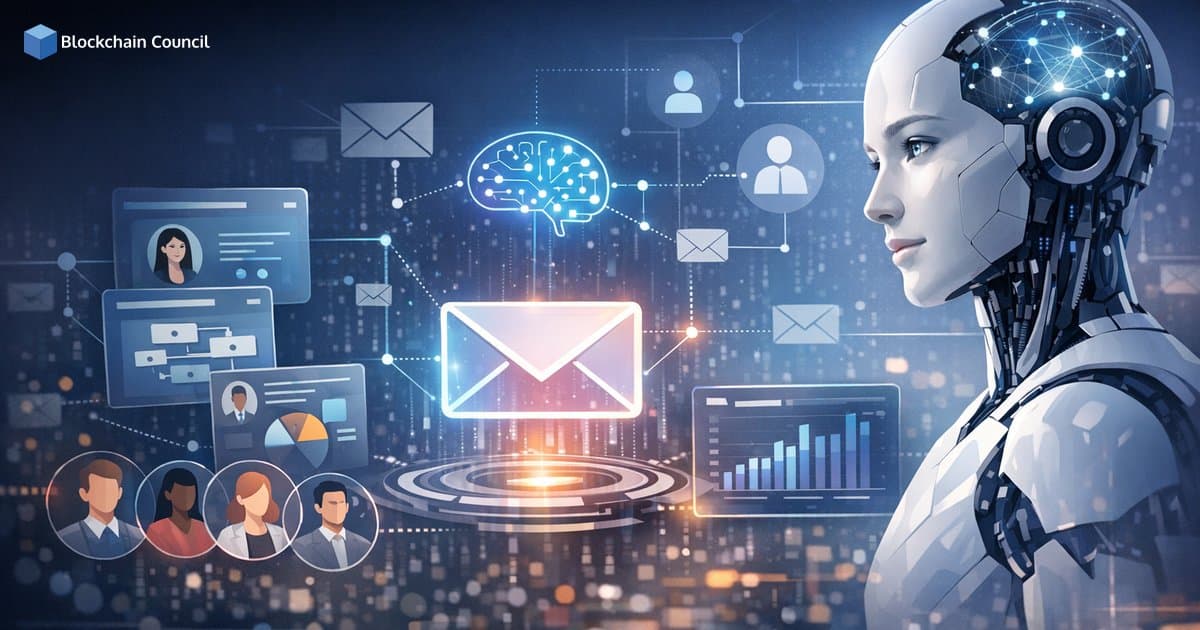
Email marketing automation with Claude AI has shifted from simple copy generation to agentic execution in 2026. With tools like Claude Code, marketers can orchestrate segmentation, build multi-step sequences, and deliver highly personalized messaging faster and with stronger performance than traditional approaches. Teams using these methods report open rates reaching 40-52% and reply rates of 15-21%, compared with typical cold email benchmarks of 15-20% opens and 3-5% replies.
What Changed in 2026: From Prompts to Agentic Workflows
Claude AI's most significant advancement for email marketing automation is its move toward agentic orchestration. Rather than generating one-off drafts, teams use Claude Code to run repeatable workflows that handle:

List building and enrichment using firmographic and technographic signals
Email verification and structured data cleanup
Personalization variable mapping by role, industry, and intent
Sequence generation that exports cleanly into platforms like HubSpot
Claude integrations with tools such as Gmail and Slack make contextual personalization more practical - for example, drafting replies aligned with past threads and internal conversations. Claude's Constitutional AI framework also supports safer, more transparent outputs, helping campaigns stay brand-aligned and trustworthy.
Performance Benchmarks: Why Teams Adopt Claude for Email
Results from 2026 indicate that Claude-assisted email marketing automation can materially outperform typical outbound baselines. Reported benchmarks include:
Open rates: 40-52% (vs. 15-20% typical averages)
Reply rates: 15-21% (vs. 3-5% typical averages)
Scale: some teams increase content throughput by approximately 4x while maintaining quality
In practice, this enables a shift from volume-based outbound to velocity-based testing. Rather than sending more emails, teams iterate faster on message-market fit, segmentation, and sequencing logic.
Segmentation with Claude AI: Micro-Campaigns Built from Real Signals
Segmentation is where email marketing automation with Claude AI becomes genuinely strategic. Claude can analyze and organize audience groups using signals such as:
LinkedIn engagement patterns
Webinar attendance and content downloads
Competitor content interactions
Job title, seniority, industry, and growth stage
Recent activity indicators, such as last product touch or last engagement date
Rather than relying on broad ICP buckets, Claude supports micro-campaigns matched to a narrow use case and a specific buying trigger. This precision is especially valuable in small-TAM categories where relevance drives results.
Practical Segmentation Workflow
Define ICP slices (example: RevOps leaders at SaaS companies actively hiring SDRs)
Collect signals (example: attended a pipeline webinar, engaged with outbound content)
Enrich and normalize (industry, funding stage, tech stack, hiring intent)
Generate segment-specific angles (pain points, language, objections, proof points)
Sequence Generation: A Proven 3-Email Structure
Claude is commonly used to generate concise, psychologically attuned sequences that avoid templated language. A widely used structure follows a 3-email series:
Email 1: a value-first insight tied to a company-specific detail and a credible problem statement
Email 2: social proof, such as a relevant case study or quantified outcome from the same industry
Email 3: a low-friction CTA, often a 15-minute call with tailored ideas or a short audit offer
Example Prompt for Claude Sequences
Create a 3-email outreach sequence for [target company] and [target role]. Email 1: Reference [specific detail], acknowledge [problem]. Email 2: Share [industry case study]. Email 3: Propose a 15-minute call with tailored ideas.
For operational repeatability, teams increasingly implement these sequences as reusable assets inside Claude Projects and custom Skills, so each new segment only requires updated inputs rather than rebuilding from scratch.
Personalization That Does Not Feel Templated
Personalization in email marketing automation with Claude AI extends well beyond first-name tokens. High-performing campaigns typically personalize by:
Role context: what the job is accountable for and relevant KPIs
Industry nuance: regulatory constraints, sales cycles, and seasonality
Company reality: recent news, hiring patterns, and product launches
Behavior signals: last engagement date, content consumed, and prior conversations
When Claude can pull relevant context from connected systems - CRM notes, email threads, or internal Slack discussions - it can draft messages that read as though written after genuine research, not assembled through a mail-merge.
Optimization Loop: A/B Testing and Iteration at Speed
Claude is most effective when used as part of a structured experimentation loop. A common process looks like this:
Launch two subject lines and two opening angles per segment
Measure opens, replies, positive replies, and booked meetings
Feed results back to Claude to identify patterns and rewrite underperforming steps
Redeploy improved variants quickly, prioritizing learning velocity over volume
Claude can also help synthesize performance data across multiple dashboards, converting raw metrics into actionable hypotheses for the next iteration cycle.
Real-World Results: Agency and Startup Use Cases
Agencies and high-velocity teams use Claude to run end-to-end outbound operations, from ICP research to HubSpot-ready sequence output. One reported use case involves an agency booking 150 or more high-ticket meetings monthly using Claude-generated sequences that referenced company news and operational challenges. Startup teams similarly export CRM contacts, generate sequences by job title and industry, and report performance as high as 52% open rates and 21% reply rates.
Skills to Build Next: Preparing for 2027 Agent-Led Campaigns
Looking ahead to 2027, AI agents are expected to manage more of the campaign lifecycle with greater autonomy - monitoring intent signals, launching micro-campaigns, measuring results, and iterating while humans focus on strategy. Multi-channel orchestration is also likely to expand segmentation logic beyond email into LinkedIn, phone, and other touchpoints triggered by real-time behavioral data.
For professionals building credibility in this space, structured learning paths such as Blockchain Council's Certified AI Marketing Professional, Certified Prompt Engineer, or Certified Email Marketing Expert programs offer formal grounding in AI-driven campaign design, automation, and analytics.
Conclusion
Email marketing automation with Claude AI in 2026 is defined by agentic workflows, sharper segmentation, and personalization grounded in real context. The teams seeing the strongest results focus on micro-campaigns, disciplined sequence frameworks, and rapid testing loops. As Claude Code-style orchestration becomes standard practice, the competitive advantage will belong to operators who can translate data signals into repeatable systems that consistently produce relevant, human-sounding outreach at scale.
Related Articles
View All
Claude Ai
Claude AI for Customer Support Automation
Learn how Claude AI automates support with macros, help center RAG, and tone control, plus tiered escalation and governance for safe 24-7 operations.

Claude Ai
Claude AI for Affiliate Marketing Content
Learn how Claude AI supports affiliate reviews, comparisons, and compliance-safe copy with faster production, personalization, and analytics-driven optimization workflows.

Claude Ai
Generating Marketing Reports with Claude AI
Learn how generating marketing reports with Claude AI improves dashboards, insight extraction, and executive summaries using Projects, coding integrations, and repeatable workflows.
Trending Articles
The Role of Blockchain in Ethical AI Development
How blockchain technology is being used to promote transparency and accountability in artificial intelligence systems.

AWS Career Roadmap
A step-by-step guide to building a successful career in Amazon Web Services cloud computing.
Top 5 DeFi Platforms
Explore the leading decentralized finance platforms and what makes each one unique in the evolving DeFi landscape.