
Claude AI for Sr. DevOps Engineers and Devlopers
 Suyash Raizada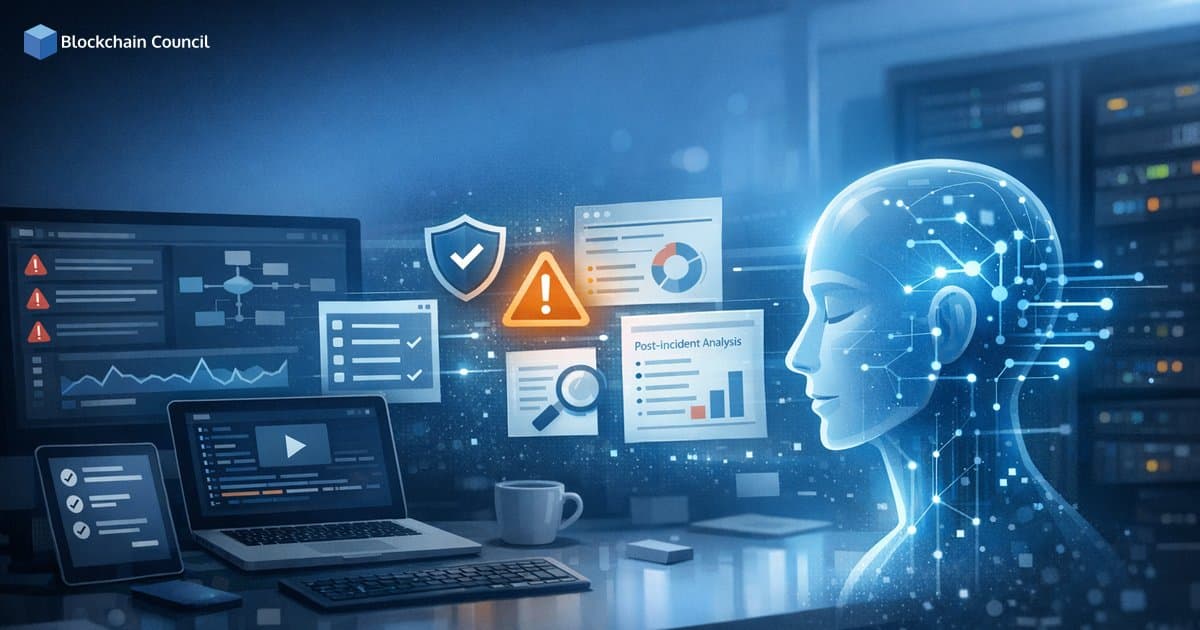
Claude AI for DevOps Engineers is becoming a practical way to reduce toil across the incident lifecycle, from noisy alert triage to structured postmortems. Instead of relying on brittle, rule-based automation, Claude can reason about context across logs, metrics, traces, and code, then propose next steps that reflect how an experienced SRE would approach the problem. For teams operating complex production systems, that shift can translate into faster diagnostics, more consistent communication, and higher-quality learning after incidents.
Why Claude AI is changing incident response in DevOps
Traditional incident tooling excels at detection and routing, but often struggles with reasoning. Alert rules fire, tickets get created, and humans still spend time correlating signals, identifying blast radius, and deciding what to do next. Claude's skills-based approach is designed to close that gap by encapsulating structured operational practice into reusable skills that guide how the model analyzes an incident, communicates findings, and triggers escalations.

In DevOps environments, this matters because the hardest part of incident response is rarely running a command. It is choosing the right sequence of questions, quickly validating hypotheses, and coordinating people while the system is unstable.
Core Claude skills DevOps teams can use today
Claude's incident response value becomes more tangible when mapped to specific skills and artifacts that teams already use: runbooks, severity models, SLOs, and escalation policies.
DevOps Incident Responder skill
The DevOps Incident Responder skill targets MTTR reduction by automating structured diagnostics and assisting with root cause analysis and remediation planning. In practice, this can include:
Summarizing the incident context from alerts and recent deploy activity
Proposing a hypothesis tree covering likely and less likely causes based on observed symptoms
Recommending verification steps using observability queries and known service dependencies
Generating safe remediation options aligned to your architecture and deployment patterns
Incident runbook templates with severity models (SEV1 to SEV4)
Many teams have runbooks, but they tend to be inconsistent, outdated, or too vague to be useful during a high-pressure event. Claude can generate or standardize incident runbooks that include detection, triage, mitigation, resolution, and communication steps, along with escalation decision trees. A typical structure includes:
Severity definition with clear customer impact guidance covering SEV1 through SEV4
Immediate containment actions such as rate limiting, feature flag rollback, and traffic shifting
Diagnostic checklist tied to golden signals and known failure modes
Communication templates for internal and external stakeholders
Exit criteria to confirm stability before closing the incident
SRE Engineer skill for SLOs, error budgets, and toil reduction
DevOps teams already practicing SRE can use Claude to define SLOs and SLIs, calculate error budgets, and connect incident response to reliability objectives. Incident response quality improves when the team can quickly answer:
Which SLO is being violated, and for which users or endpoints?
How quickly is the error budget burning, and what does that imply for escalation?
What operational work should be automated to reduce repeated incidents?
Automating the incident lifecycle with Claude
Claude's most effective use in DevOps incident management is not hands-off autopilot. It is structured acceleration - Claude reduces cognitive load and standardizes best practices while keeping humans in control for risk-sensitive actions.
1) Alert triage and noise reduction
AI-assisted triage works best when constrained to well-defined tasks. Claude can:
Cluster related alerts into a single incident narrative
Summarize key anomalies across logs, metrics, and traces
Suggest severity based on impact signals and predefined SEV criteria
Open or enrich tickets with a consistent template and initial diagnostic context
This helps teams avoid a common failure mode: spending too long deciding whether an incident is real instead of moving quickly to containment.
2) Diagnostics and root cause analysis support
Claude's diagnostic advantage comes from contextual reasoning. Instead of matching patterns in a single log line, it can trace relationships - for example, how a downstream dependency change could manifest as timeouts in an upstream API.
When paired with your observability stack, Claude can propose a structured diagnostic sequence like:
Confirm customer impact and isolate the affected services and regions
Check golden signals: latency, traffic, errors, saturation
Correlate with recent deployments, config changes, and feature flag updates
Validate dependency health across datastores, queues, and third-party APIs
Narrow to the smallest plausible change that explains the observed symptoms
3) Coordinated communication via Slack and PagerDuty
Incident success is often communication success. Claude can integrate into common incident management workflows by assisting with:
Slack updates that follow a consistent cadence covering what happened, impact, mitigation status, and the next update window
PagerDuty escalations based on severity models and decision trees
Role reminders for incident commander, communications lead, and operations lead
Standardized updates reduce confusion, particularly when multiple teams join and context is fragmented.
4) Contextual remediation guidance
A key difference between AI-assisted operations and traditional tooling is the ability to propose remediation in context. Many tools identify what is wrong but stop short of explaining how to fix it safely. Claude can tailor remediation steps to your architectural patterns and codebase conventions, recommending a rollback path, feature flag disablement, or configuration change complete with verification checks.
Best practice is to treat these outputs as reviewable suggestions and pair them with guardrails, approvals, and staged rollouts.
5) Postmortem automation and learning capture
Postmortems often suffer from two problems: they take too long to write, and they focus on blame rather than system learning. Claude can accelerate postmortems by generating drafts that include:
Timeline built from alerts, chat logs, deploy history, and key decisions
Customer impact assessment aligned to SLOs and error budget burn
Root cause summary with contributing factors spanning process, tooling, and architecture
Action items that are specific, measurable, and prioritized by risk reduction
Follow-up automation opportunities to reduce recurring toil
Teams can then review, correct, and finalize the document, preserving human accountability while eliminating repetitive writing work.
Implementation examples: what changes when Claude is skill-configured
In practical testing on infrastructure tasks, Claude configured with DevOps-oriented skills behaves more like a senior engineer. For example, when deploying a static website, it does not stop at provisioning resources. It prompts for error rate thresholds before writing code and suggests alerting components such as CloudWatch alarms and SNS topics. That shift is subtle but important: it moves reliability from an afterthought to an upfront requirement.
For more complex deployments, teams can stack multiple skills into a single workflow. An Amazon EKS rollout can combine Kubernetes security hardening, GitOps workflows for ArgoCD, incident response templates, cost optimization, and SRE-oriented SLO definitions into one coordinated infrastructure-as-code plan, creating a more complete production-ready baseline than a simple cluster template.
Enterprise integration and guardrails
Claude can fit into existing enterprise operations by integrating with observability tools for diagnostics and with Slack and PagerDuty for communications and escalation. Teams can also enforce organizational constraints through the skills framework, including:
Preventing production deployments without approvals
Flagging secrets committed to code
Rejecting unversioned container images
Reviewing infrastructure-as-code for misconfigurations before deployment
For organizations building maturity across DevSecOps, these controls pair well with structured enablement programs covering DevOps, cloud security, and cybersecurity fundamentals.
Security considerations: Claude Code Security and semantic analysis
Claude Code Security extends DevOps workflows into code security by scanning codebases using semantic analysis rather than rule-based pattern matching alone. Semantic approaches can reason about intent and execution paths, which helps reduce the false positives common in traditional static application security testing (SAST).
Anthropic has publicly discussed responsible rollout given the power of these techniques. Frontier Red Team testing using Claude Opus 4 reportedly uncovered a significant number of previously undetected vulnerabilities in production open-source codebases, including issues that had persisted for years despite expert review. For DevOps engineers, this reinforces a key operational reality: AI can accelerate both defense and offense, so adoption should include strict access control, auditability, and safe deployment practices.
Limitations: where Claude helps most, and where humans are still required
Claude is not a replacement for operational ownership. Early implementations can generate monitoring suggestions that are generic or not perfectly aligned to your specific SLOs. In practice, the improvement may look like going from no monitoring to monitoring that needs tuning. That is still meaningful progress, but it requires iteration.
The most reliable AI-driven incident response outcomes come from well-scoped tasks, such as:
Log summarization and signal extraction
Alert triage and incident ticket creation
Executing predefined, reviewed remediation steps
Drafting runbooks and postmortems for human review
Keep humans in the loop for high-risk actions, particularly production changes, security-sensitive investigations, and customer communications.
Conclusion: building a faster, more consistent incident response capability
Claude AI for DevOps Engineers is best understood as a force multiplier. It standardizes good incident hygiene, speeds up diagnostic reasoning, and reduces the documentation burden that often delays organizational learning. When implemented with skills, guardrails, and clear ownership, Claude can help teams shorten MTTR, improve communication quality, and produce postmortems that translate into measurable reliability improvements.
As AI-driven semantic analysis expands across operations and security, teams that shorten the cycle from detection to remediation to prevention will hold a structural advantage. The practical starting point is a narrow workflow - triage summaries or postmortem drafts - then progressively adding runbook structure, SLO alignment, and controlled remediation automation.
Related Articles
View All
Claude Ai
Claude AI for DevOps Engineers
Learn how Claude AI supports DevOps with AI by improving IaC, CI/CD, GitOps, and SRE workflows through large-context reasoning, structured automation, and safer operational patterns.

Claude Ai
Using Claude AI in DevOps Pipelines
Learn how using Claude AI in DevOps pipelines improves CI/CD automation, runbooks, and incident response with safer deployments, SLO-driven operations, and smarter troubleshooting.

Claude Ai
Securing DevOps with Claude AI
Learn how securing DevOps with Claude AI supports secrets management, OPA policy-as-code, and supply chain security with human-reviewed fixes and pipeline guardrails.
Trending Articles
The Role of Blockchain in Ethical AI Development
How blockchain technology is being used to promote transparency and accountability in artificial intelligence systems.
AWS Career Roadmap
A step-by-step guide to building a successful career in Amazon Web Services cloud computing.

Top 5 DeFi Platforms
Explore the leading decentralized finance platforms and what makes each one unique in the evolving DeFi landscape.