
Predictive Project Management with AI
 Suyash Raizada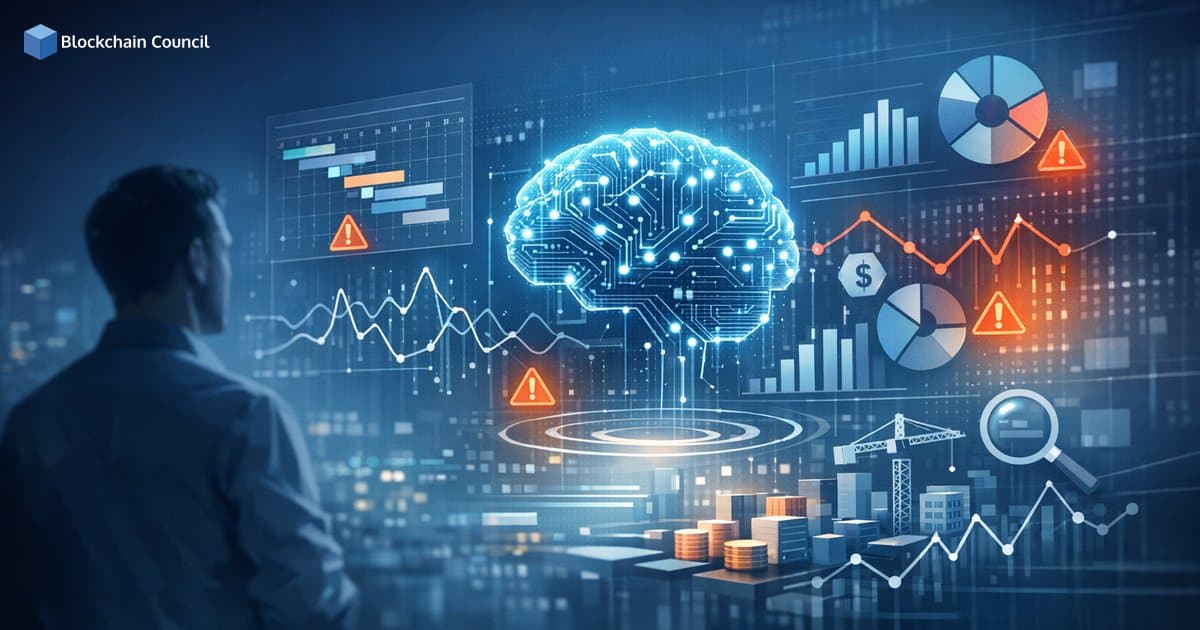
Predictive project management with AI helps teams forecast risks, schedule delays, and budget overruns before they happen by analyzing historical project data, real-time delivery signals, and repeatable patterns. Instead of reacting after issues surface, AI-enabled forecasting supports prevention through earlier warnings, more realistic estimates, and faster decision-making.
As organizations manage tighter timelines, distributed teams, and complex dependencies, predictive models can highlight where work is likely to slip, which resources are overloaded, and how cost burn aligns with progress. Between 2024 and 2026, this capability shifted from optional enhancement to a core function in many project and portfolio tools, supported by advanced analytics, agentic AI, and human-AI collaboration.

If you are learning through an Agentic AI Course, a Python Course, or an AI powered marketing course, this guide will help you understand predictive analytics in projects.
What is Predictive Project Management with AI?
Predictive project management with AI is the application of machine learning and advanced analytics to anticipate future project outcomes based on patterns in data. The goal is not simply reporting what happened, but forecasting what is likely to happen next, including:
Risk forecasting (probability of delivery issues or quality problems)
Delay forecasting (task slippage, dependency bottlenecks, sprint velocity decline)
Budget forecasting (burn rate issues, cost variance, margin erosion)
Resource forecasting (capacity shortfalls, utilization spikes, skills gaps)
AI systems learn from prior project performance, resource utilization, financial data, work velocity, and customer behavior signals to provide early warnings. This shifts the project manager's role away from manual consolidation and firefighting, and toward proactive steering and scenario-based planning.
Why Predictive AI is Becoming Essential in 2026
By 2026, predictive project management has matured into a practical capability within day-to-day delivery operations. Several developments are driving adoption:
Agentic AI support that monitors signals continuously and recommends actions, rather than simply generating reports.
Real-time delivery telemetry from task tools, sprints, timesheets, repositories, and finance systems that feeds forecasting models.
Human-AI collaboration where project managers validate predictions, add context, and decide on interventions.
Tooling integration across common platforms such as Asana, Smartsheet, and Microsoft Planner, as well as specialized systems such as Epicflow, Celoxis, and Project Insight.
Modern platforms surface early indicators including task slippage, scope change frequency, budget burn rate mismatches, resource availability constraints, sprint velocity shifts, and customer sentiment signals. The result is faster detection of delivery risk and earlier course correction.
Traditional Project Management vs. AI-Predictive Delivery
Predictive AI changes how forecasting, reporting, and allocation decisions are made. The contrast is clearest in four areas:
Risk management: Traditional approaches often respond after an issue appears. AI-predictive approaches provide early warnings and scenario simulations so teams can intervene sooner.
Forecasting: Manual estimates and expert judgment remain valuable, but AI can align expectations with feasible outcomes by learning from similar projects and benchmarks.
Reporting: Static status reports give way to automated, real-time health scoring and ongoing monitoring.
Resource allocation: Instead of subjective decisions, AI can optimize allocation using patterns related to utilization, throughput, and dependency load.
Prevention consistently outperforms firefighting. When forecasts are continuously updated, teams can take smaller corrective actions earlier rather than large, disruptive changes late in the project lifecycle.
What Data Does AI Use to Predict Risks, Delays, and Overruns?
Predictive models perform best when they have consistent inputs and a clear definition of outcomes - for example, what counts as a delay or overrun in your organization. Common data sources include:
Historical project records: planned vs. actual dates, variance causes, delivery patterns.
Work management metrics: cycle time, blocked work, dependency aging, backlog churn.
Resource utilization: capacity, allocation conflicts, overtime signals, skills coverage.
Financial data: burn rate, committed costs, earned value proxies, margin trends.
Change and scope signals: frequency of change requests, requirement volatility, rework.
Customer and stakeholder signals: sentiment and feedback trends that can predict downstream churn or escalation risk.
Qualitative evidence is consistent across practitioners: AI-based forecasting helps teams produce more realistic schedules and budgets, improving the ability to prevent variance rather than merely report it after the fact.
How AI Forecasts Schedule Delays
Schedule prediction typically combines historical throughput patterns with real-time leading indicators. AI can flag risks earlier than standard human review cycles by detecting patterns such as:
Slippage clustering: multiple tasks in a dependency chain slipping together.
Bottleneck formation: work accumulating at a specific role, team, or approval gate.
Velocity drift: gradual decline in sprint velocity or increased cycle time.
Blocked work escalation: rising blocked time or unresolved dependencies.
Some platforms provide near-real-time predictions of due dates and delivery risk based on ongoing changes in task progress and capacity. For multi-project environments, this is especially valuable because small resource conflicts can cascade across programs.
How AI Forecasts Budget Overruns
Budget forecasting is often where teams face the greatest pressure, particularly when spend moves faster than delivery. Predictive AI can monitor:
Burn rate vs. progress: spend increasing without proportional completion signals.
Resource cost drift: over-allocation of higher-cost resources or extended contractor usage.
Scope change impact: cost implications of change requests and rework.
Estimation bias: recurring underestimation patterns linked to similar project types.
In professional services and delivery organizations, AI estimation drawn from historical projects and benchmarks can improve timeline realism and protect margins by reducing early lifecycle surprises. For enterprise programs, this supports proactive contingency planning and stronger governance.
Use Cases: Where Predictive Project Management with AI Delivers Value
1. Migration Projects
Migration projects often carry hidden complexity across dependencies, environments, and testing cycles. AI can analyze past migrations to forecast timelines, identify probable bottlenecks, and improve budget accuracy. This supports contingency planning and reduces the likelihood of late-stage overruns.
2. Multi-Project and Portfolio Environments
In multi-project organizations, the most significant risks are often resource conflicts and shifting priorities. AI systems can predict due dates and risks in real time based on capacity and dependency patterns, helping improve utilization while preventing schedule cascades.
3. Professional Services Estimation
Services teams benefit from AI-driven estimation based on benchmarks and prior engagements. Forecasts become more realistic, supporting better delivery commitments, healthier margins, and earlier identification of risk hotspots across the statement of work lifecycle.
Implementation Roadmap: How to Adopt Predictive AI in Your PMO
Predictive project management works best when introduced as a sustained capability, not a one-time tool rollout. A practical sequence looks like this:
Standardize project data: define common fields for scope, milestones, effort, cost, and outcomes so models learn from consistent inputs.
Integrate delivery signals: connect work tracking, resource management, and finance signals to reduce manual updates.
Start with high-impact predictions: prioritize schedule slippage and burn rate forecasts, then expand to scenario planning and portfolio optimization.
Operationalize thresholds: define what triggers an alert, escalation, or replanning event to avoid alert fatigue.
Keep humans in the loop: require PM validation and context annotations, especially when data is sparse or external factors are significant.
Measure forecast quality: track accuracy over time and continuously refine the data and model inputs.
If you are learning through an Agentic AI Course, a Python Course, or an AI powered marketing course, this approach explains forecasting and risk management.
Skills Project Managers Need in an AI-Predictive World
As AI becomes a core capability, project managers increasingly operate as strategic leaders who translate predictions into action. Key skills include:
Data literacy: understanding leading indicators, variance drivers, and what the model is actually measuring.
Scenario thinking: evaluating options when forecasts show risk, such as re-sequencing work or adding capacity.
Governance and transparency: ensuring predictions are explainable enough for stakeholders and audit requirements.
Power skills: communication, negotiation, and decision-making under uncertainty.
Structured methods and clear controls remain important so that AI-driven recommendations stay aligned with governance, prioritization, and benefits tracking across the portfolio.
Future Outlook: Agentic AI and Continuous Value Delivery
Predictive project management is expected to deepen through agentic AI capabilities that support autonomous workflows, virtual assistants, advanced testing coordination, and PMO-level decision support. Hybrid human-AI models are likely to dominate, with AI handling monitoring and forecasting while humans provide context, ethics, and accountability.
PMOs will increasingly rely on real-time dashboards and predictive analytics across all phases, from discovery through delivery to benefits realization. The broader shift is toward continuous value delivery rather than one-time completion, with AI improving adaptability, prioritization, and precision.
Conclusion
Predictive project management with AI helps organizations forecast risks, delays, and budget overruns early enough to prevent them. By combining historical patterns with real-time execution signals, AI can highlight bottlenecks, validate estimates, and trigger timely interventions through health scoring and scenario planning.
As tools and practices mature in 2026, the competitive advantage increasingly belongs to teams that standardize data, integrate delivery telemetry, and build human-AI operating rhythms. For project leaders, the opportunity is clear: move from reactive reporting to proactive control, and deliver outcomes with fewer surprises and stronger stakeholder confidence.
Related Articles
View All
Blockchain
AI-Powered Project Management
AI-powered project management automates planning, scheduling, and resource allocation using predictive analytics and optimization to improve delivery speed and reduce risk.

Blockchain
How Blockchain Supply Chain Systems Are Transforming Supply Chain Management in 2026
In 2026, blockchain supply chain systems boost transparency, traceability, and automation with DLT, smart contracts, and real-time data sharing across partners.

Blockchain
Crypto30x.com
Crypto30x.com is an emerging platform in the blockchain space. It offers a comprehensive suite of services tailored to meet the needs of cryptocurrency enthusiasts, traders, and developers. The platform aims to simplify blockchain interactions, making them accessible to both beginners and seasoned professionals.
Trending Articles
The Role of Blockchain in Ethical AI Development
How blockchain technology is being used to promote transparency and accountability in artificial intelligence systems.
AWS Career Roadmap
A step-by-step guide to building a successful career in Amazon Web Services cloud computing.

Top 5 DeFi Platforms
Explore the leading decentralized finance platforms and what makes each one unique in the evolving DeFi landscape.