

How Blockchain Product Managers Build Successful Web3 Products

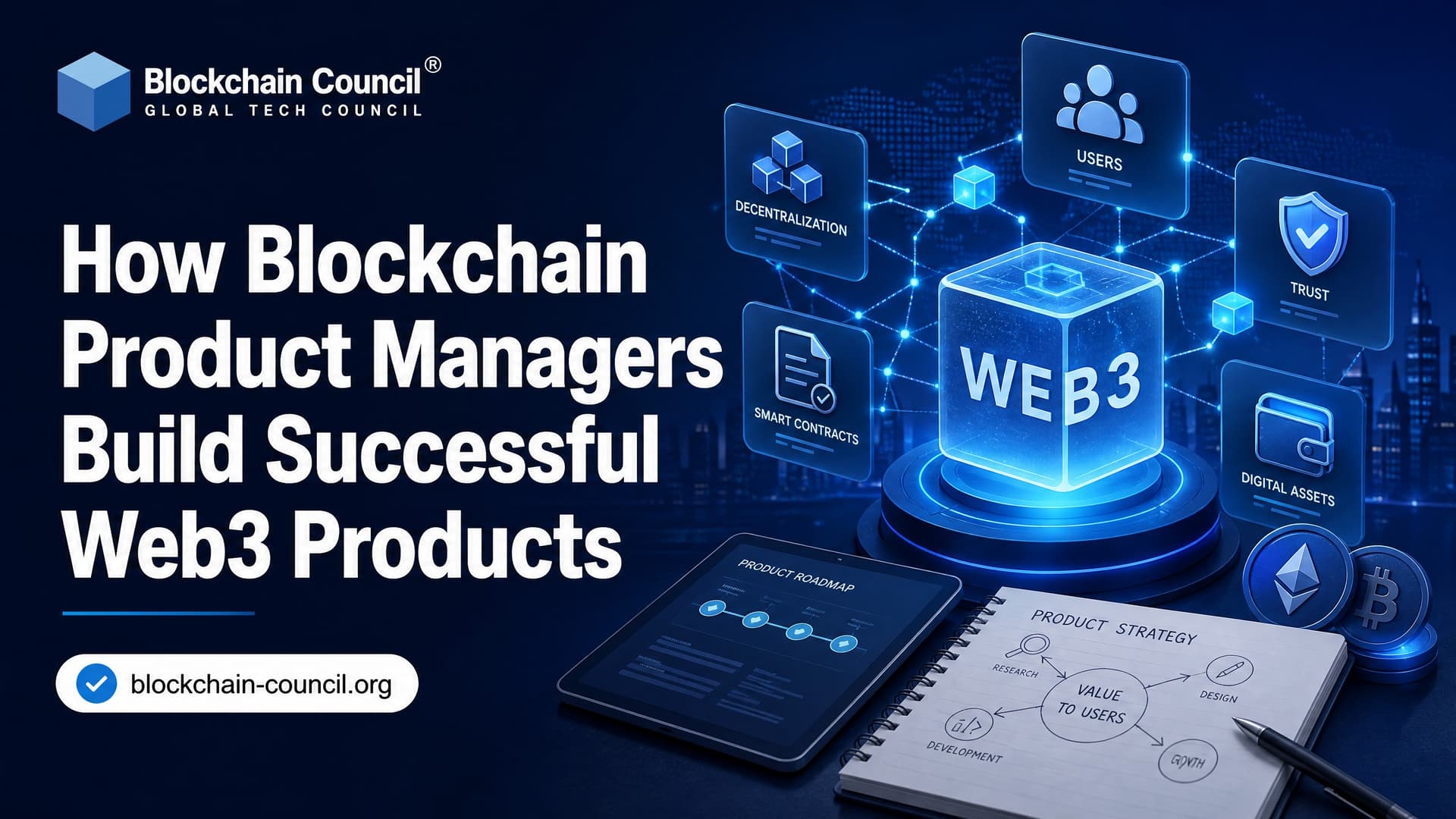
Blockchain product managers build successful Web3 products by doing two jobs at once. You still need sharp product judgment, user research, prioritization, and delivery discipline. But you also need blockchain-native judgment around token incentives, governance, wallets, security, and community trust.
That second part changes the work. A Web3 product can look healthy in a dashboard while the protocol is quietly drifting toward poor token concentration, low governance participation, or extractive usage. Good blockchain product managers catch those signals early and design for long-term ecosystem health, not just this month's acquisition chart.

What Makes Blockchain Product Managers Different?
A blockchain product manager owns products built on decentralized infrastructure: dApps, protocols, wallets, NFT platforms, DeFi systems, L2 infrastructure, or enterprise blockchain networks. The role sits between product strategy, technical architecture, community operations, and economic design.
In Web2, a PM can often ship features inside a closed system. In Web3, your product may be composable by default. Another team can build on your smart contracts without asking permission. A governance forum can shape the roadmap. A token incentive can attract users fast, then vanish just as fast when rewards dry up.
To be blunt, this is not just product management with a crypto vocabulary. It is a different operating model.
- Users interact through wallets, not only email logins and passwords.
- Transactions cost money, so gas fees become part of UX.
- Smart contract bugs can be permanent, especially when funds are locked or transferred.
- Communities expect transparency, often through Discord, governance forums, Snapshot votes, and public roadmaps.
- Product metrics need on-chain context, because traditional analytics miss wallet behavior and contract calls.
The Core Workflow of a Web3 Product Manager
1. Start With the Problem, Not the Chain
The best Web3 PMs do not begin with Ethereum, Solana, Polygon, or an L2 pitch. They begin with the user problem. Does blockchain actually help? If a normal database solves the issue with lower cost and lower risk, use the database.
Blockchain makes sense when the product needs shared state between parties, transparent settlement, user-owned assets, verifiable provenance, programmable incentives, or reduced reliance on a single operator. Supply chain traceability, decentralized finance, digital collectibles, and cross-organization record systems are common examples. Even then, the PM must define scope tightly. Do not try to decentralize every layer on day one.
2. Translate User Flows Into Transaction Flows
A normal product requirement might say: user deposits funds. A Web3 requirement must be more precise. Which wallet? Which network? Which token standard? Is the user approving ERC-20 spending first? What happens if the approval succeeds but the deposit transaction fails? How do you explain slippage, finality, or a pending transaction?
This is where technical fluency matters. You do not have to write every Solidity 0.8.x contract yourself, but you should understand enough to avoid bad product decisions. For example, a user signing an EIP-712 typed message is not the same as sending an on-chain transaction. One costs gas, the other usually does not. Confuse those in a product spec and engineering will lose a sprint cleaning it up.
A small practitioner detail: beginners often panic when MetaMask shows insufficient funds for intrinsic transaction cost. It usually means the wallet lacks the native gas token, such as ETH on Ethereum mainnet or POL on Polygon, even if the user holds plenty of a stablecoin. A Web3 PM who knows that will design better empty states, help text, and onboarding prompts.
3. Choose the Right Network With Clear Trade-offs
Network choice is a product decision, not only an engineering preference. Ethereum mainnet, with chain ID 1, offers deep liquidity and security, but transaction fees can be painful for small consumer actions. L2 networks can reduce cost and improve throughput, but add bridging, ecosystem, and support complexity. Appchains may fit specialized needs, but they raise bootstrapping and security questions.
Use a simple decision lens:
- Cost: Can users afford the expected transaction frequency?
- Security: What assumptions does the chain or L2 make?
- Liquidity: Are the needed assets and users already there?
- Developer ecosystem: Are tools, indexers, wallets, and auditors available?
- Compliance: Does the use case involve regulated assets, identity, or financial activity?
The wrong choice is expensive to reverse. Bridges, token migrations, and liquidity moves are not small UX tasks.
Tokenomics Is Product Design
In Web3, incentives are part of the product surface. Tokenomics affects who joins, who stays, who governs, and who extracts value. A PM working on DeFi, gaming, infrastructure, or creator platforms needs to understand staking, rewards, vesting, treasury allocation, governance rights, and liquidity design.
Bad incentives create fake growth. A rewards campaign can inflate active wallets while attracting mercenary users who leave as soon as emissions drop. Good incentives reinforce useful behavior: liquidity that improves execution, staking that supports security, governance that attracts informed participation, or creator rewards that grow supply quality.
Track concentration too. If a small number of wallets controls most governance tokens, community ownership may be more theoretical than real. That affects trust.
Community Is Not a Marketing Channel
Web3 communities are closer to stakeholders than audiences. They report bugs, test releases, challenge economic assumptions, vote on proposals, and build integrations. Treating them as a distribution channel is a fast way to lose credibility.
A strong blockchain product manager spends time where users already are: Discord, Telegram, X, Farcaster, governance forums, GitHub issues, and developer calls. The goal is not to agree with every loud voice. The goal is to understand what the community values, explain trade-offs clearly, and show how feedback affects decisions.
Governance adds another layer. If token holders vote on parameter changes or upgrades, product work includes proposal writing, forum discussion, risk framing, and post-vote execution. Good governance UX matters. Voters need plain-language summaries, clear options, and visible consequences.
Metrics Web3 PMs Should Watch
Traditional analytics still matter. You should know activation, retention, conversion, support tickets, and funnel drop-offs. But Web3 products also need on-chain analytics because wallet behavior often happens outside your app interface.
Useful Web3 metrics include:
- Active wallets: Wallets interacting with key contracts over time.
- Repeat interactions: Whether users return after the first transaction.
- Transaction success rate: Failed transactions are a UX smell.
- Gas cost per core action: Especially important for gaming, NFTs, and high-frequency DeFi.
- Token distribution: Concentration among whales, teams, market makers, and retail users.
- Governance participation: Proposal creation, voting rate, voter diversity, and delegation quality.
- Liquidity depth: For DeFi and marketplaces, shallow liquidity can kill the user experience.
- Security signals: Audit findings, bug bounty reports, paused contracts, abnormal flows, and oracle incidents.
Use tools that can read on-chain data, not just page views. Dune, Flipside, The Graph, Nansen, Token Terminal, and custom indexers are common in Web3 teams. Pair that with product analytics from your app. The fuller picture is usually in the overlap.
Security Must Be in the Roadmap, Not After It
Smart contract security is a product requirement. If a contract controls assets, a late audit is not enough. You need threat modeling, test coverage, staged rollouts, monitoring, emergency controls, and a clear incident response plan.
For PMs, the key is sequencing. Ship risky components in controlled phases. Use testnets for behavior, but do not mistake testnet usage for real demand. Users behave differently when real funds are involved. Also, make time for audit remediation. A serious finding can change the product design, not just the code.
Security trade-offs should be explicit. Upgradeable contracts improve response options but introduce admin key risk. Fully immutable contracts can increase trust, but make bugs harder to fix. Neither choice is automatically right.
Common Web3 Product Archetypes
DeFi Protocols
DeFi PMs need financial literacy, risk awareness, and incentive discipline. Lending parameters, collateral ratios, oracle choices, liquidation flows, and reward emissions are product decisions with real money attached. If you are weak on risk, do not wing it. Work closely with protocol engineers, economists, auditors, and legal counsel.
NFT and Creator Platforms
The product challenge is often wallet onboarding, minting UX, marketplace liquidity, royalties, fraud prevention, and creator trust. The community can make or break the product. Speculators may bring volume, but creators and collectors create staying power.
Infrastructure and L2 Products
For infrastructure PMs, developers are the users. Documentation, SDK design, faucet reliability, RPC performance, sample apps, and clear migration guides matter. A broken quickstart can cost more adoption than a missing advanced feature.
Enterprise Blockchain Products
Enterprise PMs must be honest about where blockchain fits. Shared audit trails, traceability, and multi-party workflows are strong cases. Replacing an internal database with a blockchain for branding is not.
Skills You Need to Build Successful Web3 Products
- Product fundamentals: Research, prioritization, roadmapping, stakeholder management, and delivery.
- Blockchain literacy: Consensus, smart contracts, wallets, token standards, gas, finality, bridges, and L1/L2 trade-offs.
- Tokenomics: Incentive alignment, governance rights, rewards, staking, treasuries, and token distribution.
- Community judgment: Public communication, proposal design, expectation setting, and conflict handling.
- Security mindset: Audit planning, incident response, risk trade-offs, and safe release design.
- Data fluency: Off-chain analytics plus on-chain metrics from contracts, wallets, and token flows.
If you are moving from Web2 product management, start with blockchain foundations before chasing a PM title. Blockchain Council's Certified Blockchain Expert™ covers the fundamentals. If you work closely with engineering teams, consider the Certified Blockchain Developer™. For risk-heavy products, especially DeFi, the Certified Smart Contract Auditor™ is relevant. For broader decentralized product strategy, the Certified Web3 Expert™ fits well.
A Practical Build Framework for Web3 PMs
- Define the user and the job. Be specific. Traders, DAO voters, game players, validators, and enterprise operators do not need the same product.
- Prove blockchain is needed. Write down why shared state, ownership, transparency, or programmability matters.
- Map the transaction journey. Include wallet connection, approvals, signatures, gas, failures, pending states, and support paths.
- Design incentives early. Model who benefits, who can exploit the system, and what happens when rewards fall.
- Choose infrastructure deliberately. Pick chains, wallets, indexers, oracles, and custody models based on the use case.
- Plan security before launch. Include audits, bug bounties, monitoring, and emergency processes.
- Launch in stages. Start small, learn from real usage, then widen access.
- Measure on-chain and off-chain behavior. Look for retained usage, not only wallet spikes.
- Communicate in public. Share trade-offs, timelines, risks, and governance decisions clearly.
Your Next Step
If you want to become a blockchain product manager, build one small Web3 product end to end: a wallet-based onboarding flow, a simple ERC-20 dashboard, a governance voting prototype, or a testnet NFT mint. Track every failed transaction and every confused user. That practice teaches more than another abstract strategy deck.
Then fill the gaps with structured learning. Start with the Certified Blockchain Expert™ if you need foundations, move to the Certified Web3 Expert™ for ecosystem strategy, and add the Certified Smart Contract Auditor™ if your products will hold user funds. Web3 rewards PMs who can connect user needs, protocol mechanics, and community trust. Build for all three.
Related Articles
View All
Blockchain
Product Discovery for Blockchain Products: A Step-by-Step Guide for Web3 Product Managers
A practical Web3 product discovery guide covering wallet behavior, token validation, governance, security, metrics, and testnet pilots.

Blockchain
Tokenomics for Product Managers: Designing Sustainable Blockchain Products
A practical guide to tokenomics for product managers, covering utility, supply, incentives, governance, compliance, and sustainable Web3 product design.

Blockchain
Agile for Blockchain Product Managers: Managing Iterative Web3 Development
Learn how agile for blockchain product managers adapts sprint planning, audits, governance, compliance, and Web3 metrics for safer iterative delivery.
Trending Articles
The Role of Blockchain in Ethical AI Development
How blockchain technology is being used to promote transparency and accountability in artificial intelligence systems.
How Blockchain Secures AI Data
Understand how blockchain technology is being applied to protect the integrity and security of AI training data.
What is AWS? A Beginner's Guide to Cloud Computing
Everything you need to know about Amazon Web Services, cloud computing fundamentals, and career opportunities.