
Community-Driven Learning Models in Blockchain Education

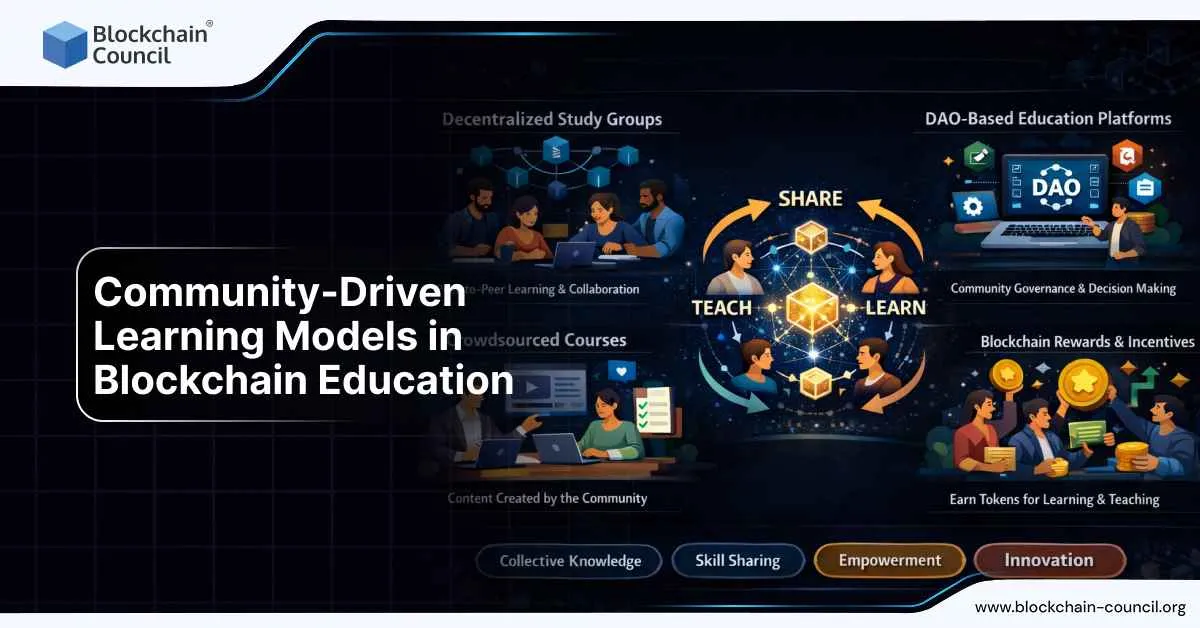
Blockchain education looks nothing like it did five years ago. The fastest learners today are not grinding only through textbooks alone – they are inside communities, asking questions, reviewing each other’s work, and shipping real projects. Understanding how these models work gives you a real advantage.
Why Community Learning Works Better
Traditional education moves in one direction. Fixed curriculum, one instructor, yearly updates. Community-driven learning is the opposite – knowledge flows between everyone, and the content evolves constantly.
That matters a lot in blockchain. New protocols, Layer 2 solutions, and governance models emerge every few months. No single course keeps up with that pace. But a good community does – because someone in it always knows what just shipped, what broke, and what it means. The environment you learn in shapes how far you go.
Structuring Your Research in a Fast-Moving Field
Most blockchain professionals never had a formal degree in it. They learned through communities, real projects, and a lot of self-study. As a student, you actually have an advantage here – you already have structure, time to experiment, and access to peers who are learning the same things. Use that. Start with the foundations: cryptography, consensus mechanisms, DLT architecture. Get those solid before moving into development. Everything else builds on them.
Writing is a skill that matters more in Web3 than most students expect. DAOs run on proposals, documentation, and research – and being clear in writing is what gets you taken seriously. If you’re struggling to keep up with everything at once, writers can be a backup. When you’re out of time but the deadline is close, some people simply ask: “can someone help write my thesis paper for me online?”. The ability to communicate technical ideas in plain language is exactly what DAO contributors need – in governance posts, research threads, and community proposals.
That skill is what turns a student into someone others actually listen to.
How DAOs Are Reshaping Education
Several DAOs have built full learning ecosystems. Developer DAO runs an open-source academy where members learn Web3 development by contributing to real projects. Bankless DAO built a culture around contributor-driven content and peer education. Members vote on what gets taught, propose new modules, and get recognized for helping others.
Two models are gaining the most traction right now:
- Token-Gated Communities – access to courses, mentorship, and resources unlocks through token ownership. It creates a direct incentive to participate early and contribute actively.
- Learn-to-Earn (L2E) – platforms like Layer3 and RabbitHole reward learners with crypto tokens for completing verified modules. You study, you earn, you keep going.
What Makes Community Knowledge Stick
When peers review your work, your thinking sharpens fast. Inside blockchain communities, peer review is also a credibility signal. Some platforms use smart contracts to issue certificates automatically once a learner finishes a community-verified module – no central authority needed, and the record lives permanently on-chain.
On-Chain Credentials
Traditional diplomas sit in a university database. On-chain credentials sit on the blockchain – owned by the student, verifiable by anyone, instantly. Micro-credentials let you stack smaller qualifications into a full professional profile over time. According to research published in the International Journal of E-Learning & Distance Education confirms that blockchain’s key advantage in education is giving data ownership to the student, not the institution.
Certifications Backed by Real Expertise
Credentials like the Certified Blockchain Expert from Blockchain Council carry weight because the content is built by practitioners. Studying through peer groups and shared case studies works better than going it alone. Someone who already passed can explain the logic behind a hard concept – not just point to the right answer.
Traditional vs Community-Driven Learning
| Traditional Education | Community-Driven Learning | |
| Curriculum updates | Yearly at best | Continuous |
| Credential ownership | Institution | Student |
| Feedback | Instructor only | Peers and mentors |
| Incentives | Grade-based | Token and reputation-based |
| Real-world application | Limited | Built into the process |
Where This Is Going in 2026
AI tools are becoming standard inside blockchain communities. Members use them to break down governance proposals, summarize whitepapers, and build study guides from dense technical content. It speeds up the learning cycle without replacing the community itself.
Micro-credentials are becoming serious career currency. Web3 hiring managers increasingly look at on-chain proof of skills over traditional degrees. A stack of verified micro-credentials from recognized communities can outweigh a general CS diploma when applying for roles in DeFi, smart contract development, or blockchain consulting. The average blockchain developer salary sits around $150,000 – and demand keeps growing.
Engage actively, contribute to real projects, and document your progress in ways others can verify. That is how you build a profile that actually opens doors in this space.