

Blockchain Supply Chain Management: End-to-End Traceability and Anti-Counterfeit Strategies

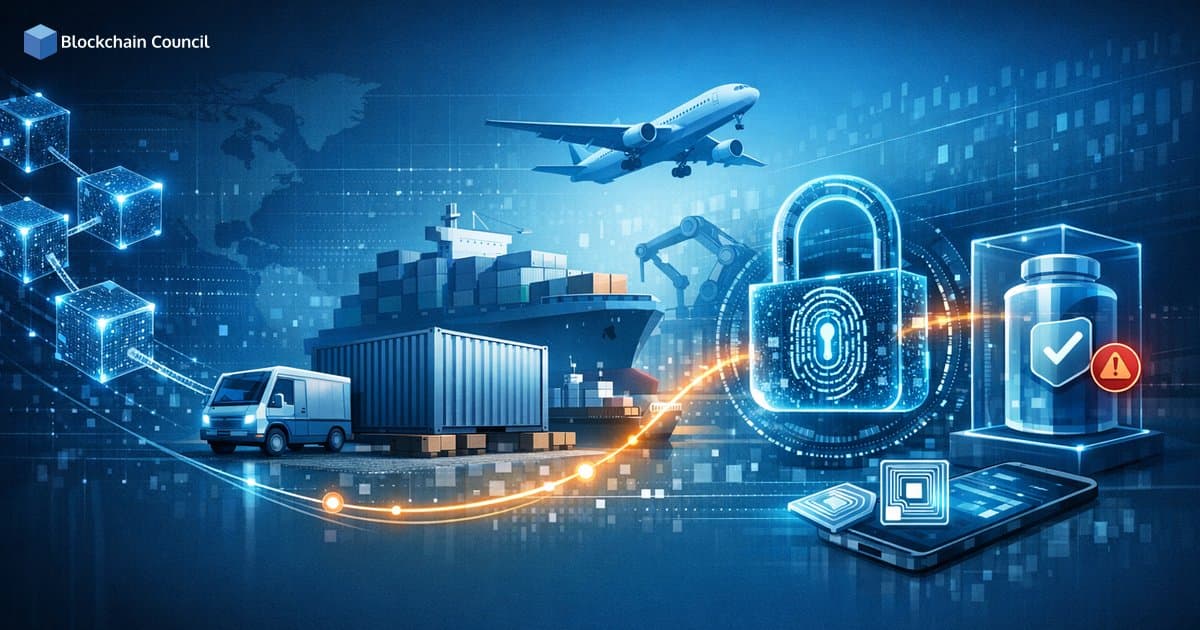
Blockchain supply chain management is becoming a practical foundation for end-to-end traceability and anti-counterfeit controls in industries where provenance, compliance, and consumer trust are critical. As global supply chains grow more complex, organizations need a shared way to verify what happened to a product, when it happened, and who handled it, without relying on a single party's database.
Counterfeiting remains a significant economic and safety risk. The OECD and EUIPO estimated that counterfeit and pirated goods represented up to 3.3 percent of world trade in 2019, equivalent to over USD 500 billion annually. In pharmaceuticals, the WHO estimated that up to 10 percent of medicines in low- and middle-income countries are substandard or falsified. These pressures are driving enterprises to adopt traceability systems that are auditable, interoperable, and resistant to tampering.

Why Blockchain Supply Chain Management Is Gaining Traction
Traditional supply chain visibility often breaks at organizational boundaries. Each participant maintains separate records in ERP, WMS, TMS, or paper-based logs. Disputes arise when data is missing, altered, delayed, or inconsistent across parties.
Blockchain addresses these gaps by providing a shared, tamper-evident ledger where authorized participants can write and read product events. Enterprise and consulting analyses from organizations such as Deloitte, ConsenSys, and Oracle frequently converge on three value drivers:
- Traceability across the full product lifecycle
- Transparency for compliance, audits, and consumer verification
- Tradeability of assets, enabling new financing and secondary-market models in select cases
Technical Patterns in Modern Blockchain Traceability Solutions
Most production-grade deployments follow a pragmatic architecture designed to fit enterprise constraints around performance, privacy, and governance.
Permissioned, Public, and Hybrid Networks
Permissioned blockchains such as Hyperledger Fabric, Quorum, and Corda dominate enterprise implementations because they support role-based access, higher throughput, and clearer governance. Well-known initiatives include IBM Food Trust and PharmaLedger, though some logistics networks have encountered ecosystem and governance challenges over time.
Public or hybrid approaches are increasingly used when consumer-facing verification is required. A common pattern is to keep detailed business events on a permissioned network while anchoring cryptographic hashes to a public chain such as Ethereum, Polygon, or Bitcoin to strengthen immutability claims and support external auditability.
Smart Contracts for Compliance and Automation
Smart contracts encode shared rules and automate workflows such as:
- Chain-of-custody checks, including allowed handoffs and required scans
- Conditional payments triggered after delivery confirmation or quality verification
- Recall enforcement and automated reporting when a lot is flagged
In practice, smart contracts are most effective when paired with strong identity management, onboarding processes, and exception-handling procedures.
IoT Sensors and Product Identification (QR, RFID, NFC)
Blockchain does not directly observe the physical world, so successful traceability solutions connect physical items to digital identities using:
- QR codes for low-cost, broadly compatible identification
- RFID for high-volume scanning in warehouses and logistics operations
- NFC for consumer-grade authenticity checks, widely used in luxury goods
- IoT sensors for cold chain and condition-sensitive products, recording temperature, humidity, and location data
How Blockchain Enables End-to-End Supply Chain Traceability
End-to-end traceability means capturing critical events across a product's lifecycle in a consistent, auditable way. A typical model covers:
- Sourcing of raw materials
- Processing and manufacturing
- Packaging and labeling
- Warehousing and transport
- Distribution, retail, and end-of-life or recycling
A Shared Audit Trail Across Organizations
Rather than reconciling multiple private databases, blockchain-based systems create a shared record accessible to authorized stakeholders. This supports a consistent reference point for disputes, audits, and incident response. Supply chain analysts highlight that near real-time visibility improves coordination and reduces reliance on manual paperwork.
Provenance and Product History You Can Verify
For regulated and high-risk sectors, traceability depends on proving provenance and documenting key attributes such as:
- Origin and supplier identity
- Batch or lot details
- Quality checks and certificates
- Ownership transfers and custody handoffs
Because entries are tamper-evident, the ledger becomes a reliable source for investigations and compliance reporting, provided the ecosystem enforces trustworthy data capture at each step.
Anti-Counterfeit Strategies Powered by Blockchain
Anti-counterfeit systems typically combine blockchain with packaging, tagging, and verification workflows. Blockchain adds value by making product history difficult to rewrite and by enabling rapid verification across many parties.
Binding Physical Goods to Digital Identities
The most common strategy is serialization. Each unit, case, or pallet receives a unique identifier, often aligned with GS1 standards. Lifecycle events are then recorded against that identifier.
To strengthen the link between the physical and digital worlds, companies use:
- QR-based verification for broad reach and consumer scanning
- RFID-based verification for high-speed logistics operations
- NFC authenticity chips for luxury goods, enabling tap-to-verify experiences
If the same identifier appears in two locations within an impossible timeframe, or if a code is scanned after being marked as sold or recalled, the system can flag probable duplication or diversion.
Digital Twins to Detect Anomalies
A digital twin represents the product on-chain and accumulates its event history. Analytics can then detect path deviations such as unexpected routes, missing custody scans, broken temperature thresholds, or unauthorized handoffs.
Regulatory and Consumer Verification
Regulators benefit from tamper-evident audit trails for compliance checks and incident response. In pharmaceuticals, regulatory requirements have accelerated interest in interoperable tracing. The U.S. Drug Supply Chain Security Act requires electronic, package-level tracing, with enhanced security requirements that took effect in November 2023 and enforcement flexibility extending into 2024. In the EU, the Falsified Medicines Directive requires unique identifiers and tamper-evident packaging for prescription medicines, which aligns with blockchain-supported verification models.
Consumers can also verify product authenticity and origin by scanning codes to view validated information, including sourcing claims, certifications, and handling history, depending on what the brand chooses to disclose.
Real-World Examples Across Industries
Food Safety and Recalls
Food traceability initiatives have demonstrated how blockchain can reduce time-to-trace during incidents. IBM Food Trust case examples cited in World Economic Forum discussions describe tracing certain products, such as mangoes, from approximately seven days to a matter of seconds compared to traditional approaches. Retailers such as Carrefour have also used QR-based experiences to provide customers with origin and production details.
Pharmaceutical Compliance and Counterfeit Prevention
Pharma consortia such as PharmaLedger have piloted blockchain systems for medicine verification, recalls, and supply chain integrity. Academic research, including work by Qamar and colleagues published in 2023, highlights blockchain's potential for end-to-end pharmaceutical traceability and DSCSA-aligned data exchange, while noting challenges around privacy, interoperability, and stakeholder governance.
Luxury Goods Authentication
Luxury brands increasingly combine NFC tags with blockchain-backed records to support authenticity checks in primary and secondary markets. A verified chain of custody helps buyers validate a product's history and supports resale and warranty workflows.
Standards and Interoperability: Where Blockchain Meets GS1 and EPCIS
Blockchain is rarely deployed as a standalone data model. Interoperability improves when organizations align identifiers and event structures with standards such as GS1 and EPCIS. Industry groups and consortia publish reference architectures and best practices, helping networks agree on shared definitions for events such as commissioning, packing, shipping, receiving, and transforming goods.
Limitations and Implementation Risks to Address Upfront
Blockchain can strengthen integrity and auditability, but it does not automatically resolve all supply chain problems. Common constraints include:
- Scalability and performance: high-volume event streams require careful design, batching, and data retention strategies.
- Privacy and confidentiality: sensitive commercial data and personal data require permissioning, encryption, and selective disclosure patterns.
- Interoperability: different networks and legacy systems must exchange data consistently, often through EPCIS-aligned APIs.
- Data quality: blockchain preserves data integrity, not data truth. Secure onboarding, tamper-evident packaging, and validated scanning processes remain essential.
- ROI and change management: integration and ecosystem coordination often cost more than the ledger infrastructure itself.
Practical Roadmap for Enterprises Adopting Blockchain Supply Chain Management
- Define the risk-driven use case: prioritize high-risk SKUs, regulated lanes, or high-value components where counterfeiting, diversion, or recall cost is highest.
- Align to standards early: adopt GS1 identifiers and EPCIS event models to reduce lock-in and enable partner integration.
- Choose the right architecture: permissioned networks fit most enterprise needs; hybrid anchoring can support public verification when required.
- Design governance and identity: define who can write which events, how disputes are handled, and how participants are onboarded and audited.
- Integrate operational systems: connect ERP, WMS, and TMS, along with IoT data where it materially reduces risk.
- Pilot, measure, then scale: track metrics such as time-to-trace, counterfeit incident rates, dispute reduction, and recall execution speed.
Skills and Training: Building Internal Capability
Successful programs require cross-functional expertise spanning blockchain architecture, cybersecurity, data standards, and supply chain operations. For teams looking to formalize these skills, training plans can map to professional certifications such as Blockchain Council's Certified Blockchain Expert, Certified Smart Contract Developer, and Certified Hyperledger Fabric Developer. For organizations combining traceability with analytics and anomaly detection, complementary training in AI can also support fraud detection and predictive risk monitoring.
Conclusion
Blockchain supply chain management is establishing itself as a core infrastructure layer for traceability and anti-counterfeit strategies, particularly in pharmaceuticals, food, luxury goods, and electronics. Its main advantage is not simply transparency, but shared verifiability: a tamper-evident chain of custody that multiple organizations can trust without delegating control to a single party.
Blockchain delivers value only when paired with strong standards adoption, secure physical-to-digital binding, robust governance, and careful integration into existing operations. Enterprises that start with a well-scoped, risk-driven use case and build toward interoperable networks are best positioned to achieve end-to-end traceability that supports compliance, reduces fraud, and strengthens customer trust.
Related Articles
View All
Blockchain
DeFi Product Management Guide: Strategies for Decentralized Finance Products
A practical DeFi product management guide covering token economics, governance, analytics, security, product process, and career skills for Web3 PMs.

Blockchain
Blockchain Digital Identity Management Patents: Key Innovations and Market Trends
A practitioner-focused look at blockchain digital identity management patents, from biometric wallets and DIDs to KYC, EU wallets, IoT, and market growth.
Blockchain
How Smart Contracts Impact Blockchain Product Management
Smart contracts change blockchain product management by moving product logic, governance, compliance, and operational risk into on-chain code.
Trending Articles
How Blockchain Secures AI Data
Understand how blockchain technology is being applied to protect the integrity and security of AI training data.
What is AWS? A Beginner's Guide to Cloud Computing
Everything you need to know about Amazon Web Services, cloud computing fundamentals, and career opportunities.

Can DeFi 2.0 Bridge the Gap Between Traditional and Decentralized Finance?
The next generation of DeFi protocols aims to connect traditional banking with decentralized finance ecosystems.