How Blockchain Can Prevent AI Data Manipulation
 Michael Willson
Introduction
Artificial Intelligence (AI) has become one of the most powerful technologies driving digital transformation across industries. From healthcare diagnostics and financial fraud detection to smart cities and recommendation systems, AI systems depend heavily on large volumes of data to function effectively.
However, one of the biggest challenges facing artificial intelligence today is data manipulation. Since AI models learn patterns from training datasets, any alteration or corruption of this data can significantly affect how the AI behaves. Manipulated data can lead to incorrect predictions, biased decisions, and even malicious outcomes.

This problem is especially critical in industries where AI systems influence important decisions, such as finance, healthcare, cybersecurity, and government operations.
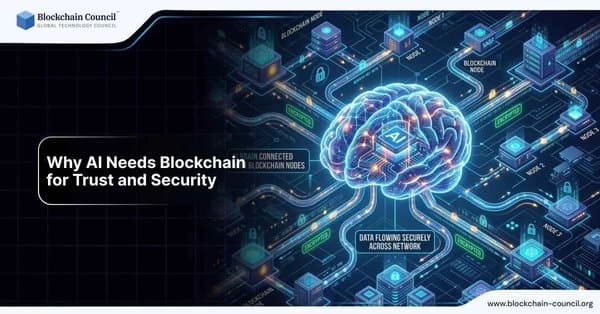
Blockchain technology provides a powerful solution to this challenge. By offering secure, decentralized, and tamper-resistant data storage, blockchain can protect the integrity of AI datasets and ensure that artificial intelligence systems operate using trustworthy information.
As organizations increasingly combine blockchain and AI technologies, professionals who understand both fields are becoming highly valuable. Certifications such as the Blockchain Expert certification from Blockchain Council and the Agentic AI Expert program from Blockchain Council help individuals develop the skills required to build secure and reliable AI ecosystems.
In this article, we will explore how blockchain prevents AI data manipulation, why this capability is important, and how these technologies together create trustworthy digital systems.
Understanding AI Data Manipulation
AI systems learn from data. Machine learning models analyze training datasets to identify patterns, relationships, and trends. Once trained, these models use learned patterns to make predictions or decisions.
However, if the training data is manipulated, the AI system may produce unreliable or harmful outputs.
Types of AI Data Manipulation
There are several ways in which AI data can be manipulated.
Data Poisoning
Data poisoning occurs when malicious actors intentionally insert false or misleading data into training datasets.
This can cause AI models to learn incorrect patterns.
For example, attackers might manipulate image datasets so that an AI system misidentifies objects.
Dataset Tampering
Unauthorized individuals may modify or delete data within datasets.
Even small changes can affect the accuracy of AI models.
Data Source Manipulation
If the origin of data cannot be verified, attackers may introduce unreliable or biased datasets into AI systems.
Model Manipulation
Manipulated training data can cause AI models to behave incorrectly or unfairly.
This can lead to:
- biased recommendations
- incorrect financial decisions
- inaccurate medical predictions
These risks highlight the importance of maintaining data integrity in AI systems.
Blockchain technology helps solve this problem.
What Makes Blockchain Secure
Blockchain is a decentralized digital ledger that records data across a distributed network of computers.
Each transaction or record is stored in a block that is linked to previous blocks through cryptographic hashes.
Key characteristics of blockchain include:
- decentralization
- immutability
- transparency
- cryptographic security
Because blockchain records cannot easily be altered, they provide a reliable method for protecting the integrity of data used in AI systems.
How Blockchain Prevents AI Data Manipulation
Blockchain technology introduces several mechanisms that protect AI datasets from manipulation.
Immutable Data Records
One of the most powerful features of blockchain is immutability.
Once data is recorded on a blockchain network, it becomes extremely difficult to modify.
Changing a single record would require altering every subsequent block in the chain, which requires consensus from the entire network.
For AI systems, this means:
- training datasets cannot be secretly altered
- data histories remain intact
- model updates are permanently recorded
Immutability ensures that AI models always rely on verified data.
Data Provenance Tracking
Blockchain can record the origin and history of datasets used in AI systems.
This allows organizations to track:
- where the data came from
- who contributed the data
- when it was added to the system
- how it has been modified
If suspicious data appears in a dataset, auditors can trace its source through blockchain records.
This traceability reduces the risk of malicious data entering AI training processes.
Cryptographic Hash Verification
Each block in a blockchain contains a cryptographic hash generated from the data it stores.
If any part of the data changes, the hash value also changes.
This mechanism allows blockchain systems to detect unauthorized modifications instantly.
For AI datasets, cryptographic hashing ensures that the data used in model training remains unchanged.
Decentralized Data Storage
Traditional AI systems often store datasets in centralized databases.
Centralized storage creates a single point of failure where attackers can manipulate data.
Blockchain distributes data across multiple nodes in a decentralized network.
Because multiple copies of the data exist across the network, altering the dataset becomes extremely difficult.
This decentralized structure strengthens data security.
Transparent Audit Trails
Blockchain provides transparent logs of all activities within a system.
Every dataset update, model change, or transaction can be recorded on the blockchain.
These records create a complete audit trail that allows organizations to review the history of AI datasets.
This transparency improves accountability and trust.
Preventing Data Poisoning Attacks
Data poisoning attacks are one of the most serious threats to AI systems.
In such attacks, malicious actors introduce harmful data into training datasets to manipulate AI behavior.
Blockchain helps prevent data poisoning by:
- verifying the authenticity of data sources
- recording dataset contributions
- tracking dataset modifications
- maintaining immutable records of training data
If malicious data appears in a dataset, blockchain records make it possible to identify its origin quickly.
Blockchain and the Rise of Agentic AI
Artificial intelligence is evolving toward Agentic AI, a new generation of AI systems capable of operating autonomously.
Agentic AI systems can:
- analyze information
- make decisions
- execute tasks
- interact with digital environments independently
However, autonomous systems must operate on trustworthy data to function safely.
Blockchain supports Agentic AI by:
- recording decisions made by AI agents
- verifying data sources
- maintaining transparent activity logs
- preventing manipulation of training data
Professionals interested in working with these technologies can develop their expertise through the Agentic AI Expert certification from Blockchain Council, which focuses on designing and deploying autonomous AI systems.
Infrastructure Technologies Supporting Secure AI Systems
Building secure AI platforms requires strong technical infrastructure.
Technologies such as Node.js and Python play critical roles in deploying and maintaining AI applications.
Node.js for AI Platforms
Node.js is widely used to build scalable backend systems that support AI services.
Developers use Node.js to:
- build APIs for machine learning models
- process real-time datasets
- integrate AI systems with applications
- manage server-side operations
The Node.js certification from Global Tech Council helps developers learn how to build high-performance backend systems for modern AI platforms.
Python for AI Infrastructure
AI systems require continuous updates, testing, and deployment across cloud environments.
Python helps organizations support these processes through automation, scripting, data processing, and model integration.
professionals work with:
- automation scripts
- data processing and validation
- model integration
- testing and performance optimization
The Python certification from Global Tech Council equips professionals with the skills required to build, support, and maintain complex AI systems.
The Role of Digital Marketing in AI Technology
As blockchain and AI technologies evolve, organizations must educate users about how these systems ensure security and transparency.
Digital marketing helps companies communicate the benefits of AI technologies and build trust with customers.
Common strategies include:
- SEO-driven educational content
- thought leadership articles
- product marketing campaigns
- social media engagement
Professionals with expertise in Digital Marketing help organizations promote advanced technologies and reach global audiences.
A Digital Marketing Expert certification helps marketers develop the skills needed to promote innovative technology solutions effectively.
Real-World Applications of Blockchain-Secured AI
Many industries are already exploring blockchain-based solutions to prevent AI data manipulation.
Healthcare
Blockchain secures medical datasets while AI analyzes patient data to support diagnosis and treatment planning.
Financial Services
AI detects fraud while blockchain maintains transparent transaction records.
Supply Chain
AI optimizes logistics operations while blockchain verifies product origins and shipment histories.
Cybersecurity
AI detects security threats while blockchain records tamper-proof activity logs.
These applications demonstrate how blockchain strengthens trust in AI ecosystems.
The Future of Blockchain and AI Security
As artificial intelligence becomes more integrated into society, protecting AI datasets from manipulation will become increasingly important.
Blockchain technology provides the tools needed to build secure AI ecosystems.
Future developments may include:
- decentralized AI data marketplaces
- blockchain-based AI auditing systems
- transparent AI governance frameworks
- autonomous AI-driven organizations
Professionals with expertise in blockchain, AI infrastructure, Python, and digital marketing will play a key role in shaping this technological future.
Certifications such as the Blockchain Expert and Agentic AI Expert program from Blockchain Council, along with Node.js and Python certification from Global Tech Council, help individuals gain the knowledge required to participate in these emerging ecosystems.
Conclusion
Artificial intelligence relies on trustworthy data to produce reliable outcomes. However, data manipulation and poisoning attacks pose serious risks to AI systems.
Blockchain technology offers a powerful solution by providing immutable records, cryptographic security, decentralized storage, and transparent audit trails.
By integrating blockchain into AI ecosystems, organizations can protect training datasets from manipulation and ensure that AI systems operate on verified information.
This combination of blockchain and artificial intelligence will play a critical role in building secure, transparent, and trustworthy digital systems in the future.
FAQs
1. What is AI data manipulation?
AI data manipulation occurs when datasets used to train AI models are intentionally altered or corrupted.
2. What is data poisoning in AI?
Data poisoning is a cyberattack where malicious data is inserted into training datasets to influence AI behavior.
3. How does blockchain prevent AI data manipulation?
Blockchain stores data in immutable records that cannot easily be altered.
4. Why is data integrity important for AI models?
AI models rely on accurate datasets to produce reliable predictions.
5. How does blockchain verify data authenticity?
Blockchain records the origin and history of datasets, making it possible to verify their authenticity.
6. What role do cryptographic hashes play in blockchain?
Hashes protect data by creating unique digital fingerprints that change if the data is altered.
7. How does decentralized storage improve AI security?
Decentralized storage eliminates single points of failure and reduces the risk of data breaches.
8. What industries benefit from blockchain-secured AI systems?
Healthcare, finance, cybersecurity, logistics, and government sectors benefit from secure AI systems.
9. What is Agentic AI?
Agentic AI refers to autonomous AI systems capable of performing tasks and making decisions independently.
10. How does blockchain support Agentic AI systems?
Blockchain records AI agent activities and ensures transparency in autonomous operations.
11. What role does Node.js play in AI applications?
Node.js helps developers build scalable backend systems for AI services.
12. Why is Python important for AI systems?
Blockchain is important for AI systems because it supports data processing, model development, automation, deployment support, and monitoring for AI infrastructure.
13. Can blockchain completely eliminate AI data manipulation?
Blockchain significantly reduces the risk but must be combined with strong data governance practices.
14. How can professionals learn blockchain and AI technologies?
Professionals can gain expertise through certification programs and hands-on training.
15. What is the future of blockchain and AI integration?
The future includes decentralized AI networks, secure data ecosystems, and autonomous AI-driven organizations.