

Blockchain in Creator Economy
 Blockchain Council
The creator economy isn’t a side hustle anymore—it’s an industry. In 2025, creators are demanding more control, fairer pay, and a better way to connect with their audiences. Blockchain is making that possible. Whether you’re tired of platform cuts, demonetization, or lack of content ownership, blockchain offers new tools for monetization, fan engagement, and ownership.
What Is the Creator Economy in 2025?
The creator economy is the space where digital content creators—like YouTubers, podcasters, streamers, and educators—make a living through online content. According to Goldman Sachs, the market was worth $250 billion in 2023 and is expected to reach $480 billion by 2027. By 2025, the momentum continues, with tens of millions of creators earning from their work. But many of them are still facing:

- High platform fees
- Unpredictable algorithms
- Limited ownership rights
- Restrictions on global payments
Blockchain steps in to solve these problems at the infrastructure level.
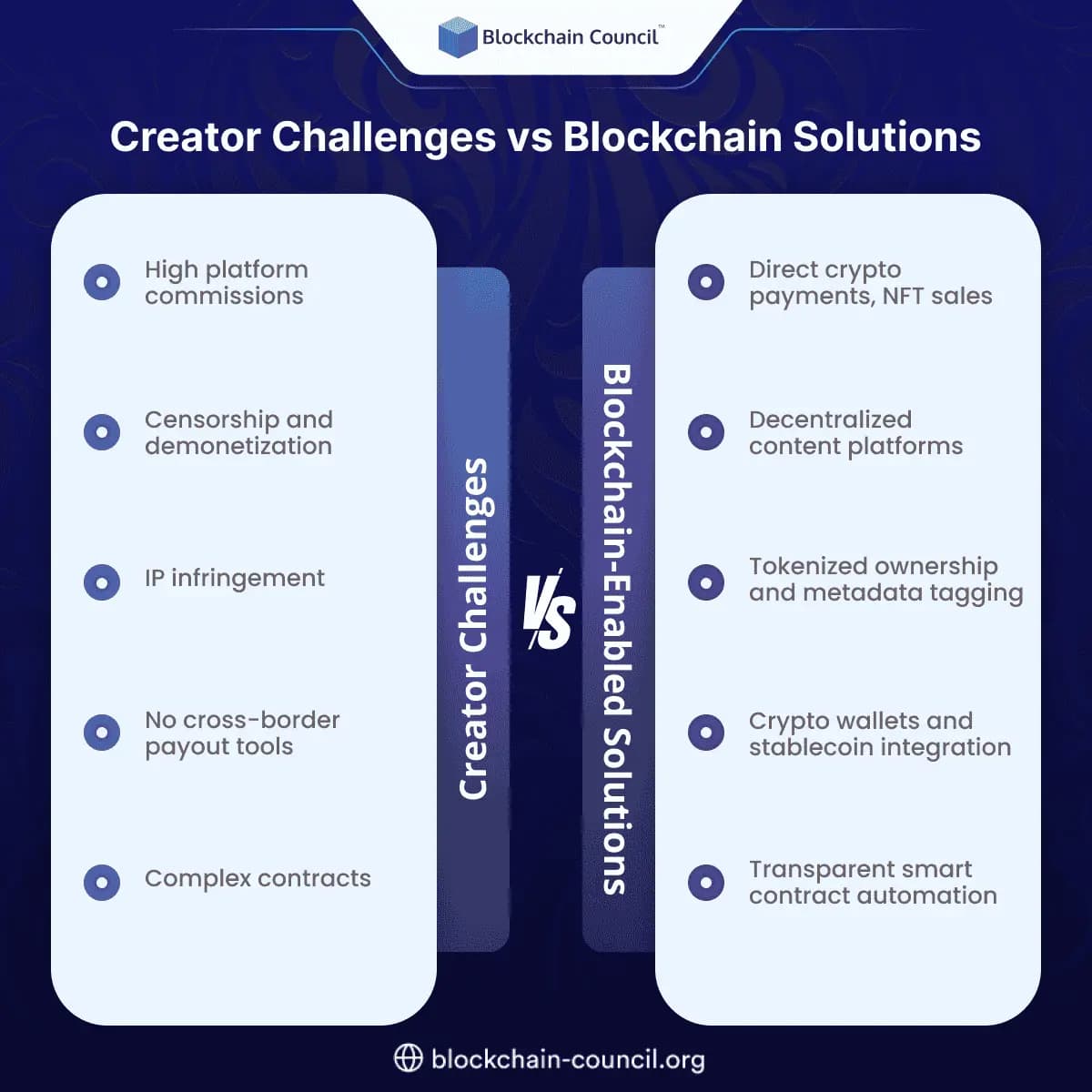
How Does Blockchain Solve Problems in the Creator Economy?
- Proof of Ownership and Royalties
Creators can mint NFTs for their work and earn programmed royalties from future sales. - Direct Monetization
Blockchain allows peer-to-peer payments, eliminating reliance on platforms for income. - Revenue Transparency
Smart contracts manage revenue sharing between collaborators with automatic, traceable payouts. - Borderless Earnings
With crypto wallets and stablecoins, creators can get paid instantly—anywhere in the world.
Creator Challenges vs Blockchain Solutions
Top Blockchain Platforms Empowering Creators in 2025
Zora – A minting and auction platform that supports artists, musicians, and digital creators.
Lens Protocol – A decentralized social media ecosystem where creators own their content and audience.
Sound.xyz – A Web3 music distribution platform for releasing and monetizing tracks as NFTs.
Mirror – A publishing tool that lets writers monetize their work through crowdfunding and tokenized content.
Audius – A blockchain-based music streaming platform that gives creators full control over their royalties.
How Fans Benefit Too
Fans are also gaining from this shift:
- They can support creators directly
- Buy limited-edition content and collectibles
- Participate in creative decisions via DAOs
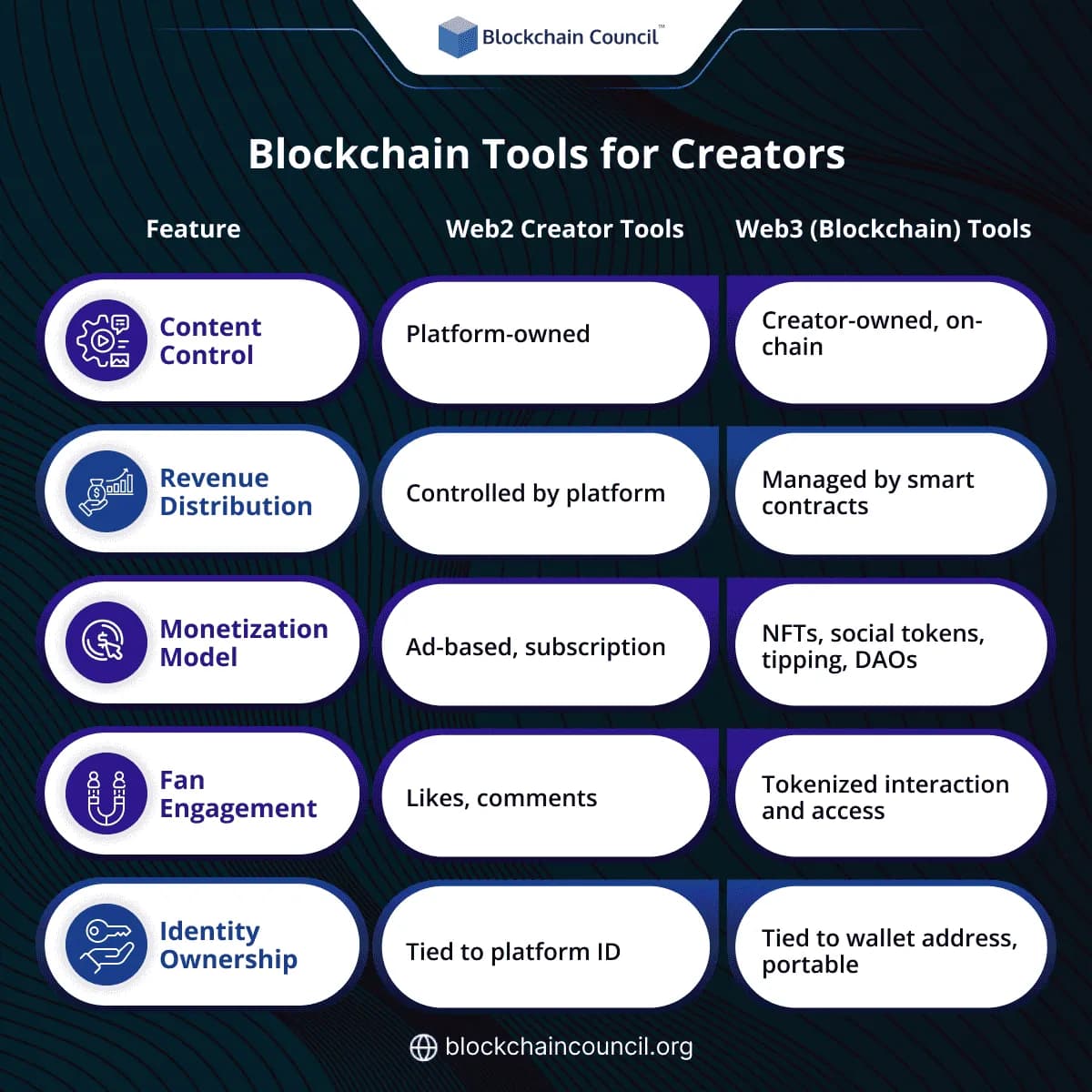
Blockchain Tools for Creators
Conclusion
Blockchain is creating a more fair and open creator economy. In 2025, creators are using decentralized tools to keep more of what they earn, build closer relationships with their communities, and protect their content. Fans are no longer just passive viewers—they’re active stakeholders.
If you want to understand or enter this space, the first step is understanding blockchain. Start with Blockchain Certifications to learn how smart contracts, NFTs, and decentralized platforms are shaping the future of digital creativity.
Related Articles
View All
Blockchain
Beyond Cryptocurrency: How Blockchain Is Transforming Real-World Industries
Explore how blockchain works beyond cryptocurrency in banking, supply chains, healthcare, tokenisation, CBDCs, and government, plus key challenges and career paths.
Blockchain
Smart Contracts & dApps: How Blockchain Becomes Programmable
Learn how smart contracts and dApps make blockchain programmable, from Ethereum and tokens to DeFi, NFTs, real use cases, benefits, and key risks.

Blockchain
Behind the Blocks: How Blockchain Transactions Actually Work
Go behind the blocks to see how a blockchain transaction really works: wallets and keys, digital signatures, verification, hashing, blocks, consensus, proof of work vs proof of stake, and how miners and validators secure the network.
Trending Articles

Can DeFi 2.0 Bridge the Gap Between Traditional and Decentralized Finance?
The next generation of DeFi protocols aims to connect traditional banking with decentralized finance ecosystems.
Claude AI Tools for Productivity
Discover Claude AI tools for productivity to streamline tasks, manage workflows, and improve efficiency.
How to Create Claude Skills?
Claude Skills are one of the most important features Anthropic has introduced for users who want automation that is structured, consistent and reusable. Instead of giving Claude long instructions ever