
How Blockchain Can Be Used In Smart Wallets & How It Works?

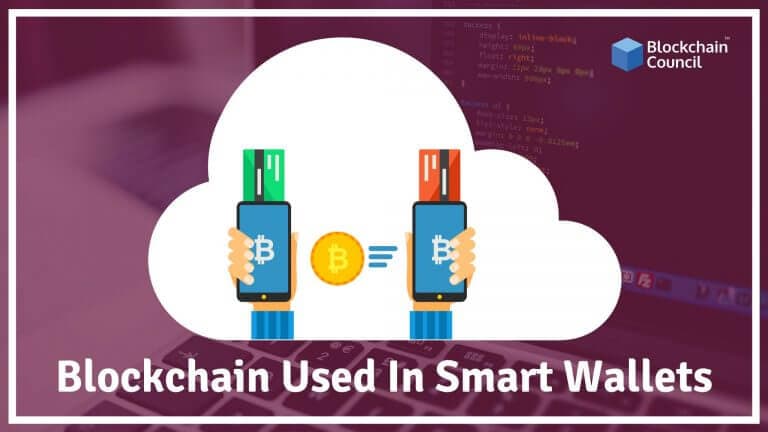
Many use cases and applications are now made which use blockchain technology, with several recent implementations and use cases described in our previous articles. All implementations of blockchain-based applications have the standard security requirements for generating, storing and managing the user cryptographic keys. Also, they would benefit from convenient user access and use of their keys. The smart card chip or embedded secure element contains a secure microprocessor, RAM, non-volatile memory, and a crypto-coprocessor. The memory and processors are protected physically, using a variety of software and hardware security technologies.

Implementing blockchain applications using a smart card and secure element technology brings the following benefits: Generates and protects user cryptographic keys. Smart card and secure element technology are purpose-built to perform key pair generation and other cryptographic operations quickly, with low power consumption. Because a hardware-based secure element is used, key pair generation is performed securely and is efficiently protected, even from advanced attacks. Smart card and safe feature technology protect private keys in hardware with tamper-resistant hardware security and interaction restricted to a limited set of commands and responses.
How does Smart Wallet work?
Cryptocurrencies can be used to make money in two ways – Mining and investing. Cryptocurrency miners solve mathematical problems (mining) and are then awarded tokens as a reward by the network. Through this process, a miner records a validated transaction into the Blockchain. Senders pay their fees for transactions to be made within the Blockchain. When invested in, cryptocurrencies are no different from any stock or currency on the market. As with other products, cryptocurrencies are subject to market forces of demand and supply. Bitcoin investors face almost the same risk as their counterparts in the stock market, given that they aren’t insured, and their values fluctuate. Bitcoin’s predefined algorithms, however, play a crucial role.
The Digital Wallets are secure systems that store payment information and passwords of users for a range of payment methods and websites and are designed to hold and use your cryptocurrency. With the use of Near Field Communication technology, Digital wallets can be used to complete purchases even more easily and quickly. Users can also create secure passwords without worrying about remembering them later. Some mobile payments have incorporated the use of Digital Wallets, which allows users to pay for purchases directly from their Smartphones. Many digital wallets can also store digital coupons and loyalty card information.
The Digital Wallets came into existence at the height of the dot-com boom. A variety of entrepreneurial companies developed early electronic payment programs but failed because of poor publicization. Moreover, most of these early electronic payment programs were offered by small and relatively unknown developers, and therefore had no aura of authority commanded by consumers when dealing with financial information. The first-generation programs came and went with little fanfare, sliding into limbo in the wake of the turn-of-the-millennium collapse.
Related Articles
View All
Blockchain
Blockchain Private Key QR Code: How Air-Gapped QR Wallets Protect Your Keys in 2026
Learn how a blockchain private key QR code workflow supports air-gapped signing, reduces phishing risk, and improves self-custody security in 2026.

Blockchain
AI-Driven Blockchain Analytics: Detecting Anomalies, Fraud, and Smart Contract Exploits
Explore AI-driven blockchain analytics for real-time anomaly detection, fraud prevention, and smart contract exploit monitoring with privacy-preserving governance.

Blockchain
What are smart contracts in blockchain and how do they work?
Blockchain can provide the ultimate solution with its feature of Smart Contracts. One of the biggest problems of modern business is trust. With each passing day, we lose faith in big companies and even other humans. Without the trust factor and transparency, we are always advised to dread slowly. We take much more precaution, and this comes at the expense of flexibility that modern business requires.
Trending Articles

The Role of Blockchain in Ethical AI Development
How blockchain technology is being used to promote transparency and accountability in artificial intelligence systems.

AWS Career Roadmap
A step-by-step guide to building a successful career in Amazon Web Services cloud computing.

Top 5 DeFi Platforms
Explore the leading decentralized finance platforms and what makes each one unique in the evolving DeFi landscape.