Blockchain and AI: Understanding the Perfect Tech Combination
 Michael Willson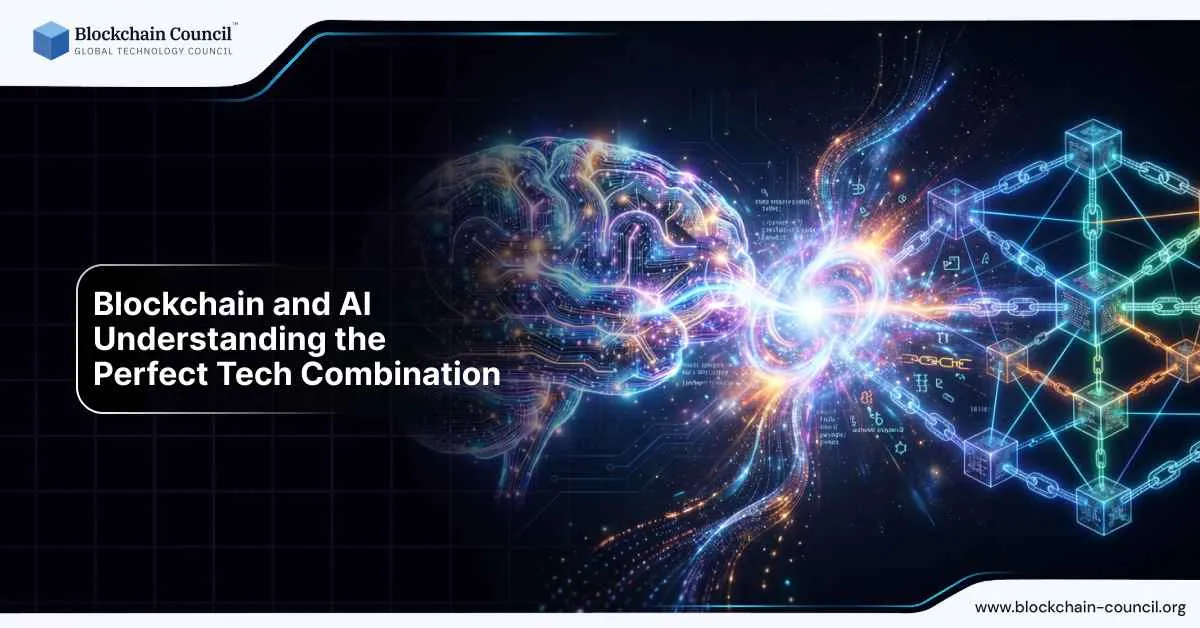
Introduction
Two of the most revolutionary technologies of the modern digital era are Artificial Intelligence (AI) and Blockchain. Individually, both technologies have already transformed industries such as finance, healthcare, logistics, cybersecurity, and digital commerce. However, when combined, blockchain and AI create a powerful ecosystem capable of solving some of the biggest technological challenges faced today.
Artificial Intelligence focuses on analyzing data, identifying patterns, and automating decision-making processes. Blockchain, on the other hand, provides a secure, decentralized, and transparent way to store and verify data. Together, these technologies create systems that are not only intelligent but also secure, trustworthy, and transparent.

Organizations across the globe are exploring how blockchain can support AI systems by improving data security, ensuring transparency, and enabling decentralized collaboration. As a result, professionals who understand both technologies are becoming highly valuable in the technology workforce.
Certifications such as the Blockchain Expert certification from Blockchain Council and the Agentic AI Expert program from Blockchain Council are helping professionals develop the expertise needed to build next-generation AI systems powered by blockchain infrastructure.
In this guide, we will explore why blockchain and AI are considered the perfect technological combination, how they complement each other, and what opportunities they create for businesses and professionals in the future.
Understanding Artificial Intelligence
Artificial intelligence refers to the ability of machines to simulate human intelligence and perform tasks that typically require human thinking.
AI systems rely on algorithms and data to perform functions such as:
- recognizing patterns
- analyzing large datasets
- predicting outcomes
- automating decisions
- learning from experience
Some common types of AI technologies include:
- machine learning
- deep learning
- natural language processing
- computer vision
- autonomous agents
AI systems are used in many industries to improve efficiency, automate operations, and generate valuable insights from data.
However, AI systems also face several challenges, particularly related to data security, transparency, and trust.
Understanding Blockchain Technology
Blockchain is a decentralized digital ledger that records transactions across multiple computers in a network.
Each transaction is stored in a block, and these blocks are linked together using cryptographic techniques to form a chain.
Key characteristics of blockchain include:
- decentralization
- immutability
- transparency
- cryptographic security
Because blockchain records cannot easily be modified, they provide a reliable method for verifying data and maintaining trust in digital systems.
Initially developed for cryptocurrencies like Bitcoin, blockchain technology is now used in many industries, including:
- financial services
- supply chain management
- healthcare data systems
- identity verification
- digital contracts
When combined with AI systems, blockchain provides a secure foundation for managing the data used in intelligent applications.
Why AI and Blockchain Work Well Together
Although AI and blockchain serve different purposes, they complement each other perfectly.
AI requires large volumes of reliable data to train algorithms, while blockchain ensures that this data remains secure, transparent, and tamper-proof.
At the same time, AI can analyze blockchain data to improve system efficiency and detect patterns or anomalies.
This synergy creates several powerful advantages.
Improved Data Security
AI models rely heavily on training datasets. If these datasets are manipulated or corrupted, the performance of AI models may be affected.
Blockchain protects AI data by storing it in an immutable ledger where unauthorized modifications are extremely difficult.
This ensures that AI models are trained using trustworthy data.
Increased Transparency
One of the biggest challenges in artificial intelligence is the black box problem, where it is difficult to understand how AI systems reach specific decisions.
Blockchain can record the entire lifecycle of AI systems, including:
- data collection
- model training
- algorithm updates
- decision outputs
This transparent record allows organizations to audit AI systems more easily and understand how decisions are made.
Decentralized AI Networks
Traditional AI systems often rely on centralized infrastructure controlled by a single organization.
Blockchain enables the creation of decentralized AI networks where multiple participants contribute data, computing power, and algorithms.
This decentralized structure encourages collaboration and reduces the risk of monopolization.
Trusted Data Sharing
Organizations often hesitate to share valuable datasets due to security concerns.
Blockchain enables secure data-sharing platforms where contributors retain control over their data.
Smart contracts can automatically enforce data-sharing agreements and ensure that contributors receive compensation.
This encourages collaboration while maintaining data security.
AI Enhancing Blockchain Systems
While blockchain improves AI infrastructure, AI can also improve blockchain performance.
Artificial intelligence can analyze blockchain data to:
- detect fraudulent transactions
- optimize network performance
- predict system failures
- automate blockchain management
This mutual relationship strengthens both technologies.
The Rise of Agentic AI
A major trend in modern AI development is the emergence of Agentic AI.
Agentic AI refers to intelligent systems capable of performing tasks autonomously. These AI agents can analyze information, make decisions, and execute workflows without constant human supervision.
Agentic AI systems may operate across digital environments such as business operations, research systems, and customer service platforms.
However, as AI agents gain more autonomy, transparency and accountability become essential.
Blockchain can support Agentic AI by:
- recording decisions made by AI agents
- verifying data sources
- maintaining secure activity logs
- enabling decentralized governance
Professionals interested in building such systems can gain expertise through the Agentic AI Expert certification from Blockchain Council, which focuses on designing and deploying autonomous AI agents.
Infrastructure Technologies Supporting AI and Blockchain
Building platforms that combine blockchain and AI requires strong backend infrastructure.
Technologies such as Node.js and Python play important roles in developing scalable and reliable systems.
Node.js for AI Applications
Node.js is widely used for building backend services and APIs that support AI systems.
Developers use Node.js to:
- process large datasets
- integrate machine learning models
- build scalable APIs
- manage real-time data streams
The Node.js certification from Global Tech Council helps developers learn how to build scalable applications that support modern AI platforms.
Python for AI Deployment
AI models require continuous updates, testing, and deployment. Python helps organizations support these processes through automation, scripting, and integration.
Python professionals work with:
- automation scripts
- data processing
- model integration
- testing and performance optimization
The Python certification from Global Tech Council provides professionals with the skills required to build, support, and maintain complex AI systems.
The Role of Digital Marketing in AI Products
While technology development is critical, successful AI products also require effective marketing strategies.
Digital marketing helps organizations promote AI solutions, educate audiences, and build trust with customers.
Common digital marketing strategies include:
- search engine optimization (SEO)
- content marketing
- product marketing campaigns
- social media promotion
Professionals with expertise in Digital Marketing can help companies explain complex technologies in ways that audiences understand.
A Digital Marketing Expert certification equips professionals with the knowledge required to promote innovative technology solutions in competitive markets.
Real-World Applications of Blockchain and AI
The combination of blockchain and AI is already transforming multiple industries.
Healthcare
AI analyzes medical data for diagnosis and treatment planning, while blockchain secures patient records.
Finance
AI detects fraud and analyzes market trends, while blockchain ensures transparent transaction records.
Supply Chain
AI optimizes logistics operations, while blockchain verifies product origins and shipment histories.
Cybersecurity
AI detects security threats, while blockchain maintains tamper-proof activity logs.
These applications demonstrate the powerful potential of combining blockchain and AI technologies.
The Future of Blockchain and AI
The integration of blockchain and AI is expected to grow rapidly in the coming years.
Several emerging trends include:
- decentralized AI marketplaces
- blockchain-based AI governance systems
- tokenized data-sharing platforms
- autonomous AI-driven organizations
- transparent AI auditing frameworks
These innovations will create new opportunities for businesses and professionals across industries.
Certifications such as the Blockchain Expert and Agentic AI Expert program from Blockchain Council, along with Node.js and Python certification from Global Tech Council, provide the skills required to succeed in this evolving technology landscape.
Conclusion
Artificial intelligence and blockchain are two of the most transformative technologies of the digital age. While AI enables intelligent data analysis and automation, blockchain provides the secure and transparent infrastructure required to support trustworthy systems.
Together, these technologies create powerful ecosystems capable of improving data security, enabling decentralized collaboration, and ensuring accountability in automated systems.
As industries continue to adopt AI-driven solutions, blockchain will play an increasingly important role in ensuring that these systems remain secure, transparent, and ethical.
Professionals who develop expertise in blockchain, AI infrastructure, Python, and digital marketing will be well-positioned to lead the next generation of technological innovation.
FAQs
1. What is the relationship between blockchain and AI?
Blockchain provides secure data storage and transparency, while AI analyzes data and automates decision-making processes.
2. Why are blockchain and AI considered a perfect combination?
Blockchain ensures data security and transparency, while AI extracts insights and automates processes using that data.
3. How does blockchain improve AI systems?
Blockchain improves AI systems by providing secure data management, transparent processes, and tamper-proof records.
4. What industries benefit from blockchain and AI integration?
Industries such as healthcare, finance, logistics, cybersecurity, and government services benefit from blockchain-powered AI systems.
5. Can AI improve blockchain technology?
Yes, AI can analyze blockchain data to detect fraud, optimize network performance, and automate operations.
6. What is the black box problem in AI?
The black box problem refers to the difficulty in understanding how complex AI algorithms make decisions.
7. What is Agentic AI?
Agentic AI refers to autonomous AI systems capable of performing tasks and making decisions independently.
8. How does blockchain support Agentic AI systems?
Blockchain records decisions and actions made by AI agents, ensuring transparency and accountability.
9. Why is data integrity important for AI models?
AI models rely on accurate datasets. If data is manipulated, AI results may become unreliable.
10. What role does Node.js play in AI applications?
Node.js is used to build scalable backend systems and APIs for AI platforms.
11. Why is Python important for AI development?
Python is important for AI development because it supports data processing, model building, automation, testing, and integration throughout the AI development lifecycle.
12. How does blockchain enable secure data sharing?
Blockchain allows participants to share data through encrypted and decentralized networks.
13. What career opportunities exist in blockchain and AI?
Careers include blockchain developer, AI engineer, DevOps engineer, machine learning specialist, and data engineer.
14. How can professionals learn blockchain and AI technologies?
Professionals can learn through certification programs, practical projects, and specialized training.
15. What is the future of blockchain and AI integration?
The future includes decentralized AI networks, autonomous AI agents, secure data marketplaces, and transparent AI governance systems.