

How to Buy Bitcoin Safely: A Practical Step-by-Step Guide

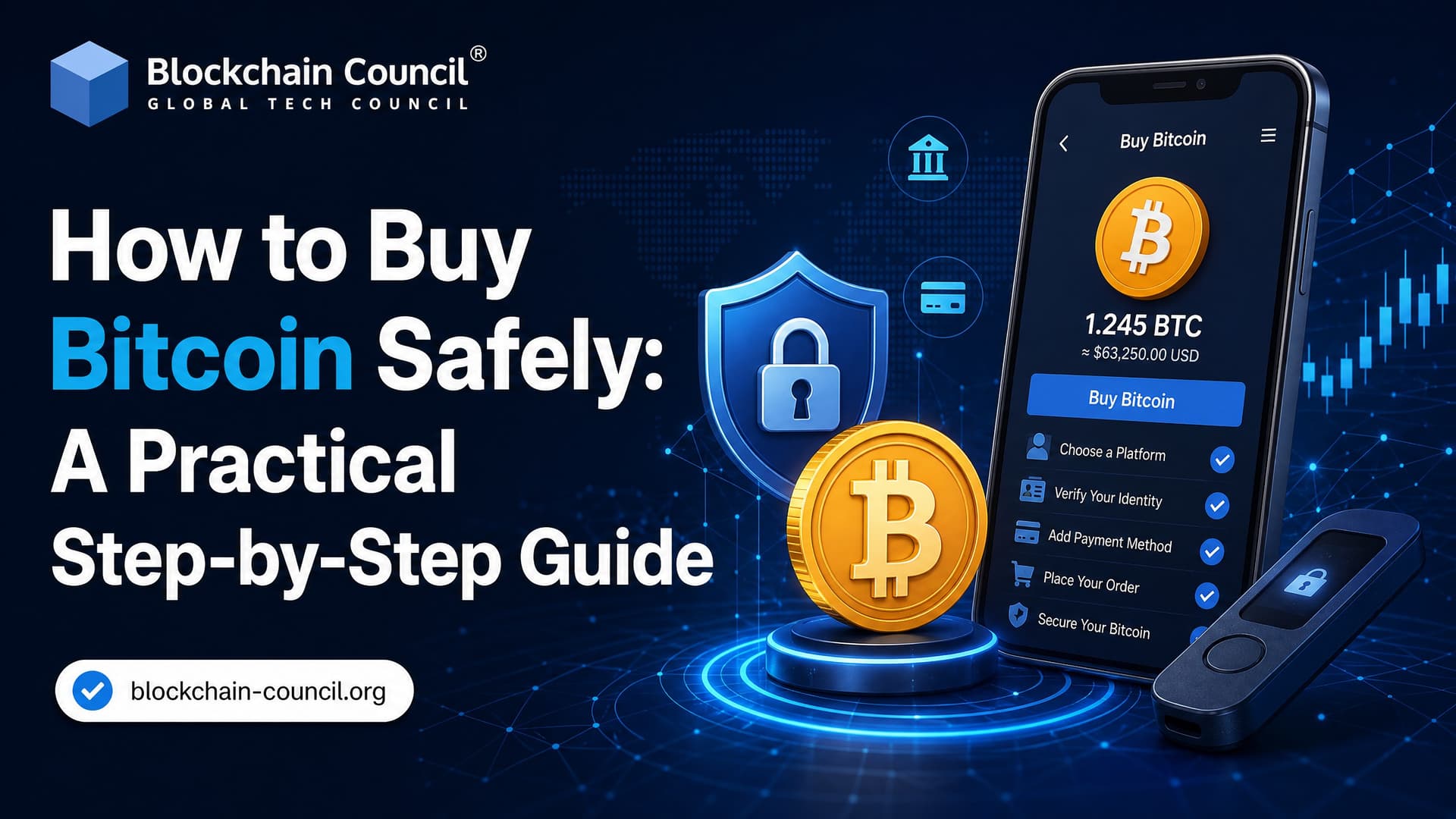
Buying Bitcoin safely starts with three decisions: where you buy it, how much risk you accept, and where you store it after the purchase. Access is easy now. Easy access does not remove price volatility, scams, tax duties, or custody risk.
The safest route for most people is plain. Use a regulated, well-known platform. Secure your account before you fund it. Start small, and move meaningful long-term holdings to a wallet you control. Simple, but not casual.

What Buying Bitcoin Safely Means
Safe buying is not about removing all risk. That is impossible. Bitcoin trades 24 hours a day, swings hard on price, and depends on careful private key management. Safe buying means cutting the avoidable mistakes.
In practice, you should:
- Use an established exchange, brokerage, or payment platform with identity verification and clear compliance controls.
- Avoid obscure offshore platforms, social media sellers, and unsolicited investment offers.
- Use a unique password and app-based two-factor authentication.
- Limit Bitcoin exposure to an amount that fits your financial plan.
- Store larger balances in self custody, preferably with a hardware wallet.
Major financial firms such as Fidelity and Charles Schwab describe Bitcoin as a speculative asset. That framing is right. Treat Bitcoin as a high-risk satellite position, not emergency savings, not rent money, and not a substitute for a diversified portfolio.
Step 1: Decide Why You Are Buying Bitcoin
Before you open an account, write down your reason. Are you testing Bitcoin to learn how it works? Building a long-term position? Using it for payments? Your answer changes the safest setup.
If you are buying for education, a small amount is enough. If you are investing, decide your maximum allocation before price movement starts pressuring you. Many consumer finance guides suggest keeping speculative assets to a small slice of a portfolio, often under 5 to 10 percent depending on risk tolerance.
Be blunt with yourself. If a 50 percent drop would make you panic sell or miss a bill, you are buying too much.
Step 2: Choose a Reputable Platform
Platform choice is where many safety problems begin. For a first purchase, use a large regulated exchange, brokerage, or financial app that clearly explains fees, identity checks, withdrawal rules, and custody practices.
Safer platform signals
- Identity verification: KYC checks are inconvenient, but they are standard on regulated platforms.
- Clear fee schedule: You should know trading fees, card fees, spread, and withdrawal charges before you buy.
- Withdrawal support: A platform that lets you withdraw real Bitcoin to the Bitcoin network gives you more control.
- Security controls: Look for app-based 2FA, withdrawal address allowlisting, device management, and account activity alerts.
- Transparent operations: Avoid platforms with hidden ownership, vague custody language, or aggressive yield promises.
Bitcoin ATMs and peer-to-peer trades can work, but they are usually not the safest first step. Fees can be high, fraud risk is higher, and beginners often miss basic checks.
Step 3: Secure the Account Before You Add Money
Do this before funding the account. Not after.
- Create a long, unique password with a password manager.
- Enable two-factor authentication with an authenticator app, and avoid SMS where you can.
- Bookmark the official exchange URL and use that bookmark every time.
- Turn on withdrawal confirmations and login alerts.
- Do not install browser extensions you do not need.
Phishing is still one of the easiest ways to lose crypto. Attackers copy exchange emails almost perfectly. The tell is often small: a lookalike domain, a rushed warning, or a fake support agent asking you to verify your wallet. Real support will never need your seed phrase.
Step 4: Pick a Funding Method
Most platforms support bank transfers, debit cards, credit cards, wire transfers, and sometimes Apple Pay or Google Pay. The safest funding method is usually the one with clear records and reasonable fees.
- Bank transfer: Usually lower cost, slower settlement, good for planned purchases.
- Debit card: Faster, often more expensive.
- Credit card: Convenient, but some issuers treat crypto purchases as cash advances with extra fees and interest.
- Wire transfer: Useful for larger purchases, but mistakes can be costly and harder to reverse.
For a beginner, a small bank transfer or debit card purchase on a reputable platform is usually better than chasing the absolute lowest fee through an unfamiliar provider.
Step 5: Place the Bitcoin Order Carefully
Once your account is funded, you can place an order. The two basic types are market orders and limit orders.
Market order
A market order buys immediately at the best available price. It is simple, but in fast markets the final price may differ from what you expected.
Limit order
A limit order lets you set the maximum price you are willing to pay. If Bitcoin trades at that price, the order can fill. If not, it waits or expires, depending on your settings.
I prefer limit orders for most purchases. The extra 20 seconds reduces surprises, especially during high volatility. If you are buying small amounts on a simple app, a market buy may be fine, but check the spread before you confirm.
Step 6: Store Bitcoin the Right Way
After you buy Bitcoin, you have two broad storage choices. Leave it with a custodian, or withdraw it to your own wallet.
Custodial storage
Custodial storage means the exchange or broker controls the private keys. It is simpler. It may be acceptable for small balances, active trading, or users who are not ready for self custody.
The trade-off is counterparty risk. If the platform freezes withdrawals, suffers a breach, or fails operationally, your access may be affected.
Self custody
Self custody means you control the private keys. Hardware wallets are widely used for long-term Bitcoin storage because they keep signing keys offline. Common Bitcoin address formats include legacy addresses starting with 1, wrapped SegWit addresses starting with 3, and native SegWit addresses starting with bc1q. Taproot addresses often start with bc1p.
Here is a practical detail that saves real money: always send a small test withdrawal first. Confirm the network is Bitcoin, not a wrapped version of BTC on another chain. Plenty of support tickets start with a user choosing the wrong withdrawal network because the ticker still looked like BTC.
Step 7: Protect Your Seed Phrase
If you use a non-custodial wallet, your recovery phrase is the master key. It is often 12 or 24 words based on BIP39-style wallet design, though implementations vary.
- Write it offline on paper or a metal backup.
- Never store it in email, cloud notes, screenshots, or chat apps.
- Never type it into a website that claims to validate or sync your wallet.
- Store backups where fire, theft, and water damage are accounted for.
- Make sure trusted heirs or business partners have a lawful recovery process if needed.
If someone gets your seed phrase, they can move your Bitcoin. There is no bank chargeback on the Bitcoin network.
Common Scams to Avoid
- Guaranteed profit schemes: No legitimate Bitcoin platform can guarantee returns.
- Fake exchange apps: Download apps only from official stores and verify the publisher.
- Impersonation scams: Support agents on Telegram, WhatsApp, or X are often scammers.
- Romance and investment coaching scams: Be suspicious when a new contact pushes you to buy Bitcoin and send it elsewhere.
- Recovery scams: Anyone claiming they can recover stolen Bitcoin for an upfront fee is likely setting up a second loss.
Tax and Record-Keeping Basics
Bitcoin purchases, sales, swaps, and payments can create tax reporting obligations. Rules vary by country, but you should keep records from day one.
Track:
- Date and time of purchase.
- Amount of Bitcoin bought.
- Price paid and fees.
- Wallet transfers.
- Sales, swaps, or payments using Bitcoin.
Use platforms that export transaction history. For larger amounts, speak with a qualified tax professional in your jurisdiction.
Safe Buying Pattern for Beginners
If you want a conservative workflow, use this pattern:
- Set a maximum Bitcoin allocation, such as a small percentage of investable assets.
- Choose a regulated exchange or brokerage.
- Secure the account with a password manager and app-based 2FA.
- Start with a small bank transfer.
- Use a limit order if the platform supports it.
- Buy a small amount first.
- Set up a hardware wallet before the balance becomes meaningful.
- Send a small test withdrawal, then move the rest.
- Record every transaction for tax and audit purposes.
Learning Path for Professionals
If you work in finance, compliance, cybersecurity, development, or enterprise strategy, buying Bitcoin safely is only the first layer. You also need to understand custody models, consensus, wallet security, regulation, and transaction mechanics.
For structured learning, consider Blockchain Council programs such as Certified Bitcoin Expert™, Certified Cryptocurrency Expert™ (CCE), and Certified Blockchain Expert™. Developers who want to go deeper into wallet integrations and blockchain applications can also look at blockchain developer-focused training.
Final Checklist: How to Buy Bitcoin Safely
- Use a regulated, well-known platform.
- Never buy through links sent by strangers.
- Enable app-based 2FA before funding the account.
- Use bank transfers when fees and timing make sense.
- Prefer limit orders for better price control.
- Move meaningful holdings to a hardware wallet.
- Back up your seed phrase offline.
- Keep tax records from the first transaction.
- Do not invest money you cannot afford to lose.
Your next step is practical. Choose one reputable platform available in your jurisdiction, secure the account fully, and make only a small first purchase. If you plan to hold more than a test amount, set up self custody before you scale.
Related Articles
View All
Bitcoin
Is Bitcoin Legal? A Global Guide to Bitcoin Laws
Is Bitcoin legal? Learn where Bitcoin is allowed, restricted, or treated as legal tender, plus key rules for users, developers, and businesses.
Bitcoin
Top 5 Apps to Buy and Trade Bitcoin
Bitcoin has become a major player in the world of finance, and with its growing popularity, the number of apps to buy and trade Bitcoin has surged. Whether you’re a beginner or an experienced investor, choosing the right platform is crucial for smooth transactions, security, and low fees. In…

Bitcoin
Sequans Raises $200M to Buy Bitcoin
Sequans Communications has announced a plan to raise $200 million through an at-the-market equity program with the goal of buying more Bitcoin. This move adds momentum to the trend of public companies treating Bitcoin as a core treasury asset rather than a speculative gamble. With this raise,…
Trending Articles

Top 5 DeFi Platforms
Explore the leading decentralized finance platforms and what makes each one unique in the evolving DeFi landscape.
What is AWS? A Beginner's Guide to Cloud Computing
Everything you need to know about Amazon Web Services, cloud computing fundamentals, and career opportunities.
How to Install Claude Code
Learn how to install Claude Code on macOS, Linux, and Windows using the native installer, plus verification, authentication, and troubleshooting tips.