

PM Modi Appeals: Understanding Modi ji's 7 Appeals Amid the West Asia Crisis
 Suyash Raizada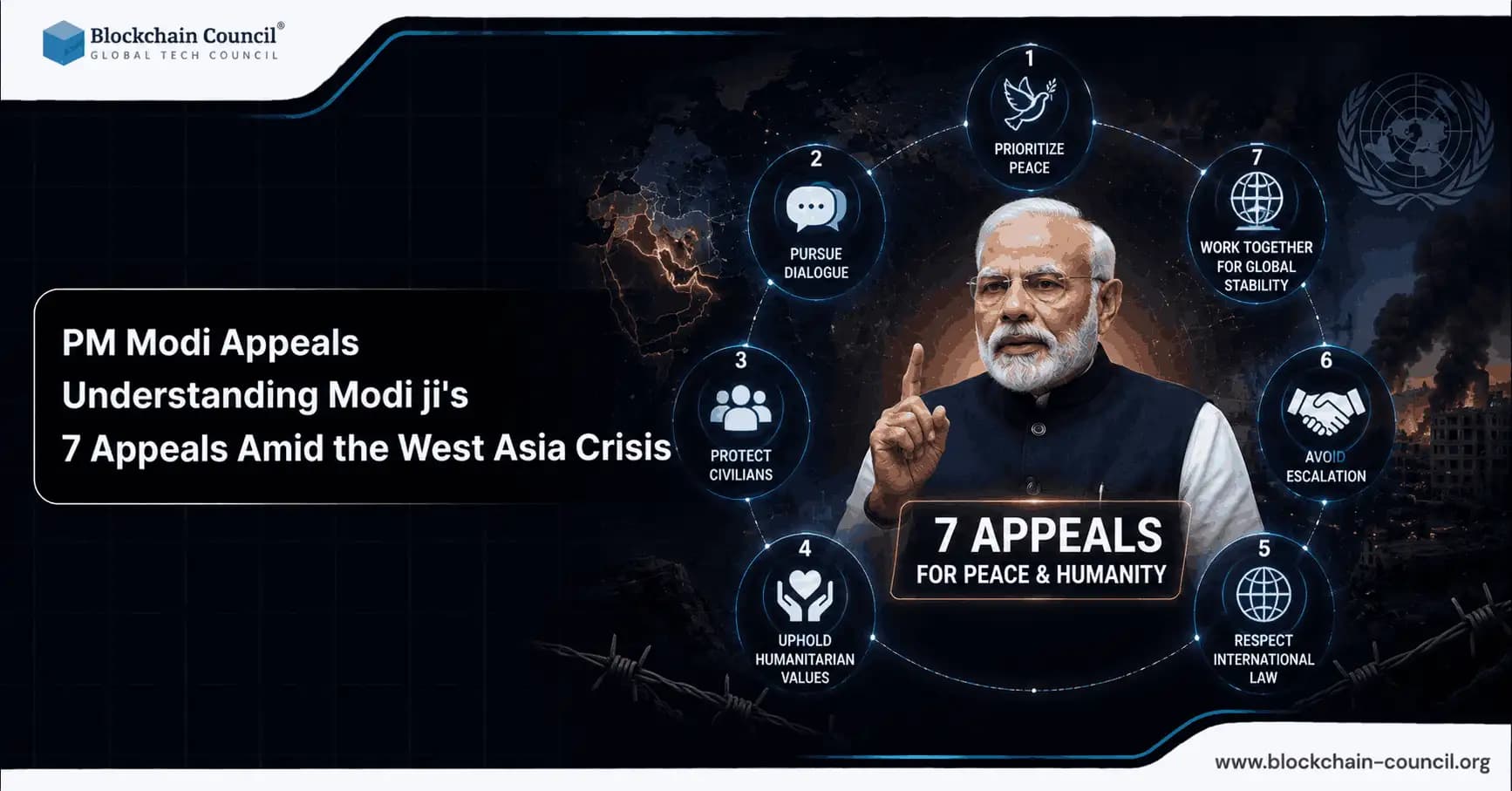
PM Modi Appeals became a national talking point after Prime Minister Narendra Modi addressed a public event in Secunderabad, Telangana on May 10, 2026, inaugurating projects worth Rs 9,400 crore and urging citizens to follow seven practical steps to reduce economic pressure from the ongoing US-Iran conflict in West Asia. With disruptions around the Strait of Hormuz and crude prices rising above $100 per barrel, these appeals focus on conserving foreign exchange, cutting import dependency, and reinforcing Atmanirbhar Bharat.
Shared on PM Modi's official X account and amplified via MyGovIndia under the theme "Nation First, Duty Above Comfort," Modi ji's message echoes crisis-era behavior many Indians recall from the COVID-19 period: tighter personal spending, smarter consumption, and broader participation in national resilience.

Why PM Modi Issued These Appeals Now
The immediate driver behind the PM Modi Appeals is the inflationary and forex impact of an energy shock. India imports roughly 85% of its crude oil needs, and West Asia has historically supplied about 60% of those imports. Any prolonged disruption in shipping routes like the Strait of Hormuz pushes up oil prices, transport costs, and the price of everyday essentials.
Crude oil recently traded above $100 per barrel, after touching a 52-week high near $126 per barrel by late April 2026 amid fears of a shipping deadlock. These elevated prices widen India's import bill, pressure the rupee, and raise the cost of subsidies and logistics across the economy. Explore how global crises influence policy, remote work, digital transformation, and economic resilience by mastering AI-driven analytics through an AI certification, building data analysis tools using a Node JS Course, and scaling strategic communication using an AI powered marketing course.
PM Modi's 7 Appeals: What They Are and What They Aim to Achieve
Each item in Modi ji's list targets a large import category or an activity that causes foreign exchange outflow. Together, they aim to protect macroeconomic stability without formal rationing.
1) Prioritise Work From Home Wherever Possible
Modi ji urged offices to revive remote work and increase online meetings and video conferencing. The logic is straightforward: fewer commutes reduce fuel consumption and lower pressure on petrol and diesel demand.
Why it matters: During 2020-2022, work from home helped many sectors sustain output while reducing travel demand. Remote work at scale across Indian IT and knowledge industries demonstrated its feasibility for office-based roles.
Practical take: Even hybrid schedules can cut weekly fuel use meaningfully for urban families.
2) Avoid Buying Gold for One Year
Gold purchases are a major driver of imports and foreign exchange outflow. India remains among the world's largest gold consumers, and discretionary buying can intensify pressure when the external environment is stressed.
Why it matters: Gold imports have historically represented tens of billions of dollars annually, contributing significantly to the current account deficit.
Practical take: Households can prioritize essential spending and defer non-essential jewellery purchases. Where gifting is unavoidable, smaller purchases or domestic alternatives can reduce import dependence.
3) Reduce Petrol and Diesel Consumption
This appeal focuses on fuel conservation through public transport, metro systems, carpooling, electric vehicles, and railways - including shifting more freight movement to rail. The goal is demand management during an external supply shock.
Why it matters: Oil is one of India's most significant import expenditures and a direct contributor to inflation through transport and logistics costs.
Practical take: Combine errands, choose public transit when feasible, maintain tyre pressure, and adopt carpooling for regular routes.
4) Cut Down the Use of Cooking Oil
India imports a substantial share of its edible oil needs. Reducing consumption can lower imports and support domestic alternatives.
Why it matters: Edible oil imports add to the trade deficit, and global supply disruptions can push prices higher for households and food businesses.
Practical take: Reduce waste, avoid deep frying, and align consumption with health guidance. Small household changes can aggregate into meaningful national savings.
5) Reduce Dependence on Chemical Fertilisers
Modi ji urged farmers to reduce chemical fertiliser usage, with messaging encouraging at least a 50% cut and a shift toward natural farming methods where viable.
Why it matters: Chemical fertilisers are linked to import dependence and cost volatility. Natural farming pilots in several Indian states have demonstrated input cost reductions for participating farmers.
Practical take: Adoption should be phased and data-led, with soil testing, crop-specific planning, and local extension support to manage yield risks during any transition.
6) Use Fewer Foreign-Branded Products
This appeal extends the "Vocal for Local" approach by encouraging Indians to prefer domestic products where quality and price are competitive. The objective is to strengthen local manufacturing and reduce import demand.
Why it matters: Consumer choices directly influence the import bill and domestic job creation across manufacturing sectors.
Practical take: Start with everyday categories like apparel, home goods, and electronics accessories, while still prioritizing safety standards and verified product quality.
7) Avoid Foreign Travel for One Year
Outbound tourism is a direct foreign exchange outflow. The scale is significant: if 1 million tourists each spend $3,000 abroad, that amounts to $3 billion leaving the country.
Why it matters: In a high-oil-price environment, reducing non-essential forex outflows can help stabilize reserves and support the rupee.
Practical take: Consider domestic tourism, postpone destination weddings abroad, and plan local alternatives until global volatility eases.
Economic Logic Behind the PM Modi Appeals
The seven measures cluster around three macroeconomic goals:
Reduce import demand: Oil, gold, edible oils, and fertiliser-linked inputs can widen the current account deficit during a global shock.
Protect foreign exchange reserves: Fewer discretionary imports and lower outbound travel can conserve forex during periods of external uncertainty.
Limit inflation pass-through: Lower fuel consumption and reduced logistics pressure can soften price increases that otherwise ripple across food and essential goods.
Broad adoption could potentially save meaningful forex annually by cutting oil, gold, and travel outflows, although a prolonged crisis can still slow growth in sectors like tourism and retail.
Support and Criticism: How India Is Reacting
The PM Modi Appeals have drawn both support and political criticism. Some commentators framed them as proactive austerity in the national interest. Opposition leaders, including Congress figures, criticized the appeals as shifting the burden to citizens and questioned whether adequate energy-security planning was in place after months of conflict escalation.
From a policy perspective, both readings can coexist: appeals can serve as a legitimate short-term demand-management tool, while structural energy security still requires long-term investment and supply diversification.
What Indians Can Do Immediately
For most households and working professionals, the easiest actions are behavioral and scheduling changes that require no major spending:
Adopt hybrid work: Target one to two work-from-home days per week where feasible.
Plan transport smarter: Shift to metro or buses for predictable routes, and bundle errands to reduce trips.
Delay discretionary gold buying: Reassess non-essential purchases for the next year.
Reduce edible oil usage: Cut waste and choose healthier cooking methods.
Choose domestic brands thoughtfully: Prefer Indian-made products when quality is comparable.
Pick domestic travel: Substitute overseas vacations with Indian destinations to reduce forex outflow.
Digital Readiness and Skills: An Overlooked Enabler
One practical challenge in implementing Modi ji's appeals is digital capability. Work-from-home, online meetings, and efficient digital workflows require cybersecurity hygiene, cloud skills, and AI-assisted productivity tools.
Understand the broader economic, social, and strategic implications of PM Modi’s 7 appeals during the West Asia crisis by building analytical expertise through an AI certification, analyzing geopolitical and economic data using a Python certification, and communicating complex global developments effectively with a Digital marketing course.
Conclusion: What the PM Modi Appeals Signal for the Months Ahead
The PM Modi Appeals represent a citizen-focused response to a geopolitical shock that is pushing up oil prices and increasing pressure on India's import bill and foreign exchange reserves. Modi ji's seven-step list is designed to reduce discretionary forex outflows, lower fuel demand, and reinforce self-reliance habits that align with longer-term national goals.
If the West Asia crisis persists, adoption may need to be sustained, and policy measures may expand to incentivize EVs, rail logistics, renewable energy, and local manufacturing. For Indian households and workplaces, the core message is clear: small, practical choices at the individual level can add up to measurable national resilience during a period of global uncertainty.
FAQs
1. What are PM Modi’s 7 appeals?
PM Modi’s 7 appeals are practical steps aimed at reducing India’s import burden and conserving foreign exchange. They include Work From Home, avoiding gold purchases, saving fuel, reducing cooking oil use, cutting chemical fertiliser dependence, choosing local products, and avoiding foreign travel. These appeals were made in response to economic pressure from the West Asia crisis.
2. Why did PM Modi issue these appeals?
PM Modi issued these appeals because rising tensions in West Asia could affect oil supply and increase crude prices. Since India imports a large share of its crude oil, higher prices can raise inflation and widen the import bill. The appeals encourage citizens to reduce unnecessary consumption and support national economic stability.
3. How is the West Asia crisis linked to India’s economy?
The West Asia crisis can disrupt oil movement through important shipping routes such as the Strait of Hormuz. Any disruption can push crude oil prices higher and increase India’s fuel import costs. This affects transport, logistics, household expenses, and the value of the rupee.
4. Why did PM Modi ask people to work from home?
PM Modi asked people to work from home wherever possible to reduce daily fuel consumption. Fewer office commutes mean lower petrol and diesel demand, especially in major cities. Even hybrid work can help families save fuel and reduce pressure on national energy demand.
5. Why did PM Modi appeal against buying gold?
Gold purchases increase import demand and cause foreign exchange outflow. During periods of global uncertainty, reducing non-essential gold buying can help protect India’s current account balance. The appeal asks households to delay discretionary jewellery purchases for one year.
6. How can reducing petrol and diesel use help India?
Reducing petrol and diesel use lowers India’s demand for imported crude oil. It can also reduce traffic congestion, logistics costs, and inflationary pressure. Citizens can contribute by using public transport, carpooling, combining errands, and maintaining vehicles properly.
7. Why did PM Modi mention cooking oil consumption?
India imports a significant share of its edible oil needs, so high consumption adds to the import bill. Reducing waste and avoiding excessive deep-fried food can help lower demand. It may also support healthier eating habits, which is a rare case where economics and common sense briefly cooperate.
8. What did PM Modi say about chemical fertilisers?
PM Modi urged farmers to reduce dependence on chemical fertilisers and move toward natural farming where practical. This can reduce import-linked costs and protect farmers from price volatility. Any shift should be gradual, guided by soil testing, crop needs, and local expert support.
9. Why should people use fewer foreign-branded products?
Using fewer foreign-branded products can reduce import demand and support domestic manufacturing. PM Modi’s appeal encourages people to choose Indian-made products when quality and price are competitive. This fits the broader “Vocal for Local” and Atmanirbhar Bharat approach.
10. Why did PM Modi ask people to avoid foreign travel?
Foreign travel creates direct foreign exchange outflow, especially when large numbers of tourists spend abroad. Avoiding non-essential international trips for a year can help conserve forex during economic stress. Domestic tourism can be a practical alternative.
11. What is the main goal of these appeals?
The main goal is to reduce import dependency, conserve foreign exchange, and limit inflation during a global energy shock. The appeals focus on voluntary citizen action rather than formal restrictions. They are designed to turn everyday choices into economic support, because apparently macroeconomics now starts in your kitchen and parking spot.
12. How do these appeals support Atmanirbhar Bharat?
These appeals support Atmanirbhar Bharat by encouraging local consumption, reduced imports, and more responsible use of resources. Choosing Indian products, saving fuel, and reducing foreign travel all align with self-reliance goals. The idea is to strengthen domestic capacity while reducing exposure to global shocks.
13. Which appeal can working professionals follow most easily?
Working professionals can most easily follow the Work From Home and reduced commuting appeals. They can also use online meetings, public transport, carpooling, and domestic brands in daily life. These steps require planning more than major lifestyle sacrifice.
14. How can households respond to PM Modi’s appeals?
Households can delay gold purchases, reduce fuel use, cut cooking oil waste, and choose domestic products. They can also plan local holidays instead of foreign trips. Small household decisions may look minor, but repeated across millions of people, they can affect national demand.
15. Are these appeals mandatory?
The article presents the appeals as voluntary citizen-focused measures, not formal rationing or legal restrictions. They are intended to encourage responsible behavior during a period of global uncertainty. However, if the crisis continues, policy measures could become more structured in some areas.
16. What criticism have the appeals received?
Some critics argue that the appeals shift too much responsibility onto citizens. Opposition voices have also questioned whether enough long-term energy-security planning was done. Still, voluntary demand management can work as a short-term response while structural reforms continue.
17. How can people reduce fuel use without working from home?
People can use metros, buses, railways, carpooling, and electric vehicles where possible. They can also combine errands, reduce unnecessary trips, and maintain proper tyre pressure. These actions lower fuel use without requiring every job to become remote.
18. Why is foreign exchange conservation important?
Foreign exchange is important because India uses it to pay for imports such as crude oil, gold, fertilisers, and edible oils. When import costs rise, pressure increases on the rupee and the broader economy. Conserving forex helps protect financial stability during global disruptions.
19. How do digital skills support these appeals?
Digital skills help professionals work remotely, attend online meetings, and manage secure digital workflows. Cybersecurity, cloud tools, and AI-assisted productivity can make hybrid work more effective. Without digital readiness, Work From Home becomes less efficient and more chaotic, which humanity already excels at without help.
20. What do PM Modi’s appeals mean for the coming months?
PM Modi’s appeals suggest that India may rely more on citizen participation to manage economic pressure from global instability. If the West Asia crisis continues, fuel conservation, local manufacturing, EV adoption, and domestic travel may become more important. The broader message is that small lifestyle changes can support national resilience.
Related Articles
View All
All
Bulgaria Adopts MiCA‑Style Crypto Licensing
Bulgaria has officially adopted a MiCA-style crypto licensing framework, making it one of the first countries in the European Union to fully implement the Markets in Crypto-Assets (MiCA) regulation.

All
Tether Launches USA₮
Tether launches USA₮ and this is not just another version of USDT. USA₮ is a separate stablecoin, built specifically for the United States, under U.S. federal rules, and designed to work inside the country’s evolving stablecoin framework.

All
Skill Up & Save Big: Get Up to 50% OFF on Blockchain, AI, Cybersecurity & Web3 Certifications
The Rising Value of Future-Ready Skills The professional world is evolving faster than ever before, and technology is driving much of this transformation. Businesses across industries are adopting digital systems, automation tools, and data-driven decision making to remain competitive. As a result,…
Trending Articles
AWS Career Roadmap
A step-by-step guide to building a successful career in Amazon Web Services cloud computing.

Top 5 DeFi Platforms
Explore the leading decentralized finance platforms and what makes each one unique in the evolving DeFi landscape.
Blockchain in Supply Chain Provenance Tracking
Supply chains are under pressure to prove not just efficiency, but also authenticity, sustainability, and fairness. Customers want to know if their coffee really is fair trade, if the diamonds are con