
OpenAI’s New Flagship Image Generator

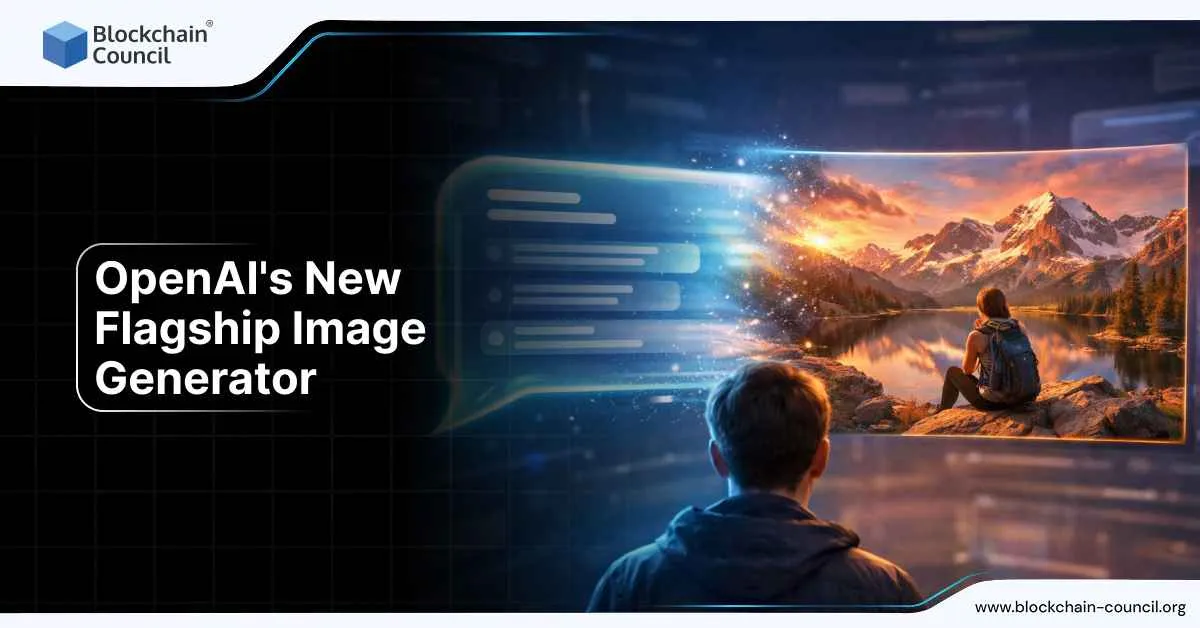
OpenAI’s new flagship image generator is the clearest signal yet that image creation is no longer a side feature bolted onto chat models. It is now a core product line with its own performance benchmarks, pricing logic, and competitive urgency. The model, officially named GPT Image 1.5, began rolling out globally inside ChatGPT on 16 December 2025, with availability expanding through 17 December 2025 depending on region and account tier.
This launch did not happen quietly. It arrived at a moment when image generation quality, speed, and edit precision had become a battleground between OpenAI, Google, and a growing list of specialized image labs. OpenAI’s response was not incremental. It was a full reset of how image generation is positioned, delivered, and monetized.

At the foundation of this release is OpenAI’s broader push to unify text, image, and multimodal intelligence into a single production system. That shift is why professionals increasingly invest time in structured pathways like an AI certification to understand how generative systems are actually evolving beyond simple prompt and output loops.
What OpenAI Actually Launched
The flagship image generator is GPT Image 1.5, exposed in two primary ways:
- Inside ChatGPT under the redesigned Images experience
- Via the OpenAI API using the model identifier gpt-image-1.5
OpenAI also lists chatgpt-image-latest as the ChatGPT-facing alias, but under the hood both reference GPT Image 1.5. This matters because it signals long-term support rather than an experimental model that may be retired quickly.
The official product announcement was published on 16 December 2025, marking the moment when GPT Image 1.5 replaced earlier DALL·E style workflows as OpenAI’s default image system.
What Changed Compared to Earlier Image Models
OpenAI and independent testing both point to three concrete improvements that define this release.
First, speed. OpenAI states that GPT Image 1.5 can generate images up to 4× faster than previous models. This is not just about raw latency. Faster generation enables iterative workflows where creators adjust prompts, styles, or layouts repeatedly in a single session without breaking flow.
Second, instruction following. Earlier image generators often struggled with precise edits. GPT Image 1.5 is designed to handle targeted changes while preserving the rest of the image. Examples demonstrated during launch included altering clothing, background elements, or text placement while keeping faces, lighting, and composition stable.
Third, editing reliability. The new model is optimized for image-to-image transformations. Users can upload an image and request specific changes without triggering a full re-render that destroys visual continuity. This capability is central to professional design and marketing workflows.
The New ChatGPT Images Experience
Alongside the model itself, OpenAI redesigned the ChatGPT interface to support image creation properly. A dedicated Images tab now separates visual work from text chat. The interface includes style presets, prompt suggestions, and quick edit options that reduce trial-and-error.
This redesign matters because it reframes image generation as a workspace, not a novelty. OpenAI is clearly targeting designers, marketers, and product teams who need repeatable outputs rather than one-off experiments.
For teams integrating GPT Image 1.5 programmatically, the same capabilities are available via the API. This includes text-to-image, image-to-image, and iterative refinement flows.
Pricing and Developer Economics
OpenAI published full pricing details for GPT Image 1.5 at launch. The model uses token-based pricing with separate rates for text and image tokens.
For text tokens per 1 million tokens:
- Input: $5.00
- Cached input: $1.25
- Output: $10.00
For image tokens per 1 million tokens:
- Input: $8.00
- Cached input: $2.00
- Output: $32.00
These numbers reveal how OpenAI expects the model to be used. Image generation is no longer treated as a flat per-image cost. It is a scalable system designed for pipelines where text prompts, image edits, and cached assets all interact.
Understanding this pricing structure requires a solid grasp of how modern platforms expose capabilities through APIs, caching, and tokenization. That foundation is often built through programs like a Tech Certification, especially for teams deploying generative tools at scale.
Competitive Pressure and Timing
The timing of GPT Image 1.5 was not accidental. In late November 2025, Google’s Nano Banana Pro image model gained attention for its realism and text rendering accuracy. Social media comparisons and developer benchmarks quickly framed the moment as a turning point in image generation quality.
OpenAI’s December release was widely interpreted as a direct response. Internal language used in briefings and product copy emphasized urgency, reliability, and professional readiness rather than playful creativity. This framing aligns with OpenAI’s broader pivot toward enterprise and production use cases.
Safety, Moderation, and Controls
GPT Image 1.5 includes updated moderation controls accessible through the API. Developers can configure moderation levels such as auto or low, balancing safety constraints with creative freedom depending on use case.
This matters for businesses operating in regulated environments or public-facing applications. Image generation now carries reputational and legal risk alongside creative potential, and OpenAI is making those trade-offs explicit rather than implicit.
Why This Release Matters
OpenAI’s new flagship image generator is not just about prettier images. It represents a shift in how visual creation is embedded into software workflows. Images are becoming programmable assets that can be generated, edited, versioned, and deployed at scale.
For businesses, this changes how campaigns are designed and tested. For creators, it alters the economics of iteration. For platforms, it raises expectations around speed, control, and integration.
Translating these capabilities into sustainable growth and clear value propositions is not automatic. That translation is where structured business frameworks, such as those taught in a Marketing and Business Certification, become relevant, helping organizations align generative output with brand, audience, and revenue strategy.
Conclusion
GPT Image 1.5 is unlikely to remain static for long. OpenAI has already hinted at deeper multimodal integration, tighter coupling with video generation, and expanded editing controls. The December 2025 launch should be seen as a foundation rather than a final form.
OpenAI’s new flagship image generator marks the point where image creation moved from experimentation into infrastructure. From this point forward, the question is no longer whether AI can generate images, but how deeply those images are woven into the products, platforms, and decisions that shape digital work.
Related Articles
View All
AI & ML
Claude’s New Constitution
Humanity has decided to build machines that can think, speak, reason, and possibly one day argue better than we do. Naturally, the next step is to write them a constitution. In January 2026, Anthropic published Claude’s New Constitution, a detailed document meant to guide how its AI model, Claude,…
AI & ML
OpenAI’s In-house Data Agent
OpenAI’s in-house data agent is not a chatbot doing party tricks with SQL. It’s an internal system built to solve a very boring, very real problem: how do thousands of employees get reliable answers from hundreds of petabytes of data without breaking things or trusting hallucinations. If you want…
AI & ML
OpenAI’s Single Database to Handle 800 Million Users
OpenAI revealed that its backend infrastructure is now built to support around 800 million ChatGPT users, and one part of that announcement caught everyone’s attention. The company described running a single primary database that supports ChatGPT at massive global scale. This does not mean…
Trending Articles

The Role of Blockchain in Ethical AI Development
How blockchain technology is being used to promote transparency and accountability in artificial intelligence systems.

AWS Career Roadmap
A step-by-step guide to building a successful career in Amazon Web Services cloud computing.
Top 5 DeFi Platforms
Explore the leading decentralized finance platforms and what makes each one unique in the evolving DeFi landscape.