
Metamask extension
 Michael Willson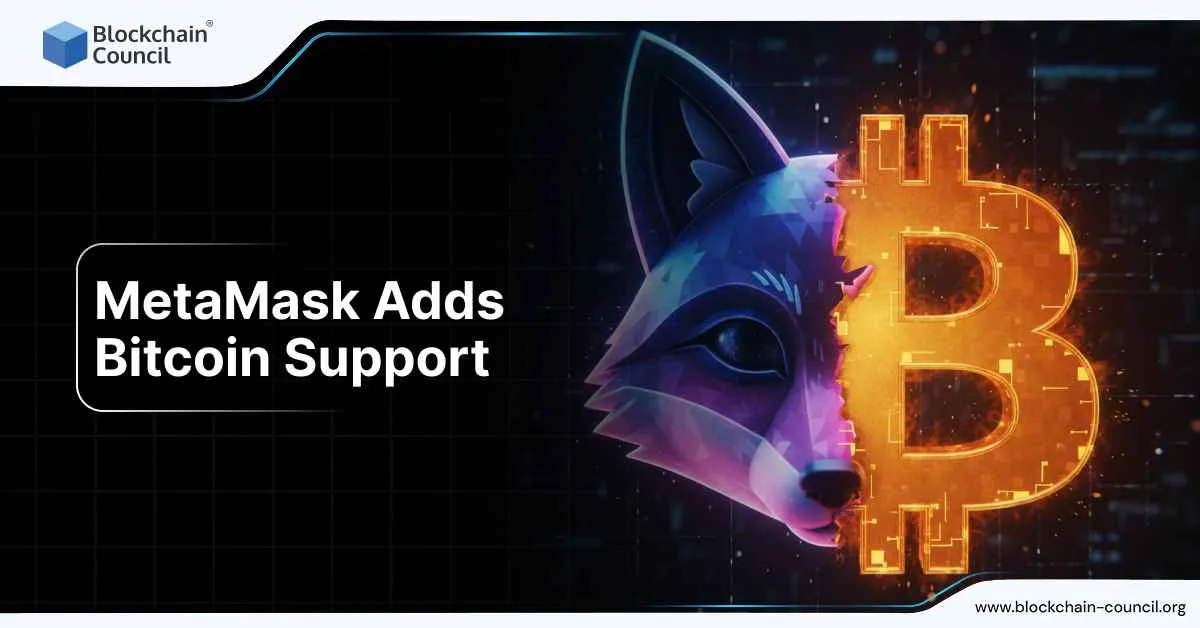
What is metamask extension
MetaMask adds Bitcoin support at a time when wallet fragmentation had become one of the most persistent pain points in digital asset management. For years, users were forced to maintain separate wallets for Bitcoin and Ethereum, or rely on wrapped tokens that introduced bridge risk and custodial dependencies. That separation narrowed decisively on 15 December 2025, when MetaMask rolled out native Bitcoin (BTC) support, allowing users to hold and transact BTC directly inside the MetaMask wallet.
This shift directly impacts how traders and long-term holders manage assets across ecosystems. Bitcoin now sits alongside Ethereum and other supported networks in a single interface, reducing operational friction for users who actively move capital between chains. As custody and execution converge inside one wallet, understanding trading mechanics and risk across assets becomes more important, which is why many participants build their foundation through a crypto trading course that covers real-world market behavior and asset-specific differences.

How the December 2025 Launch Works
MetaMask officially announced native Bitcoin support on 15 December 2025, following months of internal development and community anticipation earlier in the year. The feature became available through updated versions of the MetaMask browser extension and mobile application.
With this rollout, MetaMask users can:
- Generate a native Bitcoin address directly inside the wallet
- Send and receive BTC on the Bitcoin network
- Buy Bitcoin using supported fiat on-ramps
- Swap supported assets into BTC without relying on wrapped tokens
Before this update, Bitcoin exposure inside MetaMask depended on synthetic representations such as WBTC, which require custodians and smart contracts. Native BTC support removes that dependency and allows Bitcoin to function as Bitcoin, not as a proxy.
How Native Bitcoin Is Implemented
Once updated, MetaMask automatically creates a dedicated Bitcoin account alongside existing multi-chain accounts. The wallet supports SegWit-compatible Bitcoin addresses, improving transaction efficiency and fee optimization.
Bitcoin transactions initiated from MetaMask are broadcast directly to the Bitcoin network. Confirmation times follow standard Bitcoin behavior, meaning transactions may take longer to finalize compared to EVM-based networks. MetaMask has confirmed that Taproot address support is planned for a future update, expanding compatibility with newer Bitcoin features.
Balances and transaction history appear natively in the MetaMask interface, eliminating the need for separate Bitcoin wallet software.
Why This Matters for Blockchain Architecture
MetaMask adding Bitcoin support represents a meaningful evolution in wallet design. Bitcoin and Ethereum follow fundamentally different architectures, data models, and transaction logic. Supporting both natively requires abstracting complexity without compromising protocol integrity.
This development highlights how blockchain technology is maturing beyond isolated ecosystems into interoperable layers where users manage identities and assets across multiple chains through a unified interface. Wallets are no longer simple key managers. They are becoming orchestration layers for multi-chain interaction.
MetaMask’s Broader Multi-Chain Direction
Bitcoin support follows MetaMask’s broader expansion beyond Ethereum. Throughout 2025, MetaMask added support for additional non-EVM ecosystems, signaling a long-term strategy focused on unified asset management rather than chain-specific tooling.
By integrating Bitcoin natively, MetaMask positions itself closer to an operating system for crypto assets, where users can move value across networks without switching applications or compromising custody.
Building and maintaining such systems requires deep understanding of platforms, APIs, and security boundaries. This is where foundational knowledge in systems and infrastructure, such as that covered through a Tech Certification, becomes relevant for teams working on wallet architecture and multi-chain tooling.
User Experience Trade-Offs and Limits
While the integration simplifies custody, it does not eliminate Bitcoin’s inherent constraints. Transaction finality depends on network conditions, and fees fluctuate based on demand. MetaMask does not alter these fundamentals. It exposes them transparently within the wallet.
This design choice reinforces MetaMask’s approach of abstraction without distortion, preserving native behavior rather than masking it for convenience.
Business Implications for MetaMask
From a business perspective, adding Bitcoin support significantly expands MetaMask’s addressable user base. Bitcoin holders who previously had no reason to use MetaMask can now interact with the wallet without abandoning their primary asset.
Aligning product expansion with user trust and regulatory awareness is a strategic challenge. Connecting technical capability with sustainable adoption is where structured frameworks such as the Marketing and Business Certification are often used to bridge product decisions with long-term growth strategy.
Conclusion
MetaMask adding Bitcoin support is less about one feature and more about a shift in philosophy. Wallets are no longer tied to single ecosystems. They are becoming neutral gateways to multiple blockchains.
For users, this means fewer tools, fewer compromises, and clearer ownership. For the industry, it signals that Bitcoin and Ethereum no longer need to live in separate worlds.
Related Articles
View All
Bitcoin
How Many Bitcoins are there and How many are Left to Mine?
BTC Price USD: 67,737.58 BTC Price INR: ₹66,58,685.37 BTC Price CAD: 92,691.64 CAD BTC All-Time High: $126,080 BTC Market Cap: ~$2.05 trillion 24-Hour Trading Volume: ~$61.91 billion Circulating Supply: ~19.94 million BTC 24-Hour Change: -2.61% Bitcoin Market Cap: There is a limited supply of…

Bitcoin
How to set Bitcoin Mining Rig
BTC Mining Setting up a Bitcoin mining rig may sound complex, but with the right steps and components, anyone can get started. If you’re looking to mine Bitcoin from home or want to scale into a larger setup, this guide walks you through everything clearly. From choosing hardware to configuring…
Bitcoin
Bitcoin Liquidation
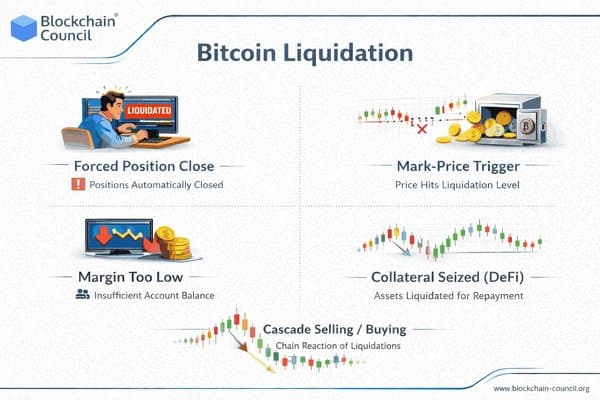
Bitcoin Liquidation Bitcoin liquidation is a forced close. You open a BTC position using margin (or you borrow against BTC-like collateral), price moves against you, and your safety buffer gets too small. At that point the platform takes control and closes the position, sells collateral, or both.…
Trending Articles

The Role of Blockchain in Ethical AI Development
How blockchain technology is being used to promote transparency and accountability in artificial intelligence systems.

AWS Career Roadmap
A step-by-step guide to building a successful career in Amazon Web Services cloud computing.
Top 5 DeFi Platforms
Explore the leading decentralized finance platforms and what makes each one unique in the evolving DeFi landscape.