
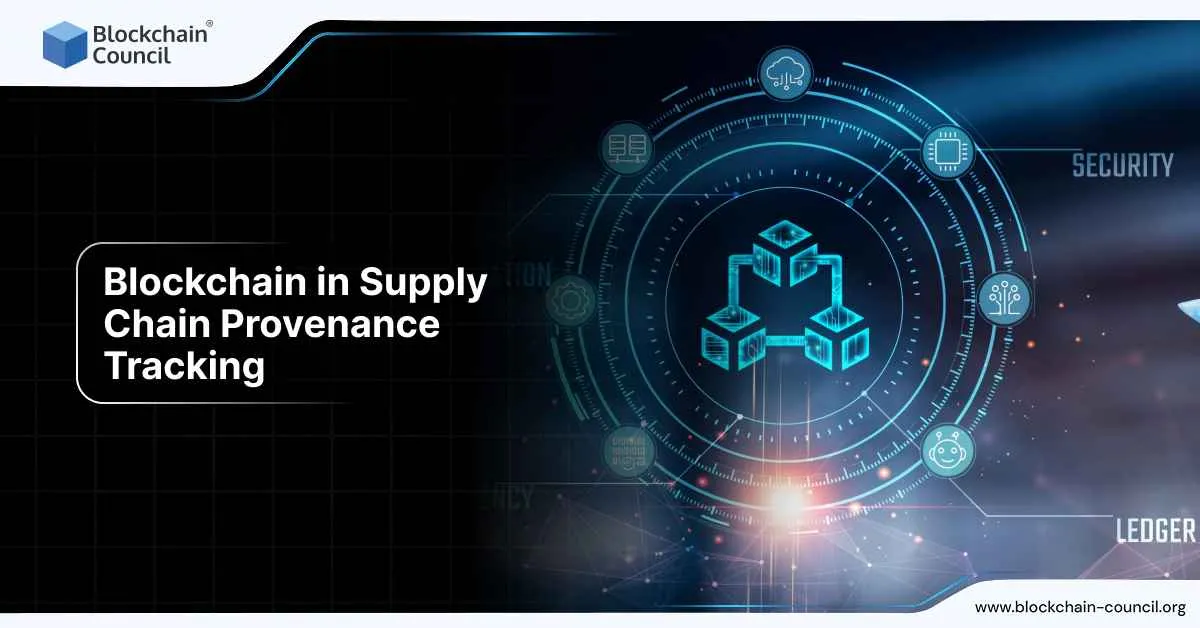
Blockchain in Supply Chain Provenance Tracking

Supply chains are under pressure to prove not just efficiency, but also authenticity, sustainability, and fairness. Customers want to know if their coffee really is fair trade, if the diamonds are conflict-free, and if the batteries in electric cars are ethically sourced. Traditional systems rely on paper trails and siloed databases, both prone to error and fraud. Blockchain provides a new way forward: a shared, tamper-proof ledger that records every step in a product’s journey. For professionals eager to understand these systems deeply, a Blockchain Course is the right place to begin.
Why Provenance Tracking Needs Blockchain
- Complex supply chains with multiple actors create data gaps.
- Counterfeiting and fraud cost businesses billions each year.
- Regulatory requirements demand proof of sustainability and sourcing.
- Recalls and audits are often slow and incomplete.
Blockchain solves these problems with immutability, real-time transparency, and automation through smart contracts.

How Blockchain Transforms Provenance
- Immutable records: Every transaction or product update is time-stamped and unchangeable.
- Digital product passports: QR codes or NFC chips link directly to blockchain data.
- Smart contracts: Automate compliance and payments on delivery.
- End-to-end visibility: All stakeholders—from farmers to retailers—see the same source of truth.
Real-World Examples
- Walmart: Tracks leafy greens with Hyperledger Fabric, reducing trace times from days to seconds.
- Volvo & Circulor: Battery passport system to trace cobalt and raw materials, set to meet EU 2027 requirements.
- OpenSC: A WWF-backed platform letting consumers scan QR codes for proof of sustainable sourcing.
- Tracifier: Oracle-backed project that cut food processing costs by 40%.
- VeChain: Used by PwC, Renault, and Microsoft to verify product authenticity and trace origins.
- De Beers: Traces diamonds from mine to retail to avoid conflict minerals.
Blockchain Provenance in Action
Authenticity
- Stops counterfeits with unchangeable product histories.
- Luxury goods, wine, and pharmaceuticals benefit most.
Transparency
- Makes environmental and ethical claims verifiable.
- Used for Scope 3 emissions tracking and fair-trade audits.
Efficiency
- Reduces recall times from weeks to minutes.
- Cuts disputes by providing a single shared ledger.
Sustainability
- Digital product passports highlight recycled content and carbon footprint.
- Helps brands prove ESG compliance to regulators.
Automation
- Smart contracts trigger payments and certifications automatically.
- Reduces admin work and speeds up logistics.
This condensed snapshot shows blockchain’s role in making provenance faster, cleaner, and more trustworthy.
Challenges Holding Back Adoption
- Integration with legacy ERP systems is complex and costly.
- High setup expenses deter small suppliers.
- Uneven adoption across stakeholders reduces effectiveness.
- Privacy concerns: Sensitive supplier data may need permissioned chains.
Why Business Leaders Should Pay Attention
- Consumers increasingly demand proof, not promises.
- Governments are mandating supply chain transparency in areas like battery metals and emissions.
- Companies stand to save costs, cut fraud, and strengthen brand trust.
- Professionals can prepare by exploring the Best Blockchain Course. For those diving into analytics, the Data Science Certification is valuable, while the Marketing and Business Certification helps leaders align blockchain initiatives with strategy.
Conclusion
Provenance is becoming the backbone of supply chain trust. From Walmart’s food tracking to Volvo’s EV batteries, blockchain is already proving its value. Challenges like integration and adoption remain, but the momentum is undeniable. In a world where customers and regulators demand proof of authenticity, blockchain delivers what old systems cannot: a single source of truth that makes supply chains transparent, accountable, and future-ready.
Related Articles
View All
Blockchain
Enterprise Blockchain Supply Chain Systems
Enterprise blockchain supply chain systems are permissioned or semi-permissioned networks used by multiple organizations to share traceability, provenance, compliance, and sometimes settlement data without a single party controlling the database. In real deployments, the blockchain itself is rarely…
Blockchain
Can Blockchain Help in Supply Chain Transparency?
Yes, blockchain can help improve supply chain transparency by creating a shared, tamper-proof record of how goods move from origin to consumer. It makes it possible to trace products, reduce fraud, and build consumer trust in industries such as food, fashion, logistics, and healthcare. The…
Blockchain
Blockchain for Carbon Credit Tracking
Blockchain is becoming an important tool for making carbon credit tracking transparent and reliable. Carbon credits are meant to prove that a company or project has reduced or removed emissions, but the system has long faced problems such as double counting, fraud, and lack of trust. Blockchain can…
Trending Articles

The Role of Blockchain in Ethical AI Development
How blockchain technology is being used to promote transparency and accountability in artificial intelligence systems.

AWS Career Roadmap
A step-by-step guide to building a successful career in Amazon Web Services cloud computing.

Top 5 DeFi Platforms
Explore the leading decentralized finance platforms and what makes each one unique in the evolving DeFi landscape.