Apple’s 2026 AR Glasses

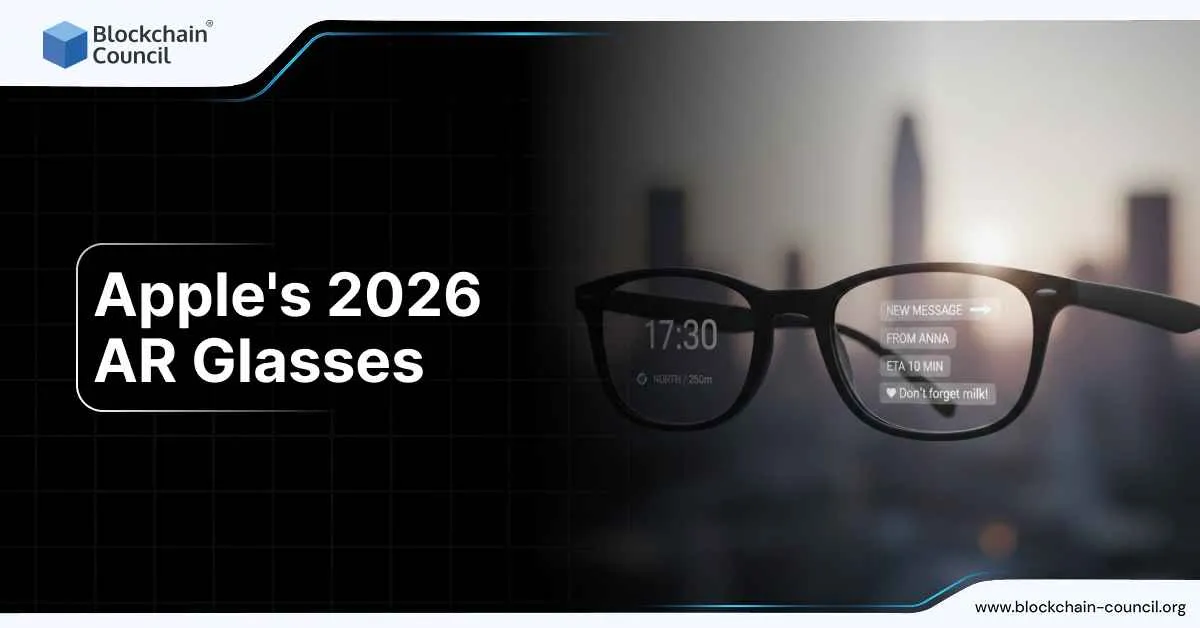
Apple is expected to target AI smart glasses in 2026, not full augmented reality glasses with holographic displays. Multiple credible reports describe the 2026 device as closer to Meta’s Ray-Ban smart glasses than to Apple Vision Pro. The focus is on cameras, audio, and artificial intelligence, with heavy reliance on the iPhone. Anyone trying to understand why Apple is prioritizing intelligence over displays will find the shift easier to follow by first understanding applied AI systems through an AI Course.
True AR glasses with digital overlays in the field of view are still described as a later product category.

Apple 2026 glasses
The 2026 Apple glasses are best described as AI-powered smart glasses.
They are expected to:
- Look like regular eyewear
- Be light enough for daily use
- Include cameras, microphones, and speakers
- Use AI to interpret surroundings
- Avoid projecting screens or holograms
These glasses are designed to assist, not replace a phone or create an immersive visual environment.
What they are not
The 2026 device is not:
- A Vision Pro replacement
- A full augmented reality display
- A standalone computing device
There are no reliable indications of waveguide displays, floating UI elements, or constant visual overlays in this generation.
Why Apple is not launching true AR yet
True AR glasses still face unresolved constraints:
- Displays consume too much power
- Heat dissipation near the face is risky
- Batteries remain too small
- Comfort drops quickly with added weight
Apple has consistently avoided shipping products that fail comfort or usability standards. Smart glasses allow Apple to enter the category without forcing immature display technology into the market.
Smart glasses solve a real problem
Smart glasses can deliver value without screens.
They can:
- Listen continuously
- Capture visual context on demand
- Deliver audio responses
- Support real-time AI assistance
This approach fits everyday behavior and does not require users to learn a new interface.
iPhone dependency
Reporting consistently states that Apple’s glasses will depend on the iPhone.
The iPhone handles:
- Heavy computation
- Network access
- AI processing
- App logic
The glasses handle:
- Cameras and microphones
- Context capture
- Audio output
This architecture keeps the glasses lightweight and power-efficient. It also aligns with Apple’s ecosystem strategy.
Designing systems that distribute workloads across devices is a core engineering discipline, often emphasized in professional programs such as a Tech certification.
Why cameras are central
The cameras are not for constant recording.
Their primary purpose is context awareness.
Cameras allow the AI system to:
- Understand what the wearer is looking at
- Recognize objects, text, and environments
- Assist with translation and identification
- Provide relevant information on demand
This is commonly described as visual intelligence. The glasses see so the AI can interpret.
Importance of Apple’s low-power chip
Battery life is the main constraint in eyewear.
Apple is reported to be developing a custom low-power chip, closer to Apple Watch efficiency than iPhone performance.
This chip is designed to:
- Run continuously
- Minimize heat
- Support AI inference
- Enable all-day use
Without this class of silicon, smart glasses would not be viable as a consumer product.
The 2026 timeline debate
There is a clear split in expectations:
- Bloomberg and Reuters reporting point to a late-2026 target for smart glasses
- Analyst roadmaps argue meaningful launches begin in 2027
The correct interpretation is that 2026 is a reported target, not a confirmed launch date. Apple has a history of shifting timelines without changing direction.
What patents actually indicate
Apple patents describe:
- Optical layouts in glasses arms
- Comfort-focused frame designs
- Future display alignment methods
Patents do not confirm launch plans. They indicate continued investment in eyewear, including display-enabled AR glasses for later generations.
Why this is an AI move, not an AR one
The 2026 glasses fit into a broader strategy shift.
Apple is moving toward:
- Mass-market AI hardware
- Lightweight wearables
- Always-available assistance
This mirrors a wider industry trend where intelligence and context matter more than visual interfaces.
Adoption of such products depends as much on trust and positioning as on technology. This is why professionals studying product rollout and consumer behavior often come from programs like a Marketing and business certification.
Competitive pressure
Meta’s progress with smart glasses has shown that:
- Users accept cameras when value is clear
- Audio-first interactions work
- AI assistance fits the form factor
Apple’s reported timeline aligns with growing competition in AI wearables rather than traditional AR headsets.
What will confirm a real launch?
The strongest confirmation signals will be:
- Supply chain reports of mass prototype production
- Regulatory filings for a new wireless device category
- Software frameworks explicitly built for glasses
Until those appear, claims should be treated as development-stage reporting.
Bottom line
Apple’s 2026 glasses are expected to be AI smart glasses, not true AR eyewear. They prioritize comfort, battery life, and contextual intelligence, with the iPhone doing most of the computing. Full augmented reality glasses remain part of Apple’s long-term roadmap, but the near-term product is about bringing AI into a wearable form people can realistically use every day.