

Smart Glasses to Replace Smartphones: Mark Zuckerberg
 Blockchain Council

Meta’s latest Ray-Ban smart glasses are no longer just about taking photos or playing music. With new features like live translation, object recognition, and an always-on AI assistant, Meta CEO Mark Zuckerberg says these glasses are being built to replace your smartphone. You can now take calls, listen to podcasts, get real-time answers, or translate signs in another language — all through a pair of glasses.
What Are Meta’s Ray-Ban Smart Glasses?
Meta’s Ray-Ban Smart Glasses are wearable devices that combine classic eyewear design with built-in tech features. They include cameras, speakers, microphones, and now even AI integration. The goal is to offer a hands-free way to capture content, talk to friends, and interact with digital services without pulling out a phone.

What Mark Zuckerberg Said
Zuckerberg said that smart glasses will soon be able to do all the main things we use our phones for. That includes messaging, taking photos, searching the web, and using AI. He explained that glasses feel more natural than holding a phone and allow users to keep their heads up and hands free.
According to him, smart glasses won’t just add features — they’ll change the way we use tech entirely. Instead of tapping and scrolling, we’ll use voice, visuals, and simple gestures.
Features That Could Replace Smartphones
The latest version of Meta’s smart glasses already includes powerful features:
- Voice assistant: Talk to Meta AI and get answers in real time
- Photo and video capture: Use voice to snap pictures or record
- Live streaming: Share your view directly to Instagram or Facebook
- Music and podcasts: Listen without needing earbuds
- Phone calls: Take calls through built-in microphones and speakers
Meta is working to add even more features that could eventually replace daily phone use.
Why Smart Glasses Could Replace Phones
Here’s how smart glasses could take over tasks we now use smartphones for:
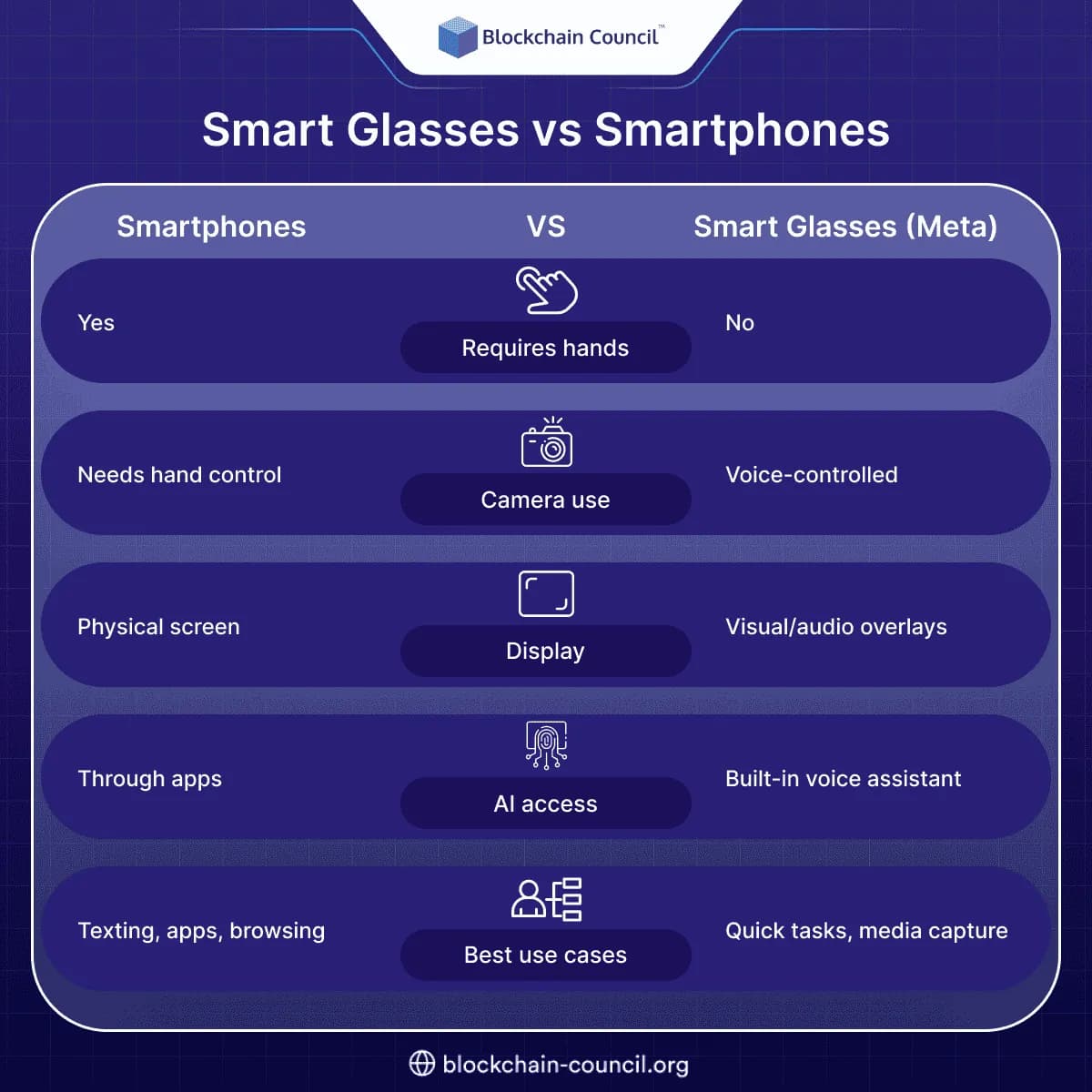
- No hands needed: Control apps and services just by speaking
- No screens: See information in your line of sight, not on a screen
- Faster access: Ask a question or take a photo instantly
- AI-powered help: Get answers, translations, or reminders based on what you’re seeing
Smart Glasses vs Smartphones
Benefits of Using Smart Glasses
- More natural movement: No need to look down at a screen
- Better multitasking: Use tech while walking, cooking, or commuting
- Lower screen time: Interact without constant scrolling
- Faster responses: Get answers or take photos right away
Challenges Ahead
Even with strong potential, there are real challenges to replacing phones:
- Battery life: Keeping glasses charged all day is still tough
- Privacy: Built-in cameras and microphones raise concerns
- Cost: High-tech glasses are still more expensive than many phones
- Comfort and style: Not everyone is ready to wear tech on their face
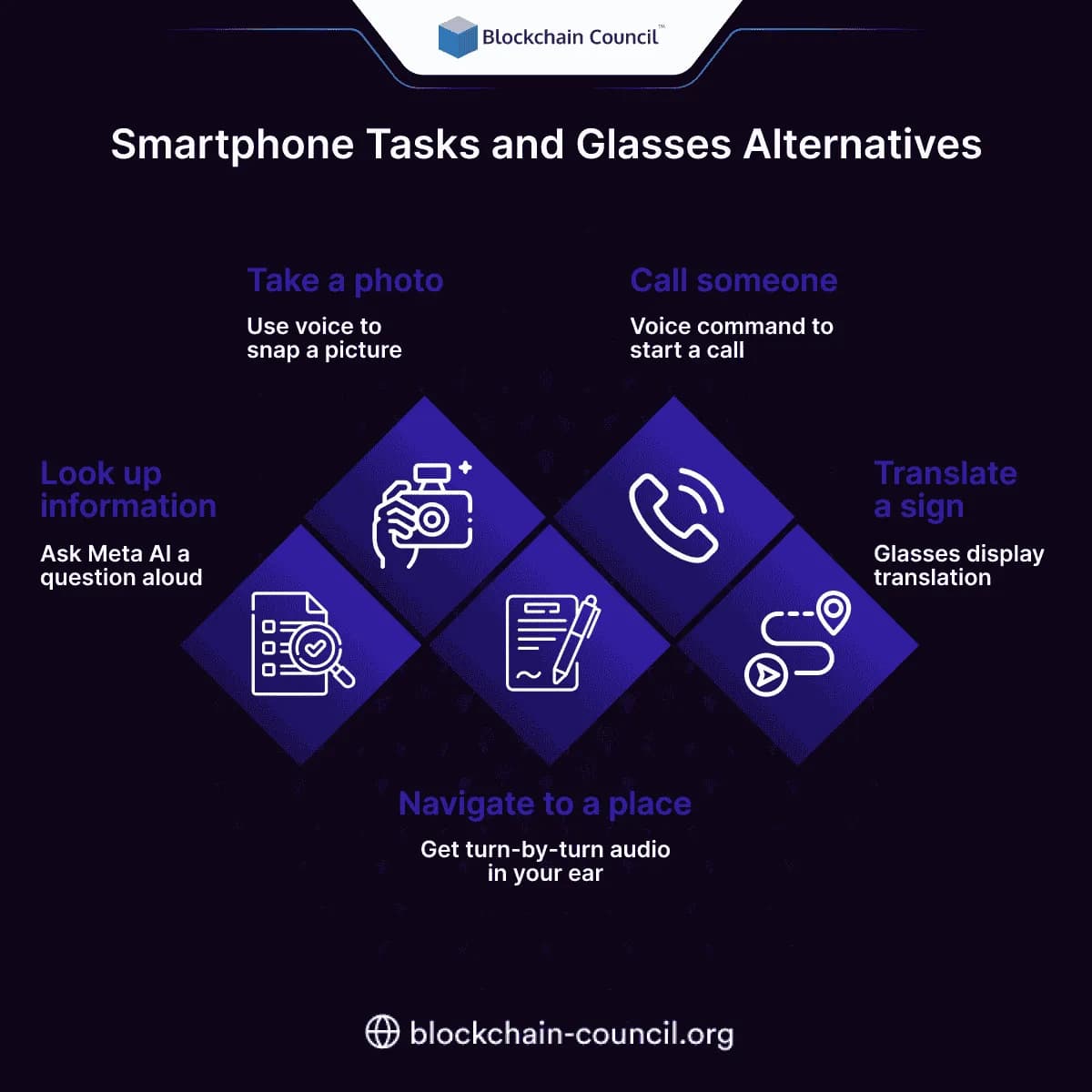
Smartphone Tasks and Glasses Alternatives
What This Means for the Future
If Meta’s vision becomes reality, smart glasses may eventually be as common as smartphones are today. Many companies, including Apple and Google, are also working on similar tech. But Meta is leading the charge in combining AI, AR, and wearables into one easy-to-use product.
We may not stop using smartphones overnight, but glasses could become the first thing we reach for — especially for quick tasks, voice commands, and on-the-go content. For creators, business users, and anyone who relies on fast communication, these glasses could be a game changer.
If you’re interested in how AI powers tools like smart glasses, check out this AI Certification. It’s a practical way to understand the tech shaping tomorrow.
Related Articles
View All
AI & ML
What Is Dark AI? Private by Design & Launch Date
Dark AI is a privacy-focused AI assistant from Eternal, the parent of Zomato and Blinkit. Learn how its encrypted chats and private memory work, and what is known about the launch date.

AI & ML
Apollo Farm: Growing Food With 95% Less Water
Apollo Farm, officially Opollo Farm, is a robotic indoor farm near Phoenix that grows fresh greens with up to 95% less water. Learn how it works, its benefits, and its limits.
AI & ML
What is Google TimesFM 3.0 and How Does It Work?
TimesFM 3.0 is Google Research’s 330-million-parameter foundation model for time series forecasting. Learn how it works, what multivariate forecasting adds, where to use it in BigQuery, and what its license allows.
Trending Articles
The Role of Blockchain in Ethical AI Development
How blockchain technology is being used to promote transparency and accountability in artificial intelligence systems.
How Blockchain Secures AI Data
Understand how blockchain technology is being applied to protect the integrity and security of AI training data.
What is AWS? A Beginner's Guide to Cloud Computing
Everything you need to know about Amazon Web Services, cloud computing fundamentals, and career opportunities.