Could AI Replace Social Media Influencers?

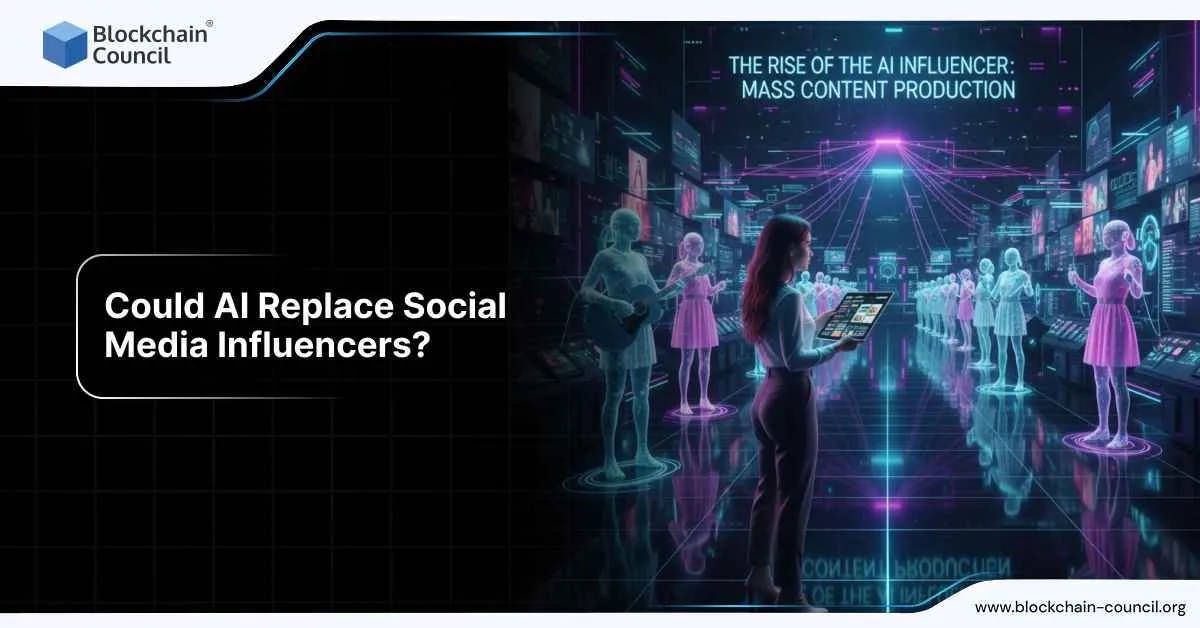
The question has become more relevant than ever: could AI truly replace human social media influencers? The rise of virtual influencers shows that brands can now promote products and engage audiences with personalities that don’t exist in real life. AI can create consistent, polished, and always-available characters. But when it comes to authenticity, emotional connection, and lived experience, human influencers still hold an edge. The future looks less like full replacement and more like a hybrid model.
Anyone who wants to understand this shift in depth can benefit from an AI certification, which provides insight into how these technologies are shaping industries like marketing and entertainment.

AI Influencers
AI influencers are digital personas powered by algorithms, CGI, or generative AI models. They look and act like real people, posting photos, videos, and even engaging in conversations with followers. Famous examples include Lil Miquela and Shudu Gram, who have gained millions of followers and secured brand deals with top fashion companies.
Unlike humans, AI influencers never age, never tire, and never go off-message. They are designed to be consistent, brand-safe, and adaptable across multiple platforms.
Why Brands Like AI Influencers
Control and Consistency
Human influencers can make mistakes, but AI personas stick to script. Brands enjoy the high level of control they get with virtual ambassadors, reducing the risk of scandals.
Cost Efficiency
Creating an AI influencer may require significant upfront investment, but once built, ongoing costs are lower than paying human influencers for continuous campaigns.
Global Reach
AI influencers can be tailored to different languages, cultural styles, and target audiences. They can scale instantly, something human influencers cannot do at the same pace.
Novelty and Buzz
Because AI influencers are still relatively new, they generate attention and headlines simply by existing. This novelty factor can help brands stand out.
Where AI Influencers Fall Short
Lack of Authenticity
Followers often value real experiences, vulnerability, and relatability. AI cannot share a genuine personal journey or emotions. Its “life” is simulated.
Emotional Connection
People connect more deeply when they sense genuine feelings and lived stories. AI can mimic empathy, but many audiences see through the simulation.
Risk of Disconnection
Overly polished, controlled AI personas can come across as robotic or artificial. Without the imperfections of humanity, engagement may plateau.
To better understand these audience dynamics, many professionals study user data and social behavior through a Data Science Certification.
Evidence From Research
Studies suggest AI influencers can outperform humans when promoting functional or utilitarian products. However, humans remain more persuasive in areas that require emotional resonance. Fashion and cosmetics brands, for example, use AI influencers successfully for brand positioning, but when authenticity is key, audiences lean toward real people.
Comparing AI vs Human Influencers
Strengths and Weaknesses of Each Approach
| Feature | AI Influencers | Human Influencers |
| Availability | 24/7, no downtime | Need rest and scheduling |
| Emotional depth | Simulated emotions | Genuine experiences and stories |
| Brand control | High, fully managed | Lower, subject to human behavior |
| Cost | High setup, lower long-term | Continuous fees, travel, production costs |
| Relatability | Limited, artificial context | Strong, based on lived life |
| Risk factor | No scandals, brand-safe | Risk of mistakes or controversies |
| Novelty | Still exciting and unique | Relies on personality and creativity |
| Global scalability | Easy to adapt across regions | Limited by time and language barriers |
| Engagement | Varies by niche | Strong in emotional and lifestyle niches |
| Trust | May feel artificial | Builds trust over time |
What This Means for the Future
It’s unlikely that AI will completely replace human influencers. Instead, the future will combine both. AI influencers will dominate in areas where control, scale, and novelty matter. Human influencers will thrive where personal stories, authenticity, and trust are essential.
Marketers exploring this shift often turn to a Marketing and Business Certification to learn how to balance human creativity with digital innovation. On the technical side, blockchain technology courses offer insights into building secure ecosystems where influencer marketing can evolve safely. Many creators also explore AI certs to strengthen their role in this changing environment.
Conclusion
So, could AI replace social media influencers? The answer is: partly, but not fully. AI influencers bring scalability, control, and novelty, but lack human authenticity. People may follow AI personas for entertainment and style inspiration, but when it comes to building trust and emotional bonds, human influencers still matter.
The smart move for brands and creators is not to choose between human or AI, but to integrate both — using AI for efficiency and innovation while keeping the human touch alive for trust and relatability.