
Top AI Certifications and Courses for Career Growth: What Hiring Managers Look For in 2026


Top AI certifications and courses for career growth in 2026 look different than they did even two years ago. Hiring managers are increasingly filtering for credentials that prove practical, role-specific ability to ship AI in real environments, not just familiarity with concepts. This shift is visible in the cloud market as well: AWS has announced the retirement of the AWS Machine Learning Specialty certification effective March 31, 2026, with the AWS Generative AI Developer Professional credential positioned as its successor, reflecting the broader pivot toward generative AI engineering skills.
At the same time, organizations are under pressure to operationalize AI responsibly. Industry reporting shows that 75% of organizations now expect AI awareness across their workforce, and that 60% of AI deployments fail due to poorly engineered solutions. These signals shape what hiring managers look for: platform currency, implementation readiness, and the ability to connect AI work to measurable business outcomes.

What Hiring Managers Look for in AI Certifications
Certifications still matter, but not as checkbox credentials. Recruiters and hiring managers typically evaluate them as evidence of four things.
1) Role Alignment: Skills Mapped to Job Responsibilities
Hiring teams map certifications to outcomes: building models, deploying services, securing systems, or leading AI product strategy. A credential carries more weight when it mirrors the actual responsibilities of the role.
2) Platform Currency: Skills That Match Today's Stack
Cloud and enterprise vendors update their exams frequently because the tools change quickly. Credentials with clear renewal cycles signal current knowledge, which is particularly important for platform-specific roles.
3) Practical Application: Projects, Capstones, and Real Deliverables
Programs that emphasize implementation, architecture, evaluation, and integration tend to outperform purely theoretical courses in hiring decisions. This matters because poorly engineered implementations remain a primary driver of AI project failure.
4) Enterprise Credibility: Trusted Vendors and Applied University Programs
Vendor certifications and university-backed professional certificates often carry weight because they are designed around job roles, assessment rigor, and real-world constraints.
Top Vendor AI Certifications Hiring Managers Recognize
Vendor certifications remain highly visible in enterprise hiring because they validate competency on widely used platforms and typically include scenario-based assessment.
Google Professional Machine Learning Engineer (PMLE)
Best for: ML engineers and AI specialists working on Google Cloud.
Why hiring managers value it: It signals readiness for enterprise-scale machine learning work, including model design, training, deployment patterns, and operational considerations. It is commonly associated with senior engineering responsibilities in organizations that standardize on Google Cloud services.
Microsoft Azure AI Fundamentals (AI-900)
Best for: Beginners, career switchers, business stakeholders, and early-career technical professionals who need baseline AI literacy.
Why hiring managers value it: It demonstrates shared vocabulary and foundational understanding across AI and machine learning concepts. This certification requires renewal after one year through a free renewal process, which can help demonstrate recency and a commitment to ongoing learning.
Microsoft Azure AI Engineer Associate (AI-102)
Best for: Cloud AI engineers implementing AI solutions on Azure.
Why hiring managers value it: It maps closely to real responsibilities in Azure-heavy environments, including building AI solutions, integrating services, and working cross-functionally with data science and product teams.
AWS Certification Shift: From ML Specialty to Generative AI Developer Professional
Best for: Professionals building AI applications on AWS, especially those working with generative AI workloads.
Why hiring managers value it: The market is moving toward generative AI engineering, and AWS's exam evolution reflects that reality. Candidates should be prepared to discuss how they design, evaluate, and integrate generative AI features into production systems, not just how they use them.
Role-Based Pathways: Matching Certifications to the Job You Want
Hiring managers frequently use a skill-to-certification map when screening candidates. Applying the same approach helps you choose a focused learning path and communicate a clear story on your resume and in interviews.
ML Engineer and MLOps Roles
Recommended: Google PMLE and cloud ML credentials aligned to your target employer's stack.
What interviewers probe: Feature pipelines, evaluation metrics, deployment strategy, monitoring, drift, and cost-performance tradeoffs.
Cloud AI Engineering in Azure-Heavy Environments
Recommended: Azure AI-102, often paired with AI-900 for foundational coverage.
What interviewers probe: Architecture decisions, service integration, security basics, and operational readiness.
GPU and LLM Infrastructure Roles
Recommended: NVIDIA generative AI certifications for teams working close to accelerated compute and LLM infrastructure.
What interviewers probe: Performance bottlenecks, deployment patterns, scaling, and reliability under load.
Management and Strategy Roles
Recommended: DeepLearning.AI AI for Everyone and executive-focused certificates for AI adoption and change leadership.
What interviewers probe: Prioritization, value measurement, AI risk awareness, and cross-functional leadership.
Specialized AI Certifications That Stand Out in 2026 Hiring
Beyond platform credentials, hiring managers increasingly value certifications that address implementation gaps, governance, and AI leadership. These are especially useful when you want to differentiate beyond basic prompt usage or general cloud skills.
Certified AI Foundation Professional (AIFP)
Best for: Professionals who need AI fluency without becoming full-time ML engineers.
What it signals: Understanding of AI fundamentals, ethical considerations, data-driven decision-making, and the ability to collaborate effectively with technical teams. This credential is valuable in roles such as business analysis, operations, QA, marketing analytics, and non-technical product functions.
Generative AI Engineering Professional (GAIEP)
Best for: Engineers and builders moving from experimentation into production.
What it signals: Capability to design, build, integrate, and optimize generative AI solutions in enterprise environments. This aligns directly with the industry finding that many AI deployments fail due to poor engineering practices, making implementation-focused credentials more compelling to hiring managers.
AI Product Manager Certification (AIPMC)
Best for: Product managers and product-minded professionals.
What it signals: Ability to translate AI capabilities into customer value, manage AI product lifecycles, set measurable success criteria, and address responsible AI concerns. Demand for AI-fluent product managers has grown significantly, and hiring managers favor candidates who can bridge business goals and technical execution.
Enterprise AI Transformation Expert (EAITE)
Best for: Leaders responsible for scaling AI across functions.
What it signals: Competence in AI operating models, transformation planning, risk management, and aligning AI initiatives to business objectives. These skills become critical when organizations move from pilots to scaled adoption.
AI Cyber Security and Risk Specialist (AICRS)
Best for: Security professionals, GRC teams, and AI builders working in regulated or high-risk environments.
What it signals: Awareness of AI threat landscapes, controls, risk assessment, governance, and compliance considerations. As AI becomes embedded in core systems, hiring managers increasingly expect security and risk competence to be part of AI delivery from the start, not added as an afterthought.
How to Choose the Right AI Certification for Your Career Growth
A simple selection framework mirrors how hiring managers screen candidates and helps you build a coherent credential story.
Start with your target role. Choose one clear job title, such as Azure AI Engineer, ML Engineer, or AI Product Manager.
Match the target company's stack. If the employer is Azure-heavy, prioritize AI-102. If they run on Google Cloud, prioritize PMLE.
Add a role differentiator. Pair a vendor credential with a specialized certification such as GAIEP for production generative AI, AIPMC for product roles, or AICRS for risk and security responsibilities.
Prove practice. Prepare to discuss one or two projects covering requirements, architecture, evaluation, failure modes, costs, and what you adjusted after testing.
Stay current. Track renewal requirements. AI-900, for example, requires yearly renewal, which supports the case that your knowledge is up to date.
How to Present Certifications So They Matter in Interviews
Hiring managers trust certifications more when candidates can connect them to real impact. Consider adding the following to your resume and interview preparation:
One-line context next to each credential covering the tools used, the problem solved, the scale, and the outcome.
A portfolio link such as a GitHub repository, case study, or architecture diagram that demonstrates real application.
Responsible AI notes covering privacy, bias, governance, and security when relevant to the target role.
Conclusion: What Hiring Managers Really Reward
Top AI certifications and courses for career growth are the ones that reduce hiring risk. In 2026, that means role-aligned credentials, current platform skills, and clear evidence that you can deliver AI systems that work in production. The market shift toward generative AI engineering, reflected in cloud certification updates, is raising the bar from basic usage to real implementation.
A pathway that combines a reputable vendor certification with a practical, role-specific credential such as Blockchain Council's AIFP, GAIEP, AIPMC, EAITE, or AICRS gives you a clearer story to tell hiring managers: you understand AI, you can apply it responsibly, and you can deliver outcomes that align with business objectives.
Related Articles
View All
AI & ML
Top AI Certifications for Remote Jobs in 2026
Remote work is no longer just a trend — it’s the future of employment. With companies across the world hiring remote talent, there’s an urgent need for professionals to upskill and stay competitive. Among the most in-demand remote-ready skills today is artificial intelligence. But how do you prove…

AI & ML
How to Start a Career in AI in 2026: Skills, Roles, and a 90-Day Learning Roadmap
Learn how to start a career in AI in 2026 with in-demand skills, key roles, and a practical 90-day roadmap covering ML, GenAI, RAG, agents, and MLOps.

AI & ML
Top AI Jobs in 2026: Roles, Salaries, and Skills Employers Want
Explore top AI jobs in 2026, including CAIO, AI architect, and LLM specialist. Compare salary ranges and the skills employers want for production-ready AI.
Trending Articles
The Role of Blockchain in Ethical AI Development
How blockchain technology is being used to promote transparency and accountability in artificial intelligence systems.
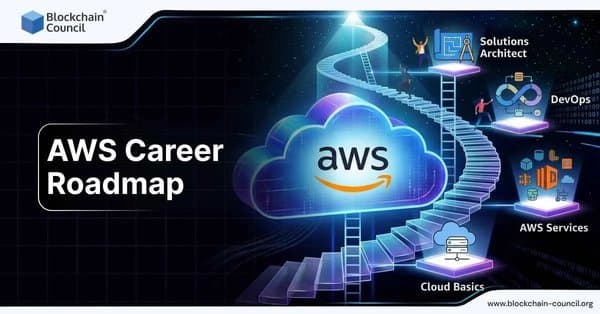
AWS Career Roadmap
A step-by-step guide to building a successful career in Amazon Web Services cloud computing.
Top 5 DeFi Platforms
Explore the leading decentralized finance platforms and what makes each one unique in the evolving DeFi landscape.