

OpenAI Launches Businesses in ChatGPT: What's New?

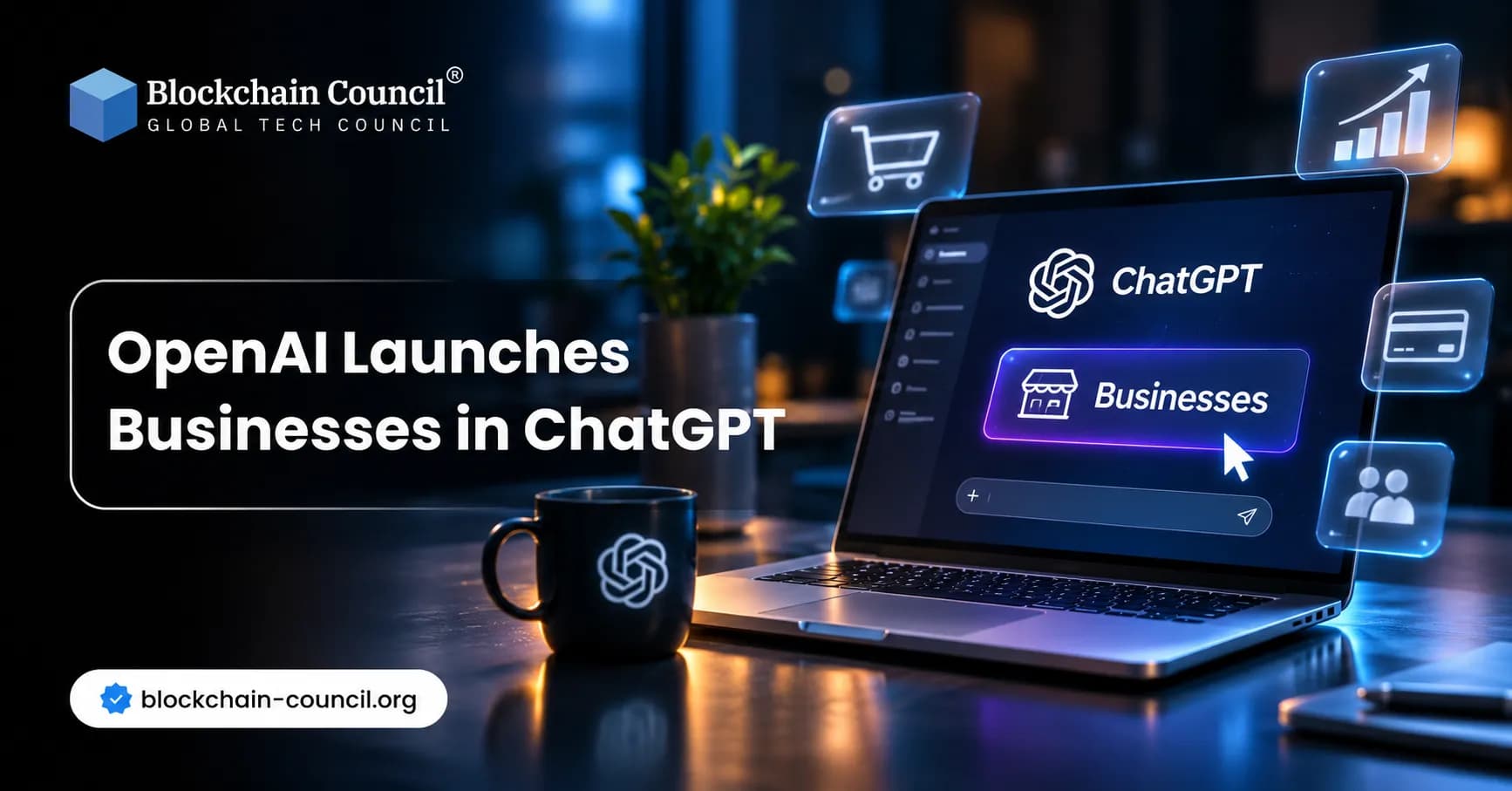
Millions of people now ask ChatGPT what to buy, where to book, and which company to trust. Until now, businesses had little say in how they appeared in those answers. That changed on November 10, 2026, when OpenAI launched Businesses in ChatGPT in beta. The new feature lets companies claim a verified profile, update their details, see how often ChatGPT mentions them, and, in the United States, launch AI agents that chat with customers. OpenAI says ChatGPT reaches 1.2 billion people each week, which makes this a big moment for marketers and small business owners alike. People who want to use ChatGPT well for work, including learners who study for a Certified ChatGPT Expert credential, will find this update important. This guide explains what is new, who can use it, and how to prepare, in plain language. It links OpenAI's official announcement and labels any details that come from press reports.
What Did OpenAI Announce?
Here are the key facts, based on OpenAI's announcement and reports from Reuters, The Next Web, The Decoder, and others.

Launch date: Tuesday, November 10, 2026, in beta.
Business Hub: A place where eligible companies claim their business, manage information, and see engagement insights. It launches in markets where ChatGPT is available.
Business Agents: AI agents that answer customer questions inside ChatGPT. For now they are limited to eligible U.S. e-commerce and online service businesses.
Privacy promise: OpenAI says businesses do not receive users' conversations or Business Agent chats.
Ads link: Businesses can sponsor a Business Agent as a destination for ChatGPT Ads. Sponsored placements are labeled and separate from ChatGPT's own answers.
Future plans: OpenAI calls this an early step and plans to expand to more markets and business categories.
What Is the Business Hub?
The Business Hub is the control center. Learners who explore a Certified Artificial Intelligence (AI) Expert program study how AI systems pull in business data and decide what to show, which helps explain why this tool matters. Think of the hub as a dashboard where a company tells ChatGPT who it is.
Claim and Verify Your Business
A company can claim its profile if it owns the business or is authorized to represent it. OpenAI's product FAQ, as reported by Unite.AI, says initial claiming is limited to eligible businesses with a website. Verified businesses get a blue check, according to The Next Web. Existing OpenAI Enterprise customers and advertisers can work with their OpenAI representative to claim their business.
Manage Your Information
After claiming, a business can update company details and submit product information, including prices and availability. The Decoder reported that Shopify merchants can connect their store directly. This matters because ChatGPT can show more accurate and current facts when the data comes from the business itself.
See Engagement Insights
The hub provides aggregated insights, such as how often ChatGPT mentions a business, how many people click through to its website, and common topics in those conversations. Privacy rules apply. OpenAI says data appears only after a minimum number of conversations is reached, and businesses do not see individual chats or customer identities.
What Are Business Agents?
A Business Agent is an AI representative a company can build, test, and publish inside ChatGPT. When a business appears in a ChatGPT answer, a user can open its profile and chat with the agent. The agent answers using the company's own product details.
How They Work
A user asks ChatGPT for recommendations or comparisons.
A business shows up in the answer.
The user opens the business profile and starts a chat with its agent.
The agent answers questions, helps with comparisons, and explains products.
For now, buyers are sent to the brand's own website to finish a purchase.
OpenAI says the agent chat is clearly labeled and kept separate from ChatGPT's independent answers. Reports also say OpenAI is building agent payments with Visa, but that is not part of this launch.
Rules for Agents
According to The Next Web, agents must say they are AI, keep prices accurate, and avoid pressure tactics. Purchases and sharing personal data require the user's explicit approval.
Who Can Use It, and Where?
Feature | Who can use it | Where |
Business Hub | Eligible businesses, including those with a website | Markets where ChatGPT is available, including Europe, India, and Australia, per press reports |
Business Agents | Eligible e-commerce and online service businesses | United States only for now |
Claiming through a representative | Existing OpenAI Enterprise customers and advertisers | Where available |
Reports from India said no launch date has been announced for Business Agents there. Eligibility rules may change as the beta grows, so check the Business Hub for your own status.
How Do Sponsored Agents and ChatGPT Ads Fit In?
OpenAI links Business Agents to advertising. Businesses can sponsor an agent and use it as the landing place for ChatGPT Ads. This builds on Sponsored Agents, a test OpenAI announced on September 16, 2026, with select U.S. advertisers.
What Stays Separate
OpenAI says paying does not change how often ChatGPT recommends a business, according to Digiday as reported by The Next Web. Sponsored placements are labeled. That distinction matters for trust, and readers should expect scrutiny from regulators and advertisers.
Why OpenAI Wants This
OpenAI's ad business is growing fast. The Next Web reports that ChatGPT Ads passed a $1 billion annual run rate in August and now has about 100,000 advertisers. Claimed profiles also give OpenAI direct contact with many companies that have never bought ads on ChatGPT.
How Does It Compare With Google Business Profile?
Many writers describe Businesses in ChatGPT as a rival to Google Business Profile, because both let companies manage how they appear. Building and using such tools takes technical literacy, from data feeds and analytics to how AI systems read structured information. A broad Tech Certification path can help marketers build that foundation.
Point | Google Business Profile | Businesses in ChatGPT |
Where it appears | Search and Maps | Inside ChatGPT conversations |
Interface | Links, maps, and listings | Conversational answers and agent chats |
Insights | Views, searches, and actions | Mentions, website clicks, and common topics, in aggregate |
Customer chat | Messaging features in some regions | Business Agents for eligible U.S. businesses |
Maturity | Established for many years | New beta |
The comparison is useful, but not perfect. A ChatGPT answer is a recommendation in conversation, not a ranked list, which changes how customers discover companies.
What Might a Customer Journey Look Like?
Here is an illustrative example, not an OpenAI case study. A shopper asks ChatGPT for a durable backpack for commuting. The answer mentions several brands, including one small online store. The shopper taps that store's verified profile, sees accurate prices and stock, and asks its Business Agent whether the bag fits a 15-inch laptop. The agent answers using the store's product details and links to the product page. The shopper then visits the brand's website to buy. The store sees a mention and a website click in its Business Hub, but not the shopper's chat.
How Could Small and Large Businesses Use It Differently?
Small businesses may care most about accuracy. A bakery or boutique can fix hours, prices, and descriptions so that ChatGPT stops repeating old details. Larger brands may focus on scale, such as syncing product catalogs, testing agent behavior, and comparing results across product lines. Enterprise customers and advertisers can work through their OpenAI representative. In both cases, the same basics apply: clean data, clear policies, and honest answers.
How Do You Measure Success?
Start with a baseline before you change anything. Record how often ChatGPT mentions your business and how many clicks reach your website. Then update your profile and watch for changes over several weeks. Match those numbers with your own analytics, such as visits, leads, and sales from your website. Remember that mentions are not sales, and aggregated data cannot show individual customers. Look for trends, not single-day spikes, and keep notes on every change so you can tell what helped.
Why Does This Matter for SEO and GEO?
SEO means search engine optimization, which helps pages rank in search results. GEO means generative engine optimization, which helps brands appear accurately in AI answers. Businesses in ChatGPT gives companies direct data and a basic feedback loop for GEO.
What Changes for Marketers
First-party data matters more. Accurate prices, stock, policies, and descriptions help AI describe your business correctly.
Visibility has a scoreboard. Mention and click counts give brands a first official view of their ChatGPT presence.
Third-party tools face pressure. Trending Topics noted that startups selling ChatGPT visibility estimates may feel pressure, though OpenAI will not replace them entirely for now.
Quality still wins. OpenAI's profile policy says profiles may include information from other sources, so your website, reviews, and public content still shape what ChatGPT says.
How Can You Get Started?
Check eligibility. Make sure your business has a website and that you are authorized to represent it.
Open the Business Hub and follow the claim and verification steps.
Review your public information. Fix outdated hours, prices, locations, and descriptions.
Prepare product data. If you sell products, organize names, prices, availability, and links in a clean feed.
Read the insights carefully. Track mentions and clicks over time, not just once.
Plan an agent if you qualify. Decide what the agent should answer, what it should never say, and when it should send customers to a human or your website.
Test before you launch. Ask the agent your hardest customer questions.
Keep your policies clear. Returns, shipping, and warranty details should be easy to find.
What Are the Risks and Limits?
It is a beta. Features, rules, and eligibility can change quickly.
Agents are U.S.-only for now. Many businesses cannot launch one yet.
Accuracy is shared. OpenAI says it does not verify every business-supplied detail or resolve every factual dispute. Businesses remain responsible for their submissions.
Insights are limited. Aggregated data and privacy thresholds mean small businesses may see little detail.
Ads blur lines for some users. Labels and separation help, but brands should be transparent.
Payments are not in the agent yet. Customers are sent to the brand's website.
A Note on Privacy and Trust
Customers will care about how their data is handled. OpenAI says businesses receive only aggregated insights, and that purchases and sharing personal data need the user's explicit approval. Businesses should respect that spirit. Do not ask agents to collect more personal information than needed, explain clearly when customers are talking to an AI, and give people an easy path to a human when a question is sensitive or complicated.
What Are Best Practices for Product Data and Content?
Use one consistent business name, address, and description everywhere.
Keep prices and stock current.
Write plain descriptions that answer common questions.
Use clear policy pages for returns and shipping.
Encourage honest reviews, and respond professionally.
Avoid exaggerated claims that an AI agent could repeat inaccurately.
Where Can You Read OpenAI's Official Announcement?
Go to the source for exact terms, eligibility, and updates:
Official announcement: Introducing Businesses in ChatGPT
Business Hub: Claim your business in ChatGPT
Details may change during the beta, so check these pages before you act.
What Should You Watch Next?
Expansion of Business Agents to more countries and business types.
Payments inside agents, including OpenAI's Visa work.
Independent research on how profiles affect recommendations.
Regulatory attention on sponsored agents and AI advertising.
Competing moves from Google, Meta, and others.
Conclusion
Businesses in ChatGPT turns ChatGPT from a place where brands are discussed into a place where brands can speak for themselves. The Business Hub gives eligible companies verified profiles, accurate details, and engagement insights, while Business Agents let U.S. e-commerce and online service firms chat with customers. OpenAI says it does not share user chats with businesses and that payment does not change recommendations.
The smart response is practical. Claim your profile if you are eligible, fix your information, watch the insights, and test agents carefully. Treat the beta as a learning phase, not a guarantee of sales.
Marketers need to explain these changes in clear, honest language to customers and teams. A recognised Marketing Certification can help professionals plan messaging, protect trust, and use AI platforms responsibly.
FAQs
1. What Is Businesses in ChatGPT?
Businesses in ChatGPT is a new beta initiative launched by OpenAI on November 10, 2026. It allows businesses to claim their profiles, manage company information, access engagement insights, and connect with potential customers through AI-powered Business Agents.
2. Why Did OpenAI Introduce Businesses in ChatGPT?
OpenAI introduced this feature to help people discover businesses, compare products and services, and make informed purchasing decisions. It also gives businesses new ways to maintain accurate information and interact with potential customers through ChatGPT.
3. What Is Business Hub in ChatGPT?
Business Hub is a central platform where eligible organisations can claim and verify their business profiles. Once verified, businesses can update important details, manage product information, connect product feeds, and explore aggregated engagement insights.
4. How Can Businesses Claim Their Profiles in ChatGPT?
Businesses can use Business Hub to locate and claim their organisation. After completing the verification process, eligible businesses can manage their profiles and provide updated information about their products and services. Existing OpenAI Enterprise customers and advertisers can also contact their OpenAI representatives for assistance.
5. What Information Can Businesses Update in ChatGPT?
Verified businesses can update key company details and provide product information through self-service product feeds. These feeds can include product pricing and availability, helping ChatGPT present more accurate and current information to users.
6. What Are Business Agents in ChatGPT?
Business Agents are AI-powered conversational assistants that businesses can build, test, and launch after claiming their profiles. They help customers explore products and services, ask questions, compare options, and understand business offerings.
7. How Do Business Agents Work?
When a business appears in a ChatGPT response, users can open its business profile. If the organisation has an available Business Agent, users can start a separate conversation with it. The agent uses business-provided information to answer questions and help customers explore available offerings.
8. How Are Business Agents Different From Regular ChatGPT Responses?
Regular ChatGPT responses provide independent answers based on the model's information and available sources. Business Agents represent individual businesses and provide information about their specific products or services. Their conversations are clearly labelled and kept separate from ChatGPT's independent responses.
9. What Insights Can Businesses Access Through Business Hub?
Business Hub provides aggregated engagement insights, including business mentions, website clicks, and common discovery topics across conversations where a business's website is cited. These insights help organisations understand how people discover and engage with their businesses through ChatGPT.
10. Does OpenAI Share Users' Conversations With Businesses?
No. OpenAI states that it does not share users' conversations or Business Agent chats with businesses. Business Hub provides aggregated insights that are available only when sufficient interactions meet certain privacy thresholds.
11. Can Ecommerce Businesses Use Businesses in ChatGPT?
Yes. Eligible ecommerce businesses can claim their profiles, provide product information, and build Business Agents. OpenAI is initially making Business Agents available to eligible ecommerce and online service businesses in the United States.
12. How Does Shopify Integration Work With Businesses in ChatGPT?
Shopify merchants can connect their stores through Business Hub or the Shopify administration interface to streamline business verification. Eligible Shopify products are already integrated into ChatGPT through Shopify Catalog, helping provide product information for customer discovery.
13. Is Businesses in ChatGPT Available Worldwide?
Businesses located in regions where ChatGPT is available can claim their profiles through Business Hub, subject to eligibility. However, Business Agents are initially limited to eligible ecommerce and online service businesses in the United States. Availability may expand to additional markets and categories over time.
14. How Can Businesses Benefit From Being Listed in ChatGPT?
Businesses can maintain accurate information, improve how their offerings are represented, understand discovery patterns, and create additional opportunities for customer engagement. Business Agents can also help interested users learn more about products and services through personalised conversations.
15. Can Businesses Advertise Through Business Agents?
Yes. Eligible businesses can sponsor their Business Agents and use them as destinations for ChatGPT Ads. Sponsored placements are clearly labelled and remain separate from ChatGPT's independent responses.
16. How Is Businesses in ChatGPT Different From Google Business Profile?
Both platforms help businesses manage information that customers use during discovery. Google Business Profile focuses on a business's presence across Google Search and Maps, while Businesses in ChatGPT combines business profiles, AI-powered discovery insights, product feeds, and conversational Business Agents within ChatGPT.
17. What Is the Role of AI in Business Discovery?
AI helps people discover businesses by interpreting natural-language questions, understanding customer requirements, comparing available options, and summarising relevant information. Features such as Business Agents extend this experience by allowing users to ask businesses specific follow-up questions.
18. How Can Businesses Prepare for Businesses in ChatGPT?
Businesses can prepare by maintaining accurate company information, updating product descriptions, providing current pricing and availability, and organising reliable information about their services. Ecommerce businesses should also review their product feeds and identify customer questions that a Business Agent could address.
19. What Does Businesses in ChatGPT Mean for SEO and Digital Marketing?
Businesses in ChatGPT creates another channel for online discovery and customer engagement. Digital marketers may need to focus on accurate business information, structured product data, useful website content, brand visibility, and clear answers to customer questions. Tracking mentions, website clicks, and discovery topics can also provide additional marketing insights.
20. What Is the Future of Businesses in ChatGPT?
Businesses in ChatGPT could develop into a broader platform for AI-powered business discovery, customer support, product comparison, and conversational commerce. OpenAI plans to expand the experience to more markets, business categories, and organisations with complex requirements. Its long-term impact will depend on adoption, feature expansion, and how customers use AI agents when making purchasing decisions.
Related Articles
View All
AI & ML
OpenAI Launches GPT-6.1 Terra: What’s New?
OpenAI has launched GPT-6.1 Terra, a faster and cheaper mid-tier model with stronger computer use, better image understanding and fewer errors. See what is new, what it costs, and who can use it.

AI & ML
Google Launches Gemini 4 Carbon: What’s New?
Google has launched Gemini 4 Carbon, its strongest AI model, with leading cybersecurity and long-horizon coding skills. See what is new, the benchmark scores, the price, the safety claims, and who can use it first.
AI & ML
Nanbeige 4.3 Launches: What’s New?
Nanbeige 4.3 is a free, open-weight 33B model built for agentic coding and tool use, with a 512K context window and an Apache 2.0 license. See what is new, how its benchmarks look, and what to check before trusting them.
Trending Articles
Top 5 DeFi Platforms
Explore the leading decentralized finance platforms and what makes each one unique in the evolving DeFi landscape.
How Blockchain Secures AI Data
Understand how blockchain technology is being applied to protect the integrity and security of AI training data.
Claude AI Tools for Productivity
Discover Claude AI tools for productivity to streamline tasks, manage workflows, and improve efficiency.