

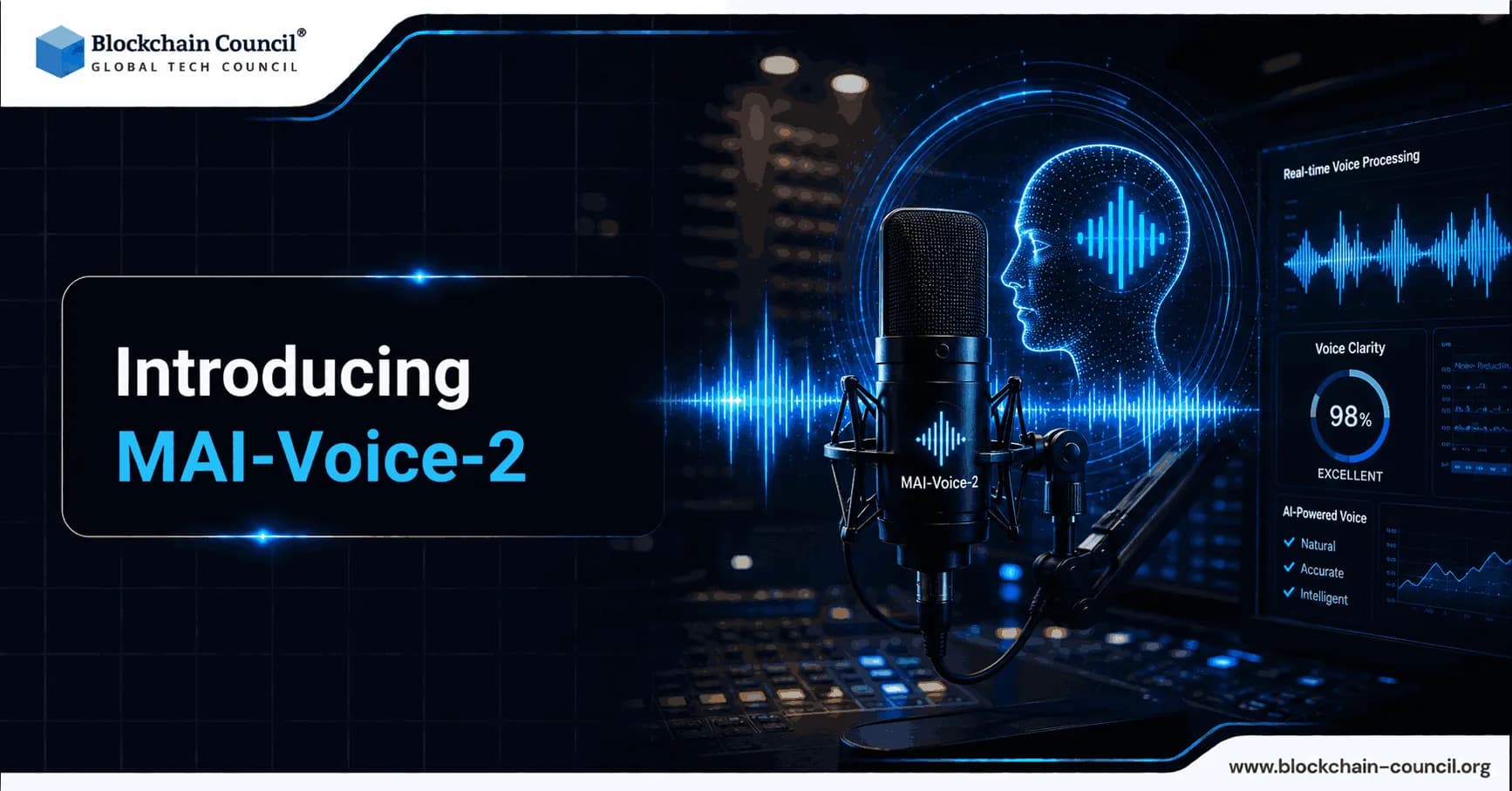
Introducing MAI-Voice-2

Introduction
Microsoft's approach to AI has shifted decisively. Furthermore, the evidence of that shift arrived at the Build 2026 developer conference in San Francisco on June 2, 2026 where the company unveiled seven new models from its MAI Superintelligence team in a single announcement. At the center of that lineup stood MAI-Voice-2, the second generation of Microsoft's proprietary text-to-speech model and one of the most significant advances in AI voice synthesis the company has ever produced. Consequently, for developers, product teams, marketers, content creators, and enterprise voice application builders, understanding what MAI-Voice-2 delivers and how it differs from its predecessor is now essential. This guide covers everything: the origin of the MAI Superintelligence team, the technical capabilities of MAI-Voice-2, its emotional and multilingual features, how it competes in the current market, and where to access it today.
The MAI Superintelligence Team: Microsoft's Declaration of Independence
To understand MAI-Voice-2, it helps to understand the organizational context that produced it. In November 2025, Microsoft formed the MAI Superintelligence team, an internal AI research and development unit led by Mustafa Suleyman, CEO of Microsoft AI and co-founder of DeepMind and Inflection AI. The stated philosophy of the team is "Humanist AI": designing models that optimize for the way people actually communicate, placing human beings at the center of the development process.

The MAI team's formation reflected a deliberate strategic decision. For years, Microsoft had built the majority of its AI product capabilities on top of models developed by external partners. The MAI initiative changed that by building foundational models entirely in-house models where Microsoft controls the architecture, training process, and deployment stack. The first major release came on April 2, 2026, with the launch of MAI-Voice-1, MAI-Transcribe-1, and MAI-Image-2. The Build 2026 conference on June 2, 2026, delivered the second wave including MAI-Voice-2 as the voice synthesis component of an expanded, seven-model release.
From MAI-Voice-1 to MAI-Voice-2: What Changed
MAI-Voice-1 established a strong technical foundation for Microsoft's voice synthesis program when it launched in April 2026. It used the 2025-12-18 engine version and demonstrated impressive generation speed producing a complete minute of audio in under one second on a single GPU. It supported Microsoft Copilot audio features, powered Copilot Daily and Podcast services, and introduced expressive speaking capabilities for storytelling and narration applications. However, it operated exclusively in English.
MAI-Voice-2 changes that limitation fundamentally. The second-generation model expands language support from English-only to ten languages at launch. Additionally, it introduces zero-shot voice cloning, a significantly deeper emotional style range, speaker role personas, and code-switching between languages within a single generation. According to Microsoft's evaluation data, MAI-Voice-2 is preferred over MAI-Voice-1 in 72% of head-to-head comparison tests, a substantial preference margin that reflects the breadth of improvements rather than any single isolated upgrade.
Key Features of MAI-Voice-2: A Numbered Breakdown
1. Multilingual Support Across 10 Languages
MAI-Voice-2 generates high-quality synthetic speech in ten languages at launch. The supported languages are German, Australian English, US English, Spanish, French, Hindi, Indonesian, Italian, Japanese, Korean, Dutch, Portuguese, Turkish, Vietnamese, and Chinese representing a combined speaker population covering the majority of the world's most commercially significant language markets. Each language is supported with regional variants that reflect local pronunciation patterns, rhythm, and speech cadence rather than applying a single standardized accent across all speakers of that language.
2. Regional Dialect Variants
Within each supported language, MAI-Voice-2 distinguishes between regional speech patterns. For example, the model generates separate Australian English and US English variants that reflect the prosodic and phonetic differences between these dialects with genuine accuracy. This regional specificity is critical for applications serving geographically diverse audiences where an incorrect accent would undermine the perceived authenticity of the voice.
3. Code-Switching Between Languages
MAI-Voice-2 supports natural code-switching, the ability to shift fluently between two languages within a single spoken passage. At launch, supported code-switching pairs include Hindi-English and Spanish-English. This is particularly valuable for content targeting bilingual populations or for applications that need to handle multilingual user inputs without breaking into separate generation calls per language segment.
4. Zero-Shot Voice Cloning
One of the most significant new capabilities in MAI-Voice-2 is zero-shot voice cloning. The model clones a target voice from a reference audio sample ranging from five to sixty seconds in length without any fine-tuning or model retraining. A developer provides the reference audio and the desired text, and the model generates speech in the cloned voice. This capability enables highly personalized AI voice applications, branded voice experiences, and content localization workflows where a consistent voice identity needs to be preserved across multiple languages or output sessions.
5. Emotional Style Range
MAI-Voice-1 could modulate speaker tone across a limited range. MAI-Voice-2 extends that capability into a clearly defined set of emotional styles. The supported registers include embarrassed, confused, sad, whispered, excited, angry, and neutral. This is the difference between a narrator reading text in a consistent neutral tone and a voice actor capable of conveying genuine emotional context through subtle acoustic shifts in delivery, pacing, and stress patterns.
6. Speaker Role Personas
Beyond emotional styles, MAI-Voice-2 introduces named role personas predefined speaker archetypes whose delivery style, energy level, and linguistic behavior are calibrated for specific professional contexts. At launch, supported roles include Motivational Trainer and Sports Commentator. Additional roles are expected to follow in subsequent model updates. These personas go beyond tone; they encode the full delivery pattern associated with each role, producing outputs that feel contextually authentic for their intended setting.
7. Generation Speed
The speed architecture that made MAI-Voice-1 technically distinctive is preserved and extended in MAI-Voice-2. The model generates sixty seconds of audio in under one second on a single GPU even when producing multilingual outputs, handling voice cloning, or applying emotional styles. Consequently, MAI-Voice-2 is practically viable for real-time voice applications, interactive voice response systems, and user-facing agents where response latency directly affects the user experience.
8. Preferred Over MAI-Voice-1 in 72% of Tests
Microsoft's internal evaluation data shows that MAI-Voice-2 is preferred over its predecessor in 72% of direct comparison tests across the full range of supported use cases. This preference margin reflects improvements across naturalness, expressiveness, multilingual consistency, and voice identity preservation validating the scope of the upgrade beyond any individual feature.
9. Integration With Azure Foundry and MAI Playground
MAI-Voice-2 is immediately available through Azure AI Foundry and the MAI Playground from June 2, 2026. The Azure Foundry integration connects the model directly to Microsoft's enterprise cloud infrastructure giving developers working within the Azure ecosystem access to MAI-Voice-2 through the same deployment patterns and SDKs they already use for other Azure AI services. The MAI Playground provides a no-code interface for testing voice generation, cloning, emotional styles, and language selection before any API integration work begins.
10. Copilot, Teams, and Dynamics 365 Integration
MAI-Voice-2 powers voice synthesis across Microsoft's product ecosystem. The model drives Copilot audio features, enables voice narration in Teams meeting summaries, and supports multilingual voice interfaces in Dynamics 365 customer engagement tools. As a first-party model fully controlled by Microsoft, it replaces third-party voice synthesis dependencies in these products giving Microsoft the ability to update, improve, and customize the voice layer of its product stack without external coordination.
MAI-Voice-2 in the Context of Build 2026
MAI-Voice-2 arrived as part of a seven-model announcement at Microsoft Build 2026 the broadest single-day model release in Microsoft's AI history. The full lineup included:
MAI-Voice-2: Expressive multilingual speech synthesis in 10 languages with voice cloning and emotional styles.
MAI-Transcribe-1.5: An upgraded transcription model covering 43 languages, with a 2.4% word error rate and the ability to transcribe one hour of audio in under 15 seconds up to five times faster than several competing models in the same category.
MAI-Image-2.5: An updated image generation model that debuted at number two for image editing and number three for text-to-image generation on the LM Arena leaderboard. The model adds image-to-image editing and a suite of control-with-preservation capabilities. A faster variant, MAI-Image-2.5-Flash, provides a higher-speed option.
MAI-Thinking-1: Microsoft's first large language model, designed for strong reasoning, mathematics, and general intelligence at a fraction of the cost of comparable models.
MAI-Code-1-Flash: A five-billion-parameter coding model integrated directly into GitHub Copilot for free use by developers.
Together, these models complete a first-party AI stack text, image, voice, speech recognition, reasoning, and code that Microsoft describes as giving developers the most comprehensive proprietary AI foundation available within a single cloud ecosystem.
Technical Architecture and the Humanist AI Philosophy
The design principles behind MAI-Voice-2 reflect the broader philosophy Mustafa Suleyman articulated when forming the MAI team: optimize for the way people actually communicate, not the way synthetic systems have historically approximated communication. Traditional text-to-speech systems have historically optimized for intelligibility producing audio that is understandable and clear. They have not optimized for the subtler acoustic qualities that make communication feel genuine: the slight hesitation before a confusing statement, the energy compression in a whispered phrase, the forward pressure in an excited announcement.
MAI-Voice-2 was trained with these qualities in mind. The emotional style system is not a post-processing layer applied to a neutral base voice; it is embedded in the generation process, producing acoustic outputs where emotional qualities emerge naturally from the same neural pathway that produces the phonetic content. Consequently, emotional outputs in MAI-Voice-2 avoid the artificiality of systems where tonal changes are applied as a separate transform, a limitation that has historically made emotional TTS feel unconvincing to human listeners.
Competitive Positioning in the AI Voice Synthesis Market
The AI voice synthesis market was valued at approximately $4.6 billion in 2024 and is projected to reach $9.7 billion by 2028. MAI-Voice-2 enters a competitive landscape that includes ElevenLabs, OpenAI's TTS and Realtime API, and a range of platform-specific voice synthesis offerings. Each of these competes across overlapping dimensions: language support, voice cloning capability, emotional range, latency, and cost.
MAI-Voice-2 differentiates most clearly through three combined advantages that no single competitor fully matches: generation speed comparable to the fastest available alternatives, zero-shot voice cloning from short reference clips without model fine-tuning, and deep integration with Microsoft's enterprise product ecosystem through Azure. For organizations already operating within the Microsoft ecosystem using Teams, Copilot, Dynamics 365, and Azure MAI-Voice-2 offers a voice synthesis capability that integrates without friction into existing infrastructure rather than requiring a separate third-party service and the associated procurement, compliance, and technical integration overhead.
Use Cases Across Professional Domains
Conversational AI and Voice Agents
Agentic AI systems that interact with users through voice require a synthesis layer that responds quickly, maintains consistent voice identity, and adapts emotional register to conversational context. MAI-Voice-2 fulfills all three requirements within a single model enabling voice agents to feel genuinely responsive rather than mechanically precise.
Content Localization and Multilingual Production
Content teams producing video, audio, and interactive content for multilingual audiences can use MAI-Voice-2 to generate localized narration across ten languages from a single reference voice. The zero-shot cloning capability eliminates the need for separate human recording sessions per language, dramatically reducing localization timelines and costs.
Customer Experience and Contact Centers
Contact center applications that use synthetic voice for IVR systems, callback narration, and automated outreach benefit from emotional style capabilities particularly in contexts where tone significantly affects user response, such as de-escalation workflows, confirmation messages, and support follow-up communications.
Podcast and Audio Content Generation
AI-assisted podcast and audio content tools benefit from the speaker role personas and emotional styles in MAI-Voice-2 enabling dynamic, engaging narration that avoids the flat monotony of earlier synthetic voice systems.
Building Professional Expertise Around Agentic AI Systems
MAI-Voice-2 is not simply a standalone voice tool. It is one component of a broader agentic infrastructure designed to power Copilot agents, customer service automation, and developer-built voice applications within Microsoft's ecosystem. As AI agents become increasingly capable and increasingly deployed in production environments, professionals who understand how agentic systems make decisions, coordinate tasks, and interact through multimodal outputs hold a decisive advantage. An Agentic AI certification builds exactly this expertise equipping practitioners to design, deploy, and oversee voice-enabled agentic workflows that leverage models like MAI-Voice-2 effectively and responsibly.
Furthermore, understanding the foundational principles of AI model architecture and how models are trained, evaluated, and deployed at scale is increasingly expected of any professional working with AI systems in a production capacity. An AI Certification provides this structured technical grounding, enabling professionals to evaluate models like MAI-Voice-2 with genuine architectural understanding rather than surface-level familiarity.
For professionals who want to build broader recognized expertise across the technology domains that support modern AI infrastructure including cloud deployment, model evaluation, API integration, and enterprise AI governance a Tech Certification creates a verifiable professional foundation applicable across the entire AI technology stack, not just any single model or platform.
Finally, for marketers and growth professionals who want to integrate MAI-Voice-2 into customer communications, campaign audio, and branded voice experiences translating its multilingual and emotional capabilities into measurable audience engagement a Marketing Certification provides the strategic framework to connect AI voice capabilities to campaign outcomes, audience targeting, and commercial performance.
Pricing and Access
MAI-Voice-2 is available through Azure AI Foundry and the MAI Playground from June 2, 2026. Pricing follows Azure AI's standard consumption-based model developers pay per character of text converted to speech, with rates varying by region and usage tier. Enterprise agreements through Azure provide volume pricing for high-frequency production workloads. The MAI Playground provides free access for experimentation and evaluation before production deployment. For teams building within the Microsoft ecosystem, MAI-Voice-2 is accessible through the same Azure SDK patterns and deployment workflows already used for other Azure AI Speech services requiring no new infrastructure setup for organizations already on Azure.
FAQs
What is MAI-Voice-2?
MAI-Voice-2 is Microsoft's second-generation AI text-to-speech model, developed by the MAI Superintelligence team. It generates expressive, emotionally nuanced speech in ten languages with zero-shot voice cloning capabilities, regional dialect variants, and speaker role personas.
When was MAI-Voice-2 announced?
MAI-Voice-2 was announced at Microsoft Build 2026 on June 2, 2026, in San Francisco, as part of a seven-model release from the MAI Superintelligence team.
Who leads the MAI Superintelligence team?
The MAI Superintelligence team is led by Mustafa Suleyman, CEO of Microsoft AI and co-founder of DeepMind and Inflection AI. The team was formed in November 2025.
How is MAI-Voice-2 different from MAI-Voice-1?
MAI-Voice-1 generated English-only audio. MAI-Voice-2 adds ten-language support, zero-shot voice cloning from five to sixty seconds of reference audio, a defined emotional style range, speaker role personas, and code-switching between Hindi-English and Spanish-English within a single generation.
What languages does MAI-Voice-2 support?
At launch, MAI-Voice-2 supports German, Australian English, US English, Spanish, French, Hindi, Indonesian, Italian, Japanese, Korean, Dutch, Portuguese, Turkish, Vietnamese, and Chinese — across ten distinct language tiers with regional dialect variants within each.
What is zero-shot voice cloning in MAI-Voice-2?
Zero-shot voice cloning allows MAI-Voice-2 to replicate a target voice from a reference audio sample of five to sixty seconds without fine-tuning or retraining the model. The developer provides the reference clip and the text, and the model generates speech in the cloned voice.
What emotional styles does MAI-Voice-2 support?
MAI-Voice-2 supports a range of emotional registers including embarrassed, confused, sad, whispered, excited, angry, and neutral embedded in the generation process rather than applied as post-processing effects.
What are speaker role personas in MAI-Voice-2?
Speaker role personas are predefined delivery archetypes calibrated for specific professional contexts. Launch personas include Motivational Trainer and Sports Commentator, with additional roles expected in future updates.
How fast does MAI-Voice-2 generate audio?
MAI-Voice-2 generates sixty seconds of audio in under one second on a single GPU — even when producing multilingual outputs, applying emotional styles, or generating cloned voices.
How much is MAI-Voice-2 preferred over MAI-Voice-1?
According to Microsoft's evaluation data, MAI-Voice-2 is preferred over MAI-Voice-1 in 72% of direct head-to-head comparison tests across the full range of supported use cases.
Where can developers access MAI-Voice-2?
MAI-Voice-2 is available through Azure AI Foundry and the MAI Playground from June 2, 2026. Enterprise access is available through standard Azure AI Speech service contracts and volume pricing agreements.
Does MAI-Voice-2 integrate with Microsoft Copilot?
Yes. MAI-Voice-2 powers voice synthesis across Microsoft Copilot audio features, Copilot Daily, and Podcast services replacing third-party voice synthesis dependencies in these products.
What other products does MAI-Voice-2 support?
Beyond Copilot, MAI-Voice-2 integrates with Microsoft Teams for meeting summary narration and Dynamics 365 for multilingual voice interfaces in customer engagement applications.
What is code-switching in MAI-Voice-2?
Code-switching is the ability to shift fluidly between two languages within a single spoken passage. MAI-Voice-2 supports Hindi-English and Spanish-English code-switching at launch, enabling natural bilingual delivery without separate generation calls.
What other models were announced alongside MAI-Voice-2 at Build 2026?
The Build 2026 launch included MAI-Transcribe-1.5, MAI-Image-2.5, MAI-Image-2.5-Flash, MAI-Thinking-1, and MAI-Code-1-Flash completing a seven-model, first-party AI stack across voice, transcription, image, reasoning, and code modalities.
What is MAI-Transcribe-1.5?
MAI-Transcribe-1.5 is Microsoft's updated speech-to-text model covering 43 languages, with a 2.4% word error rate and the ability to transcribe one hour of audio in under 15 seconds — up to five times faster than several competing models.
What is the MAI Playground?
The MAI Playground is a no-code browser-based interface where developers can test MAI-Voice-2's voice generation, cloning, emotional styles, and language selection capabilities before integrating through the Azure API.
How does MAI-Voice-2 compete with ElevenLabs?
MAI-Voice-2 differentiates from ElevenLabs through its deep integration with Microsoft's enterprise ecosystem Azure, Copilot, Teams, and Dynamics 365 combined with generation speed, zero-shot cloning, and emotional styles delivered within a single first-party model without requiring a separate third-party service contract.
Is MAI-Voice-2 available outside the United States?
Yes. MAI-Voice-2 is available globally through Azure AI Foundry and the MAI Playground, with regional deployment options across Azure's global infrastructure. Specific regional pricing and availability details follow standard Azure regional availability guidelines.
What does the Humanist AI philosophy mean for MAI-Voice-2?
Humanist AI is the core design principle of the MAI Superintelligence team optimizing AI for the way people actually communicate rather than how synthetic systems have historically approximated communication. For MAI-Voice-2, this means emotional styles and delivery patterns are trained into the model rather than applied as post-processing layers, producing outputs that feel naturally expressive to human listeners.
Related Articles
View All
AI & ML
What Is Strawberry Browser? The Self-Driving Browser Explained
Strawberry Browser is an agentic browser with built-in AI companions that can navigate websites, work across tabs, automate repetitive tasks, extract data, and complete multi-step web workflows.

AI & ML
How Recursive Self-Improvement Could Accelerate AI Innovation
Recursive self-improvement can speed AI innovation through bounded loops that refine prompts, code, data, and evaluations, but safety controls are essential.
AI & ML
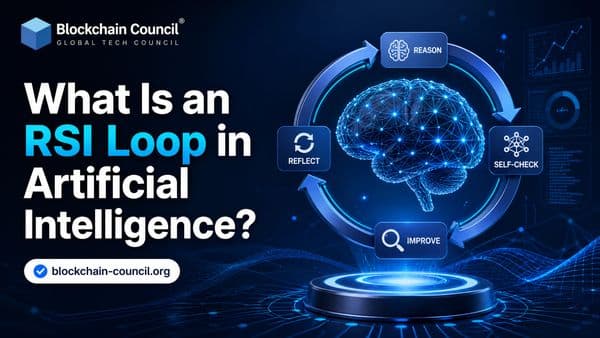
What Is an RSI Loop in Artificial Intelligence?
Learn what an RSI loop in artificial intelligence means, how recursive self-improvement works, and why verification and governance matter.
Trending Articles
The Role of Blockchain in Ethical AI Development
How blockchain technology is being used to promote transparency and accountability in artificial intelligence systems.

Top 5 DeFi Platforms
Explore the leading decentralized finance platforms and what makes each one unique in the evolving DeFi landscape.
How Blockchain Secures AI Data
Understand how blockchain technology is being applied to protect the integrity and security of AI training data.