

Integrating OpenAI Codex into CI/CD Pipelines for Automated Code, Tests, and Docs

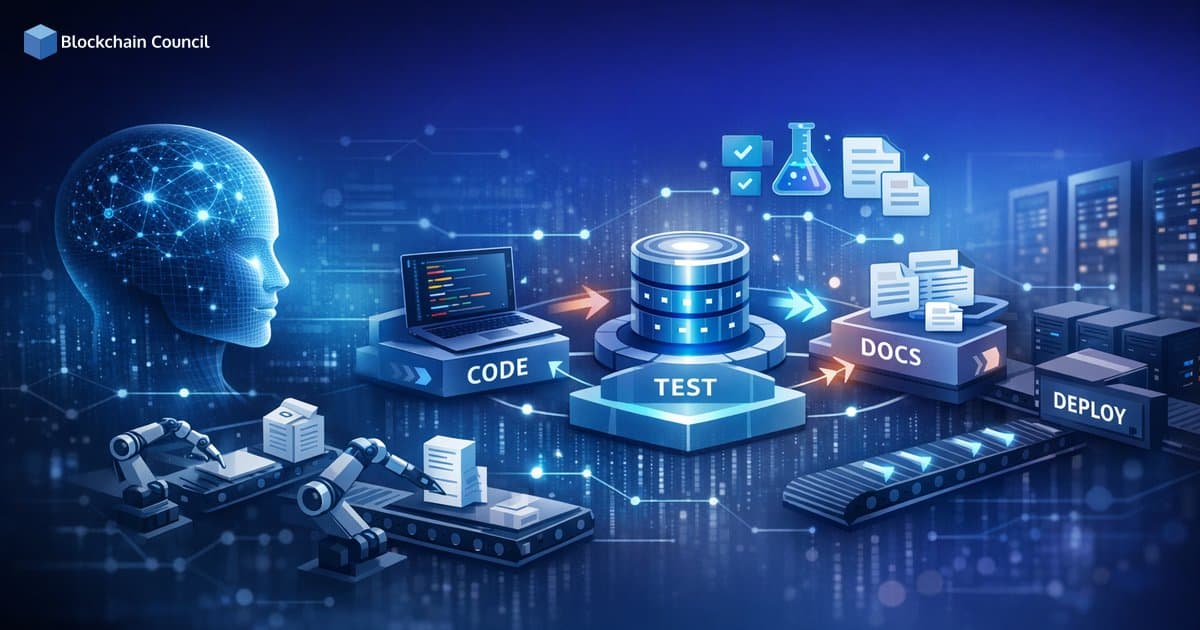
Integrating OpenAI Codex into CI/CD pipelines is shifting automation from simple rule-based checks to intelligent workflows that can propose code changes, generate tests, and keep documentation current. Instead of limiting CI/CD to build-and-verify, teams are experimenting with Codex as an agent that reads logs, understands repository context, and produces patches, reports, and pull requests for human review.
This article explains how to integrate Codex into modern pipelines, what patterns are working in GitHub Actions and GitLab CI, and how to apply guardrails for security, reliability, and cost control.

Why Integrate OpenAI Codex into CI/CD Pipelines?
CI/CD exists to reduce risk and shorten delivery cycles. Codex can help by automating work that traditionally slows teams down, particularly when failures require manual triage or when code quality checks produce noisy results.
- Faster recovery from failures: Codex can inspect CI logs and propose a fix as a pull request.
- Better signal from quality and security checks: Codex can post-process findings into structured reports and actionable remediation steps.
- More consistent documentation: Codex can generate or update docs based on code changes during pull request workflows.
- Developer time shifts to review and architecture: Teams increasingly validate AI outputs instead of writing every line from scratch.
GitLab has publicly described a goal of achieving a 90% or higher success rate for standard code generation and review tasks when integrating assistants like Codex into CI/CD workflows. That target matters because it implies an operational expectation: AI assistance must be reliable enough to become part of daily engineering routines.
Core Integration Patterns That Work Today
1) Auto-Fix CI Failures with GitHub Actions
One of the most practical approaches is a failure-driven workflow: when a pipeline fails, Codex is invoked to analyze logs and repository context, then generate a patch and open a pull request for review.
In OpenAI cookbook examples, the workflow typically:
- Triggers when a CI job fails.
- Installs Codex CLI on the runner.
- Runs a Codex command (for example, codex exec) with a prompt that includes failure logs and relevant repository context.
- Creates a branch such as codex/auto-fix and opens a pull request.
This pattern is effective for common breakages like failing unit tests after a dependency update, broken imports, configuration drift, and small refactors needed to satisfy lint rules. It also enforces a key governance principle: Codex proposes changes, humans approve and merge.
2) Generate Code Quality and Security Reports in GitLab CI
GitLab pipelines can treat Codex as a report generator that outputs machine-readable artifacts. OpenAI cookbook guidance shows Codex CLI being used to produce CodeClimate JSON for code quality, which GitLab can display inline in merge requests.
For security workflows, Codex can post-process SAST findings to:
- Deduplicate repeated findings
- Rank issues by likely exploitability
- Add remediation guidance that developers can apply quickly
A key engineering detail from these patterns is strict output control: prompts request JSON-only output, pipelines validate schemas, and jobs fall back safely (for example, defaulting to an empty JSON array) if parsing fails. This converts an LLM into a dependable CI stage that can be gated, validated, and reviewed.
3) AI Code Review as a Pipeline Stage (Provider-Agnostic)
Some teams run agentic tooling inside CI to review pull requests. A common workflow is to feed the Git diff into an AI review tool that uses Codex as the backend model, then output a Markdown report posted as a pull request comment.
This approach is attractive because it is:
- CI-platform agnostic: works with GitHub, GitLab, Bitbucket, and other YAML-based systems.
- Integrated with existing review habits: results appear where developers already work.
- Controllable: teams can scope reviews to specific directories, file types, or risk levels.
4) Documentation and Comment Generation Tied to Merge Requests
Documentation drift is a recurring DevOps problem. When integrating OpenAI Codex into CI/CD pipelines, teams can introduce an optional stage that:
- Detects changes in public APIs, configuration, or CLI flags
- Updates README files, docs pages, or code comments
- Creates a pull request with documentation diffs
This pattern works best when coupled with clear rules: only run on pull requests, only touch docs folders, and require mandatory human review from code owners.
Reference Workflow: Code, Tests, Docs, and Reports
A practical CI/CD architecture uses Codex in multiple stages, each with its own guardrails:
- Plan: Read the PR description and diff, summarize intent and risk areas.
- Generate: Optionally generate boilerplate, refactors, or migration steps in a dedicated branch.
- Test: Generate missing tests for changed modules, then run the test suite.
- Verify: Run linters, SAST, and dependency checks; use Codex to normalize findings into structured artifacts.
- Document: Update docs and examples impacted by the changes.
- Review and merge: Humans validate changes; pipeline enforces approvals and policies.
Codex is particularly valuable when used to convert unstructured pipeline data (logs, scanner output, diffs) into structured outputs (patches, JSON reports, prioritized remediation steps).
Enterprise Deployment Options and Governance
For regulated environments, enterprises often need strict control over identity, networking, and data boundaries. Microsoft supports Codex availability through Azure OpenAI deployments that include enterprise-grade security features such as private networking and role-based access control, and it can be invoked from GitHub Actions runners within those constraints.
Regardless of platform, successful governance typically includes:
- Auditability: Log prompts, model versions, and artifacts produced.
- Scoped permissions: Limit which repositories and paths Codex can modify.
- Mandatory human review: Apply this especially to security-sensitive code, authentication logic, and infrastructure changes.
- Change boundaries: Allow docs and tests to be updated automatically, but restrict production code changes to pull requests.
Security, Reliability, and Cost Considerations
Secrets Handling and Access Control
Codex integrations require credentials, typically stored as CI secrets or masked variables. Recommended practices include:
- Use least-privilege tokens for repository actions such as PR creation and commenting.
- Prevent secrets from entering prompts, logs, or artifacts.
- Run Codex jobs in isolated runners or containers when possible.
Schema Validation and Safe Fallbacks
When using Codex to produce CI artifacts, treat output validation as a hard requirement. For example:
- Require JSON-only output for CodeClimate and SAST post-processing stages.
- Validate against a schema, and fail closed or fall back to safe defaults if the output is invalid.
- Keep prompts short, explicit, and deterministic.
Human-in-the-Loop Remains Essential
Even with strong targets like GitLab's 90%+ success goal for standard tasks, AI can still generate incorrect fixes or incomplete tests. In CI/CD, the safest approach is to let Codex propose changes and keep merging authority with people and policy gates.
Control Cost with Smart Triggering
Running Codex on every push can be wasteful. Common cost-control strategies include:
- Run AI stages only on pull requests, not on every branch push.
- Trigger on failure (auto-fix) rather than always-on generation.
- Scope by directory (for example, only /services or /infra).
- Use smaller prompts and narrower context windows covering only changed files and relevant logs.
Skills and Enablement for Teams
Integrations work best when engineers understand both the AI toolchain and DevOps discipline. Teams formalizing these skills should consider training paths aligned to pipeline automation and secure AI usage.
- For AI fundamentals and practical workflow design, training in AI and prompt engineering provides a strong foundation for working with models like Codex in production pipelines.
- For security gates and secure delivery, programs covering cybersecurity and secure SDLC practices help teams govern AI-generated code responsibly.
- For Web3 teams, blockchain developer and smart contract security certifications are directly relevant where CI-based testing and automated auditing are critical to deployment safety.
Conclusion
Integrating OpenAI Codex into CI/CD pipelines is a practical way to automate high-friction engineering tasks: proposing fixes when builds fail, generating tests for changed code, producing structured quality and security reports, and keeping documentation aligned with the codebase. The strongest implementations treat Codex as a first-class pipeline agent, paired with output validation, scoped permissions, and mandatory human review.
As GitHub Actions, GitLab CI, and enterprise platforms like Azure OpenAI mature their agent workflows, CI/CD will continue to evolve into a more adaptive system where code, tests, docs, and security recommendations can be generated on demand and governed by the same approval and audit mechanisms that engineering teams already rely on.
Related Articles
View All
AI & ML
AI-Era Hiring Needs AI-Proof Tests: How HireValid Is Redefining Talent Assessment
Explore how HireValid is rethinking talent assessment for the AI era with job-relevant tests, anti-cheating design, integrity signals, and human-reviewed evidence of candidate ability.
AI & ML
OpenAI Dots vs Grok Bot vs Muse
Compare OpenAI Dots, Grok Bot, and Meta Muse to understand how these always-on AI agents differ in persistent work, computer use, connected apps, automation, and personal or business workflows.

AI & ML
What Is OpenAI Dots?
Learn what OpenAI Dots are, how these always-on AI agents work, and how they use GPT-6 Astra, cloud computers, connected apps, and persistent context to handle ongoing tasks.
Trending Articles
AWS Career Roadmap
A step-by-step guide to building a successful career in Amazon Web Services cloud computing.

Top 5 DeFi Platforms
Explore the leading decentralized finance platforms and what makes each one unique in the evolving DeFi landscape.
How Blockchain Secures AI Data
Understand how blockchain technology is being applied to protect the integrity and security of AI training data.