

Gemini 3.5 Flash in Education: Personalized Learning Paths and Assessments at Scale

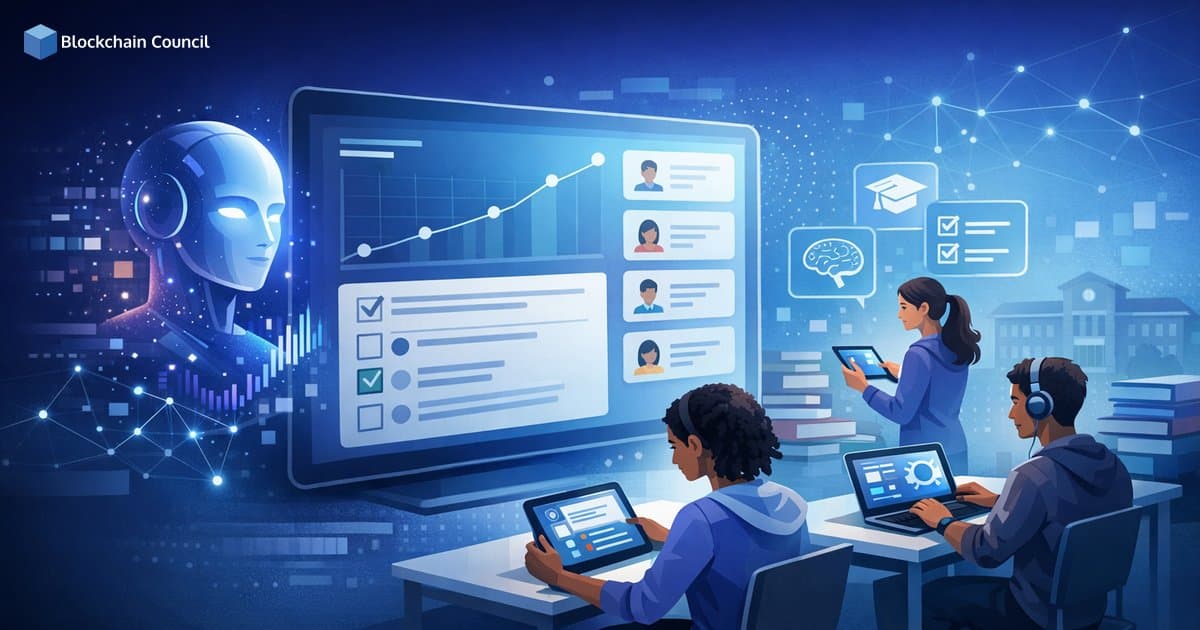
Gemini 3.5 Flash in education is gaining attention because it combines low-latency generation, long-context reasoning, and multimodal inputs - precisely the capabilities needed to personalize learning and run assessments for large cohorts. Google positions Gemini 3.5 Flash as a high-speed model in the Gemini 3.5 family, optimized for agentic workflows and complex multi-step tasks, with a 1 million token context window and support for text, image, audio, and video inputs. These capabilities create a practical foundation for adaptive tutoring, continuous formative assessment, and scalable feedback loops across classrooms, districts, and enterprise learning programs.
What is Gemini 3.5 Flash and Why It Matters for Education
Gemini 3.5 Flash is a natively multimodal reasoning model from Google DeepMind's Gemini 3.5 family, designed to deliver strong reasoning with low latency. Google reports it can generate output approximately four times faster than other frontier models, with additional optimizations in select internal environments reaching up to 12 times faster in specific scenarios. For education, speed is not merely a convenience - it enables real-time interactivity, which is essential for tutoring, practice, and immediate feedback.

Several technical properties are especially relevant to learning platforms:
- Long context (1 million tokens) to carry course materials, standards, rubrics, and a student's multi-week history in a single session.
- Large outputs (up to 65,000 tokens) for generating lesson variants, worked examples, and detailed feedback.
- Multimodal inputs for richer evidence of learning, including handwritten work, diagrams, oral responses, and presentations.
- Agentic workflow optimization for multi-step plans such as diagnose, teach, quiz, remediate, and re-assess.
- Thought preservation across multi-step interactions for consistent scaffolding and stable reasoning during longer learning arcs.
Gemini 3.5 Flash is generally available for production through the Gemini API and is integrated across Google's ecosystem, including AI Studio and enterprise agent tooling. This matters because educational institutions and edtech vendors can embed it into LMS workflows, tutoring apps, and assessment pipelines without treating it as a research-only model.
Evidence Base: LearnLM and Gemini for Education
While Gemini 3.5 Flash is a general-purpose model, Google's education-specific work provides useful signals for how Gemini-family systems can perform in real learning settings.
LearnLM: Pedagogy-Focused Tuning and Measured Outcomes
LearnLM is a learning-optimized version of Gemini that Google describes as built around learning science principles. In an 8-week randomized controlled trial with 1,763 junior secondary students in Sierra Leone, students using Gemini's Guided Learning mode for at least 12 hours improved math performance from around the 50th to the 64th percentile. Google also reports that standard conversions equate this to roughly 1.8 to 2.5 years of additional learning progress.
In a collaboration with Eedi, a math education platform, Google reports that LearnLM-based tutoring produced only 0.1% of messages containing factual errors, and that students receiving short AI tutoring sessions were 5.5 percentage points more likely to solve novel problems on subsequent topics compared to a condition relying on human tutors alone. Although these outcomes are not specific to Gemini 3.5 Flash, they indicate what is achievable when Gemini-family capabilities are paired with strong pedagogy, structured sessions, and human supervision.
Gemini for Education: Practical Classroom Workflows
Google's Gemini for Education outlines common use cases such as differentiated lesson materials, rubric drafting, writing feedback with citations, adaptive reading comprehension prompts, and teacher productivity automation. Gemini 3.5 Flash's speed and long context can strengthen these workflows by handling whole-class scale and extended student histories while maintaining responsive interactivity.
Creating Personalized Learning Paths with Gemini 3.5 Flash
Personalized learning paths require three things to work well at scale: accurate learner modeling, adaptive sequencing, and the ability to deliver content in the right modality at the right time. Gemini 3.5 Flash supports all three when integrated into an LMS or tutoring platform with appropriate guardrails.
1) Long-Context Learner Modeling
The 1 million token context window allows a system to consolidate the data needed for high-quality personalization, including:
- Quiz and assignment history, including error patterns.
- Misconceptions and prior explanations that did or did not work.
- Curriculum documents, learning standards, and course pacing guides.
- Teacher preferences, accommodations, and accessibility needs.
This enables a continuously updated learning profile, supporting mastery-based progression rather than fixed-pace instruction.
2) Agentic Curriculum Navigation and Adaptation
Gemini 3.5 Flash is optimized for multi-step, long-horizon tasks, which maps directly to an adaptive tutoring loop. A well-designed agent can:
- Diagnose what a learner knows through quick probes, confidence checks, and error classification.
- Plan the next sequence, covering micro-lessons, practice sets, and prerequisite refreshers.
- Teach and practice with step-by-step scaffolding and retrieval prompts.
- Re-assess using short formative checks.
- Adapt difficulty, modality, and pacing based on performance and engagement signals.
Because Flash is built for speed, this loop can run frequently - even during low-stakes practice - without feeling sluggish to students.
3) Multimodal Learning Paths for Accessibility and Depth
Education is inherently multimodal. Students may learn best through a mix of text explanations, diagrams, audio summaries, or short video instruction. Gemini 3.5 Flash can accept and generate across modalities, enabling personalization such as:
- Visual-first explanations for geometry, graphs, and data literacy.
- Audio supports for language learners and accessibility use cases.
- Video micro-lessons paired with timestamped questions to check understanding.
In practice, this allows platforms to offer alternative representations of the same concept, reducing cognitive load and improving comprehension.
Scaling Personalized Assessments with Gemini 3.5 Flash
Assessment at scale often breaks down when it becomes slow, generic, or disconnected from instruction. Gemini 3.5 Flash can support continuous assessment that is embedded directly into learning activities.
1) Dynamic Formative Assessment Generation
Gemini 3.5 Flash can generate questions aligned to curricula and standards while adapting difficulty in-session based on student responses. Common formats include:
- Multiple-choice items with distractors targeting known misconceptions.
- Short-answer checks for key facts and procedures.
- Open-ended prompts that test explanation, reasoning, and transfer.
The most valuable capability is not question generation alone, but the ability to produce targeted hints and worked solutions aligned to a learner's specific error pattern - which is central to effective formative assessment.
2) Rubric-Based Feedback and Semi-Automated Grading
With long context, the model can compare student work against rubrics, exemplars, and standards. This supports:
- Narrative feedback tied to rubric criteria such as clarity, reasoning, evidence use, and correctness.
- Revision guidance that suggests specific improvements rather than generic comments.
- Score estimates for low-stakes use or as a first-pass suggestion for educators to review.
For higher-stakes assessment, best practice is to keep a human in the loop and apply validation layers - for example, requiring the model to cite evidence from the submission and rubric before issuing a recommendation.
3) Process-Aware Assessment, Not Just Final Answers
Traditional grading often ignores process. Because Gemini 3.5 Flash supports multi-step interactions and can preserve intermediate reasoning, it can evaluate:
- Step-by-step math derivations and where the first error occurs.
- Argument structure in essays, including claims, evidence, and counterarguments.
- Improvement across revisions when drafts are included in context.
This aligns with competency-based education, where demonstrating thinking matters as much as the final output.
4) Multimodal Assessment of Real Student Artifacts
Many important competencies appear in artifacts beyond text. Gemini 3.5 Flash can help evaluate:
- Photos of handwritten work or diagrams.
- Recorded presentations or oral responses using transcripts and audio cues.
- Code submissions with test-driven feedback and style guidance.
This opens opportunities for more authentic assessment while still providing fast, actionable feedback.
Implementation Blueprint for Institutions and Edtech Teams
To use Gemini 3.5 Flash in education responsibly, treat the model as an engine inside a governed system rather than as an autonomous instructor.
Step-by-Step Approach
- Define outcomes: mastery targets, competencies, and the success metrics you will track.
- Design the learning loop: diagnose, teach, practice, assess, remediate.
- Ground to curriculum: inject standards, approved materials, and rubrics into context.
- Add guardrails: constrain tone, age-appropriateness, and allowed actions; require citations to provided materials where possible.
- Human oversight: establish teacher review queues for edge cases, low-confidence outputs, and high-stakes grading decisions.
- Measure and iterate: A/B test prompt strategies, question difficulty policies, and feedback templates.
Privacy, Integrity, and Fairness Considerations
- Compliance: educational deployments should align with FERPA, GDPR, and local equivalents; verify data controls and residency requirements before rollout.
- Bias and fairness: audit feedback and scoring across demographics and language proficiency levels; monitor for systematic differences in recommended learning pathways.
- Transparency: provide explainable rationales for feedback and grading suggestions that educators and learners can review and contest.
- Academic integrity: redesign tasks to value process artifacts such as drafts, oral defenses, and step logs, and clearly define acceptable AI assistance.
Skills and Certifications to Operationalize AI in Education
Deploying Gemini 3.5 Flash in education typically requires cross-functional skills spanning AI product design, data governance, and security. For teams building or managing these systems, relevant upskilling options include Blockchain Council's Certified Artificial Intelligence (AI) Expert, Certified Prompt Engineer, and Certified Machine Learning Expert programs. For institutions focused on risk management and governance, the Certified Cybersecurity Expert certification can support privacy-by-design and secure deployment practices.
Conclusion: Gemini 3.5 Flash as a Scalable Engine for Learning and Assessment
Gemini 3.5 Flash in education is well-suited to personalized learning paths and assessments at scale because it pairs strong reasoning capabilities with low latency, long context, and multimodal understanding. Evidence from LearnLM deployments and controlled trials shows that Gemini-family systems, when designed around learning science and implemented with teacher supervision, can improve learning outcomes and deliver reliable formative support. The next generation of educational platforms will likely converge personalization and assessment into continuous, low-stakes interactions supported by governed AI agents that adapt in real time while remaining aligned to curriculum standards, fairness requirements, and privacy regulations.
Related Articles
View All
AI & ML
Built to Catch AI Cheating: Rethinking Pre-Employment Assessments with HireValid
Explore how HireValid is rethinking pre-employment assessments with AI-resistant test design, integrity signals, candidate evidence, and human review to address AI-assisted cheating.
AI & ML
Google Launches Gemini 4 Argon: Features and Capabilities
Google has launched Gemini 4 Argon, its flagship AI model for coding, finance, law, cybersecurity and science. Learn its key features, availability, pricing and safety details.
AI & ML
AI Explained: From Machine Learning to Generative AI
AI Explained in simple terms. Learn the differences between AI, machine learning, and deep learning, how neural networks and LLMs work, and how generative and multimodal AI create content.
Trending Articles
The Role of Blockchain in Ethical AI Development
How blockchain technology is being used to promote transparency and accountability in artificial intelligence systems.

Top 5 DeFi Platforms
Explore the leading decentralized finance platforms and what makes each one unique in the evolving DeFi landscape.
What is AWS? A Beginner's Guide to Cloud Computing
Everything you need to know about Amazon Web Services, cloud computing fundamentals, and career opportunities.