
Future of AI Assistants & Neural Rendering
 Michael Willson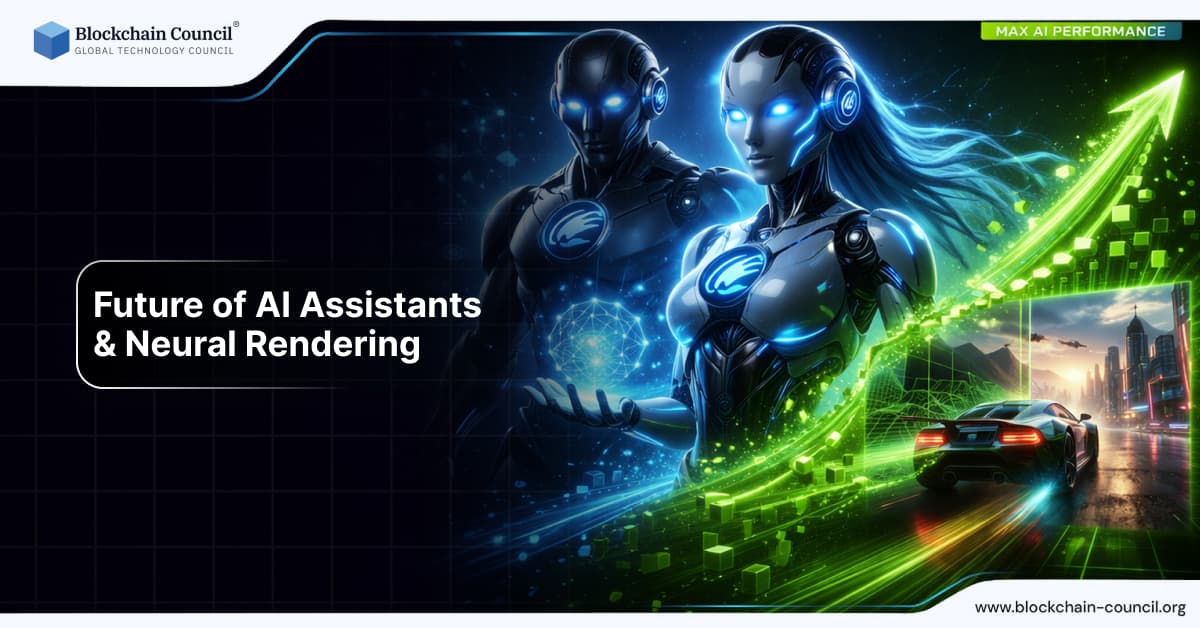
The next phase of artificial intelligence is not being defined by models alone-it is being shaped by systems that act, render, and evolve in real time. From AI assistants that execute workflows to neural rendering technologies that generate visuals, we are entering an era where AI becomes the core engine of digital experiences.
Platforms like OpenClaw and NemoClaw, along with breakthroughs such as DLSS 5, represent three critical pillars of this transformation:

Autonomous AI agents (OpenClaw)
Secure enterprise AI systems (NemoClaw)
AI-driven rendering pipelines (DLSS 5)
In this article, we explore where these technologies are heading and how they will redefine the future of AI assistants and digital environments.
If you are learning through an Agentic AI Course, Python Course, or an AI powered marketing course, this analysis will help you understand how advanced AI systems evolve from tools into full-scale platforms.
The Convergence of AI Assistants and Rendering Technologies
AI is no longer limited to generating text or images. It is now:
Executing tasks
Making decisions
Generating entire environments
What Is Changing
AI assistants are becoming action-oriented agents
Graphics pipelines are becoming AI-generated systems
User interfaces are shifting toward dynamic, AI-driven experiences
Key Insight
The future lies in the convergence of thinking AI (agents) + visual AI (rendering systems).
OpenClaw: The Evolution of Autonomous AI Assistants
OpenClaw represents the next generation of flexible, developer-driven AI agents.
Where OpenClaw Is Heading
Fully autonomous multi-step task execution
Deep integration with APIs, apps, and services
Real-time decision-making systems
Future Capabilities
Self-improving agents through feedback loops
Cross-platform automation ecosystems
Personalized AI assistants trained on user behavior
Challenges Ahead
Lack of standardized governance
Security risks in open systems
Complexity in large-scale deployments
Key Insight
OpenClaw will drive innovation in AI assistants, pushing the limits of what autonomous systems can achieve.
NemoClaw: The Rise of Trusted AI Systems
NemoClaw is shaping the future of enterprise-grade AI assistants with built-in security and control.
Where NemoClaw Is Heading
Enterprise-wide AI orchestration platforms
Secure deployment of autonomous agents
Integration with compliance and governance systems
Future Capabilities
Adaptive guardrails that evolve with usage
Real-time monitoring and decision auditing
Scalable AI deployment across organizations
Challenges Ahead
Balancing flexibility with control
Avoiding over-restriction of AI capabilities
Managing infrastructure complexity
Key Insight
NemoClaw will define how AI is trusted, governed, and scaled in real-world environments.
DLSS 5: The Future of Neural Rendering
DLSS 5 represents a shift from traditional rendering to AI-generated visual pipelines.
Where DLSS 5 Is Heading
Neural rendering replacing manual pipelines
AI-driven lighting, textures, and environments
Reduced reliance on raw GPU power
Future Capabilities
Fully AI-generated frames in real time
Hyper-realistic environments with minimal computation
Integration with game engines as a standard layer
Challenges Ahead
Maintaining artistic control
Managing AI artifacts
Hardware dependency
Key Insight
DLSS 5 will redefine graphics as AI-generated experiences rather than manually rendered scenes.
The Convergence: AI Agents + Neural Rendering
The real transformation happens when these technologies combine.
What This Looks Like
AI assistants that control and generate environments
Real-time interaction between agents and visual systems
Dynamic worlds created and modified by AI
Example Scenarios
AI-Powered Gaming
Agents control NPCs and game logic
DLSS 5 generates environments dynamically
Enterprise Simulation
AI agents simulate business scenarios
Visual systems render real-time insights
Personal AI Systems
Assistants manage tasks and interfaces
AI renders personalized digital environments
Key Insight
The future is not separate systems-it is integrated AI ecosystems.
Architecture of Future AI Systems
Layered AI Ecosystem
Layer | Technology |
Agent Layer | OpenClaw, NemoClaw |
Rendering Layer | DLSS 5 |
Infrastructure | GPUs, AI cloud |
Interface | AI-driven UI/UX |
What This Means
AI systems will operate across multiple layers
Integration will define competitive advantage
Platforms will replace standalone tools
Key Insight
The winners in AI will be those who control multiple layers of the ecosystem.
Key Trade-Offs Shaping the Future
Flexibility vs Control
OpenClaw vs NemoClaw
Quality vs Performance
Neural rendering optimization
Innovation vs Stability
Experimental vs enterprise systems
Key Insight
Balancing these trade-offs will define the success of future AI platforms.
Industry Impact
Gaming
Fully AI-driven game worlds
Real-time environment generation
Smarter NPC behavior
Enterprise
Autonomous workflows
AI-driven decision systems
Real-time simulation environments
Consumer Technology
Personalized AI assistants
Dynamic interfaces
Seamless human-AI interaction
Learning Perspective
Understanding the future of AI assistants and neural rendering helps you prepare for the next generation of technology.
To build expertise:
Learn autonomous systems through an Agentic AI Course
Strengthen programming foundations with a Python Course
Explore business applications via an AI powered marketing course
These technologies demonstrate how AI evolves from isolated tools into interconnected systems.
Final Thoughts
OpenClaw, NemoClaw, and DLSS 5 are not isolated innovations-they are part of a larger transformation toward AI-native ecosystems.
OpenClaw drives flexibility and innovation
NemoClaw ensures trust and scalability
DLSS 5 powers AI-generated visual experiences
Together, they represent the future of:
AI assistants
Digital environments
Human-AI interaction
To stay ahead in this rapidly evolving space:
Explore AI systems through an Agentic AI Course
Build technical expertise with a Python Course
Apply AI in real-world scenarios via an AI powered marketing course
Quick Recap
AI assistants are becoming autonomous systems
Neural rendering is replacing traditional graphics
Integration of agents and visuals defines the future
Hybrid ecosystems will dominate
FAQs: Future of AI Assistants & Neural Rendering
1. What is the future of AI assistants?
They will become autonomous systems capable of executing complex tasks.
2. What is neural rendering?
AI-driven generation of visuals instead of traditional rendering.
3. How does DLSS 5 fit into this?
It enables real-time AI-based visual generation.
4. What is OpenClaw’s role?
Driving flexible and innovative AI agents.
5. What is NemoClaw’s role?
Providing secure and scalable AI systems.
6. Will AI replace traditional interfaces?
It will transform them into dynamic, AI-driven experiences.
7. What industries will be impacted?
Gaming, enterprise, and consumer technology.
8. What is the biggest challenge?
Balancing innovation with control.
9. Are these technologies available now?
They are evolving and gradually being adopted.
10. How can I learn this field?
Through AI, programming, and applied learning courses.
Related Articles
View All
AI & ML
NVIDIA GTC 2026 Breakdown: DLSS 5, NemoClaw & the Future of AI Platforms
NVIDIA GTC 2026 introduced groundbreaking innovations like DLSS 5 and NemoClaw, signaling a major leap in AI platforms, automation, and GPU-powered intelligence.
AI & ML
AI Agents in Coding: The Future of Development
Discover how AI agents are transforming software development by automating coding tasks and managing complex workflows.
AI & ML
Convolutional Neural Network (CNN)
The significance of CNNs in the realm of machine learning and artificial intelligence is profound. They represent a monumental shift from traditional programming to systems that can understand and interpret the visual world, mirroring human cognitive abilities.
Trending Articles
The Role of Blockchain in Ethical AI Development
How blockchain technology is being used to promote transparency and accountability in artificial intelligence systems.

AWS Career Roadmap
A step-by-step guide to building a successful career in Amazon Web Services cloud computing.
Top 5 DeFi Platforms
Explore the leading decentralized finance platforms and what makes each one unique in the evolving DeFi landscape.