

ChatGPT Prompts for DAO Operations: Proposals, Voting Summaries, and Coordination

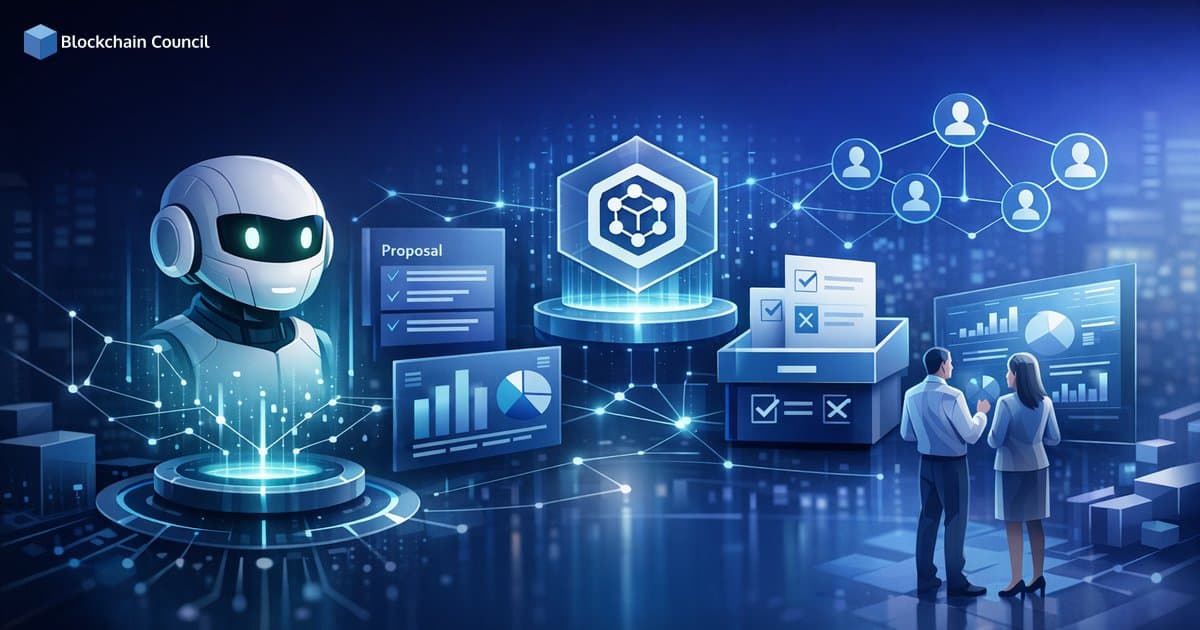
ChatGPT prompts for DAO operations are becoming a practical layer in day-to-day governance. As decentralized autonomous organizations scale, they face familiar bottlenecks: too many proposals, too little attention, and coordination across contributors who rarely share the same time zone. Large language models (LLMs) are now used to draft governance proposals, summarize long discussions and votes, and organize contributor workflows. A consistent theme across credible industry commentary holds that AI can accelerate operations, but human oversight remains essential for legitimacy, accuracy, and value alignment.
Why DAOs Are Using LLMs in Operations
DAO governance typically operates across public forums (Discourse, Commonwealth), chat platforms (Discord, Telegram), and voting tools (Snapshot, on-chain governance). That creates three recurring challenges:

High information volume across proposals, threads, and delegate commentary
Voter fatigue and low participation driven by attention scarcity
Fragmented coordination across working groups and time zones
LLMs like ChatGPT are being adopted as:
Drafting assistants for proposals, documentation, and change logs
Summarization engines for long discussions and governance outcomes
Decision-support tools for pros-and-cons analysis, stakeholder impact assessment, and risk identification
Contributor coordination tools for onboarding, standups, and handoffs
Web3 governance communities, including BanklessDAO, have explored AI as a way to write proposals, summarize decisions, assist with operational tasks, and onboard members. Early experimentation with AI agents acting as voting delegates under human oversight reflects a broader push to reduce manual workload while preserving accountability and alignment.
Core Prompt Patterns for DAO Governance Proposals
High-quality governance starts with a proposal that is understandable, complete, and explicit about risks. The most useful ChatGPT prompts for DAO operations impose structure, force clarity, and reduce ambiguity before a vote occurs.
1) Proposal Drafting from Rough Notes
This prompt pattern converts informal discussion into a standardized template. It is especially effective for DAOs that want consistent formatting across working groups.
Prompt: Draft a governance proposal using a template
You are a governance analyst for a DeFi protocol. Draft an on-chain governance proposal that follows our standard template:
- Title
- Summary (TL;DR)
- Motivation
- Specification (technical details)
- Risks and trade-offs
- Implementation timeline
- Success metrics
Here is the idea in rough notes: [paste Discord messages or notes].
Constraints: keep the summary under 150 words, make risks explicit, and avoid jargon where possible.
Why it works: It reduces variation in proposal quality, makes risk discussion mandatory, and improves readability for non-technical voters.
2) Proposal Critique and Quality Assurance
Before a proposal is posted publicly or moved on-chain, an LLM can act as a reviewer to spot missing information and unclear assumptions. This mirrors how enterprise operations teams use LLM prompts for audits and risk planning.
Prompt: Governance reviewer for clarity and risk
Act as a DAO governance reviewer.
1) Identify unclear assumptions.
2) Flag missing risk analysis.
3) Identify potential conflicts of interest.
4) Suggest 3 improvements to make the proposal understandable for non-technical token holders.
Here is the proposal: [paste].
Tip: Ask the model to quote the exact sentence it is critiquing. That makes review easier and reduces vague feedback.
3) Values and Constitution Alignment Checks
As DAOs scale, a common failure mode is values drift: decisions become locally rational but globally misaligned with the mission. LLMs can support a first-pass alignment check, similar to how enterprises use AI governance prompts to test policy compliance.
Prompt: Alignment scoring against mission and values
Using the mission and values below, evaluate whether this proposal is aligned or misaligned. Rate alignment from 1 to 10 and justify.
DAO mission and values: [paste]
Proposal: [paste]
Guardrail: Treat the score as an input to discussion, not as a final authority. Human reviewers should determine what alignment means in practice.
Prompts for Voting Summaries and Governance Communication
Summaries are where LLMs deliver immediate value: they compress long, high-context threads into digestible updates. Many DAO communities now experiment with newsletter-style digests to keep token holders informed without requiring them to read every forum post.
1) Forum Thread Summarization for Token Holders
Prompt: 300-word summary with balanced arguments
Summarize the following governance forum thread for token holders who do not have time to read the entire discussion.
- Length: 200-300 words
- Include: main proposal, key arguments for, key arguments against, open questions, and important deadlines
- Avoid: personal attacks or off-topic content
Thread: [paste text].
Operational best practice: Generate two versions: one for non-technical readers and one for technical reviewers. The same source material can be summarized differently depending on the audience.
2) Delegate-Style Vote Rationale Drafts
In mature DAOs, delegates are expected to publish voting rationales. LLMs can speed up drafting while still requiring the delegate to verify claims and own the final position.
Prompt: Neutral analysis for a delegate rationale
Act as a neutral governance analyst. For this proposal:
- List the strongest arguments for and against
- Identify key stakeholder groups and likely impact on each
- Highlight technical risks, economic risks, and governance risks
Proposal: [paste].
Anti-bias step: Ask the model to include a section called What evidence would change my mind? to reduce one-sided reasoning.
3) Post-Vote Reporting and Decision Logs
Transparent post-vote reporting improves institutional memory and makes it easier to evaluate whether governance decisions delivered expected outcomes.
Prompt: Post-vote report for newsletter and archive
Create a post-vote report for the following governance decision. Include:
- Proposal summary
- Voting results (yes/no/abstain percentages and quorum)
- Major arguments raised
- Implementation plan and next steps
- Metrics that should be monitored after implementation
Data: [voting results]
Key comments: [selected quotes].
DAO ops improvement: Store the prompt and output in a versioned repository (Notion plus GitHub, or a dedicated ops knowledge base) to support auditability over time.
Prompts for Contributor Coordination and DAO Operations
Many DAO pain points are not philosophical - they are operational: onboarding, status reporting, process clarity, and repeatability. Enterprise prompt libraries for operations, HR, and security address similar challenges and can be adapted to a DAO context.
1) Onboarding Plans for Working Groups
Prompt: 4-week onboarding plan
You are an operations lead in a DAO. Create a 4-week onboarding plan for a new contributor in the [working group], including:
- Learning materials
- People to meet
- First tasks
- Expectations and success criteria
Context about the working group: [paste].
Note: If your DAO trains analysts or ops contributors, consider aligning onboarding with role-based education such as Blockchain Council programs like Certified Blockchain Expert, Certified Web3 Professional, or Certified AI Expert to build foundational knowledge alongside practical workflows.
2) Standup and Weekly Reporting from Chat Updates
Prompt: Standup synthesis from Discord messages
Act as a project coordinator. Based on the following updates from contributors, produce a concise standup summary with:
- What was done yesterday
- What will be done today
- Blockers
- Open decisions that require governance attention
Updates: [paste].
Practical workflow: Run this daily for working groups and weekly for a cross-DAO ops digest. Always link back to source messages for verification.
3) SOP Creation for Repeatable Processes
Repeatability is a governance advantage. If a DAO can reliably execute a grants program, security response, or treasury action, it reduces operational risk and contributor churn.
Prompt: Convert ad hoc description into an SOP
You are a DAO operations specialist. Convert the following ad hoc process description into a clear SOP with:
- Purpose
- Scope
- Roles and responsibilities
- Step-by-step process
- Inputs and outputs
- Tools used
Process description: [paste].
Risk Management for ChatGPT Prompts in DAO Operations
Using LLMs in governance introduces predictable risks that should be addressed with process and policy rather than assumption.
Hallucinations and incorrect summaries: Require human review, link to sources, and use direct quotes for critical claims.
Bias and value misalignment: Add values checks, request counterarguments, and explicitly define what the DAO optimizes for.
Confidentiality and data leakage: Avoid pasting sensitive security details or treasury access information into uncontrolled tools. Consider vetted deployments and clear acceptable-use policies.
Over-automation of voting: If experimenting with AI delegates, implement transparency requirements, explicit constraints, and a human override process. Accountability must remain clearly assigned.
Reproducibility and auditability: Version prompts, log inputs and outputs, and document model assumptions so others can challenge or verify the analysis.
These controls align with broader AI governance guidance emerging in enterprises and the public sector, where mapping AI usage, establishing acceptable-use rules, and implementing human oversight are standard requirements.
What to Expect Next: AI-Native Governance Workflows
Three developments are likely as adoption matures:
DAO-specific prompt libraries: Standard templates for proposals, risk reviews, vote summaries, and working group operations.
LLM features inside governance platforms: Inline drafting, automated digests, and constitution-aware policy checking built into the same interface where proposals are debated and voted on.
Preference-based AI delegates with confirmation: Token holders define governance profiles (risk-averse, public goods oriented), and AI produces draft recommendations pending human approval.
Conclusion
ChatGPT prompts for DAO operations are moving from ad hoc experiments toward repeatable operational tooling: drafting better proposals, reducing voter fatigue through high-quality summaries, and improving contributor coordination through structured onboarding, reporting, and SOPs. The DAOs that benefit most will treat prompts as governance infrastructure - meaning standard templates, documented review steps, and clear boundaries around sensitive data and automated voting. Used responsibly, LLM-assisted workflows can increase clarity, participation, and execution speed without compromising accountability.
Related Articles
View All
AI & ML
Can ChatGPT Improve Itself? Understanding RSI in Modern LLMs
ChatGPT can refine outputs, generate feedback, and support agentic workflows, but full autonomous recursive self improvement remains out of reach.

AI & ML
Built to Catch AI Cheating: Rethinking Pre-Employment Assessments with HireValid
Explore how HireValid is rethinking pre-employment assessments with AI-resistant test design, integrity signals, candidate evidence, and human review to address AI-assisted cheating.
AI & ML
AI-Era Hiring Needs AI-Proof Tests: How HireValid Is Redefining Talent Assessment
Explore how HireValid is rethinking talent assessment for the AI era with job-relevant tests, anti-cheating design, integrity signals, and human-reviewed evidence of candidate ability.
Trending Articles
The Role of Blockchain in Ethical AI Development
How blockchain technology is being used to promote transparency and accountability in artificial intelligence systems.
How Blockchain Secures AI Data
Understand how blockchain technology is being applied to protect the integrity and security of AI training data.

Can DeFi 2.0 Bridge the Gap Between Traditional and Decentralized Finance?
The next generation of DeFi protocols aims to connect traditional banking with decentralized finance ecosystems.