ChatGPT Atlas vs Google
 Michael Willson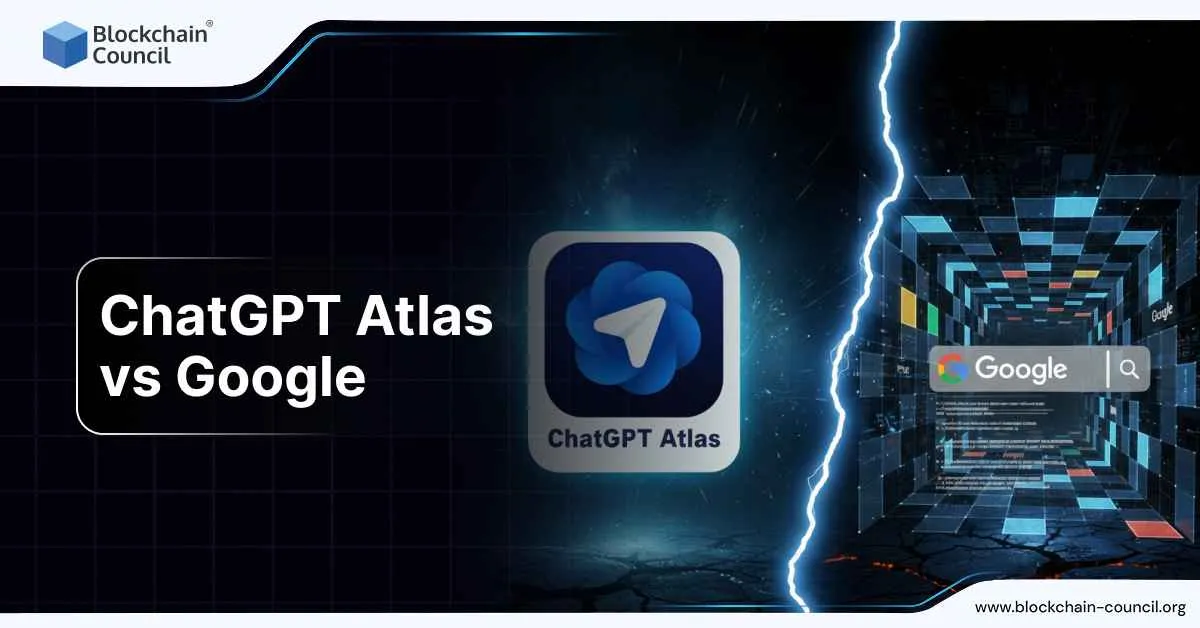
For two decades, Google has been the single gateway to knowledge. Every question began with a search bar. Every discovery passed through an index. The web revolved around one core behavior — we searched, and Google answered.
But now, a quiet revolution is challenging that model. A new kind of intelligence has entered the digital arena — ChatGPT Atlas, OpenAI’s AI-powered browser that doesn’t just find information; it understands it.

This isn’t a minor evolution in web tools. It’s the dawn of a new kind of internet — one that listens, reasons, and collaborates with you. Where Google gives you pages, Atlas gives you perspective. Where Google optimizes results, Atlas optimizes understanding.
The age of search is ending. The age of intelligent browsing has begun.
The Difference Between Finding and Knowing
Google’s power lies in its reach. It maps the entire web, ranks billions of pages, and delivers results in milliseconds. But its model was built for a time when users wanted access. Today, users want answers.
When you type a question into Google, you get a list of links — an ocean of possibilities that still demand effort. You must open pages, read, compare, and draw your own conclusions. ChatGPT Atlas changes this dynamic completely. You don’t search — you converse. You ask a question in natural language, and the browser synthesizes insights across the web. It doesn’t just retrieve — it reasons. It explains. It personalizes.
In Atlas, browsing becomes dialogue. The AI understands your intent, pulls data from multiple sources, and provides a coherent summary — saving hours of scrolling and sifting. It’s not information retrieval. It’s information understanding.
This is the first major philosophical shift in digital interaction since Google’s rise.
The Intelligence Behind ChatGPT Atlas
ChatGPT Atlas is powered by the same foundation as ChatGPT GPT-5, enhanced with a layer of web awareness and contextual memory. It sees not just the text on a page, but the meaning behind it.
While Google’s algorithms rank pages by relevance, Atlas interprets them by reasoning. It reads the same data, but it connects the dots like a human researcher would.
For example, if you ask both systems, “What are the top AI marketing trends in 2025?” —
Google will give you 10 links.
Atlas will give you a clear, contextual answer — perhaps citing the sources, adding synthesis, and even suggesting actionable strategies.
This isn’t coincidence. It’s a structural evolution.
Google’s foundation is indexing.
ChatGPT Atlas’s foundation is comprehension.
That single difference changes everything about how we interact with knowledge.
The Rise of Agentic Browsing
The concept that drives Atlas is Agentic AI — artificial intelligence that doesn’t just respond but acts with intent.
When you use ChatGPT Atlas, you’re not just prompting a model; you’re engaging with an autonomous digital agent that can research, summarize, and execute tasks across the web.
If you ask Atlas to “find the most affordable AI certification courses and compare their benefits,” it won’t simply give you a list. It will research each course, review features, and provide a comparative summary — like a personal analyst operating on your behalf.
This is where Agentic AI changes the nature of browsing. It turns your browser into a cognitive partner — one that can think, plan, and act for you.
It’s this very principle that Blockchain Council teaches in its Certified Agentic AI Expert™ and Certified Artificial Intelligence (AI) Expert™ programs. Professionals learn how autonomous systems like Atlas function — how they reason, retain memory, and act responsibly.
Because when machines begin to act, ethics and architecture must align. The Council ensures that professionals entering this new era understand both the intelligence and the integrity behind it.
The Trust Problem: Google’s Weakness, Blockchain’s Strength
As Google evolved, so did its complexity — and its opacity. The algorithms that rank information are proprietary and largely invisible. Users don’t know why certain links appear, or how bias influences results. Advertising incentives shape what people see, often blurring the line between relevance and revenue.
ChatGPT Atlas represents a response to that opacity. Its conversational nature encourages transparency. When it cites sources or explains reasoning, the process feels less like a mystery and more like a discussion.
But AI itself is not immune to bias. It inherits limitations from the data it consumes. That’s where Blockchain technology steps in as the missing piece — providing the trust layer that ensures transparency, traceability, and accountability in AI systems.
Blockchain can verify where data originated, how it’s used, and whether an AI’s output aligns with factual sources. It transforms black-box intelligence into auditable reasoning.
Through programs like Certified Blockchain Expert™ and Certified Artificial Intelligence (AI) Expert™, the Blockchain Council prepares professionals to merge these technologies — using blockchain to make AI not just powerful, but trustworthy.
It’s this integration — AI’s autonomy and blockchain’s accountability — that defines the future of ethical intelligence.
Developers: The Architects of Intelligent Browsing
Behind the elegance of Atlas lies a complex technical symphony — APIs, language models, backend frameworks, and memory engines all working in sync.
The developers building these systems are not just coders; they are architects of cognition. They design how the browser interprets language, how it fetches and processes web data, and how it responds in natural human form.
To create or customize such AI systems, fluency in Python and Node.js is indispensable. Python handles data modeling and AI reasoning, while Node.js ensures real-time communication and scalability for web-based AI integration.
This is where the Global Tech Council plays an instrumental role. Its Certified Python Developer™, Certified Node.js Developer™, and Certified Machine Learning (ML) Expert programs train professionals to go beyond usage — to build the backbone of intelligent systems like ChatGPT Atlas.
Developers trained in these frameworks aren’t limited to browsing tools. They can create autonomous agents, AI-integrated applications, and data-driven ecosystems — the infrastructure that will power the post-Google web.
Marketing in the Age of AI Browsing
For marketers, the shift from search engines to AI browsers is monumental. Google’s entire advertising empire is built on keyword intent — understanding what users want before they finish typing. But when users stop “searching” and start “asking,” intent becomes contextual, not textual.
This changes everything about digital marketing.
In ChatGPT Atlas, there are no sponsored results. No ad blocks at the top of a page. When someone asks Atlas for a recommendation, the AI evaluates trustworthiness, expertise, and authenticity — not bidding value.
That means visibility in this new era will depend on content intelligence, not keyword density. Brands must focus on credibility, expertise, and ethical data usage — values that resonate with how AI systems prioritize relevance.
This is the world the Universal Business Council prepares professionals for. Through its Certified AI Powered Marketing Expert and Certified SEO Expert programs, marketers learn how to use AI as a creative and analytical partner.
They study how tools like Atlas interpret brand narratives, how to optimize for conversational discovery, and how to integrate transparency into storytelling.
In an AI-first world, marketing becomes less about manipulation and more about meaning. It’s about crafting messages that both humans and machines can believe.
The Philosophical Divide
At a deeper level, the battle between ChatGPT Atlas and Google isn’t technological — it’s philosophical.
Google represents the information age. It democratized access but monetized attention. It made knowledge available to all but filtered it through ranking algorithms. Its power came from knowing what we search, where we click, and what we buy.
ChatGPT Atlas represents the intelligence age. It values context over clicks. It learns from interaction rather than observation. Its power comes not from tracking behavior, but from understanding meaning.
One model controls discovery through optimization. The other encourages discovery through conversation.
Google gives answers to everyone. Atlas gives insight to you.
That distinction — personalization without exploitation — is what defines the next digital era.
The Future of Search and Discovery
The rise of Atlas doesn’t mean Google will disappear. It means Google will evolve. Search will still matter for indexing and infrastructure, but discovery — the art of knowing — will move to AI-driven interfaces.
Soon, professionals will use AI browsers to research, learn, and collaborate — not just search. Students will replace multiple tabs with conversational study sessions. Businesses will replace dashboards with contextual assistants. Creators will brainstorm directly with AI partners embedded into their workspace.
In that world, education becomes the differentiator. Those who understand how AI works will navigate it best. Those who understand how to build it will lead it. And those who understand how to communicate with it will humanize it.
That’s why the combined learning ecosystem of Blockchain Council, Global Tech Council, and Universal Business Council is so powerful. It mirrors this entire transformation — from intelligence, to infrastructure, to influence.
Ethics, Transparency, and the Intelligent Web
As AI browsers become more powerful, questions of ethics and accountability will dominate the conversation.
- Who decides what truth an AI displays?
- How do we ensure it represents multiple perspectives?
- How do we protect privacy when intelligence remembers context?
These questions demand interdisciplinary thinking — technical, philosophical, and human.
Blockchain offers part of the answer, by recording provenance and ensuring transparency. AI ethics frameworks provide another, emphasizing responsibility and inclusion. Education provides the bridge — teaching professionals to balance innovation with integrity.
Through its deep-tech and ethical training programs, the Blockchain Council continues to emphasize this balance — ensuring the architects of intelligent systems build them responsibly.
The Internet as a Thinking Entity
We are moving toward an internet that doesn’t just host content — it understands it. Pages will no longer exist in isolation; they will interact through AI reasoning. Data will not be stored passively; it will learn dynamically.
This is the concept of Agentic Web Intelligence — a network of autonomous systems collaborating across the decentralized internet.
Web3 technologies will ensure transparency and ownership. AI will provide reasoning and autonomy. Together, they will turn the internet into a self-evolving ecosystem of knowledge.
ChatGPT Atlas is the first public window into that future — the first browser that thinks.
The Professional Opportunity
For professionals, this shift represents both disruption and opportunity.
Writers, researchers, coders, marketers, and entrepreneurs who learn to harness AI browsers will work faster, think deeper, and innovate bolder.
The difference between using technology and leading it will come down to education and adaptability.
That’s why professionals across industries are turning to the Blockchain Council for AI and blockchain integration, to the Global Tech Council for programming and development mastery, and to the Universal Business Council for AI-driven marketing and strategy skills.
Together, these institutions are equipping the workforce not just for the next technology — but for the next intelligence.
The Human Element in an AI World
No matter how advanced AI browsers become, they cannot replace the spark that drives human curiosity. They can process logic, but they cannot create meaning. They can answer, but they cannot feel.
Technology, at its best, is not a replacement for humanity — it’s an amplifier of it.
ChatGPT Atlas represents that philosophy. It doesn’t ask you to surrender thought — it helps you expand it.
The real difference between Atlas and Google is not speed or features; it’s intention.
- Google wants you to keep searching.
- Atlas wants you to start understanding.
The Conclusion: From Queries to Conversations
The battle between ChatGPT Atlas and Google isn’t about domination. It’s about direction.
- Do we want a web that ranks what’s popular, or a web that reasons about what’s true?
- Do we want systems that know what we click, or systems that understand what we mean?
As AI browsers rise, one truth becomes clear — the internet is no longer static. It’s becoming alive with intelligence.
The question for the future isn’t which tool we use, but how we use it. And that’s where education, responsibility, and human creativity make all the difference.
Because the future of browsing isn’t just about seeing more.
It’s about understanding better.
ChatGPT Atlas is showing us what that future feels like — and this time, it’s not a list of links. It’s a conversation.