
AI Speaks Every Student’s Language, Japanese Research Finds Out
 Michael Willson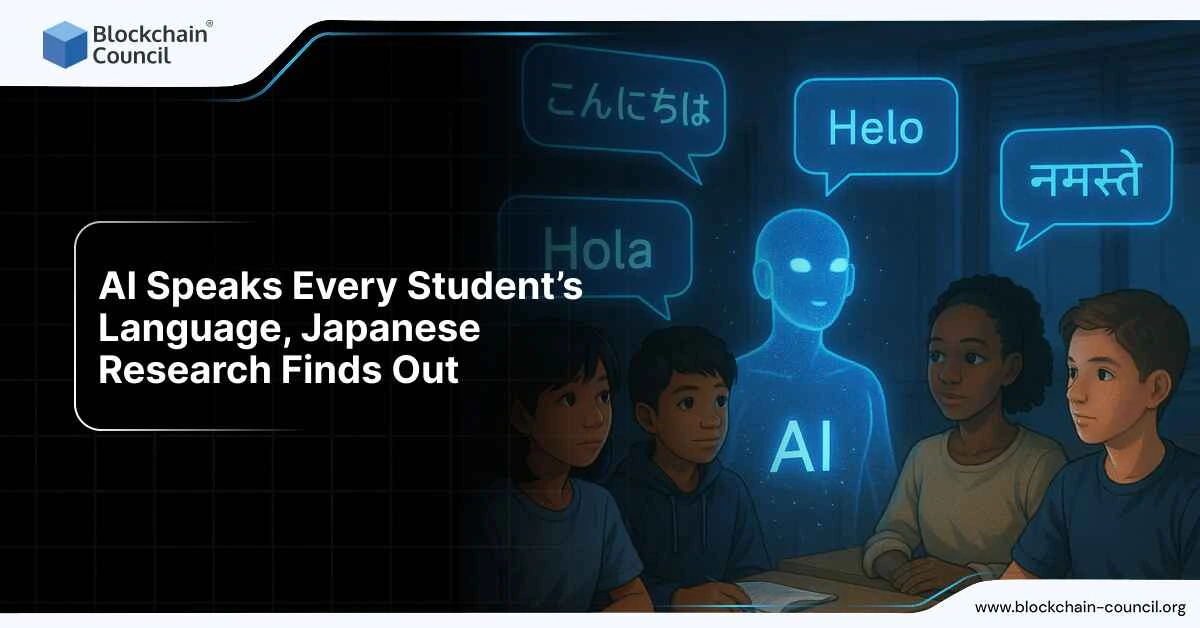
AI is now helping students learn in their own languages. Japanese researchers have confirmed that artificial intelligence can personalize learning, translate in real time, and reduce pressure on teachers. These systems are already being tested in classrooms with diverse student populations.
This article breaks down what the research shows, how AI is being used, and what it means for the future of education.

Language-Based Challenges in Japanese Classrooms
Japan has over 480,000 foreign-national children. Around 130,000 of them are considered culturally and linguistically diverse (CLD) students. Many don’t speak Japanese well enough to follow lessons. Teachers are overwhelmed and under-resourced.
To solve this, Osaka University and Fujitsu developed a generative AI tool that creates individual learning plans. It supports students by translating speech and text, recommending lesson ideas to teachers, and adjusting content difficulty in real time.
AI’s Role in Supporting Individual Learning Paths
This AI system takes in personal data—such as native language, age, and Japanese proficiency—and produces a custom experience for each student. The tool doesn’t just translate. It adjusts pace, content, and language level to ensure students learn better.
When tested, the AI helped students feel more involved, confident, and better understood.
AI Language Models for Beginners
Separate studies showed that language learners benefit when AI tailors its output to simpler formats. One Japanese-led project used LLMs tuned to CEFR A1–A2 levels. The result: student comprehension improved from around 40% to more than 80%.
That proves AI isn’t only for fluent speakers. With tuning, it can guide beginners as well.
AI Tools Benefiting Multilingual Classrooms
| Tool or Capability | Classroom Impact |
| Custom Learning Plan Generator | Matches content to student profile and learning needs |
| Voice and Text Translation | Provides real-time understanding during instruction |
| CEFR-Level Text Simplification | Makes materials easier for beginner-level learners |
| Multilingual Question Assistants | Supports direct help in the student’s native language |
| Automatic Lesson Adjustments | Alters pace and difficulty based on ongoing performance |
Japanese Investment in Culturally Aware AI
Kyoto University and Japan Science and Technology Agency (JST) are developing empathetic conversational AI that adapts to the user’s tone, emotion, and cultural background. These AI models are trained not only in Japanese language, but also in social context—something global English-language models often lack.
The goal is to create AI tools that respect cultural identity, improve trust, and reduce classroom anxiety.
Japan is also building its own language models based on GPT, CLIP, and HuBERT, all optimized for Japanese users.
Foundational Needs for Ethical AI in Education
While AI can bridge gaps, it can also deepen them if not used responsibly. Researchers warn that students who speak less-common languages or live in underserved areas might be left behind if tools are only optimized for high-resource groups.
That’s why it’s essential to provide equal access, strong policies, and staff training. AI should help every student—not just a few.
The AI Certification offers practical guidance for educators and administrators looking to integrate AI tools responsibly in learning environments. For those focused on analytics and data-driven decision making, the Data Science Certification can help build the skills needed to work with data effectively and ethically.
Core Requirements for Scalable AI in Education
| Requirement | Purpose and Benefit |
| Universal Device Access | Ensures equal opportunity for students to use AI tools |
| Teacher AI Literacy Programs | Builds staff confidence and promotes safe implementation |
| Multilingual Model Integration | Prevents bias toward dominant languages |
| Transparent Data Policies | Protects student privacy and builds trust |
| Emotion-Sensitive AI Response | Improves learning environment through empathy-based design |
Moving from Theory to Practice
Teachers don’t need to be tech experts. What they need is structure and guidance. By running pilot programs, selecting tools that support multiple languages, and offering teacher training, schools can start using AI meaningfully.
For example, programs like the Agentic AI certification are designed to help leaders manage AI tools as part of a real-world team. The Marketing and Business Certification also equips education professionals with skills to scale and fund AI adoption.
Final Thoughts
Japanese research shows that AI can serve every student—no matter their language. From real-time classroom support to cultural awareness and custom learning plans, AI is no longer an experimental tool. It’s a practical solution.
But schools must prepare thoughtfully. When AI is inclusive, ethical, and well-supported, it opens the door to a more personalized and fair education system for all.
Related Articles
View All
AI & ML
BharatGen: India’s Indigenous Generative AI Revolution Transforming Language, Law, and Digital Sovereignty
Key Takeaways The provided text introduces BharatGen, a groundbreaking indigenous generative AI initiative designed to reflect India’s vast linguistic and cultural diversity. Professor Arnab Bhattacharya explains that this multimodal system aims to cover all 22 official Indian languages while…

AI & ML
AWS Career Roadmap
Cloud computing has transformed the way businesses build and deliver digital products. Today, companies no longer need to invest in expensive physical servers to run their applications. Instead, they rely on cloud platforms that provide scalable computing power over the internet. One of the most…

AI & ML
What is AWS? A Beginner’s Guide to Cloud Computing and Career Opportunities
Cloud computing has become the backbone of modern technology. From streaming services and online shopping platforms to AI applications and mobile apps, most digital services today run on cloud infrastructure. One of the most powerful platforms leading this transformation is Amazon Web Services…
Trending Articles
The Role of Blockchain in Ethical AI Development
How blockchain technology is being used to promote transparency and accountability in artificial intelligence systems.
AWS Career Roadmap
A step-by-step guide to building a successful career in Amazon Web Services cloud computing.

Top 5 DeFi Platforms
Explore the leading decentralized finance platforms and what makes each one unique in the evolving DeFi landscape.