

AI Prompt Engineering for HR
 Michael Willson
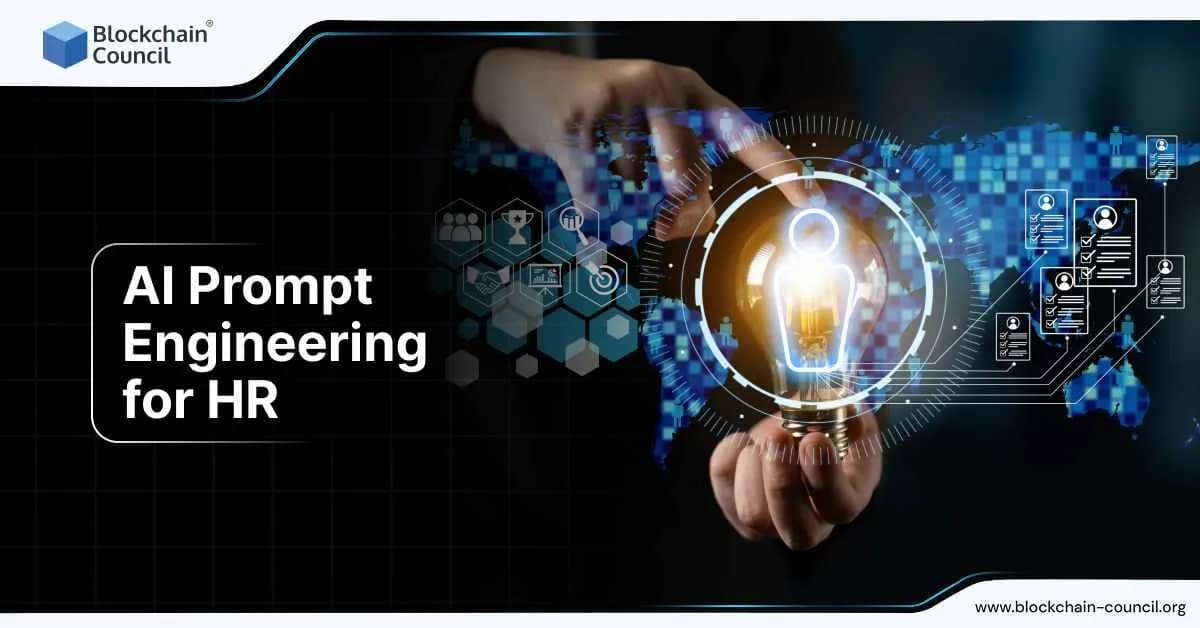
AI prompt engineering for HR is the skill of crafting clear and effective AI inputs to improve recruitment, employee engagement, and workplace efficiency. It allows HR teams to automate repetitive tasks, create better communication, and make faster, more accurate decisions. With AI adoption in HR growing rapidly, this skill is becoming as important as traditional HR management practices.
Organizations across industries are beginning to recommend a Prompt Engineering Course to employees who are involved in automation and AI adoption. By enrolling in a Prompt Engineering certification, teams can adopt AI tools in a systematic way, ensuring better collaboration and productivity.

What Is AI Prompt Engineering in HR
Prompt engineering in HR means designing the right instructions for AI tools so they produce useful and accurate results. Instead of entering vague commands, HR professionals learn how to give precise prompts that generate the best outcomes for hiring, onboarding, training, and performance management.
For example, a well-designed prompt can help AI create an inclusive job description, screen candidates fairly, or summarize employee survey results in minutes. This leads to more consistent results and reduces the risk of bias.
Why HR Needs Prompt Engineering Skills Now
The role of HR has shifted from administrative work to strategic decision-making. AI can handle much of the repetitive workload, but only if it is guided properly. Poor prompts can lead to irrelevant or even harmful results.
Prompt engineering is especially valuable because:
- Recruitment processes are faster and more accurate.
- Communication with candidates and employees is clearer.
- Data analysis is easier and less time-consuming.
- The risk of bias in hiring can be reduced with structured AI guidance.
Common HR Tasks Improved by Prompt Engineering
HR teams can apply AI prompting to many daily activities:
- Writing job descriptions that are engaging and inclusive.
- Screening resumes for specific skills and qualifications.
- Drafting interview questions tailored to the role.
- Generating performance review summaries.
- Creating training materials based on company goals.
- Writing clear employee policy documents.
HR Functions Enhanced by AI Prompt Engineering
| HR Function | Prompt Engineering Role | Example Outcome | Key Benefit |
| Recruitment | Crafting targeted prompts for screening | Shortlist of best-fit candidates | Saves recruiter time |
| Onboarding | Creating structured training prompts | Customized onboarding plans | Faster integration |
| Performance Reviews | Summarizing feedback with AI | Concise performance summaries | Clearer evaluations |
| Policy Writing | Directing AI to follow legal language | Compliant HR policies | Reduced legal risk |
| Employee Engagement | Designing survey prompts | Actionable engagement insights | Better workplace culture |
This table can be used on its own to see how prompt engineering directly improves core HR processes.
Advanced Prompt Engineering Techniques for HR
Prompt engineering in HR is moving beyond simple question-and-answer formats. New approaches include:
- Few-shot learning – Giving AI a few examples so it understands the style or structure you want.
- Chain-of-thought prompting – Breaking complex HR tasks into step-by-step reasoning for more accurate results.
- Retrieval-augmented generation (RAG) – Combining prompts with internal HR data for context-aware outputs.
These techniques help HR teams get more reliable and context-specific AI responses.
If you are new to AI and want to build your foundation, AI certs are a good starting point. They introduce you to AI concepts while showing how to use them effectively in HR and other fields.
Security and Ethical Considerations
While AI can boost fairness, it can also introduce risks if not managed carefully. One concern is prompt injection, where hidden instructions in input data manipulate the AI into producing incorrect or biased results. HR teams should:
- Use input filters to prevent harmful commands.
- Keep human oversight for important decisions.
- Maintain strict data privacy rules.
Regulations like Illinois’ AI Video Interview Act show that governments are paying close attention to AI in hiring. Staying compliant requires knowing both the legal and ethical limits of AI use in HR.
Best Practices for Ethical and Secure AI Prompt Engineering in HR
| Area | Best Practice | Benefit | Example |
| Bias Reduction | Use structured, role-focused prompts | Fairer candidate evaluation | Skills-based screening |
| Privacy Protection | Avoid personal identifiers in prompts | Data compliance | Anonymized resume reviews |
| Security | Monitor for prompt injection | Safer AI interactions | Filtering suspicious inputs |
| Transparency | Keep a record of prompts used | Accountability | Documenting hiring decisions |
| Accuracy | Test prompts before live use | More reliable outputs | Pilot runs with sample data |
This table is a standalone reference for HR leaders creating safe and fair AI systems.
AI Prompt Engineering and HR Career Growth
HR professionals with prompt engineering skills can take on higher-value roles. These might include AI-assisted recruitment lead, digital HR transformation manager, or employee experience strategist.
To deepen your technical understanding of AI tools, the AI Certification is a strong choice. It covers AI applications that are directly useful for HR and recruitment.
If you want to focus on HR data analytics and reporting, the Data Science Certification can help you turn HR data into actionable strategies.
For those aiming to lead AI adoption in HR at an organizational level, the Marketing and Business Certification offers training in strategy, change management, and cross-department AI integration.
Final Takeaway
AI prompt engineering is becoming a must-have skill for HR teams in 2025. It improves recruitment, streamlines operations, enhances communication, and ensures fairer evaluations. By learning how to create precise prompts, HR professionals can unlock the full potential of AI while avoiding common risks.
Combining practical skills with recognized certifications ensures HR teams are ready for the future of work and able to make the most of AI in everyday operations.
Related Articles
View All
AI & ML
Prompt Engineering to Context Engineering: How to Get Better Results From AI
Learn the journey from Prompt Engineering to Context Engineering. Understand prompts, few-shot and chain-of-thought techniques, context windows, memory, and RAG to get better results from AI.
AI & ML
Google Launches Gemini 4 Neon: What's New?
Google launched Gemini 4 Neon on November 18, 2026, a mid-tier Gemini 4 model with a 1M-token context window, $3/$15 pricing and strong coding and agent benchmarks. See what’s new, how it compares with Carbon and Hydrogen, and how to access it.
AI & ML
OpenAI Flags GPT-6.2 Astra for AI Self-Improvement Risk
OpenAI has flagged GPT-6.2 Astra as the first model it has released externally at the High threshold for AI self-improvement. Learn what the rating means, how Astra and Sol compare, what the new safeguards are, and why independent testing matters.
Trending Articles
AWS Career Roadmap
A step-by-step guide to building a successful career in Amazon Web Services cloud computing.
How Blockchain Secures AI Data
Understand how blockchain technology is being applied to protect the integrity and security of AI training data.
Claude AI Tools for Productivity
Discover Claude AI tools for productivity to streamline tasks, manage workflows, and improve efficiency.