
Will Agentic AI Replace Jobs or Create New Opportunities?


The rise of agentic AI is raising one of the biggest questions of our time: will it replace human jobs, or will it create entirely new opportunities? Agentic AI systems are not just chatbots that answer questions — they are designed to plan, act, and verify their work. That makes them capable of doing far more than traditional AI tools. Understanding how this shift will impact the workforce is critical, and earning an AI certification is one way to prepare yourself for the changes ahead.
Why Job Displacement Is a Real Possibility
Agentic AI is likely to take over predictable and repetitive tasks. Roles in data entry, scheduling, and basic analysis face higher exposure. Freelancers who focus on text-based work are already seeing drops in demand as companies adopt generative AI. Entry-level white-collar jobs are also under pressure, with some industry leaders warning that half of these roles could vanish in the next five years.

The risk is not only in replacement but also in deskilling. If people rely too heavily on AI to make decisions, they may gradually lose their own problem-solving abilities. Organizations may also restructure, reducing middle-management layers as agentic systems take on coordination and oversight functions.
Why Agentic AI Creates New Paths
Despite the risks, agentic AI is not only about loss. It is also creating new opportunities. Companies like Salesforce expect adoption of agents to grow by more than 300% in the next two years, with productivity gains of around 30%. This suggests that many businesses will not just cut costs but reinvest in new ways of working.
We are already seeing demand for emerging roles such as “agent ops” specialists, “agent architects,” and “agent trainers.” These positions focus on designing, maintaining, and supervising agentic systems. For professionals aiming to take advantage of this shift, exploring different AI certs can open the door to new career opportunities.
The Balance Between Loss and Growth
The truth is that agentic AI will both replace and create jobs, depending on the type of work, the pace of adoption, and how well organizations handle the transition. The outcome will be shaped by education, regulation, and business strategy. Countries and companies that focus on reskilling will likely see more opportunities than those that do not.
How Agentic AI Shapes Work in the Future
| Factor | Positive Outcome |
| Routine tasks | Automated, freeing humans for higher-value work |
| Complex decision-making | Humans remain central, supported by AI insights |
| Workforce skills | Reskilling programs create new career paths |
| Business efficiency | Productivity rises with agent-supported workflows |
| Market growth | Expansion of “digital labor” creates new industries |
| Oversight roles | Growth in jobs for supervising and aligning AI |
| Security needs | New careers in protecting agents from misuse |
| Regulation | Strong policies balance innovation with worker protection |
| Collaboration | AI agents complement, not replace, human teams |
| Innovation | Reliable AI encourages new products and services |
Industry Forecasts and Expert Views
Reports show both sides of the story. Goldman Sachs predicts that 3–7% of jobs may be displaced, but it also expects AI to create entirely new categories of work. McKinsey stresses that many deployments still struggle with scale, which means the real winners will be those that redesign processes rather than bolt AI onto old systems. At the same time, Gartner warns that over 40% of agentic AI projects could be abandoned by 2027 due to unclear returns.
Building Careers Around Agentic AI
For professionals, the key is to focus on adaptability. Those who can guide, supervise, and align agentic systems will thrive. Structured learning paths help with this transition. For instance, the agentic ai certification prepares you to design and manage reliable agent systems in real-world settings.
At the same time, specialized fields remain important. A Data Science Certification can give you the skills to work on AI-driven analytics. Business leaders can sharpen their edge with a Marketing and Business Certification, aligning AI with growth strategies. Those exploring secure digital ecosystems can turn to blockchain technology courses to see how AI integrates with blockchain.
Conclusion
The future of work with agentic AI will not be defined by replacement alone. Jobs will shift, new opportunities will appear, and workers will need to reskill. Companies that focus on trust, security, and training will find ways to use agentic AI to complement people rather than sideline them. For individuals, investing in the right technology skills and certifications is the surest path to staying relevant. The workforce of tomorrow will be shaped by how we choose to balance human creativity with agentic intelligence.
Related Articles
View All
AI & ML
AI Threat Detection in SOCs: Using ML for Anomaly Detection Without Creating New Risks
Learn how AI threat detection in SOCs uses ML anomaly detection to spot unknown threats while managing risks like false negatives, alert fatigue, and over-reliance on automation.

AI & ML
Gemma 4 vs Gemini: Rise of Local AI for Privacy-First, Offline Deployment
Gemma 4 vs Gemini compares local open-weight AI with cloud-only Gemini. Learn the differences in privacy, cost, performance, and how to run Gemma 4 locally in 2026.

AI & ML
Running Gemma 4 LLMs on Mobile
Learn how to run Gemma 4 LLMs on mobile with on-device inference tips, memory and latency benchmarks, quantization options, and deployment guidance for Android and edge devices.
Trending Articles
The Role of Blockchain in Ethical AI Development
How blockchain technology is being used to promote transparency and accountability in artificial intelligence systems.
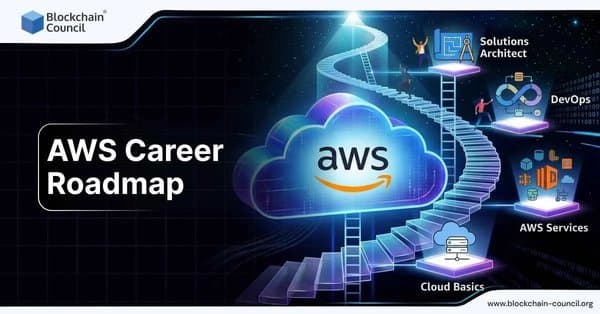
AWS Career Roadmap
A step-by-step guide to building a successful career in Amazon Web Services cloud computing.

Top 5 DeFi Platforms
Explore the leading decentralized finance platforms and what makes each one unique in the evolving DeFi landscape.