

What Is Vibe Coding? A Practical Guide to AI-Assisted Development Workflows

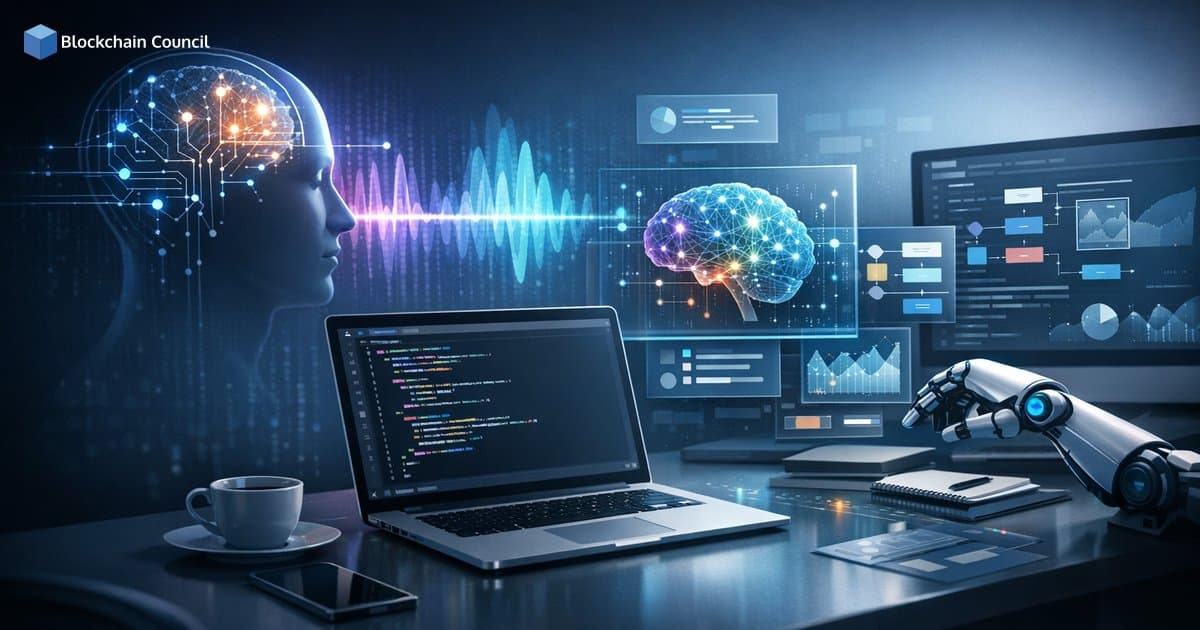
Vibe coding is an AI-assisted development workflow where you describe what you want in natural language and a large language model (LLM) generates executable code. Instead of writing every line manually, you prompt, run, test, and iterate until the software behaves the way you intended. This shift moves many developers from typing syntax to directing outcomes, while still requiring engineering judgment for architecture, security, and maintainability.
What Is Vibe Coding (Definition and Origin)
Vibe coding is the practice of building software primarily through natural language prompts to AI coding systems. You provide requirements - features, frameworks, constraints, and acceptance criteria - and the model outputs code you can run. The workflow is inherently iterative: you accept an initial draft, execute it, observe failures or missing features, and prompt refinements.

The term "vibe coding" is widely attributed to Andrej Karpathy, who described a style of coding where you "give in to the vibes" and focus on what you want rather than the code itself. The idea aligns with his earlier observation that natural language is becoming a practical programming interface, enabled by modern LLMs.
Why Vibe Coding Matters in 2025 and Beyond
Vibe coding has moved beyond novelty as AI coding assistants have become more agentic and tool-integrated. Many can now plan multi-step changes, generate tests, and iterate on failures. Major ecosystems - IDE assistants, cloud platforms, and browser-based development environments - support prompt-to-app workflows for everything from UI components to full-stack prototypes.
Industry reporting from organizations such as GitHub, IBM, Replit, and Cloudflare highlights three consistent themes:
Speed: prototyping and MVP development can drop from weeks to hours for certain application types.
Accessibility: non-traditional builders can create working software without deep syntax knowledge.
Risk: AI-generated code can carry defects and security issues unless you validate it like any other code.
How Vibe Coding Works: The Core Loop
A practical vibe coding workflow is less about crafting one perfect prompt and more about a repeatable development rhythm. Use this loop whether you are building a prototype, adding a feature, or refactoring existing code.
1. Describe the Goal with Constraints
Start with a prompt that includes sufficient context. Strong prompts specify:
Tech stack (for example: Next.js, React, FastAPI, Postgres)
Non-functional requirements (performance, accessibility, error handling)
Constraints (no new dependencies, TypeScript only, must be mobile-first)
Acceptance criteria (what "done" looks like)
Example prompt: "In React and TypeScript, add a responsive navbar with logged-in state, accessible keyboard navigation, and a dark mode toggle. Do not add new UI libraries."
2. Generate a Draft and Run It Immediately
Execute the output as soon as possible. Tight feedback loops are the fastest path to quality. Treat AI output like a junior developer's first draft: useful, but untrusted until verified.
3. Iterate Using Targeted Follow-Ups
When something breaks, avoid vague prompts like "fix this." Provide specific evidence:
Error logs and stack traces
Steps to reproduce
Expected vs. actual behavior
A failing test, if available
Example follow-up: "Auth state does not persist on refresh. Here is the console error. Update the implementation to store the token securely and add a unit test for session restoration."
4. Refine Structure After the Prototype Works
Vibe coding often produces functional code quickly, but the resulting architecture may be inconsistent. Once the application works end-to-end, prompt for refactors:
Split large files into modules
Enforce linting and formatting rules
Replace duplicated logic with shared utilities
Add type safety and explicit interfaces
5. Validate for Production Readiness
Error rates can be high when AI-generated code is accepted without review, but drop significantly when you combine iterative prompting with testing and code review. Production readiness still requires the work that matters most: testing, security review, performance checks, and maintainability improvements.
Tooling Landscape: Where Vibe Coding Happens
Vibe coding can be done in several environments, each suited to different workflows:
IDE assistants: tools like GitHub Copilot generate functions, tests, and refactors within your editor and repository context.
Agentic editors: environments such as Cursor emphasize multi-step agents that can make coordinated changes across files.
Prompt-to-app platforms: systems like Replit focus on rapid application building and deployment from natural language prompts.
Cloud developer platforms: providers such as Cloudflare support fast MVP creation patterns that pair well with AI-assisted iteration.
For teams, the key selection criteria are governance (access control and auditability), integration with CI/CD pipelines, and the ability to enforce security and policy checks.
Real-World Use Cases with Practical Prompts
MVP Prototyping for Startups
Teams frequently use vibe coding to produce a working full-stack skeleton quickly, then harden it for production.
Prompt: "Build a Next.js storefront with product pages, cart, Stripe checkout, and email receipts. Use Postgres for products and orders. Include basic admin CRUD."
Enterprise Team Acceleration
In mature codebases, vibe coding is often best applied to well-scoped tasks like unit tests, input validation, and UI components, while human engineers retain architectural control.
Prompt: "Generate unit tests for this form validation module, including edge cases for localization and empty inputs. Use our existing test utilities."
Designer-to-Code Prototypes
Non-technical creators can build interactive portfolios or landing pages by describing the desired look and behavior, then iterating on the output.
Prompt: "Create a dark-themed portfolio site with scroll animations, responsive layout, and accessible color contrast. Keep dependencies minimal."
Exploratory Projects and Learning
Vibe coding suits sandbox projects well: small games, dashboards, and scripts where rapid iteration beats perfect design upfront.
Prompt: "Make a Tic-Tac-Toe game with an AI opponent. Explain the minimax logic briefly in comments and add a difficulty setting."
Best Practices for Safe, High-Quality Vibe Coding
Use version control consistently: commit small, revertable changes. Vibe coding supports experimentation when rollback is straightforward.
Test incrementally: run the application after each meaningful change. Add unit tests and integration tests as soon as behavior stabilizes.
Let AI handle scaffolding, not judgment: AI accelerates boilerplate and repetitive code well. Own the requirements, data modeling, and architectural trade-offs yourself.
Ask for threat modeling: prompt the model to list security risks and mitigations for each feature.
Use security scanning: apply OWASP-aligned checks, dependency scanning, secret scanning, and SAST tools in CI.
Make prompts auditable: keep prompts in tickets, pull request descriptions, or repository notes so changes remain explainable later.
Common Pitfalls and How to Avoid Them
Hidden Bugs and Accumulated Code Debt
Unreviewed AI output can become a long-term maintenance burden. Treat AI output like any third-party contribution: code review and tests are non-negotiable gates before merging.
Security Vulnerabilities
AI-generated code can introduce insecure defaults, weak input validation, or unsafe authentication flows. Mitigate this by enforcing secure templates, validating all inputs, using established auth libraries correctly, and running automated security scans on every build.
Over-Reliance and Loss of System Understanding
If you cannot explain how key components work, debugging production incidents becomes significantly harder. Require short design notes, request explanations from the model, and document architecture decisions in a shared location.
Vibe Coding and Professional Upskilling
As vibe coding becomes a standard part of software delivery, teams need hybrid capability: prompt discipline, secure software engineering, and AI governance. Structured learning paths that map to real workflows include:
Certified AI Developer: building practical AI-enabled applications and workflows.
Certified Prompt Engineer: improving prompt quality, evaluation, and reliability.
Certified Cybersecurity Expert: secure coding, threat modeling, and incident readiness.
Blockchain Developer Certifications: for teams vibe coding Web3 prototypes, smart contract scaffolding, and decentralized application front ends with appropriate security audits.
Future Outlook: Where Vibe Coding Is Heading
Analyst projections for AI coding tools indicate continued growth, with more software originating from natural language specifications. The likely trajectory includes more agentic systems that can run tests, open pull requests, and coordinate changes across repositories. Multimodal models may also push the practice toward visual-first workflows, where UI mockups and screenshots become direct inputs for code generation.
Governance expectations are rising in parallel. Regulatory discussions around frameworks such as the EU AI Act increasingly highlight the need for stronger controls in high-risk environments like finance and regulated industries. For enterprises, that means reproducibility, audit trails, secure-by-default templates, and mandatory human review at defined checkpoints.
Conclusion
Vibe coding is best understood as an AI-assisted development workflow that prioritizes intent, iteration, and fast feedback over manual syntax. It can deliver meaningful gains in prototyping speed and developer throughput, particularly when paired with agentic tools and disciplined testing practices. The effective approach is not blind trust in AI-generated code, but a structured human-AI loop: prompt with constraints, run quickly, iterate with evidence, and validate with engineering rigor.
Related Articles
View All
Vibe Coding
Step-by-Step Guide to Build Projects Using Vibe Coding
Learn how to build projects using vibe coding with this step-by-step guide designed for beginners and developers.

Vibe Coding
Security Risks in Vibe Coding: Preventing Vulnerable AI-Generated Code in Production
Learn the top security risks in vibe coding and how to prevent vulnerable AI-generated code in production with reviews, SAST/SCA, DAST, and secure prompting.

Vibe Coding
Vibe Coding vs Traditional Coding: Productivity, Code Quality, and Real-World Tradeoffs
Explore vibe coding vs traditional coding across productivity, code quality, security, and scalability, with practical hybrid workflows and real-world tradeoffs for teams.
Trending Articles
The Role of Blockchain in Ethical AI Development
How blockchain technology is being used to promote transparency and accountability in artificial intelligence systems.
AWS Career Roadmap
A step-by-step guide to building a successful career in Amazon Web Services cloud computing.

Top 5 DeFi Platforms
Explore the leading decentralized finance platforms and what makes each one unique in the evolving DeFi landscape.