

Best Online Robotics Classes for Kids: Skills, Kits, and Outcomes

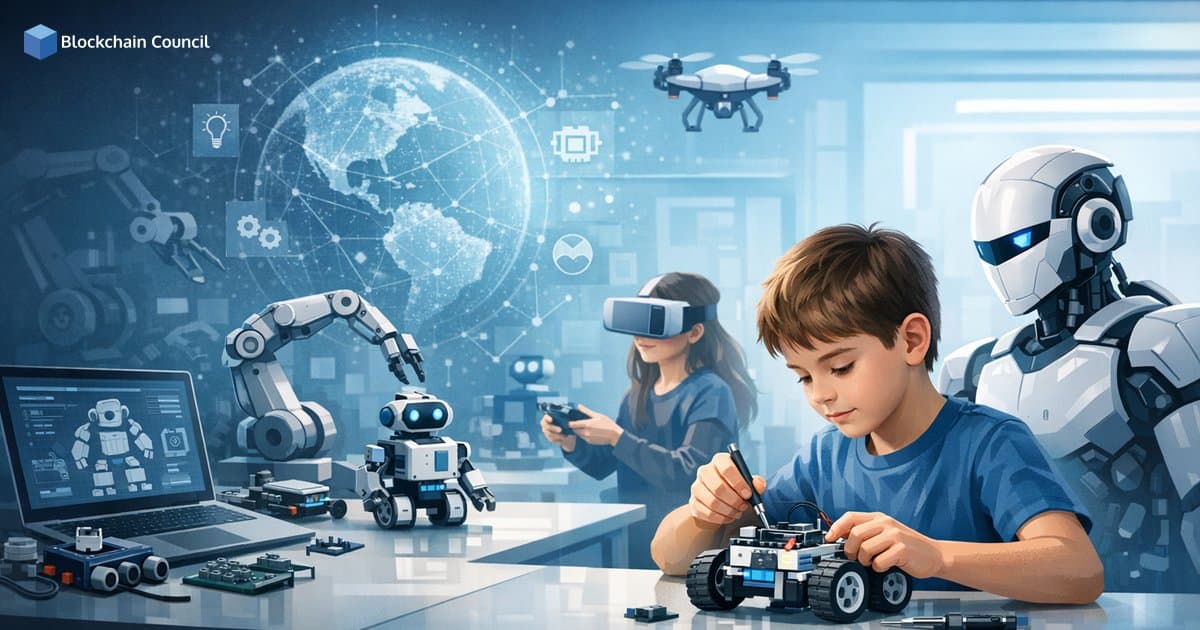
Best online robotics classes for kids have evolved into structured STEM learning pathways that blend coding, engineering, and problem solving. Families can now choose from live online sessions with shipped hardware kits, LEGO-based robotics courses, and fully virtual platforms that teach robotics logic in a browser. The educational robotics market was estimated at roughly USD 1.6 to 1.8 billion in 2023 and is projected to grow steadily through 2030, driven by mainstream K-12 adoption and online delivery models, according to research from MarketsandMarkets and HolonIQ.
This guide explains what these programs typically teach, which robotics kits your child may need, and the learning outcomes you can reasonably expect.

What Are Online Robotics Classes for Kids?
Most online robotics classes for kids fit into one of four formats. Understanding the format helps you anticipate the home setup, ongoing costs, and how hands-on the experience will be.
1) Live Online Classes with Shipped Kits
Some providers ship an age-appropriate robotics kit to your home and teach through live, instructor-led sessions. Playto Labs, for example, centers its program around a Robotics Learning Kit shipped globally, paired with an age-calibrated curriculum and trained instructors. This model suits families who want a consistent, end-to-end experience where the hardware and lessons are designed to work together.
2) Live Online Classes Using Widely Available Platforms (LEGO, VEX, etc.)
Many programs use familiar ecosystems like LEGO robotics. Snapology uses LEGO-based kits such as WeDo for younger learners and Mindstorms or Spike Prime for older students (exact kits can vary by program). CodeAdvantage also offers junior robotics classes that require a LEGO robotics kit for certain courses.
3) Structured K-12 Curricula and Teacher Training
For schools and families seeking progression aligned with classroom standards, Carnegie Mellon University Robotics Academy provides research-backed K-12 robotics curricula mapped to grade levels and platforms. Their approach typically includes a progression from graphical programming to text-based programming, along with options for physical and virtual robots.
4) Marketplaces of Independent Instructors
Marketplaces like Outschool host robotics classes from many educators, spanning LEGO robotics, Arduino, micro:bit, drones, and virtual robotics platforms. This creates variety, but parents should review each class listing carefully for kit requirements, software setup, and skill level.
What Do the Best Online Robotics Classes for Kids Teach?
While each provider has its own themes and branding, reputable programs tend to cover the same core skill domains. The best courses make these skills visible through projects rather than lectures alone.
Core Technical Skills
Mechanical design and engineering basics: stability, motion, gears, wheels, axles, levers, torque versus speed, friction, and iterative design (prototype, test, improve). Playto Labs, for instance, integrates mechanical concepts as students build robots that solve practical challenges.
Electronics and sensors: working with sensors such as touch, ultrasonic distance, infrared, color, and line-following sensors, alongside outputs such as motors, LEDs, and buzzers. Many kit-based programs include electronics as a central learning component.
Coding and computational thinking: beginners typically start with drag-and-drop or block coding (Scratch-style or LEGO block coding). As learners advance, some pathways introduce text-based languages such as Python or C/C++. Carnegie Mellon University Robotics Academy highlights this progression by grade band, supporting a move from graphical to text-based programming.
Robotics systems thinking: integrating sensors, code, and mechanical design to perform tasks like line following, obstacle avoidance, maze solving, or basic sensor-driven autonomy.
Broader STEM and Soft Skills
Robotics is also a practical vehicle for building durable learning behaviors. Providers frequently emphasize:
Problem solving and analytical thinking: breaking down tasks, debugging, and iterating based on test results.
Creativity and design: thematic builds around animals, space, and games are common in LEGO-centered programs such as Snapology, helping children absorb engineering concepts in a playful context.
Collaboration and communication: many live programs include team missions, code sharing, or presenting projects to peers.
Persistence and growth mindset: robots rarely work perfectly the first time, which makes iterative improvement a built-in habit rather than an abstract lesson.
Education research supports these outcomes. Studies by Amy Eguchi and by Barker and Ansorge report that sustained robotics activities can improve problem solving, motivation, and STEM interest among K-12 learners, particularly when learning is project-based and iterative.
Required Kits and Platforms: What You May Need at Home
Kit requirements vary significantly across programs. Before enrolling, confirm whether the class is hardware-first (physical builds every session) or simulation-first (virtual robots and browser tools).
Option A: Proprietary Kits Shipped to Your Home
Playto Labs ships a Robotics Learning Kit designed for specific age groups and teaches science, mechanics, electronics, and coding through live sessions. Components typically include structural parts, motors, sensors, a controller board, connectors, and power modules, though specific contents can vary by tier.
Moonpreneur offers tiered programs that often combine technical projects with innovation or entrepreneurship framing. Hardware details depend on the track and tier selected.
Option B: LEGO-Based Robotics Kits
LEGO kits are popular because they are reusable, widely available, and supported by a large learning ecosystem.
Snapology commonly uses LEGO WeDo for younger children and LEGO Mindstorms or Spike Prime for older students, focusing on block-based coding and engineering principles.
CodeAdvantage lists a LEGO robotics kit as required for certain junior robotics courses, pairing builds with coding, engineering, and physics concepts.
Option C: Virtual Robotics Platforms (No Physical Kit Required)
Virtual robotics reduces cost and logistics barriers while still teaching genuine robotics logic and algorithms.
Create & Learn includes options that use virtual tools such as VEXcode VR, plus other device-based or themed projects. Some classes may recommend hardware, while others can be completed fully online.
Carnegie Mellon University Robotics Academy supports both physical and virtual robot options across grade bands, which is useful for schools and structured learning pathways.
Option D: Mixed Requirements in Marketplaces
Outschool classes vary widely. Some are kit-free and use simulations, while others require Arduino starter kits, micro:bit boards, LEGO robotics sets, or other platforms. Always verify required materials on the individual class page before enrolling.
Expected Outcomes: What Kids Can Typically Achieve
Outcomes depend on program duration and learning progression. A one-off workshop may spark interest, but multi-level programs are more likely to produce durable skills.
1) Stronger Problem Solving and Logical Reasoning
Robotics requires students to plan, test, and debug. Research in informal and K-12 learning environments has found measurable gains in problem solving and programming skills when robotics activities are sustained over time, as noted in work by Barker and Ansorge and by Eguchi.
2) Foundational Coding Proficiency
Across platforms, students typically learn:
Sequences and events
Loops and conditionals
Variables and basic logic
Debugging and incremental improvement
Younger learners often master block coding. Older learners may transition toward text-based languages depending on the platform and curriculum depth.
3) Practical STEM Understanding
As kids build and program robots, they internalize concepts like friction, force, speed, energy, feedback loops, and how sensors convert physical signals into data. CodeAdvantage, for example, explicitly positions junior robotics as a way to learn engineering and physics through hands-on design and testing.
4) Increased Confidence and Interest in STEM Pathways
Hands-on robotics can increase motivation and interest in STEM fields, a finding consistently highlighted in educational robotics research. Many providers also incorporate project showcases and challenges, which strengthen communication skills and help children see themselves as capable builders rather than passive consumers of technology.
How to Choose the Right Online Robotics Class for Your Child
Use these factors to match a program to your child's needs and your home setup.
Age and Prior Experience
Ages 5-8: block coding, simple sensors, short build cycles, and high instructor support. VEX VR or beginner LEGO options work well at this stage.
Ages 9-12: more sensors, more complex builds, loops and conditionals, and early systems thinking such as line following and obstacle avoidance.
Ages 13-16: deeper autonomy, text-based programming options, and competition-style engineering challenges.
Physical Kit vs Virtual Robotics
Choose a physical kit if your child learns best by building and troubleshooting hardware and you can support setup and storage at home.
Choose virtual robotics if budget is a concern, space is limited, or faster iteration on algorithms without hardware downtime is a priority.
Curriculum Structure and Learning Pathway
Look for programs that clearly define levels and expected outcomes. Research-backed curricula such as those from Carnegie Mellon University Robotics Academy are especially useful for schools or families who want a progression aligned to grade bands and established platforms.
Instructor Quality and Support Model
Live instruction and feedback often matter more than the kit itself, particularly for beginners. Some organizations control the entire learning stack - kit, curriculum, and teacher training - while marketplaces vary by individual instructor.
Where Online Robotics for Kids Is Heading
Three trends are shaping the next wave of online robotics classes for kids:
More AI and data concepts: beginner-friendly projects are beginning to include simple AI behaviors, sensor data logging, and basic analysis.
Growth of hybrid learning: programs are increasingly blending simulations with physical builds, using virtual robots to teach algorithms and hardware to teach real-world constraints.
Greater emphasis on real-world impact: sustainability, smart agriculture, assistive robotics, and community problem solving are becoming common project themes.
Conclusion
The best online robotics classes for kids do more than teach how to snap parts together or drag code blocks across a screen. They develop systems thinking by connecting mechanical design, sensors, and programming into real behaviors that children can test and improve. Depending on your goals, you can choose a shipped-kit program like Playto Labs, a LEGO-based course like Snapology or CodeAdvantage, a virtual-first option like the VEX VR pathways used by Create & Learn, or standards-aligned curricula such as Carnegie Mellon University Robotics Academy.
For families looking to extend robotics into longer-term technology education, building complementary skills in coding, AI fundamentals, and cybersecurity awareness provides a natural progression. Related learning pathways include introductory programming courses, AI foundations, and structured certifications for older learners and educators seeking to formalize their skills development.
Related Articles
View All
Ai For Kids
How Parents Can Measure Real Progress in Online Learning for Kids: Skills, Portfolios, and Certifications
Learn how parents can measure real progress in online learning for kids using skill mastery, digital portfolios, and age-appropriate certifications, not just grades or screen time.

Ai For Kids
Future Skills for Kids: A Roadmap to Learn Coding, AI, and Cybersecurity Online by Age Group
A practical age-based roadmap to teach kids coding, AI literacy, and cybersecurity online, from early digital awareness to teen-level projects and safe habits.

Ai For Kids
Online Learning for Kids With ADHD: Strategies, Tools, and Course Formats That Work
Online learning for kids with ADHD works best with routines, short interactive lessons, executive-function tools, and school accommodations. Learn what formats help most.
Trending Articles
AWS Career Roadmap
A step-by-step guide to building a successful career in Amazon Web Services cloud computing.

Top 5 DeFi Platforms
Explore the leading decentralized finance platforms and what makes each one unique in the evolving DeFi landscape.
Blockchain in Supply Chain Provenance Tracking
Supply chains are under pressure to prove not just efficiency, but also authenticity, sustainability, and fairness. Customers want to know if their coffee really is fair trade, if the diamonds are con