

Jobs in Bitcoin
 Toshendra Kumar Sharma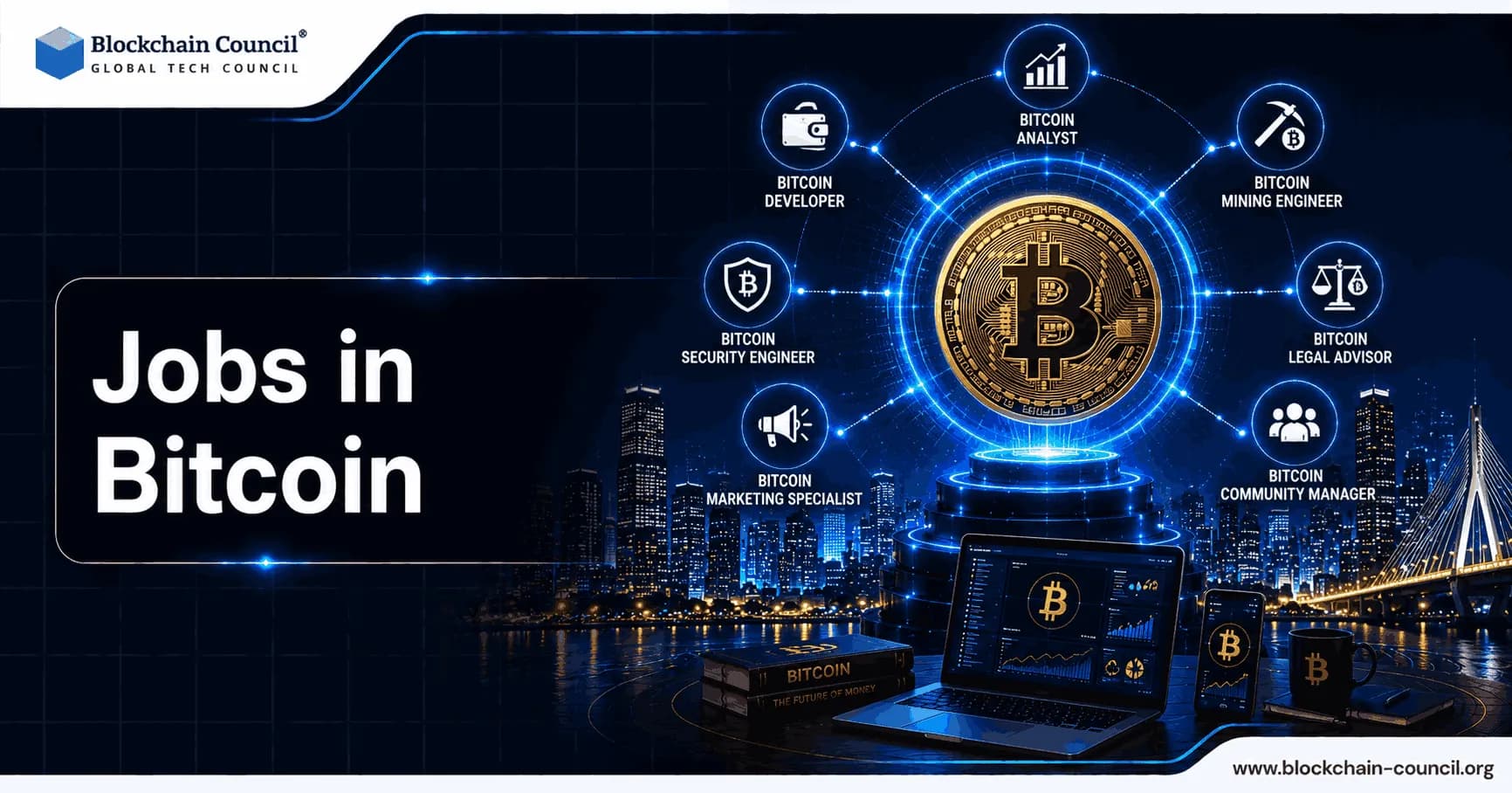
Bitcoin has grown from a digital currency concept into a major part of the global blockchain and financial technology landscape. Its underlying technology has created career opportunities across software development, cybersecurity, finance, research, infrastructure, analytics, compliance, marketing, and business development. As companies continue to build products and services around digital assets, professionals with relevant Bitcoin knowledge can explore a variety of career paths.
For individuals planning to enter this industry, specialized education can provide a useful starting point. A Certified Bitcoin Expert program can help learners develop structured knowledge of Bitcoin, blockchain concepts, transactions, wallets, mining, and the broader cryptocurrency ecosystem. Combining this knowledge with practical experience can help candidates prepare for technical and non-technical opportunities.

What Are Bitcoin Jobs?
Bitcoin jobs are professional roles involving the development, operation, security, analysis, adoption, or promotion of Bitcoin and related technologies.
These positions are not limited to cryptocurrency trading. The Bitcoin industry requires professionals from multiple backgrounds, including:
Bitcoin developers
Blockchain developers
Bitcoin security specialists
Blockchain engineers
Cryptocurrency analysts
Blockchain researchers
Compliance professionals
Financial analysts
Product managers
Business development specialists
Marketing professionals
Community managers
Some roles require advanced programming knowledge, while others focus on finance, research, communications, operations, or business strategy.
Why Choose a Career in Bitcoin?
Bitcoin has influenced discussions around decentralized finance, digital ownership, monetary technology, blockchain infrastructure, and financial innovation.
Professionals who understand Bitcoin can develop skills that are relevant beyond the cryptocurrency itself. Blockchain fundamentals, cryptography, distributed systems, digital asset security, financial technology, and data analysis can all support broader technology and finance careers.
Bitcoin-related careers may be suitable for people interested in:
Blockchain technology
Financial technology
Cybersecurity
Software engineering
Digital assets
Decentralized systems
Financial analysis
Technology research
The industry also creates opportunities for professionals who combine technical knowledge with business or communication skills.
Popular Jobs in Bitcoin
Bitcoin Developer
Bitcoin developers work with Bitcoin-related software, infrastructure, applications, and protocols. Depending on the position, they may contribute to development tools, wallets, payment applications, integrations, or blockchain infrastructure.
Strong programming, software engineering, and blockchain knowledge are important for this career.
Blockchain Developer
Blockchain developers can work on applications and systems that interact with Bitcoin and other blockchain networks.
Their responsibilities may include software development, APIs, wallet integrations, transaction systems, testing, and application maintenance.
Bitcoin Infrastructure Engineer
Infrastructure professionals help maintain systems that interact with blockchain networks. Their work can include servers, nodes, APIs, monitoring systems, cloud infrastructure, and network performance.
This role is particularly relevant for professionals with experience in DevOps, cloud computing, networking, and system administration.
Bitcoin Security Specialist
Security is essential in the digital asset industry. Bitcoin security specialists can work on wallet protection, private key management, infrastructure security, vulnerability assessment, and cybersecurity practices.
Cryptocurrency Analyst
Cryptocurrency analysts research market trends, blockchain activity, industry developments, and digital asset data.
They may work for financial technology companies, research firms, investment organizations, or digital asset businesses.
Blockchain Researcher
Researchers study blockchain protocols, cryptography, distributed systems, scalability, network activity, and emerging developments.
Research roles may involve technical writing, data analysis, experimentation, and industry research.
Bitcoin Product Manager
Product managers help companies develop Bitcoin-related products and services. They coordinate between engineering, design, marketing, compliance, and business teams to create products that address customer requirements.
Skills Required for Bitcoin Jobs
A successful Bitcoin career requires skills that match the specific role.
Blockchain Fundamentals
Candidates should understand:
Blockchain architecture
Blocks and transactions
Consensus mechanisms
Cryptography
Digital wallets
Private and public keys
Bitcoin addresses
Mining
Network nodes
Digital asset security
These concepts provide a foundation for understanding how Bitcoin works.
Programming Skills
Technical positions require programming and software engineering knowledge. Depending on the role, useful languages can include C++, Python, JavaScript, Go, Rust, and other relevant technologies.
Developers should also understand databases, APIs, version control, testing, debugging, and software architecture.
Cybersecurity
Bitcoin professionals should understand cybersecurity principles, secure key management, authentication, access control, encryption, vulnerability assessment, and risk management.
Security knowledge is valuable because digital assets require careful protection against unauthorized access and technical attacks.
Financial and Analytical Skills
Professionals working in Bitcoin research, finance, or analysis can benefit from knowledge of financial markets, economics, statistics, data analysis, and risk management.
How to Start a Career in Bitcoin
The right career path depends on your background.
Technology graduates can begin with programming and blockchain fundamentals before specializing in Bitcoin development or infrastructure.
Finance graduates can explore digital asset analysis, blockchain research, financial technology, compliance, or operations.
Marketing and communications professionals can enter Bitcoin companies through content marketing, community management, social media, partnerships, and public relations.
A practical approach is to learn the fundamentals, choose a specialization, build relevant projects, and create a professional portfolio.
Bitcoin Jobs for Freshers
Freshers can enter the Bitcoin industry by developing practical skills and gaining exposure to blockchain technology.
Entry-level opportunities can include:
Junior blockchain developer
Blockchain research assistant
Cryptocurrency research analyst
Technical support specialist
Blockchain operations associate
Web3 marketing associate
Community associate
Candidates can improve their profiles by creating blockchain projects, participating in hackathons, contributing to open-source repositories, completing relevant courses, and following developments in the digital asset industry.
Future-Ready Skills
As technology becomes increasingly important across industries, students need opportunities to develop future-ready skills early in their education. A Tech Olympiad can introduce students to areas such as artificial intelligence, coding, cybersecurity, robotics, and computational thinking while encouraging curiosity and continuous learning.
These skills can help students develop problem-solving ability, logical reasoning, creativity, and technical confidence. Early exposure to technology can provide a foundation for future careers in Bitcoin, blockchain development, cybersecurity, artificial intelligence, software engineering, and other emerging technology fields.
Technology Skills That Complement Bitcoin Careers
Bitcoin professionals often benefit from skills outside blockchain technology.
Cloud computing, cybersecurity, data analytics, artificial intelligence, databases, networking, DevOps, and software engineering can strengthen a candidate's career profile.
Professionals looking to broaden their technical knowledge can explore relevant Tech Certification options according to their career goals.
Combining Bitcoin expertise with broader technology skills can make professionals more adaptable and create opportunities across blockchain, fintech, cybersecurity, and software development.
Bitcoin Careers in Finance and Fintech
Bitcoin has created opportunities at the intersection of blockchain and financial technology.
Financial institutions, fintech companies, payment providers, digital asset platforms, and research organizations may require professionals who understand digital assets and blockchain systems.
Potential roles include digital asset analyst, blockchain financial analyst, risk specialist, compliance analyst, product analyst, and fintech consultant.
Professionals entering these roles should understand both financial principles and blockchain fundamentals.
How to Find Bitcoin Jobs
Job seekers should search using different role-specific terms because companies may not always use "Bitcoin jobs" as the official job title.
Useful searches include:
Bitcoin Developer
Blockchain Developer
Blockchain Engineer
Bitcoin Infrastructure Engineer
Cryptocurrency Analyst
Blockchain Researcher
Digital Asset Analyst
Blockchain Security Specialist
Web3 Product Manager
Blockchain Consultant
A strong resume should highlight technical skills, relevant projects, certifications, internships, research experience, and measurable achievements.
Career Growth in the Bitcoin Industry
Bitcoin professionals can progress into increasingly specialized roles as they gain experience.
A technical career path could look like:
Junior Blockchain Developer → Bitcoin Developer → Senior Blockchain Engineer → Blockchain Architect → Technical Lead
Other professionals can progress into research, cybersecurity, consulting, product management, finance, compliance, or business leadership.
Continuous learning is important because blockchain infrastructure, security practices, regulations, and digital asset applications continue to evolve.
Business and Marketing Careers in Bitcoin
Bitcoin companies also need professionals who can communicate products, build communities, attract customers, and develop partnerships.
Marketing professionals can work in content creation, search engine optimization, social media, community management, product marketing, public relations, and business development.
For professionals who want to combine blockchain knowledge with business communication and marketing capabilities, a Marketing Certification can complement their professional development and support career opportunities in blockchain marketing, Web3 communications, community building, and digital asset businesses.
Future Scope of Bitcoin Careers
The future of Bitcoin careers will depend on developments across blockchain infrastructure, digital assets, financial technology, cybersecurity, payments, research, and enterprise adoption.
As the ecosystem evolves, professionals may find opportunities in Bitcoin infrastructure, blockchain security, digital asset analysis, payment technology, research, compliance, software development, and financial technology.
Professionals who combine Bitcoin knowledge with transferable skills such as programming, cybersecurity, data analysis, finance, or marketing can build flexible career paths.
Conclusion
Jobs in Bitcoin extend far beyond cryptocurrency trading. The ecosystem requires developers, engineers, security specialists, researchers, analysts, product managers, finance professionals, compliance specialists, marketers, and business development experts.
To build a successful Bitcoin career, candidates should develop a strong understanding of blockchain fundamentals and then specialize according to their interests and professional background. Practical projects, relevant certifications, open-source contributions, industry networking, and continuous learning can strengthen career opportunities.
As Bitcoin and blockchain technology continue to influence financial technology and digital asset markets, professionals with a combination of technical, analytical, financial, and business skills can prepare themselves for diverse career opportunities in the evolving industry.
FAQs
1. What are Bitcoin jobs?
Bitcoin jobs are career opportunities involving Bitcoin development, Lightning Network infrastructure, digital-asset services, wallets, payments, mining, security, research, compliance, marketing, and business operations. Current Bitcoin-focused job boards list roles across engineering, finance, marketing, legal, operations, and customer support.
2. What types of jobs are available in Bitcoin?
Common Bitcoin career opportunities include:
Bitcoin Core Developer
Bitcoin Developer
Lightning Network Developer
Blockchain Engineer
Bitcoin Security Engineer
Bitcoin Mining Engineer
Backend Developer
Cryptography Engineer
Bitcoin Researcher
Product Manager
Bitcoin Analyst
Compliance Specialist
Marketing Specialist
Community Manager
Business Development Manager
3. What does a Bitcoin developer do?
A Bitcoin developer can work on Bitcoin Core, wallets, payment systems, Lightning applications, infrastructure, cryptographic protocols, and developer tools. Bitcoin Core itself is open-source software, and contributors can participate through code, testing, documentation, translations, and technical support.
4. What programming languages are used for Bitcoin development?
Bitcoin development can involve C++, Python, Go, Rust, JavaScript/TypeScript, and other languages, depending on the application. Bitcoin Core is primarily associated with C++, while Lightning infrastructure commonly uses Go. For example, current Lightning Labs protocol roles specifically seek Go experience and knowledge of distributed systems and Bitcoin.
5. Is C++ required for Bitcoin jobs?
Not for every Bitcoin position. C++ is particularly useful for Bitcoin Core and low-level protocol development, while other Bitcoin careers may use Go, Rust, JavaScript, Python, or traditional business and financial skills.
6. Can freshers get Bitcoin jobs?
Yes. Freshers can pursue internships, junior software roles, research opportunities, support positions, marketing roles, and entry-level Web3 jobs. However, specialized Bitcoin Core and protocol engineering positions often expect significant software-development or systems experience.
Contributing to open-source projects can help beginners build practical experience. Bitcoin Core explicitly welcomes contributions involving code, documentation, bug reporting, and support.
7. Is Bitcoin development a good career?
Bitcoin development can be a strong specialization for professionals interested in cryptography, distributed systems, financial technology, open-source software, digital payments, and decentralized infrastructure.
The career path can extend beyond Bitcoin Core into Lightning, wallets, custody, payments, security, mining, and institutional infrastructure.
8. What skills are required for Bitcoin developer jobs?
Important technical skills include:
C++ or Go
Data structures and algorithms
Distributed systems
Peer-to-peer networking
Cryptography
Bitcoin protocol fundamentals
Linux
Git
Testing
Cybersecurity
Open-source development
API development
Current Bitcoin protocol roles emphasize distributed systems, peer-to-peer networking, cryptography, testing, documentation, and open-source collaboration.
9. What is a Bitcoin Core developer?
A Bitcoin Core developer contributes to the software that implements the Bitcoin protocol and helps Bitcoin nodes validate and relay transactions and blocks. Bitcoin Core is community-driven open-source software, making experience with open-source development particularly relevant.
10. What are Lightning Network jobs?
Lightning Network jobs focus on technologies designed to enable faster and potentially lower-cost Bitcoin transactions through a layer built around Bitcoin. Roles can include Lightning protocol engineers, infrastructure engineers, application developers, developer advocates, product managers, and business-development professionals.
Current Lightning Labs openings include protocol, infrastructure, full-stack, security, product, and developer-relations positions.
11. Can Bitcoin developers work remotely?
Yes. Remote Bitcoin opportunities are common. Bitcoin-focused job listings currently include remote roles, and companies such as Lightning Labs and Galoy advertise remote positions. Bitcoin.com describes itself as remote-first, while Galoy states that every role is remote.
12. What industries hire Bitcoin professionals?
Bitcoin-related professionals can work in:
Digital payments
Cryptocurrency
Financial technology
Bitcoin mining
Digital-asset custody
Wallets
Exchanges
Lightning infrastructure
Cybersecurity
Financial research
Compliance
Blockchain infrastructure
Institutional digital assets
13. Can Bitcoin developers work in fintech?
Yes. Bitcoin technology is increasingly connected with payments, financial infrastructure, custody, banking services, and digital-asset products. Some Bitcoin companies specifically build financial and banking infrastructure around Bitcoin. For example, Galoy describes its work as building Bitcoin-based banking infrastructure for regulated institutions.
14. What is the salary for Bitcoin jobs?
There is no single Bitcoin salary because compensation depends on job role, technical specialization, experience, location, company, and employment structure.
For example, current Bitcoin-related listings include engineering, finance, compliance, marketing, and operations positions with very different compensation structures. Some companies may also offer bonuses, equity, or cryptocurrency-based compensation.
15. Can non-technical professionals get Bitcoin jobs?
Yes. Bitcoin companies also hire professionals in marketing, communications, product management, finance, legal and compliance, business development, customer support, operations, and community management.
Current Bitcoin job listings show opportunities extending well beyond engineering.
16. How can I become a Bitcoin developer?
A practical learning path is:
Learn programming fundamentals.
Study Bitcoin fundamentals and transaction mechanics.
Learn cryptography basics.
Understand peer-to-peer networking.
Learn C++ or Go.
Study Bitcoin Core.
Run a Bitcoin node.
Read Bitcoin Core documentation and source code.
Build Bitcoin-related projects.
Contribute to open-source repositories.
Learn Lightning development.
Build a GitHub portfolio.
Apply for Bitcoin developer positions.
Bitcoin Core provides documentation and contribution resources for developers interested in participating in the project.
17. What projects should I build for a Bitcoin developer portfolio?
Good projects include:
Bitcoin wallet
Bitcoin block explorer
Transaction monitoring application
Bitcoin payment processor
Lightning wallet
Lightning payment application
Bitcoin price/data dashboard
Bitcoin node monitoring tool
Bitcoin transaction analyzer
Bitcoin-related open-source contribution
Focus on explaining the architecture, security considerations, testing, APIs, and Bitcoin concepts demonstrated by each project.
18. Where can I find Bitcoin jobs?
You can search specialized Bitcoin job boards, LinkedIn, Wellfound, company career pages, and Web3 recruitment platforms.
Useful search terms include "Bitcoin Developer," "Bitcoin Core Developer," "Lightning Developer," "Bitcoin Engineer," "Bitcoin Security Engineer," "Bitcoin Researcher," and "Bitcoin Jobs Remote."
Specialized Bitcoin job boards currently list roles from companies across engineering, operations, finance, marketing, legal, and compliance.
19. Are Bitcoin jobs available for professionals in India?
Yes. Bitcoin and broader digital-asset roles are available in India, including engineering, security, product, compliance, and other positions. Current job listings show Bitcoin and digital-asset opportunities in cities such as Bengaluru, as well as remote positions available to professionals in different regions.
20. What is the future of Bitcoin jobs?
Bitcoin careers are expanding beyond traditional cryptocurrency trading into Lightning Network infrastructure, institutional custody, payments, security, mining technology, financial infrastructure, developer tooling, and Bitcoin-native applications.
Current hiring activity illustrates this diversification: Bitcoin companies are recruiting engineers, security specialists, product professionals, marketers, business-development professionals, compliance specialists, and other roles.
Related Articles
View All
Info
Part And Time Jobs
Part-time jobs provide flexibility and work-life balance for students, professionals, and anyone seeking additional income. Explore a variety of part-time employment options today.

Info
Front Desk Jobs Near Me
Front desk jobs offer excellent opportunities in hospitality, healthcare, corporate offices, and more. Discover local receptionist and front office positions near you and apply today.

Info
Daycare Jobs Near Me
Looking for daycare jobs near you? Discover opportunities for daycare teachers, childcare assistants, preschool staff, and early childhood educators. Learn where to find local openings and start a rewarding career in childcare.
Trending Articles
AWS Career Roadmap
A step-by-step guide to building a successful career in Amazon Web Services cloud computing.

Can DeFi 2.0 Bridge the Gap Between Traditional and Decentralized Finance?
The next generation of DeFi protocols aims to connect traditional banking with decentralized finance ecosystems.
How to Install Claude Code
Learn how to install Claude Code on macOS, Linux, and Windows using the native installer, plus verification, authentication, and troubleshooting tips.