

Ethereum Jobs in South Korea
 Toshendra Kumar Sharma
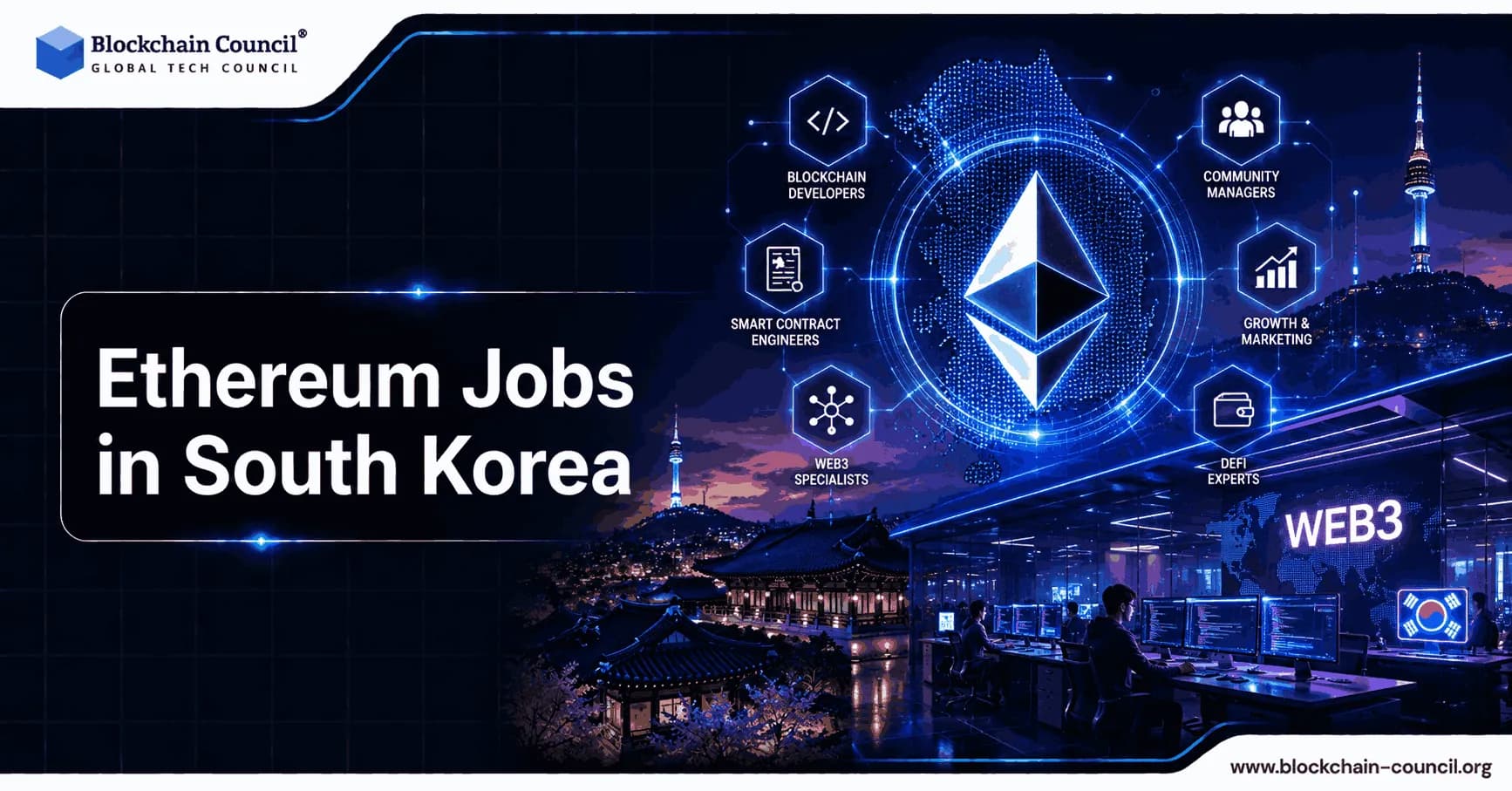
South Korea has one of the most active and highly engaged crypto trading populations in the world, and that retail energy has pulled real engineering and business demand into the country's blockchain sector. Domestic exchanges such as Upbit and Bithumb process enormous daily volume, global players including Binance and Crypto.com maintain a Seoul presence, and newer performant EVM chains have started hiring locally to establish institutional and retail adoption in one of the most dynamic blockchain markets globally. For anyone targeting this market, a recognized credential such as the Certified Ethereum Expert has become a practical way to stand out, since Korean employers increasingly expect demonstrated Ethereum knowledge rather than general crypto enthusiasm from technical candidates.
Job listings across Seoul point to a market with genuine depth. Roles range from deeply technical protocol and security engineering positions to business development leads tasked with growing a specific blockchain's footprint across Korea's investor community. This is not a market defined only by trading desks. It is building real infrastructure alongside them.

The Types of Ethereum Roles Currently Open in South Korea
South Korea's Ethereum job market spans several distinct categories, each requiring a different technical or business skill set.
Protocol and infrastructure engineering: roles at performant EVM-compatible Layer 1 projects solving speed and bandwidth constraints that older Ethereum-compatible chains still struggle with, often requiring deep technical understanding of blockchains and high autonomy.
Security engineering: backend security roles, frequently built in Rust, focused on applied cryptography, threat modeling, and hands-on experience developing on public blockchain platforms such as Ethereum or Bitcoin.
Blockchain intelligence and analytics: analyst positions at firms such as TRM Labs, Chainalysis, and similar companies, using blockchain analysis tools to investigate fraud, exchange risk, and broader crypto economy activity.
Business development and country leadership: Head of Korea and enterprise account roles tasked with establishing a specific blockchain or protocol as a leading choice for institutional and retail adoption within the country.
Regulatory and legal roles: dedicated Regulatory Counsel positions reflecting how seriously global crypto firms treat Korea's evolving compliance environment.
Every one of these roles sits within a much broader digital asset ecosystem, and Korean employers rarely hire for Ethereum-specific skill in isolation from that wider context. A candidate who understands exchange operations, custody models, and how digital assets trade across both domestic and global markets brings noticeably more value. This is where a credential like the Certified Cryptocurrency Expert becomes genuinely useful, since it covers the market-wide knowledge that complements Ethereum-specific technical skill in a country where retail trading activity shapes so much of the industry's direction.
Why Compensation and Seniority Skew High in This Market
South Korea's most visible Ethereum and Web3 roles in Seoul have advertised salary ranges reaching into the low 200,000 dollar range annually, a figure that reflects both the intensity of local competition for senior talent and the premium global firms place on hiring people who genuinely understand the Korean market rather than treating it as an afterthought.
This pattern shows up clearly in job requirements as well. Postings for protocol-level roles ask for deep technical understanding of blockchains and comfort tackling complex, technically demanding problems with real autonomy, not entry-level implementation work. Firms entering Korea specifically want senior engineers and country leads who can operate independently in a market with its own regulatory rhythm and its own highly engaged investor base.
The Technical and Security Bar Employers Are Setting
Postings across Seoul consistently combine Ethereum-specific requirements with broader technical range: experience across Bitcoin and Ethereum, comfort with Rust alongside Solidity, and applied cryptography knowledge for security-focused roles. Firms like Crypto.com have specifically sought backend security engineers who can hands-on tinker with software and hardware to understand systems at a deep level, not just write application code.
That kind of cross-domain technical expectation is exactly why structured, hands-on training carries real weight in this market. Programs under Tech Certification are built around applied engineering and security practice spanning multiple technical domains, giving candidates the breadth of hands-on experience that Korea's more senior and security-focused Ethereum roles specifically look for.
Future-Ready Skills
As technology becomes increasingly important across industries, students need opportunities to develop future-ready skills early in their education. A Tech Olympiad can introduce students to areas such as artificial intelligence, coding, cybersecurity, robotics, and computational thinking while encouraging curiosity and continuous learning.
That kind of early exposure builds exactly the habits of mind, careful logic, persistence through failure, and comfort with complex systems, that later show up in the senior protocol engineers and security specialists filling Korea's most demanding Ethereum roles today.
What Sets Candidates Apart in South Korea's Ethereum Market
A few patterns show up repeatedly among candidates who succeed in this market. Deep technical understanding paired with real autonomy stands out, since many of the most attractive roles are at lean teams solving genuinely hard problems without heavy oversight. Familiarity with Korea's specific regulatory posture toward crypto gives candidates an edge over those who only understand global or US-centric compliance frameworks. And because so much of this market's growth depends on winning institutional and retail trust within Korea specifically, firms are actively hiring for community management, growth marketing, and country-level business development roles alongside pure engineering positions.
That business and communication side of the industry should not be underestimated. A Marketing Certification can help technical professionals build the client-facing and positioning skills that Head of Korea and business development roles specifically require, since establishing a protocol's presence in this market is as much about clear communication and trust-building as it is about technical superiority.
The Bottom Line for Job Seekers Targeting South Korea
South Korea's Ethereum job market rewards senior technical depth, security-focused engineering skill, and genuine familiarity with a fast-moving, highly engaged local crypto culture. Employers here want candidates who can operate independently on hard technical problems, understand the country's regulatory context, and in many cases help build a protocol's reputation and adoption from the ground up. Building toward that combination, through a recognized Ethereum credential, broader crypto market knowledge, hands-on technical training across security and infrastructure, and the communication skills to match, gives candidates a strong path into one of Asia's most active and best-compensated blockchain hiring markets.
FAQs
1. What are Ethereum jobs in South Korea?
Ethereum jobs in South Korea include opportunities in Solidity development, smart contracts, Web3 engineering, blockchain infrastructure, DeFi, digital assets, RWA tokenization, and blockchain security. Current Korean listings specifically mention Ethereum/EVM development and smart-contract roles.
2. Is South Korea a good market for Ethereum jobs?
Yes. South Korea has an active blockchain employment market, particularly around Seoul and major technology hubs. Current recruitment listings include dozens of blockchain-related positions across engineering, infrastructure, finance, and business functions.
3. What Ethereum job roles are available in South Korea?
Common roles include Ethereum Developer, Solidity Developer, Smart Contract Engineer, Blockchain Engineer, Web3 Developer, Blockchain Architect, DeFi Developer, Digital Asset Specialist, and Blockchain Product Manager.
4. What does an Ethereum developer do in South Korea?
An Ethereum developer typically designs, develops, tests, and deploys Solidity-based smart contracts and decentralized applications. Some positions also involve backend APIs, blockchain data processing, wallets, transaction management, and on-chain/off-chain integration.
5. What skills are required for Ethereum jobs in South Korea?
Important skills include Solidity, Ethereum/EVM, Hardhat, Foundry, OpenZeppelin, JavaScript, TypeScript, Node.js, React, blockchain security, APIs, wallets, and databases. Senior positions may also require Go, Java, cloud infrastructure, and DevOps experience.
6. Is Solidity in demand for Ethereum jobs in South Korea?
Yes. Current Korean blockchain vacancies specifically request Solidity and EVM development experience, with some positions requiring experience developing Ethereum smart contracts.
7. Do Ethereum jobs in South Korea require Korean language skills?
Language requirements vary. Some employers require Korean, while international Web3 companies may accept English-speaking candidates. For example, one current Seoul Web3 developer position requires business-level proficiency in either Korean or English.
8. What is the salary for Ethereum developers in South Korea?
Ethereum and blockchain salaries vary based on experience, technical specialization, company, and employment type. Many Korean listings do not publish fixed salaries and instead determine compensation through experience and interviews, so candidates should evaluate individual job advertisements rather than relying on a single average.
9. Are there junior Ethereum jobs in South Korea?
Yes, although many developer positions prefer practical experience. Current listings range from entry-level opportunities to experienced positions. Building Solidity projects, deploying testnet contracts, and maintaining a GitHub portfolio can help candidates demonstrate their capabilities.
10. Are Ethereum jobs in South Korea only for developers?
No. The blockchain industry also needs professionals in product management, compliance, legal services, marketing, business development, research, finance, and operations. South Korean recruitment listings include blockchain positions beyond software engineering.
11. Are there RWA tokenization jobs related to Ethereum in South Korea?
Yes. RWA tokenization is creating new Ethereum-related opportunities. A current Seoul position involves developing smart contracts for real-world asset tokenization, including Ethereum and Polygon-based infrastructure, blockchain security, and Web3 wallets.
12. What skills are useful for RWA-related Ethereum jobs?
Professionals should understand Solidity, EVM networks, token standards, smart-contract security, wallets, custody, compliance, financial assets, and on-chain/off-chain integration. Knowledge of traditional finance and asset tokenization can provide an additional advantage.
13. Which Ethereum development tools should job seekers in South Korea learn?
Useful tools include Hardhat, Foundry, OpenZeppelin, ethers.js, TypeScript, Git, blockchain explorers, testing frameworks, and wallet-development tools. Current Korean listings specifically mention Hardhat/Foundry and OpenZeppelin.
14. Is blockchain security important for Ethereum careers in South Korea?
Absolutely. Smart contracts can manage valuable digital assets, making security testing, auditing, access control, gas optimization, and vulnerability prevention important skills. Current Korean blockchain roles specifically mention security reviews and smart-contract audit experience.
15. Can finance professionals find Ethereum-related jobs in South Korea?
Yes. Finance professionals can explore careers in digital assets, tokenized securities, RWA tokenization, blockchain payments, investment operations, compliance, and institutional digital-asset infrastructure.
16. Can international candidates get Ethereum jobs in South Korea?
Potentially, depending on the employer and work authorization requirements. Some positions explicitly consider international candidates or offer flexible arrangements, while others may require candidates to already have the right to work in Korea. One current listing states that applicants from India are welcome and that visa/work-authorization support may be negotiable.
17. How can I get an Ethereum job in South Korea without experience?
Start by learning Ethereum fundamentals and Solidity, then create practical projects such as an ERC-20 token, NFT application, DeFi prototype, or RWA tokenization project. Publish your work on GitHub and demonstrate testing, security, and deployment knowledge.
18. Where can I find Ethereum jobs in South Korea?
You can search Korean recruitment platforms, LinkedIn, Web3 job boards, and individual company career pages. Korean recruitment platforms currently show blockchain vacancies across different experience levels and job categories.
19. What should I include on my resume for an Ethereum job in South Korea?
Highlight Solidity projects, Ethereum/EVM experience, deployed smart contracts, GitHub repositories, Web3 tools, security knowledge, DeFi or RWA projects, and measurable technical achievements. If applicable, clearly mention your Korean and English proficiency.
20. What is the future of Ethereum jobs in South Korea?
The Ethereum job market is likely to expand beyond traditional cryptocurrency applications toward RWA tokenization, stablecoins, DeFi, digital securities, institutional blockchain infrastructure, and on-chain finance. Current hiring already shows demand for Ethereum/EVM development, smart-contract security, and RWA tokenization expertise.
Related Articles
View All
Info
Part And Time Jobs
Part-time jobs provide flexibility and work-life balance for students, professionals, and anyone seeking additional income. Explore a variety of part-time employment options today.
Info
Front Desk Jobs Near Me
Front desk jobs offer excellent opportunities in hospitality, healthcare, corporate offices, and more. Discover local receptionist and front office positions near you and apply today.
Info
Daycare Jobs Near Me
Looking for daycare jobs near you? Discover opportunities for daycare teachers, childcare assistants, preschool staff, and early childhood educators. Learn where to find local openings and start a rewarding career in childcare.
Trending Articles
The Role of Blockchain in Ethical AI Development
How blockchain technology is being used to promote transparency and accountability in artificial intelligence systems.
AWS Career Roadmap
A step-by-step guide to building a successful career in Amazon Web Services cloud computing.
Top 5 DeFi Platforms
Explore the leading decentralized finance platforms and what makes each one unique in the evolving DeFi landscape.