

Ethereum Jobs in Seoul
 Toshendra Kumar Sharma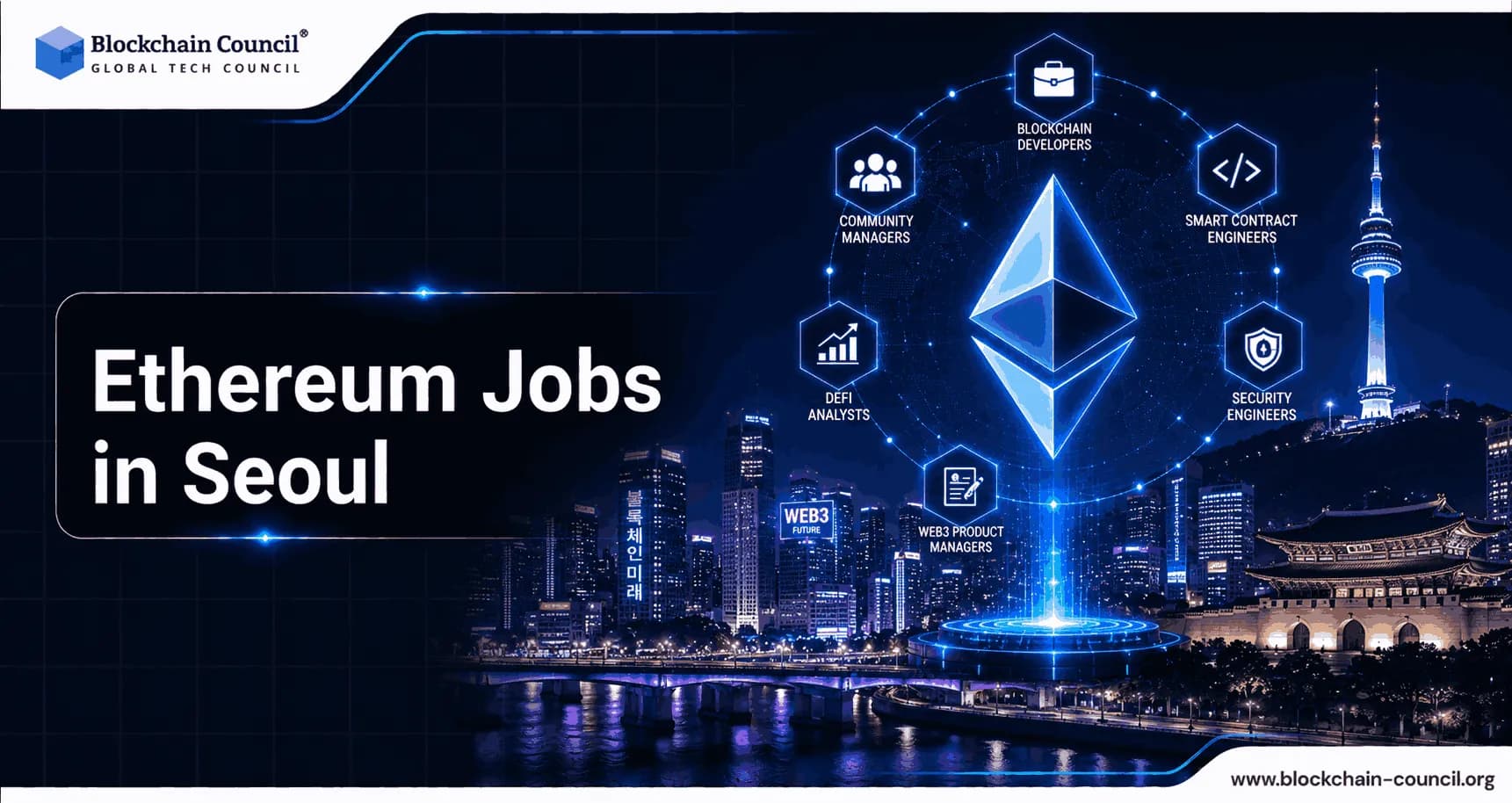
Seoul has built one of the most active blockchain job markets in Asia, driven by South Korea's outsized retail crypto trading volume, a dense cluster of exchange headquarters, and a gaming industry that has embraced blockchain and NFT technology faster than most of its regional peers. Ethereum jobs in Seoul span smart contract development at major exchanges, blockchain infrastructure work at gaming companies, and increasingly, compliance-adjacent technical roles as regulators tighten oversight of digital asset businesses. Anyone targeting these roles typically benefits from a Certified Ethereum Expert credential, since it verifies the exact Solidity and EVM knowledge that Seoul employers ask for consistently across technical job listings.
What separates Seoul from other Asian blockchain hubs is the sheer scale of retail participation in crypto trading, which has created a domestic industry large enough to support well-funded exchanges, homegrown Layer 1 and Layer 2 projects, and a gaming sector that treats blockchain integration as a natural extension of existing free-to-play and play-to-earn business models rather than an experimental side project.

Why Seoul Has Become a Major Ethereum Hiring Center
A combination of market size, industry structure, and cultural familiarity with crypto trading explains why Seoul supports more Ethereum-specific roles than its population alone would suggest.
Massive retail trading volume. South Korea has consistently ranked among the largest cryptocurrency trading markets globally relative to its population, and that trading activity has funded major domestic exchanges with the resources to build out substantial in-house blockchain engineering teams rather than relying purely on third-party infrastructure.
A gaming industry already comfortable with blockchain. Korean gaming companies, some of the largest in the world by revenue, have moved into blockchain gaming and NFT integration more aggressively than studios in many other regions, creating a steady stream of Ethereum and Ethereum-compatible development roles inside companies that are fundamentally gaming businesses.
Domestic Layer 1 and Layer 2 development. South Korea has produced several homegrown blockchain projects and infrastructure teams, some built on Ethereum-compatible technology, which has created engineering roles focused on protocol development rather than only application-layer smart contracts.
Increasing regulatory formalization. As Korean regulators have moved to formalize licensing and reporting requirements for exchanges and digital asset businesses, compliance-adjacent technical roles have grown alongside pure development positions. Job seekers evaluating the full skill set employers expect often look at broader Certified Cryptocurrency Expert training as well, since many Seoul-based Ethereum roles expect candidates to understand exchange mechanics and asset classification, not only contract syntax.
Categories of Ethereum Roles Available in Seoul
Ethereum job postings in Seoul cluster into a few recurring categories, shaped heavily by the size of the local exchange and gaming sectors.
Smart contract developers at major Korean exchanges build token listing infrastructure, staking products, and custody-adjacent contract logic, often working under more structured internal review processes than smaller international startups given the scale of user funds these platforms handle.
Blockchain engineers at gaming companies build NFT minting systems, in-game marketplaces, and the bridge infrastructure connecting traditional game backends to Ethereum or Ethereum Layer 2 networks. This category represents one of the fastest-growing segments of Ethereum hiring in the city, given how many major Korean gaming studios now run active blockchain divisions.
Protocol engineers working on domestic Layer 1 or Layer 2 projects focus on core infrastructure rather than application development, requiring deeper expertise in consensus mechanisms, network architecture, and often a strong grasp of Ethereum's own scaling roadmap for comparison and compatibility purposes.
Compliance and risk analysts with technical backgrounds assess smart contract and token risk for exchanges navigating South Korea's evolving licensing framework, a category that has expanded quickly as regulatory reporting requirements have grown more detailed.
Security auditors and researchers review contracts for Korean exchanges and gaming companies before major token launches, a role carrying particular weight given the scale of retail capital that can be exposed if a vulnerability makes it to production.
What Seoul Employers Actually Look For
Technical hiring for Ethereum roles in Seoul tends to converge on a consistent set of expectations, with a few local nuances worth understanding.
Solidity proficiency and demonstrated experience with testing and security practices sit at the top of nearly every posting, and employers at major exchanges in particular tend to probe deeply on security awareness during interviews, since the financial exposure at a large Korean exchange dwarfs that of a typical early-stage startup elsewhere.
Korean language proficiency meaningfully widens the available role pool, particularly at domestic exchanges and gaming companies where internal engineering communication happens primarily in Korean. International candidates without Korean language skills tend to find more traction at global crypto firms with a Seoul office or at companies with an explicitly international engineering culture.
Familiarity with high-throughput system design comes up frequently given the scale of transaction volume Korean platforms handle, meaning candidates who can speak to performance and scalability considerations alongside pure smart contract correctness tend to stand out in technical interviews.
Future-Ready Skills
As technology becomes increasingly important across industries, students need opportunities to develop future-ready skills early in their education. A Tech Olympiad can introduce students to areas such as artificial intelligence, coding, cybersecurity, robotics, and computational thinking while encouraging curiosity and continuous learning.
How to Position Yourself for an Ethereum Role in Seoul
Standing out in this market usually comes down to demonstrable, verifiable work rather than general blockchain enthusiasm. A public portfolio featuring at least one non-trivial smart contract project, ideally something tested rigorously or reviewed for security, carries far more weight in a technical screen than a list of completed courses without shipped work behind them.
Seoul's blockchain and Web3 meetup scene remains active, and consistent attendance at these events tends to open doors that cold applications rarely do, since referrals still drive a significant share of hiring in this niche. Candidates without Korean language skills should focus their search on international companies with a Seoul presence or on remote-friendly roles at Korean firms that have built explicitly bilingual engineering teams, since these paths tend to offer more realistic entry points than purely domestic companies operating entirely in Korean.
Tailoring applications to highlight specific tooling experience, whether that is Hardhat, Foundry, particular Layer 2 frameworks, or experience with high-volume transaction systems, will pass a technical screen more reliably than generic blockchain language on a resume.
Rounding Out Technical Skills With Broader Fluency
Ethereum expertise opens the technical door, but many roles in Seoul, particularly at large gaming companies and exchanges, expect engineers to contribute across broader backend and infrastructure work as well. A general Tech Certification can help build that wider technical grounding across systems engineering and scalable backend design, since a meaningful share of Ethereum-related work at Korean platforms involves handling transaction volume and infrastructure demands well beyond typical smart contract deployment. Developers who move into freelance, consulting, or founder roles within Seoul's blockchain scene often find they need to pitch their technical work clearly to investors, partners, or international collaborators, which is where a Marketing Certification can help turn strong engineering credentials into a message that actually lands outside a purely technical audience.
The Practical Next Step
If you are targeting an Ethereum role in Seoul, start by building a portfolio project that reflects real technical depth, whether that is a token contract, a gaming NFT integration, or infrastructure work suited to high transaction volume, and be honest about whether Korean language skills will meaningfully expand your options before committing fully to the local job search. Attend Seoul's blockchain meetups consistently if location allows, and tailor your application materials around specific tools and frameworks rather than general blockchain interest. Seoul's Ethereum job market rewards scale awareness and technical precision, and candidates who demonstrate both alongside genuine shipped work tend to move through hiring processes quickly in a market known for moving fast once it identifies real talent.
FAQs
1. What are Ethereum jobs in Seoul?
Ethereum jobs in Seoul include opportunities in Solidity development, smart contract engineering, Web3 development, blockchain infrastructure, digital assets, DeFi, RWA tokenization, and blockchain security. Current Seoul listings include blockchain and Web3 engineering positions requiring Ethereum and EVM expertise.
2. Is Seoul a good city for Ethereum and blockchain jobs?
Yes. Seoul has a substantial Web3 and blockchain employment ecosystem. A current Web3 job-board search lists 48 Web3 positions in Seoul, covering engineering, sales, legal, regulatory, and leadership roles.
3. What Ethereum job roles are available in Seoul?
Common roles include Ethereum Developer, Solidity Developer, Smart Contract Engineer, Blockchain Engineer, Web3 Developer, Blockchain Architect, Blockchain Product Manager, and Digital Asset Specialist. There are also opportunities in compliance, legal, business development, and operations.
4. What does an Ethereum developer do in Seoul?
An Ethereum developer designs, develops, tests, and deploys smart contracts and decentralized applications. Depending on the role, responsibilities can also include backend development, wallet integration, blockchain data processing, and transaction optimization.
5. What skills are required for Ethereum jobs in Seoul?
Important skills include Solidity, Ethereum/EVM, smart contracts, JavaScript, TypeScript, Node.js, React, blockchain security, APIs, wallets, and Web3 development tools. Senior positions may additionally require Go, Java, cloud infrastructure, and database expertise.
6. Is Solidity in demand for Ethereum jobs in Seoul?
Yes. Current Seoul blockchain vacancies specifically mention Solidity and EVM-based development, along with tools such as Hardhat, Foundry, and OpenZeppelin.
7. Do Ethereum jobs in Seoul require Korean language skills?
Language requirements depend on the employer. Some positions require Korean, while international Web3 companies may accept candidates with strong English communication skills. One Seoul Web3 developer listing, for example, accepts business-level Korean or English.
8. What is the salary for Ethereum developers in Seoul?
Ethereum and blockchain salaries vary substantially based on experience, technical specialization, and employer. Rather than relying on a single market-wide figure, candidates should evaluate the salary range stated in each individual Seoul job posting.
9. Are there junior Ethereum jobs in Seoul?
Junior opportunities exist, although many technical roles prefer previous blockchain development experience. Building Solidity projects, deploying smart contracts on testnets, contributing to open-source projects, and maintaining a GitHub portfolio can help demonstrate practical skills.
10. Are Ethereum jobs in Seoul only for developers?
No. The ecosystem also creates roles in product management, compliance, legal, research, marketing, business development, sales, investment, and operations. Current Seoul listings include both technical and non-technical blockchain positions.
11. Are there RWA tokenization jobs in Seoul?
Yes. RWA tokenization is becoming an important area of Seoul's blockchain employment market. A current Seoul position at Tokenable focuses on RWA smart contracts, EVM networks including Ethereum and Polygon, blockchain security, backend infrastructure, and tokenization.
12. What skills are useful for RWA-related Ethereum jobs?
Professionals should understand Solidity, EVM architecture, token standards, smart-contract security, custody, wallets, compliance, financial assets, and blockchain-to-off-chain integrations. Knowledge of real-world asset regulations and financial systems can provide an additional advantage.
13. Which Ethereum development tools should job seekers in Seoul learn?
Useful tools include Hardhat, Foundry, OpenZeppelin, ethers.js, TypeScript, blockchain explorers, Git, testing frameworks, and wallet infrastructure. Current Seoul vacancies specifically mention Hardhat/Foundry and OpenZeppelin.
14. Is blockchain security important for Ethereum careers in Seoul?
Absolutely. Smart contracts can control valuable digital assets, so employers increasingly value knowledge of secure coding, smart-contract audits, access controls, transaction security, and vulnerability prevention. Current Seoul positions specifically mention security optimization and smart-contract audit experience.
15. Can finance professionals find Ethereum-related jobs in Seoul?
Yes. Finance professionals can move into areas such as digital assets, tokenized securities, RWA tokenization, blockchain payments, investment operations, compliance, and institutional digital-asset infrastructure.
16. Can international candidates get Ethereum jobs in Seoul?
Yes, depending on the employer and work authorization requirements. International Web3 companies may place greater emphasis on English, while Korea-focused businesses may require Korean-language skills. Candidates should check visa and language requirements for each position.
17. How can I get an Ethereum job in Seoul without professional experience?
Start with Ethereum fundamentals and Solidity, then build practical projects such as an ERC-20 token, NFT marketplace, DeFi application, or RWA tokenization prototype. Publish your work on GitHub and document your architecture, testing, security considerations, and deployment process.
18. Where can I find Ethereum jobs in Seoul?
Candidates can search LinkedIn, Korean recruitment platforms, Web3-specific job boards, and individual company career pages. Current listings are available across Seoul's blockchain ecosystem, including engineering, regulatory, sales, and leadership positions.
19. What should I include on my resume for an Ethereum job in Seoul?
Highlight Solidity projects, Ethereum/EVM experience, deployed smart contracts, GitHub repositories, Web3 tools, blockchain security knowledge, RWA or DeFi projects, and measurable technical achievements. Clearly indicate Korean and English proficiency when relevant.
20. What is the future of Ethereum jobs in Seoul?
The Ethereum employment market in Seoul is likely to increasingly connect with RWA tokenization, stablecoins, DeFi, institutional digital assets, blockchain infrastructure, and on-chain finance. Current hiring already shows demand for EVM development and RWA tokenization expertise, suggesting that opportunities are expanding beyond traditional crypto applications.
Related Articles
View All
Info
Part And Time Jobs
Part-time jobs provide flexibility and work-life balance for students, professionals, and anyone seeking additional income. Explore a variety of part-time employment options today.
Info
Front Desk Jobs Near Me
Front desk jobs offer excellent opportunities in hospitality, healthcare, corporate offices, and more. Discover local receptionist and front office positions near you and apply today.
Info
Daycare Jobs Near Me
Looking for daycare jobs near you? Discover opportunities for daycare teachers, childcare assistants, preschool staff, and early childhood educators. Learn where to find local openings and start a rewarding career in childcare.
Trending Articles
How Blockchain Secures AI Data
Understand how blockchain technology is being applied to protect the integrity and security of AI training data.
What is AWS? A Beginner's Guide to Cloud Computing
Everything you need to know about Amazon Web Services, cloud computing fundamentals, and career opportunities.

Can DeFi 2.0 Bridge the Gap Between Traditional and Decentralized Finance?
The next generation of DeFi protocols aims to connect traditional banking with decentralized finance ecosystems.