
U.S. Banks Plan Joint Stablecoin
 Michael Willson
Major U.S. banks are working on a joint stablecoin project aimed at modernizing payments and staying competitive in a fast-evolving digital financial space. This initiative, if successful, could reshape how money moves within and beyond U.S. borders—by offering a reliable, regulated digital alternative backed by cash or Treasury assets.
In this guide, you’ll learn what this plan involves, who’s behind it, and what it means for users, regulators, and the crypto space. We’ll also compare it with existing stablecoins and explain how it fits into the broader financial ecosystem.

What Is the U.S. Bank-Backed Stablecoin?
The stablecoin under discussion would be backed 1:1 by the U.S. dollar, meaning every digital coin would be supported by a corresponding dollar held in reserve—either as physical cash or short-term Treasury bonds. The goal is to create a trustworthy and instantly usable digital currency for both consumers and businesses.
Who’s Involved?
A consortium of major banks including JPMorgan Chase, Bank of America, Wells Fargo, and Citigroup are exploring the project through groups like Early Warning Services and The Clearing House. These are the same players behind the popular peer-to-peer app Zelle, giving them a foundation in digital transactions.
Why Are Banks Creating Their Own Stablecoin?
1. Competing with Private Players
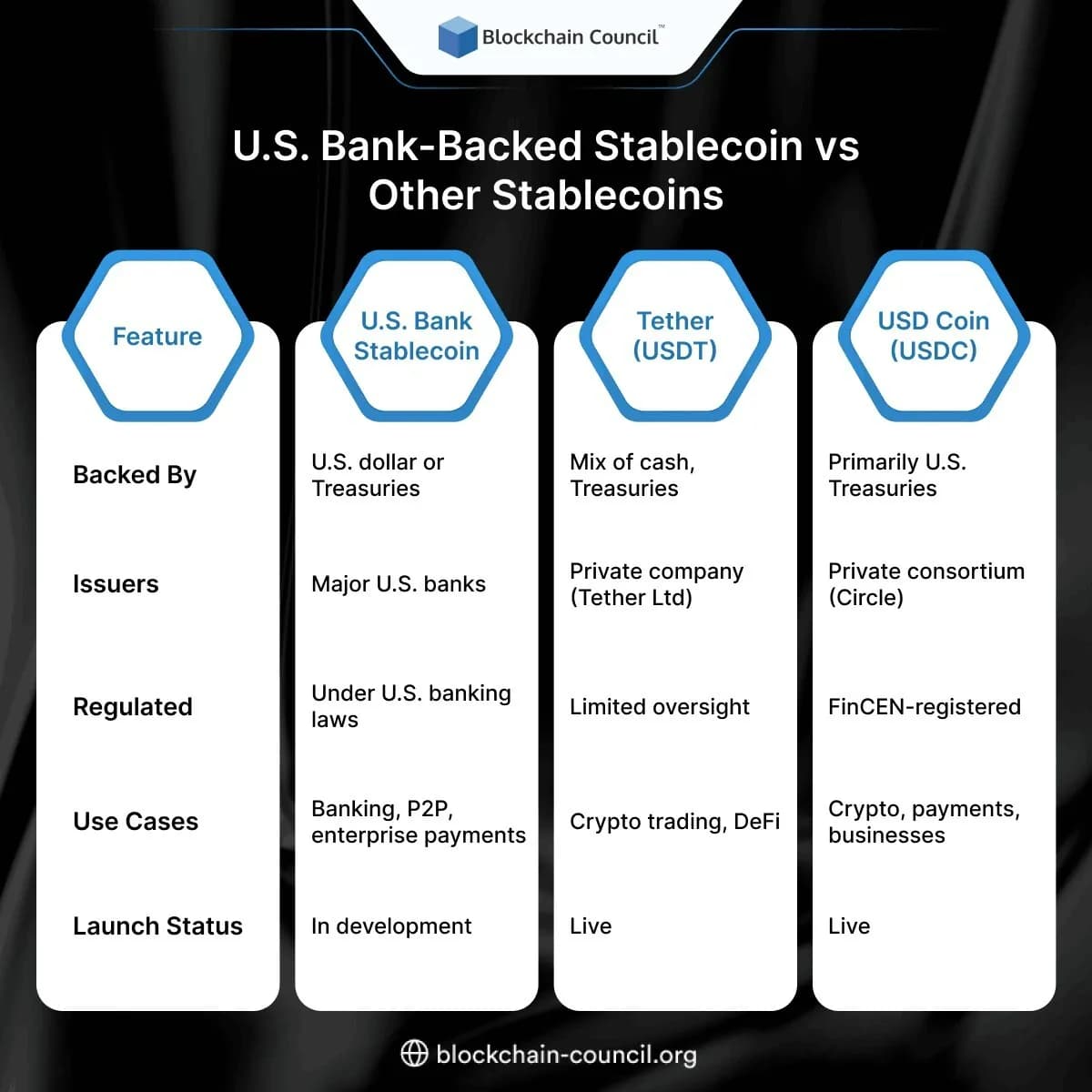
Stablecoins like Tether (USDT) and USD Coin (USDC) are already widely used in crypto trading, remittances, and DeFi. But they’re run by private companies. U.S. banks want to offer an alternative that feels safer, more transparent, and more regulated.
2. Staying Relevant in a Digital World
As blockchain-based payments and Central Bank Digital Currencies (CBDCs) gain ground, banks need to evolve. A stablecoin lets them stay in the game by offering similar tech—backed by trusted names.
3. Faster and Cheaper Transactions
This digital coin could allow for instant transfers without the need for clearinghouses or long settlement windows. That’s useful for payroll, cross-border payments, and supply chains.
U.S. Bank-Backed Stablecoin vs Other Stablecoins
Is It Regulated? What About the GENIUS Act?
The project’s timing aligns with legislative efforts like the GENIUS Act—a bipartisan bill that seeks to regulate stablecoin issuance by both banks and nonbanks. If passed, this act could provide the clarity needed to move forward with confidence.
Benefits for Consumers and Businesses
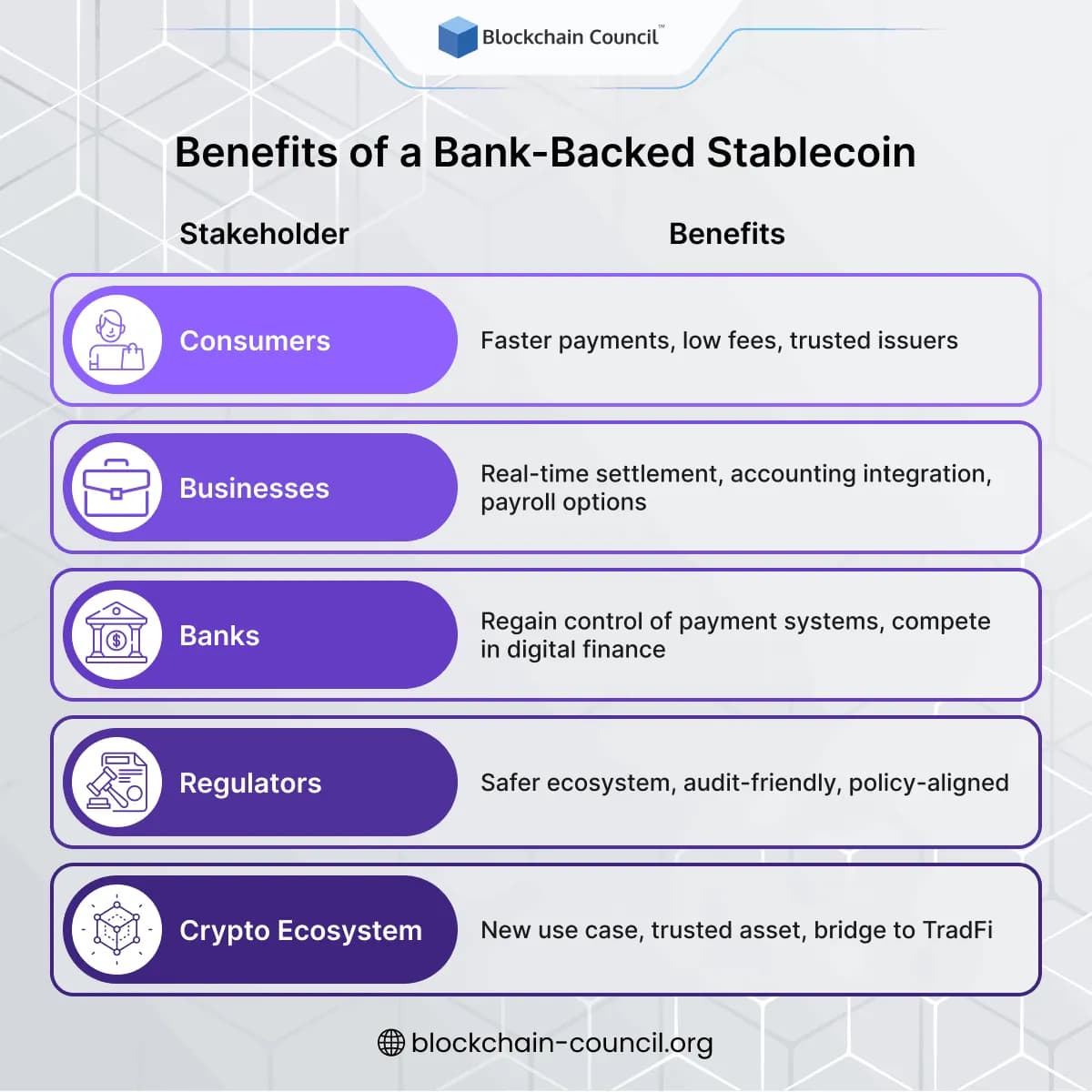
- Trust and Transparency: Backed by top banks, it could feel safer to the average user than a lesser-known crypto token.
- Speed and Cost: Faster than wires or checks. Minimal fees.
- Programmable Money: Can be embedded into contracts, payroll systems, and B2B tools.
Risks and Challenges
- Adoption Curve: Users and businesses may be slow to trust a new form of digital dollar.
- Technology Gaps: Banks aren’t crypto-native. Building secure infrastructure will be key.
- Competition: Private stablecoins and CBDCs could beat them to scale.
How It Fits into the Global Trend
Banks globally are showing growing interest in digital currencies. In Europe, similar conversations are happening under the digital euro initiative. Countries like Singapore and Japan are already piloting stablecoin frameworks.
This is not just a U.S. trend—it’s a global race to modernize money.
What This Means for Crypto and Fintech
- For Crypto Users: Another fiat-onramp with less volatility.
- For Fintechs: New rails for building apps without needing to depend on Visa/Mastercard.
- For Banks: A strategic defense and entry point into blockchain finance.
Could It Affect DeFi?
Possibly. If the U.S. bank-backed stablecoin becomes trusted, it might be integrated into DeFi protocols—especially for enterprise-grade applications or institutional liquidity.
Benefits of a Bank-Backed Stablecoin
Certifications That Can Help You Explore This Space
If this sounds exciting and you want to dive deeper into how stablecoins, crypto trading, and blockchain systems work, consider a few key learning paths:
- Learn more about trading strategies and stablecoin utility with a Crypto Certification
- Understand how data science powers real-time payment tracking with a Data Science Certification
- Explore fintech and business innovations through a Marketing and Business Certification
Conclusion
The U.S. banks’ joint stablecoin plan is a big move—combining tradition with innovation. While still in development, this project reflects how serious the traditional financial sector is about entering the crypto and blockchain space.
As regulations evolve and digital finance matures, we’ll likely see more hybrid solutions like this—blending the trust of banks with the efficiency of digital currencies.
Related Articles
View All
Cryptocurrency
Stablecoin Design Models
What is Stablecoin Design Models Stablecoins are crypto assets built to maintain a relatively stable value, usually by tracking a fiat currency like the US dollar. They matter because they combine blockchain transfer speed with price stability, making them useful for trading, payments, remittances,…

Cryptocurrency
Binance Holds 65% of CEX Stablecoin Reserves
The claim that Binance holds 65% of centralized-exchange stablecoin reserves is not a vibes-based talking point. It is a specific measurement coming from CryptoQuant’s exchange-reserve tracking for USDT and USDC held on centralized exchanges, published in a February 2026 update. If you want to…

Cryptocurrency
US Lawmakers Propose Tax Break for Small Stablecoin Payments
A bipartisan group of U.S. House lawmakers has released a discussion draft called the Digital Asset PARITY Act that would reduce tax friction for everyday stablecoin spending. The headline idea is simple. Small purchases made with qualifying U.S. dollar stablecoins could be exempt from capital…
Trending Articles

The Role of Blockchain in Ethical AI Development
How blockchain technology is being used to promote transparency and accountability in artificial intelligence systems.

AWS Career Roadmap
A step-by-step guide to building a successful career in Amazon Web Services cloud computing.

Top 5 DeFi Platforms
Explore the leading decentralized finance platforms and what makes each one unique in the evolving DeFi landscape.