
Layer 2 Scaling Solutions
 Michael Willson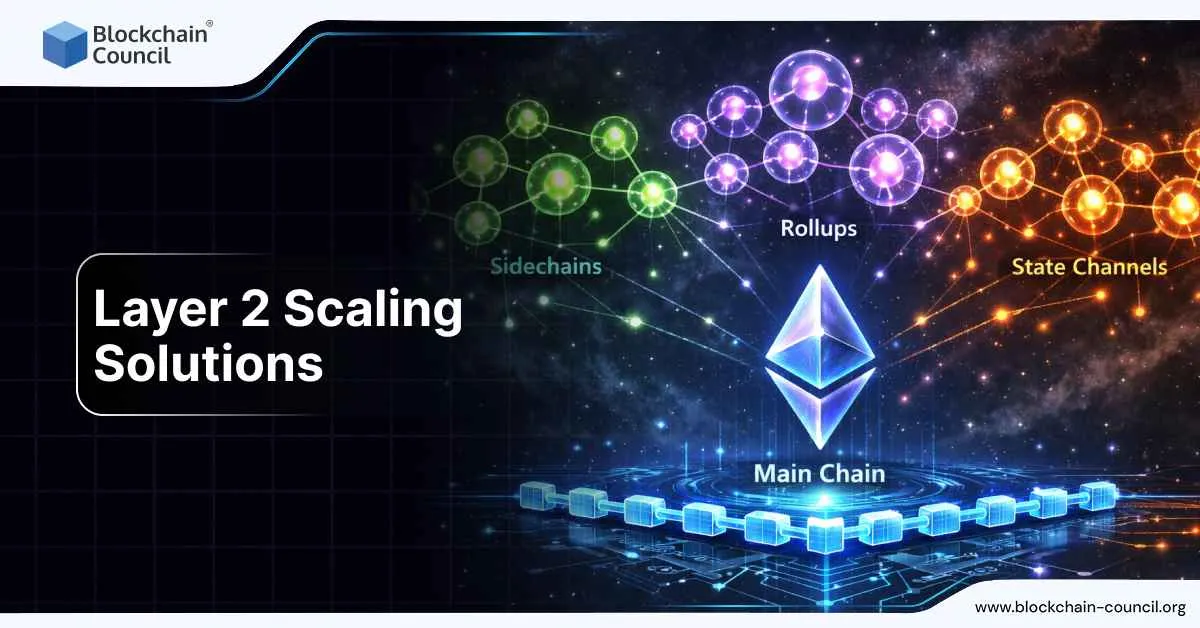
What is Layer 2 Scaling Solutions
Layer 2 (L2) scaling solutions are technologies built on top of a base blockchain, usually Ethereum, to process transactions faster and more cheaply while still relying on the base chain for security. If Layer 1 is the main highway, Layer 2 is the network of express lanes built to handle traffic without tearing up the original road every week.
This topic matters because blockchains have a basic problem: strong decentralization and security often come with limited throughput and higher fees. As usage grows, the base chain gets congested. L2s solve this by moving most computation off the main chain and posting proofs or transaction data back to it.
L2BEAT defines Layer 2 as a category of technical solutions aimed at scaling the base layer in a trust-minimized way, and it distinguishes rollups from systems that add more trust assumptions.
Why Layer 2 Matters
Ethereum is secure and widely used, but mainnet fees can rise when demand spikes. That makes everyday use harder for gaming, payments, social apps, and high-volume trading. L2s reduce costs and improve speed so users can interact more often without paying mainnet-level fees every time.
This is not just a convenience upgrade. It changes what kinds of apps are practical. Low-cost L2 transactions enable micro-payments, on-chain gaming loops, and consumer apps that would be painful on Layer 1 alone.
How Layer 2 Works
Most L2 systems batch many transactions off-chain, then submit compressed data and state updates to Ethereum. The base chain acts as the final settlement and security layer.
In general, an L2 does three things:
- Executes transactions off the main chain
- Posts data or proofs to Ethereum
- Lets users eventually settle or withdraw back to Ethereum
The exact design differs by L2 type, and those differences determine cost, speed, and trust assumptions.
Main Types of Layer 2
Rollups
Rollups are the dominant L2 model today. L2BEAT describes rollups as L2s that periodically post state commitments to Ethereum, validated either by validity proofs or accepted optimistically and challengeable through fraud proof mechanisms.
Rollups come in two major types:
Optimistic rollups
Optimistic rollups assume transactions are valid unless challenged. They rely on fraud proofs (also called fault proofs) to detect invalid state transitions.
A good recent example is the OP Stack ecosystem. Optimism documents that fault proofs were added to the OP Stack and activated on OP Mainnet on June 10, 2024, enabling permissionless submission and challenge of state proposals used in withdrawals.
Strengths:
- EVM compatibility is usually strong
- Mature developer tooling
- Good ecosystem adoption
Trade-offs:
- Withdrawal times can be longer due to challenge periods
- Security depends on functioning proof/challenge mechanisms
ZK rollups
ZK (zero-knowledge) rollups use validity proofs to prove batches are correct before finalization. This often allows faster finality and can reduce some trust assumptions around challenge participation.
ZKsync documentation describes its protocol as enabling interoperable ZK rollups and validiums via ZK Stack, with modular architecture for multiple interconnected chains.
Strengths:
- Strong cryptographic guarantees
- Faster finality in many cases
- Attractive for performance-sensitive apps
Trade-offs:
- More complex proving systems
- Tooling and compatibility can vary by stack
- Infrastructure can be harder to operate
Other Layer 2 Approaches
Besides rollups, there are older or specialized approaches such as state channels and plasma. L2BEAT notes these as part of the broader L2 category, though many modern teams now focus on rollups because they offer a better balance of usability and security.
You will also see terms like validiums and “alt-DA” designs. These can improve performance further by changing where data availability is stored, but they may introduce additional trust assumptions compared with rollups that publish data to Ethereum.
What Changed Recently
Cheaper rollups after EIP-4844
The biggest recent change in Ethereum L2 scaling has been EIP-4844 (proto-danksharding), which introduced blob-carrying transactions. The EIP explicitly defines a new transaction format for blob data that is not accessible to EVM execution but is designed for Ethereum’s sharding roadmap.
Ethereum.org also documents that Type 3 (blob) transactions were introduced via EIP-4844 as part of the Dencun upgrade and are designed to handle blob data more efficiently, especially benefiting L2 rollups by lowering data posting costs.
Why this matters in practice:
- Rollups pay less to post data
- User fees on many L2s can drop significantly
- More applications become economically viable
This is one reason L2 activity and competition have accelerated since Dencun.
More focus on decentralization stages
As L2 adoption grows, the conversation has shifted from “Is it fast?” to “How secure and decentralized is it really?” L2BEAT’s stages framework has become a widely referenced way to discuss rollup maturity and whether a project still has “training wheels” like centralized controls.
That shift is healthy. Cheap transactions are useful, but users also care about upgrade safety, proof systems, and whether they can exit if something goes wrong.
Better proof systems in production
Optimistic rollups have made visible progress by activating fault proof systems in production environments, especially in the OP Stack ecosystem. Optimism’s documentation explains how fault proof upgrades changed the security model and removed reliance on older permissioned output structures.
This is a big deal because it moves optimistic rollups closer to their intended trust model instead of relying on temporary centralization.
Real-World Examples
Consumer apps and social platforms
Low-cost L2 transactions make it practical for social apps, loyalty systems, and creator tools to run on-chain without forcing users to pay high fees for every interaction. A platform can process many small actions, batch them, and settle to Ethereum through a rollup.
DeFi and trading
DeFi protocols use L2s to reduce execution costs for swaps, lending, and perpetual trading. This improves user experience and allows higher-frequency strategies that would be too expensive on mainnet.
Gaming and micro-transactions
Games need fast and inexpensive transactions for actions like item trades, rewards, and progression events. L2s are a natural fit because they allow frequent interactions while maintaining a security link to Ethereum.
How to Evaluate an L2
Not all Layer 2 solutions are equal. Before building or investing time in one, check the basics.
Security model
Is it a rollup posting data to Ethereum, or a design with additional trust assumptions? L2BEAT is useful for understanding these distinctions.
Proof system maturity
For optimistic rollups, are fault proofs live and permissionless? For ZK rollups, how mature are the proving systems and upgrade processes? Optimism’s fault proof documentation is a good example of what to verify.
Costs after blobs
How much does the chain benefit from EIP-4844 blob transactions? Ethereum’s blob transaction docs and the EIP itself help explain why this matters for fees.
Ecosystem fit
Does it support the tooling, wallets, and developer stack you need? Performance means little if integration is painful.
Skills and Certifications
Layer 2 development and strategy now sit at the intersection of blockchain engineering, product design, and user growth. If you want a structured path, a practical mix can include an AI certificate for broader automation and analytics literacy, a Blockchain certificate and Crypto certification for Web3 and protocol fundamentals, a broad Tech Certification for systems and cloud understanding, and a business-facing Marketing Certification for product positioning and adoption strategy.
Conclusion
Layer 2 scaling solutions are no longer a side topic in crypto. They are the main path for making blockchain applications usable at scale. Rollups, especially optimistic and ZK rollups, now form the center of the Ethereum scaling strategy, while upgrades like EIP-4844 have made them cheaper and more practical by introducing blob transactions for lower-cost data posting.
The next phase is less about proving L2s can work and more about improving decentralization, proof reliability, interoperability, and user experience. In other words, the hard part starts after the hype, which is usually when the useful engineering finally happens.