Coinbase Joins S&P 500
 Blockchain Council
Coinbase is now part of the S&P 500. This makes it the first pure-play crypto company to be listed on one of the most important financial indices in the world. It’s a big moment for both Coinbase and the broader digital asset industry. Here’s why this matters, what led to the inclusion, and what it means for investors and the future of crypto.
What Is the S&P 500 and Why Coinbase Was Added
The S&P 500 includes the 500 largest public companies in the U.S. based on market cap, earnings, and other financial measures. Being added means that Coinbase is now recognized as a major player in the U.S. economy.

This inclusion happened because Coinbase met all the criteria: consistent profitability, market size, trading volume, and liquidity. Despite regulatory challenges, the company showed strong growth and resilience in the past year.
Key Factors Behind the Inclusion
Several factors helped Coinbase reach this milestone:
- A strong balance sheet with rising quarterly profits
- High trading volumes on the platform as crypto rallied
- Broad user base spanning retail and institutional clients
- Inclusion of crypto-related firms in more investor portfolios
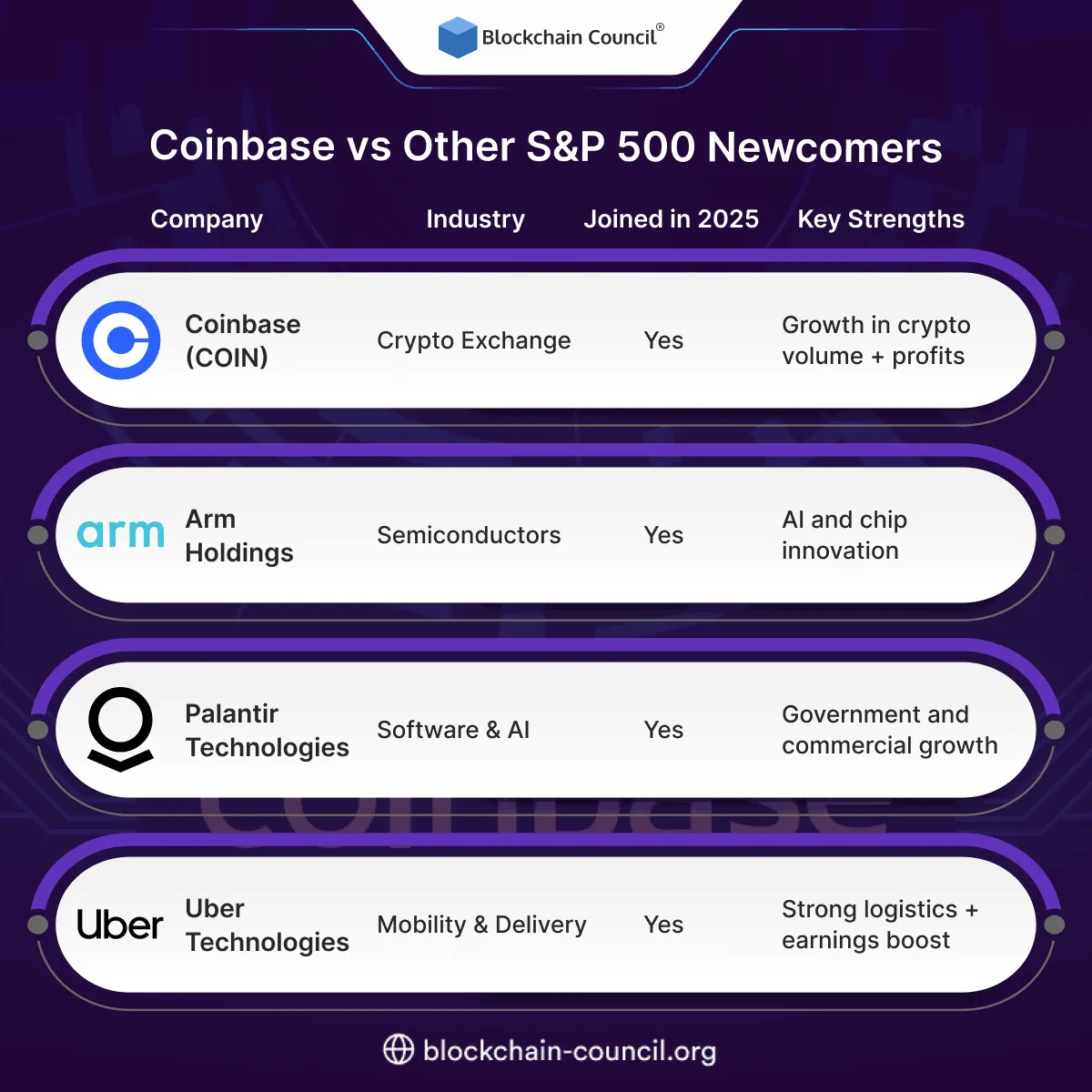
Coinbase Compares to Other S&P 500 Newcomers
What This Means for Investors
Inclusion in the S&P 500 means index funds and ETFs that track the index will automatically buy Coinbase shares. That increases institutional ownership and could lead to more price stability.
It also boosts Coinbase’s credibility. Many funds and retirement portfolios that follow strict rules can now consider investing in COIN.
Coinbase’s S&P 500 Entry: Strategic Benefits Breakdown
Instead of just short-term market reactions, here’s a clearer look at how Coinbase benefits strategically from joining the S&P 500:

More importantly, it shows how deeply crypto is becoming part of traditional finance—and why this move strengthens Coinbase’s position.
Why This Is a Big Deal for Crypto
Coinbase joining the S&P 500 is more than just a headline. It’s a signal that crypto has a place in the mainstream financial system.
It encourages other firms to aim for similar milestones and shows that blockchain-based businesses can survive—and thrive—in public markets.
If you’re planning to enter crypto investing or build a product in this space, a Crypto Certification gives a strong foundation. It can help you understand asset flows, exchange models, and investor psychology.
For professionals interested in analyzing crypto equities or trends around token adoption, a Data Science Certification is useful. And for those exploring crypto business models, listings, or market positioning, the Marketing and Business Certification helps you build growth strategies.
Conclusion
Coinbase’s entry into the S&P 500 confirms that crypto is no longer on the fringe. It’s becoming part of the core U.S. financial ecosystem.
With more companies integrating blockchain and digital assets, we can expect more crypto-native businesses to hit milestones like this in the near future. For investors and professionals alike, this shift brings new opportunities—and new responsibilities.