
Bitcoin Market Cap Nears $3.8 T
 Blockchain Council
Bitcoin’s market capitalization has nearly touched $3.8 trillion, marking a historic moment for the crypto sector. This growth places Bitcoin among the most valuable assets in the world, comparable to major national economies and tech giants. The milestone signals that institutional trust in Bitcoin has reached new highs and that digital assets are now firmly part of global finance.
This article explains what’s behind this rise, how it affects the market, and why it matters to investors, professionals, and regulators.
What Does a $3.8 Trillion Market Cap Mean?
A market cap nearing $3.8 trillion means that the total value of all Bitcoin in circulation is close to that of countries like the UK or tech companies like Apple. It reflects a massive surge in both price and demand.
Bitcoin’s price has recently crossed $123,000, driven by spot ETF inflows and broader investor confidence. This inflow of capital, especially from institutions, is a major factor pushing market cap to new records.
Key Drivers Behind the Market Cap Surge
1. Institutional Inflows
Spot Bitcoin ETFs have brought in over $1 billion per day in recent sessions. BlackRock’s IBIT, Fidelity’s FBTC, and Ark’s ARKB are now responsible for holding a large share of the supply. These inflows reduce the amount of Bitcoin available in the open market.
2. Supply Constraints
Bitcoin’s supply is capped at 21 million coins. With ETF demand far exceeding the number of new coins mined daily (about 450 BTC), scarcity is increasing. This imbalance drives prices up and boosts total market value.
3. Positive Regulation Signals
During “Crypto Week” in the U.S., Congress debated several bills aimed at making digital asset regulation more transparent. Clearer rules have encouraged more investors to treat Bitcoin as a serious long-term asset.
4. Global Economic Uncertainty
In times of inflation and dollar weakness, Bitcoin is viewed as a hedge. Its decentralized and fixed-supply nature appeals to those seeking alternatives to fiat currencies and traditional finance.
Bitcoin vs National Economies and Companies
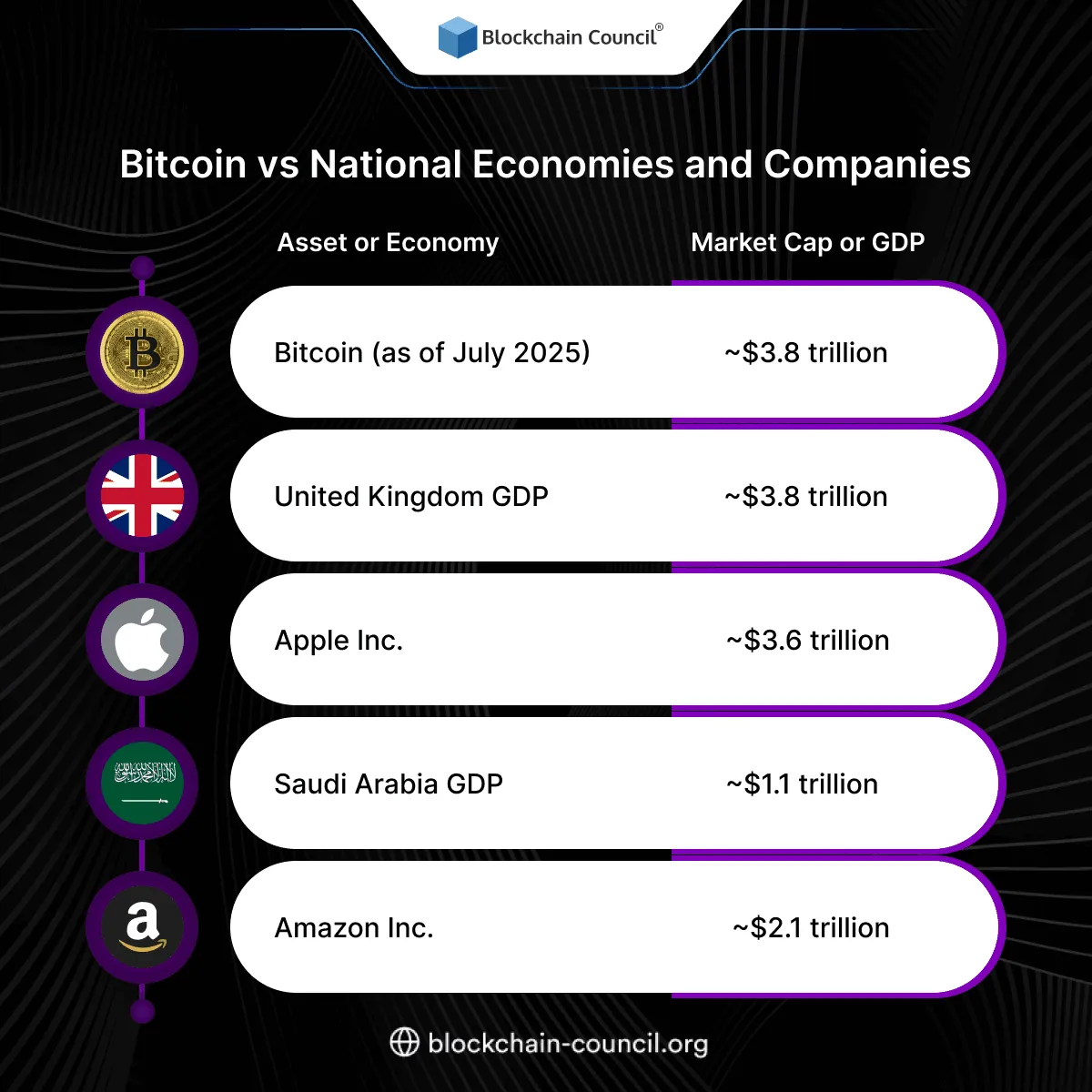
This comparison shows Bitcoin’s market strength relative to global benchmarks. It is no longer just a tech experiment or speculative bet.
Effects on the Crypto Market
Bitcoin’s rise has a ripple effect across the broader cryptocurrency space. Ethereum and altcoins are also seeing increased demand as investors diversify. Total crypto market cap has followed Bitcoin’s lead, climbing alongside it.
Investor Behavior Is Changing
Large investors are shifting from short-term trading to long-term holding. ETFs make Bitcoin accessible to institutional and retail investors without needing self-custody or crypto wallets.
This means more stability, less volatility, and growing acceptance of Bitcoin as a portfolio asset.
Institutional Inflows vs Supply Rate of Bitcoin
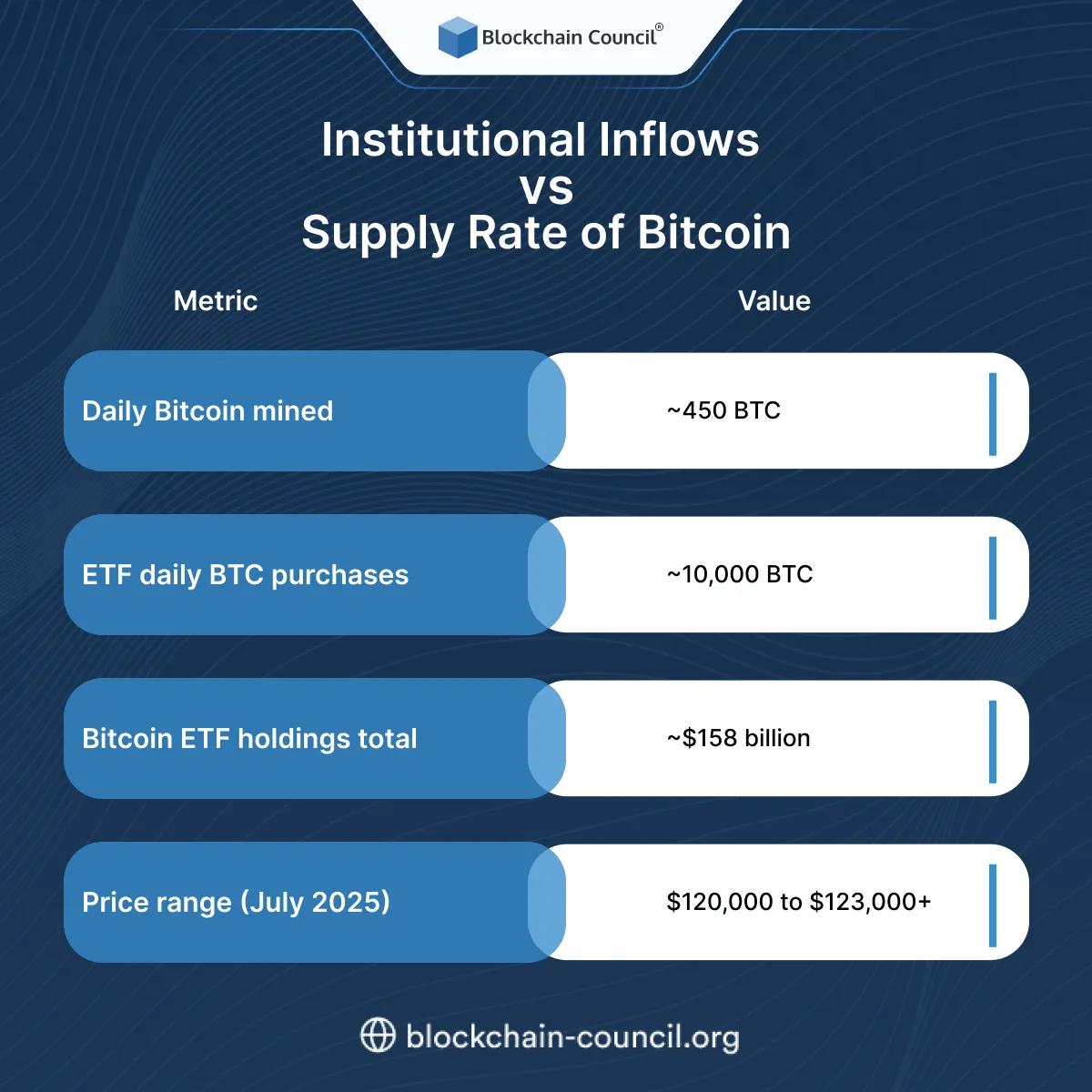
The numbers show that ETFs are buying more than 20 times the daily new supply. This is creating ongoing price pressure and boosting market cap.
Opportunities for Crypto Professionals
As Bitcoin’s financial role grows, so does the demand for skilled professionals who understand digital assets. If you’re looking to enter the crypto industry or level up your career, this is the time to build the right expertise.
- Gain trading, custody, and compliance skills with the Crypto Certification.
- Master data modeling and blockchain analytics with the Data Science Certification.
- Learn crypto product strategy and regulatory frameworks with the Marketing and Business Certification.
These programs help professionals understand both the technology and its financial impact, preparing them for real-world use cases.
What This Means for the Future
With a near $3.8 trillion market cap, Bitcoin is no longer a fringe investment. It’s on the radar of central banks, global funds, and regulatory agencies. As adoption continues, more tools, products, and services will be built around Bitcoin.
This could include:
- Wider use in pension and insurance funds
- Integration with traditional banking
- Cross-border payment platforms
- More precise regulations globally
Bitcoin’s size makes it impossible to ignore, and its influence on global markets will only grow from here.
Final Takeaway
Bitcoin reaching a market cap close to $3.8 trillion is not just a price milestone. It reflects deep, long-term confidence in a decentralized, limited-supply asset. Investors, professionals, and institutions are treating Bitcoin as a core part of their strategy.
The trend is clear: Bitcoin is moving from speculation to foundation. And for those ready to learn, work, or invest in this space, now is the time.