

Best Platform for Blockchain Courses: Key Criteria
 Michael Willson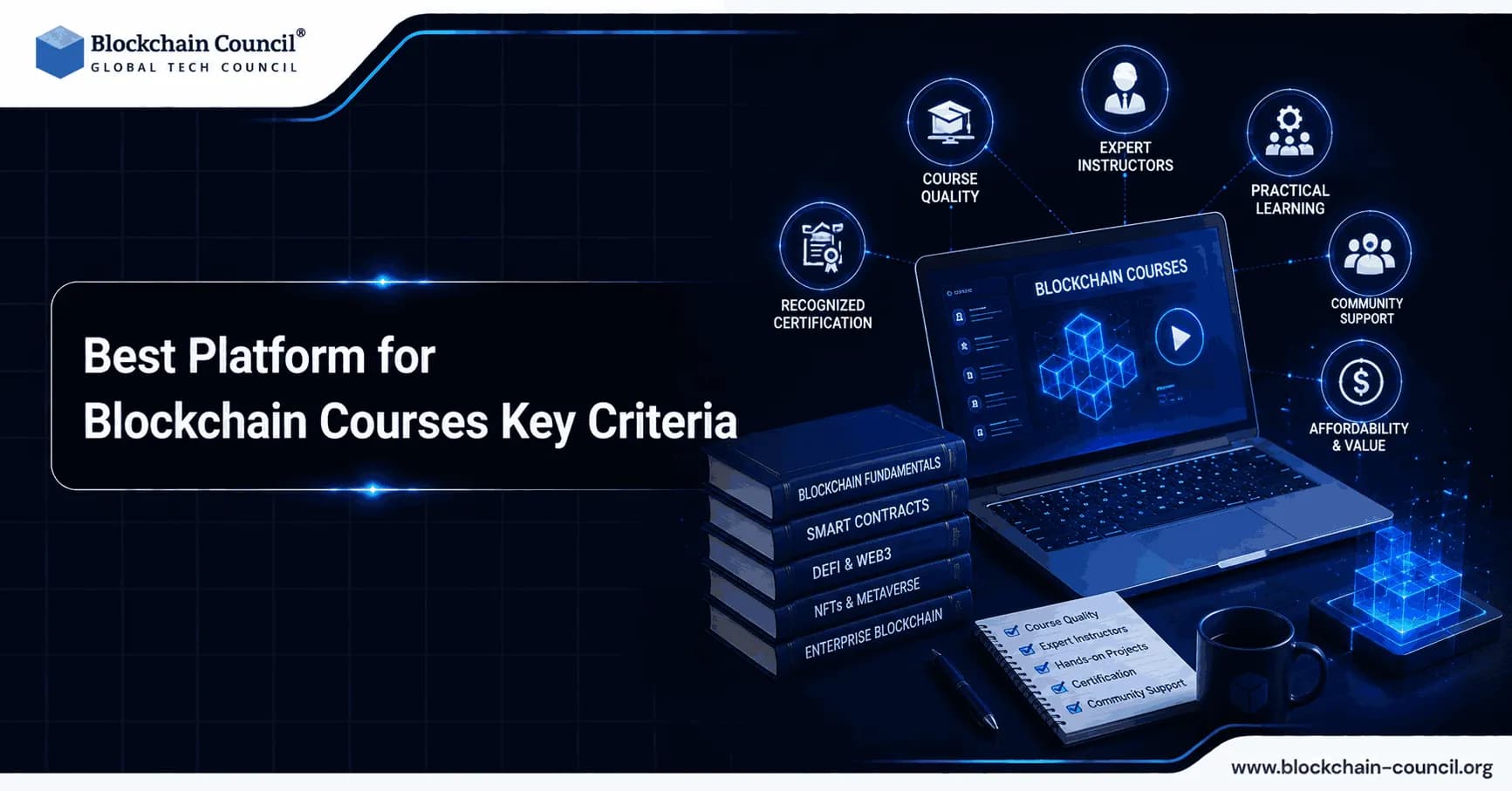
Blockchain technology has moved far beyond its early association with cryptocurrency. Today, it powers supply chains, healthcare records, digital identity systems, and decentralized finance applications across industries. Consequently, the demand for structured, credible blockchain courses has grown sharply among students, working professionals, and entrepreneurs who want to stay ahead of this shift.
However, not every learning platform delivers the same value. Some focus purely on theory, while others emphasize hands-on labs, mentorship, and recognized certification. Choosing the right platform, therefore, is not just about convenience; it directly affects how well you understand blockchain concepts and how credible your credentials appear to employers or clients.

This article breaks down the essential criteria for evaluating platforms offering blockchain courses, explains what separates a strong learning experience from a weak one, and outlines a practical certification-based learning path for professionals who want measurable career outcomes.
Why Choosing the Right Platform for Blockchain Courses Matters
Blockchain is a technical and conceptually dense subject. It combines cryptography, distributed systems, economics, and software architecture. As a result, learners who choose a poorly structured platform often end up with fragmented knowledge that fails to translate into real-world skills.
On the other hand, a well-designed platform for blockchain courses typically offers a logical progression starting with foundational concepts and moving toward specialized applications like smart contracts, decentralized applications, and enterprise blockchain architecture. This structured approach helps learners build confidence step by step, rather than jumping into advanced topics without context.
Additionally, the platform you choose influences how your skills are perceived externally. A recognized certification can serve as proof of competency, especially in a field where practical experience is still relatively rare compared to demand. For this reason, evaluating platforms carefully before enrolling is a worthwhile investment of time.
Key Criteria for Evaluating Blockchain Course Platforms
When comparing platforms that offer blockchain courses, several factors consistently separate high-quality providers from mediocre ones. Below are the criteria that matter most.
1. Instructor Credibility and Industry Experience
The quality of instruction depends heavily on who is teaching. Instructors with real-world blockchain development or architecture experience can explain concepts through practical examples rather than abstract theory alone.
Before enrolling, learners should check whether instructors have documented experience in blockchain development, security auditing, or enterprise implementation. Courses taught by professionals who have worked directly with distributed ledger technology tend to offer sharper insights than those built purely from secondary research.
Furthermore, credible instructors usually update their material regularly. Since blockchain protocols and standards evolve quickly, outdated content can mislead learners or teach practices that are no longer relevant.
2. Hands-On Labs and Practical Application
Theory alone rarely prepares someone for real blockchain work. Consequently, platforms that include hands-on labs such as deploying smart contracts, building simple decentralized applications, or configuring blockchain nodes offer far greater value.
Practical labs allow learners to apply concepts immediately, which reinforces retention. They also expose learners to common errors and debugging scenarios that theoretical instruction cannot replicate. When comparing blockchain courses, it is worth checking whether the curriculum includes sandbox environments, coding exercises, or project-based assessments.
3. Assessment Quality and Skill Validation
A platform's assessment structure indicates how seriously it treats skill validation. Weak platforms rely on simple quizzes with minimal difficulty, while stronger ones use scenario-based assessments, coding challenges, or capstone projects that mirror real industry tasks.
Effective assessments should test conceptual understanding as well as applied skills. For instance, a strong blockchain assessment might ask learners to identify vulnerabilities in a smart contract or design a consensus mechanism for a specific use case. This type of evaluation ensures that certification actually reflects competency rather than passive content consumption.
4. Learner Support and Mentorship
Blockchain concepts can be difficult to grasp independently, especially for beginners transitioning from non-technical backgrounds. Therefore, access to mentorship, discussion forums, or instructor support significantly improves the learning experience.
Platforms that offer responsive support channels help learners resolve doubts quickly, which reduces frustration and dropout rates. Meanwhile, structured mentorship such as scheduled sessions or dedicated query resolution adds a layer of accountability that self-paced learning alone cannot provide.
5. Certification Recognition and Career Value
Ultimately, many learners pursue blockchain courses because they want a credential that strengthens their professional profile. As such, it is important to evaluate whether a platform's certification is recognized within the industry, whether it includes verifiable digital badges, and whether it aligns with current job market expectations.
A certification that is well-structured, regularly updated, and tied to demonstrable skills carries more weight than a generic completion certificate. Learners should look for certifications that specify skill levels such as foundational, professional, or expert so that the credential clearly communicates depth of knowledge.
6. Curriculum Depth and Specialization Options
Blockchain is a broad field, encompassing development, architecture, security, and business applications. A strong platform typically offers multiple specialization tracks rather than a single generalized course.
For example, some learners may want to focus on smart contract development, while others may prioritize enterprise blockchain architecture or blockchain-based marketing strategies. Platforms that provide specialization options allow learners to tailor their education to specific career goals instead of following a one-size-fits-all curriculum.
7. Flexibility and Learning Format
Since many learners balance education with work or other commitments, flexibility matters. Self-paced formats, downloadable resources, and lifetime access to materials make it easier to complete blockchain courses without disrupting existing schedules.
At the same time, some learners benefit from cohort-based formats with fixed timelines, as these encourage discipline and peer interaction. The ideal platform typically balances flexibility with enough structure to keep learners motivated.
Comparing Learning Formats: Self-Paced vs. Instructor-Led
Understanding the difference between self-paced and instructor-led formats can help learners choose more effectively.
Self-paced blockchain courses allow learners to progress at their own speed, which suits those with unpredictable schedules or prior technical background. However, this format requires strong self-discipline, since there is no fixed timeline or external accountability.
Instructor-led formats, meanwhile, provide structured pacing, live interaction, and immediate feedback. This approach often benefits beginners who need guidance to stay on track. Additionally, live sessions allow learners to ask questions in real time, which can clarify complex topics faster than asynchronous learning alone.
Ultimately, the right choice depends on individual learning preferences, prior experience, and available time commitment.
A Practical Learning Path: From Foundations to Expertise
For learners who want a structured progression rather than isolated courses, following a certification-based learning path can be highly effective. This approach builds knowledge incrementally, ensuring that each stage reinforces the previous one.
Stage 1: Build Core Blockchain Expertise
The first stage should focus on foundational and cross-functional blockchain knowledge, covering concepts such as distributed ledgers, consensus mechanisms, and blockchain applications across industries. A well-rounded starting point is the Certified Blockchain Expert certification, which is designed to give learners a comprehensive understanding of blockchain fundamentals before moving into specialized tracks.
This stage is particularly useful for beginners and professionals from non-technical backgrounds who want a broad, practical introduction before committing to a specialization.
Stage 2: Specialize in Architecture Design
Once foundational concepts are clear, learners aiming for system-design or enterprise-level roles can progress toward architecture-focused study. The Certified Blockchain Architect certification is suited for this stage, as it emphasizes designing scalable blockchain systems, selecting appropriate consensus models, and structuring enterprise-grade solutions.
This specialization is valuable for professionals who want to move into solution design, technical consulting, or enterprise blockchain strategy roles.
Stage 3: Advance into Development Skills
For learners who prefer hands-on technical work, the next logical step is development-focused training. The Certified Blockchain Developer certification covers smart contract development, coding practices, and deployment workflows, making it suitable for those pursuing engineering-focused blockchain roles.
This stage typically appeals to learners with some programming background who want to build applications directly on blockchain networks.
Stage 4: Expand into Broader Technology Skills
Blockchain rarely operates in isolation; it often intersects with other emerging technologies. Learners who want to broaden their technical foundation can explore additional Tech Certification options that cover adjacent technology domains, strengthening overall technical versatility alongside blockchain expertise.
Stage 5: Apply Blockchain Knowledge to Business and Marketing
Finally, professionals interested in applying blockchain concepts within business, branding, or go-to-market strategy can pursue a Marketing Certification, which helps bridge technical blockchain knowledge with practical business and marketing execution.
This final stage is especially useful for entrepreneurs and marketing professionals who want to communicate blockchain value propositions effectively to non-technical audiences.
By following this five-stage path expertise, architecture, development, broader technology skills, and business application learners can build a well-rounded, career-relevant skill set rather than isolated, disconnected knowledge.
Common Mistakes When Choosing Blockchain Course Platforms
Even motivated learners sometimes choose platforms poorly. Recognizing common mistakes can help avoid wasted time and money.
First, many learners select courses based solely on price, overlooking curriculum depth or instructor credibility. While affordability matters, an extremely low-cost course with outdated content offers little long-term value.
Second, some learners ignore assessment quality, assuming that completion alone proves competency. As discussed earlier, robust assessments are essential for genuine skill validation.
Third, learners occasionally choose overly broad courses that fail to align with their specific career goals. Since blockchain spans multiple specializations, selecting a course without a clear objective can lead to shallow, unfocused learning.
Avoiding these mistakes requires evaluating platforms against the criteria outlined earlier, rather than relying on marketing claims or surface-level impressions.
The Future Outlook for Blockchain Skills and Learning
As blockchain adoption continues expanding across finance, healthcare, logistics, and government sectors, demand for skilled professionals is expected to grow steadily. Consequently, the value of high-quality blockchain courses is likely to increase, particularly for certifications that emphasize practical, verifiable skills.
Emerging trends suggest that specialized knowledge such as blockchain security, interoperability, and enterprise integration will become increasingly important. Therefore, learners who invest in structured, certification-based learning paths today are likely to be better positioned for future opportunities in this evolving field.
Conclusion
Selecting the right platform for blockchain courses requires careful evaluation of instructor credibility, hands-on learning opportunities, assessment rigor, support systems, and certification value. Rather than choosing based on convenience alone, learners benefit most from platforms that offer structured progression, practical application, and recognized credentials.
By following a clear learning path starting with foundational expertise, advancing through architecture and development specializations, and expanding into broader technology and business skills learners can build a comprehensive, career-relevant blockchain skill set that stands out in an increasingly competitive field.
FAQs
1. What is the best platform for blockchain courses?
The best blockchain learning platform depends on your goals, experience level, budget, and preferred learning style. Reputable options typically offer structured courses, hands-on projects, expert instructors, updated content, recognized certificates, and strong learner support.
2. What should you look for in a blockchain learning platform?
Important factors include course quality, instructor expertise, curriculum depth, practical labs, certification value, beginner-friendly content, advanced learning paths, project-based assignments, community support, and regular updates that reflect current blockchain technologies.
3. Are online blockchain courses worth it?
Yes. High-quality blockchain courses can help learners understand blockchain fundamentals, smart contracts, cryptocurrencies, decentralized finance (DeFi), Web3, NFTs, and enterprise blockchain applications. They are most valuable when combined with hands-on practice and real-world projects.
4. Which platforms offer blockchain certifications?
Many universities, technology companies, professional organizations, and online learning providers offer blockchain certifications. Before enrolling, verify whether the certificate is issued by a recognized institution and aligns with your career goals.
5. What topics should a good blockchain course cover?
A comprehensive blockchain course should include blockchain fundamentals, distributed ledger technology (DLT), consensus mechanisms, cryptography, smart contracts, Ethereum, Bitcoin, tokenization, decentralized applications (dApps), Web3, blockchain security, and real-world use cases.
6. Are blockchain courses suitable for beginners?
Yes. Many platforms provide beginner-friendly courses that explain blockchain concepts without requiring programming experience. More advanced courses often cover blockchain development, smart contract programming, and decentralized application architecture.
7. Do you need programming knowledge to learn blockchain?
Not necessarily. You can learn blockchain fundamentals, cryptocurrencies, and business applications without coding. However, programming languages such as Solidity, JavaScript, Python, Rust, or Go are valuable for blockchain development roles.
8. Which programming languages are useful for blockchain development?
Popular languages include Solidity for Ethereum smart contracts, Rust for Solana and Polkadot development, Go for blockchain infrastructure, JavaScript for Web3 applications, Python for scripting and analytics, and C++ for blockchain protocol development.
9. How important are hands-on blockchain projects?
Hands-on projects are essential because they allow learners to apply theoretical concepts. Practical experience may include deploying smart contracts, creating decentralized applications (dApps), interacting with blockchain wallets, using test networks, and building Web3 solutions.
10. What is the difference between blockchain certification and a degree?
A blockchain certification focuses on specific technical or business skills and can often be completed in weeks or months. A university degree provides broader academic education and generally requires several years of study. Both can complement each other depending on career objectives.
11. Can blockchain courses help you get a job?
Blockchain courses can strengthen your knowledge and improve your resume, particularly when combined with practical projects, certifications, internships, open-source contributions, and relevant work experience. No course alone guarantees employment.
12. What careers can blockchain courses prepare you for?
Blockchain education can support careers such as Blockchain Developer, Smart Contract Developer, Web3 Developer, Blockchain Consultant, Crypto Research Analyst, Blockchain Security Engineer, Solutions Architect, Product Manager, and Blockchain Business Analyst.
13. How do you evaluate the quality of a blockchain course?
Evaluate the instructor's expertise, curriculum relevance, project work, student reviews, course updates, certification recognition, technical depth, community engagement, and whether the course covers current blockchain technologies and industry trends.
14. Should blockchain courses include AI and Web3 topics?
Increasingly, yes. Modern blockchain education often includes AI, Web3, decentralized identity, tokenized real-world assets, decentralized autonomous organizations (DAOs), blockchain security, and the growing integration of AI with blockchain technologies.
15. Are free blockchain courses good enough?
Free courses can provide an excellent introduction to blockchain concepts. However, paid programs often offer more comprehensive curricula, instructor support, structured learning paths, practical assignments, career guidance, and recognized certifications.
16. What certifications complement blockchain education?
Professionals often strengthen their blockchain expertise with certifications in cloud computing, cybersecurity, artificial intelligence, data analytics, software development, project management, DevOps, and Web3 technologies.
17. What are the biggest mistakes when choosing a blockchain course?
Common mistakes include selecting outdated content, ignoring instructor credibility, focusing only on certificates instead of practical skills, overlooking hands-on projects, choosing overly broad curricula, and failing to verify whether the material reflects current blockchain ecosystems.
18. What future skills should blockchain learners develop?
Emerging skills include AI integration, decentralized finance (DeFi), Layer 2 scaling solutions, zero-knowledge proofs (ZKPs), blockchain interoperability, tokenization, blockchain security, decentralized identity (DID), smart contract auditing, and Web3 application development.
19. How can you get the most value from a blockchain course?
Set clear learning goals, complete all practical exercises, build personal blockchain projects, participate in developer communities, contribute to open-source repositories, earn relevant certifications, and continuously follow industry developments after completing the course.
20. How do you choose the best blockchain learning platform?
The ideal platform should match your career objectives, technical background, and preferred learning style while offering updated content, experienced instructors, practical projects, recognized certifications, and strong community support. As blockchain technology continues to evolve rapidly across finance, supply chain, healthcare, gaming, and Web3, choosing a platform that emphasizes real-world skills and continuous learning will provide greater long-term value than simply collecting certificates.
Related Articles
View All
Career Advice
How Much Do Courses at Blockchain Council Cost?
Blockchain Council offers a range of certification programs with pricing that varies by course, specialization, and promotional offers. Learn what factors influence course costs, what is typically included, and how to evaluate the value of a certification before enrolling.
Career Advice
What Online Courses Does Blockchain Council Offer?
Blockchain Council offers online certification courses across blockchain, artificial intelligence, cybersecurity, cloud computing, data science, and emerging technologies. Learn about its most popular programs, learning paths, certifications, and career-focused training options.
Career Advice
Best Courses That Pay Well in the Future
Explore future-focused courses in AI, cybersecurity, data science, cloud computing, and software development that lead to high-paying career opportunities.
Trending Articles
How Blockchain Secures AI Data
Understand how blockchain technology is being applied to protect the integrity and security of AI training data.
Claude AI Tools for Productivity
Discover Claude AI tools for productivity to streamline tasks, manage workflows, and improve efficiency.
How to Install Claude Code
Learn how to install Claude Code on macOS, Linux, and Windows using the native installer, plus verification, authentication, and troubleshooting tips.