
Why and How to Use Smart Contracts to Build Blockchain Applications
 Toshendra Kumar Sharma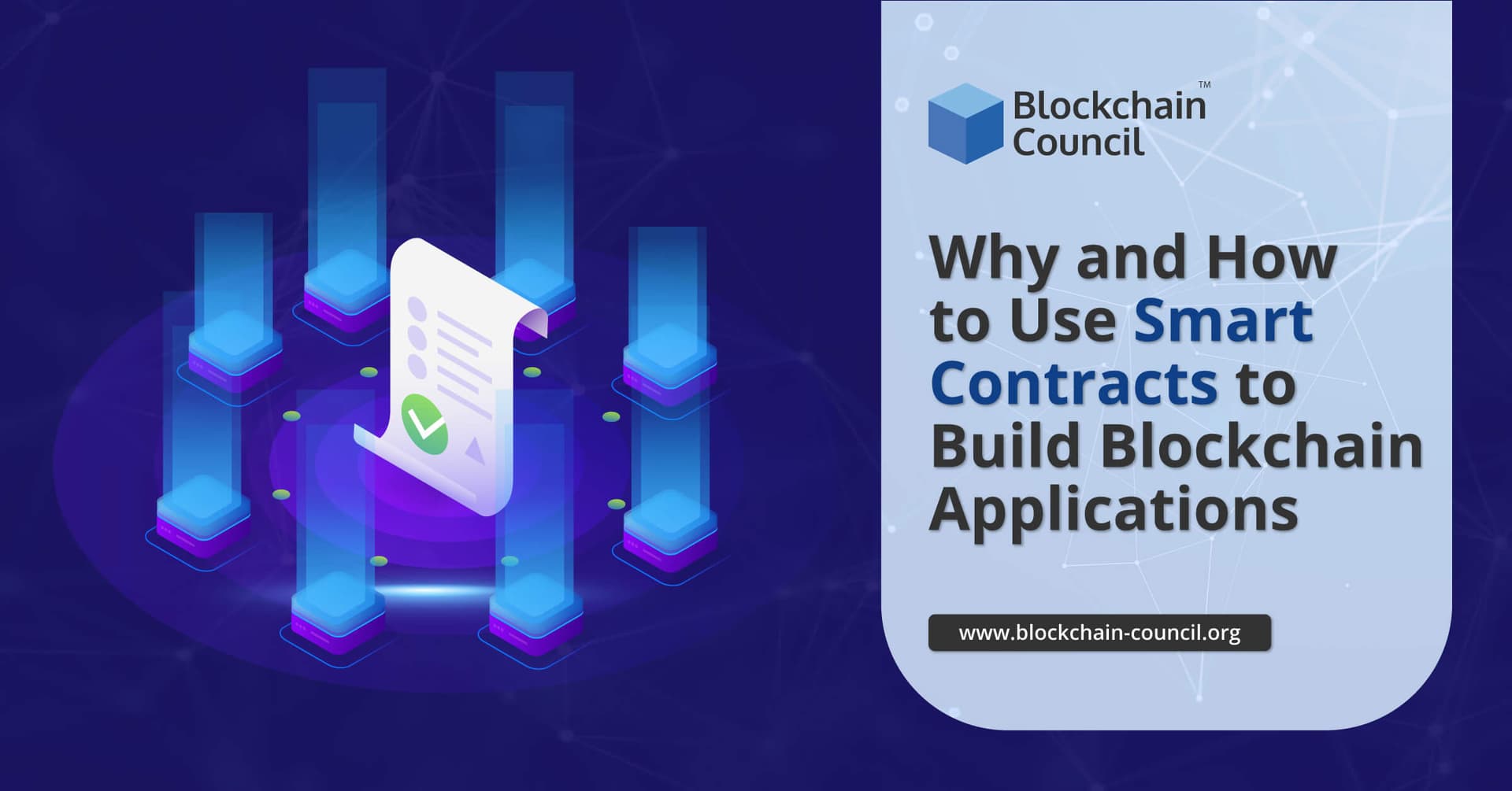
Decentralization is the most crucial feature of blockchain technology. It means that all parties of the network will share information. This removes the need for intermediaries to facilitate operations. Blockchain offers a nominal, fast, efficient, and transparent mode of transactions. In this article, I will be providing you insights into why and how smart contracts can be used to develop blockchain applications.
What is a Smart Contract?
A smart contract is a self-executing contract where the terms of the agreement between the buyer and the seller are directly written into lines of code. The code and the agreements are contained therein exist over a distributed, decentralized blockchain network. Smart contracts allow for trusted transactions and agreements to be carried out among anonymous parties without the need for a central entity, external enforcement mechanism, or legal system. This way, the transactions are transparent, irreversible, and traceable. Implementing smart contracts across various blockchains is made possible through Solidity, the high-level object-oriented programming language.

It can be thought of as computer software that controls the transfer of digital currencies between parties. Some of the notable properties of a smart contract are immutable (tamper-proof), self-executing, and self-verifying.
So, How Do Smart Contracts Function?
The functioning of smart contracts can be explained in the following three steps.
- First, the contract is written into lines of code and posted on a blockchain platform.
- The event will then be triggered through the execution of the contract.
- As the final step, the contract is then executed.
Reasons For Using Smart Contracts
Smart contracts help boost transaction speed and credibility. Some of the ultimate reasons to use smart contracts for building blockchain applications are:
- Efficiency- Transactions will be executed automatically as soon as certain conditions are met. Smart contracts perform the verification process within a short time once the contract is signed.
- Privacy- Smart contracts, especially Ethereum smart contracts, support a variable permission structure. This means that the regulators will be able to view the terms of the contract. They can identify the parties by themselves. This helps regulators eliminate any suspicious activities or fraud without violating anyone’s policy.
- Trustworthiness- Smart contracts are saved on a shared blockchain in an encrypted format so that parties can execute them on their own. Hence, a third-party is not needed to facilitate transactions.
- Transparency- There is no chance for confusion or misunderstanding as each and every term of a contract is encrypted in smart contracts. The complete process is fair and transparent as all the involved parties can test the agreement with any number of variables to check what will happen under each situation.
Ways of Using Smart Contracts For Building Applications
Smart contracts can be written with the help of various blockchain platforms such as:
1. Hyperledger Smart Contracts
Hyperledger is an open-source, global collaboration hosted by The Linux Foundation. It helps create and develop enterprise-grade, distributed ledger frameworks to support business transactions. One of the most popular tools used by Hyperledger for creating smart contracts effectively is the hyperledger composer. It is supported by IBM and is open-source.
2. Stellar Smart Contracts
Stellar is an open-source, decentralized payment protocol that facilitates fast, cross-border transactions between any pair of currencies. The primary advantage of Stellar is that it allows people to move money quickly and reliably across borders for fractions of a penny. It is one of the oldest blockchain platforms that is maintained by the Stellar Development Foundation and helps build sophisticated smart contracts.
3. Ethereum Smart Contracts
Ethereum is an open-source, distributed computing platform that features smart contract functionality. It is a decentralized, global platform for money and many other applications. Ethereum allows us to write codes to control money and build applications that are accessible from anywhere in the world. It is one of the most renowned platforms that can be used to develop smart contracts. It renders standardized support to its customers. It is dedicated to the development and operation of smart contracts.
Conclusion
With blockchain technology being applied by businesses across almost all industry verticals, smart contracts will certainly pave the way for the future. By using the credible feature of smart contracts, almost all industrial sectors will be able to manage their businesses efficiently and effectively. To get instant updates about blockchain certifications and become a blockchain expert, check out Blockchain Council.
Related Articles
View All
Blockchain
AI Smart Contracts: The Next Evolution in Blockchain Automation
AI smart contracts combine blockchain execution with AI-driven monitoring, audits, and adaptive automation, enabling more secure, scalable, and responsive Web3 systems.

Blockchain
What are smart contracts in blockchain and how do they work?
Blockchain can provide the ultimate solution with its feature of Smart Contracts. One of the biggest problems of modern business is trust. With each passing day, we lose faith in big companies and even other humans. Without the trust factor and transparency, we are always advised to dread slowly. We take much more precaution, and this comes at the expense of flexibility that modern business requires.

Blockchain
AI Skills for Blockchain Professionals: Applying AI to Smart Contract Auditing, Threat Detection, and Compliance
Learn AI skills for blockchain professionals in 2026, including AI-assisted smart contract auditing, on-chain threat detection, and compliance analytics with practical workflows.
Trending Articles

The Role of Blockchain in Ethical AI Development
How blockchain technology is being used to promote transparency and accountability in artificial intelligence systems.

AWS Career Roadmap
A step-by-step guide to building a successful career in Amazon Web Services cloud computing.
Top 5 DeFi Platforms
Explore the leading decentralized finance platforms and what makes each one unique in the evolving DeFi landscape.