
How Banks Are Using Blockchain

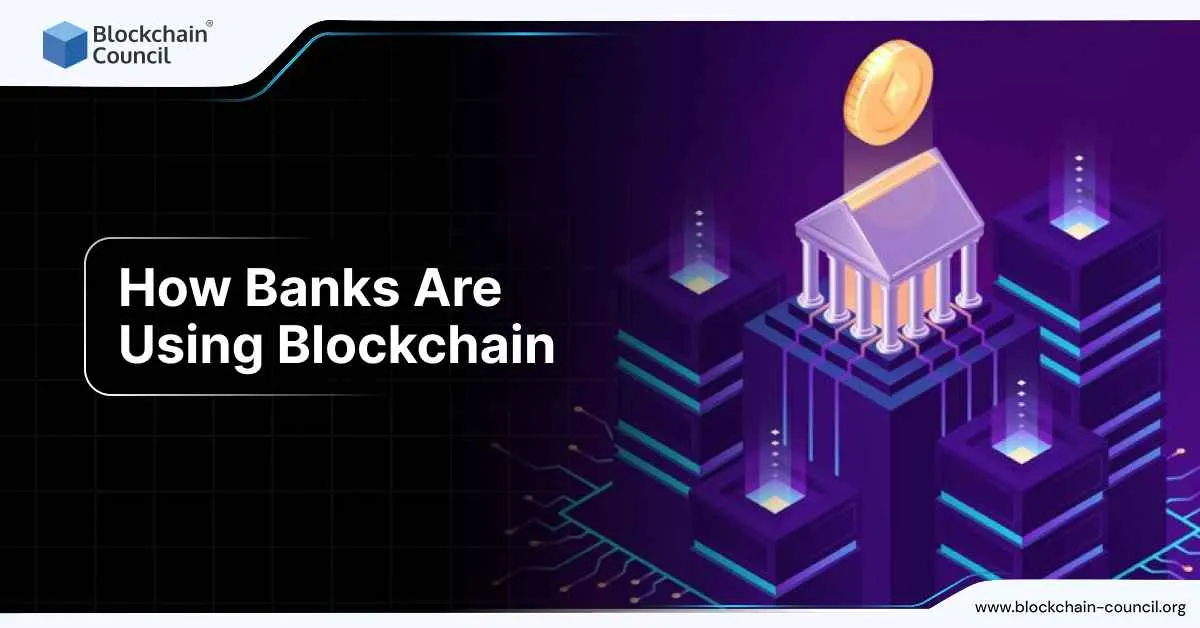
Banks are using blockchain to improve payments, reduce fraud, and simplify complex financial operations. From JPMorgan’s digital coin to tokenized funds by Goldman Sachs and BNY Mellon, blockchain is now part of real banking systems. This article explains how banks are using blockchain today, with real examples, tools, benefits, and future trends.
Why Banks Are Adopting Blockchain
Banks are turning to blockchain for speed, transparency, and cost savings. Traditional systems involve multiple intermediaries, which slow down transactions and increase costs. Blockchain offers real-time processing and a shared source of truth. It removes duplication, lowers settlement time, and reduces manual errors.

JPMorgan’s JPM Coin, for example, is used to settle transactions worth over $1 billion daily between clients. Goldman Sachs and BNY Mellon now tokenize money market fund shares to allow quicker redemptions. These are not pilot tests. They are already in use.
Popular Use Cases in Banking
Cross-Border Payments
Cross-border transactions usually take days. With blockchain, they can be completed in minutes. Fnality International, backed by banks like UBS and Santander, is building a payment system using tokenized money. This allows 24/7 instant settlement without relying on outdated messaging networks.
Digital Asset Custody
Many banks now offer secure storage for digital assets. This is similar to traditional vaults, but for cryptocurrencies and tokenized assets. Institutions like BNY Mellon and Standard Chartered already have regulated custody services live.
Tokenized Money Market Funds
Goldman Sachs and BNY Mellon have launched a platform that tokenizes fund shares. This gives institutional clients faster access to their assets while improving transparency in fund operations.
Trade Reconciliation
Platforms like Veris, developed by Axoni, help banks automate the reconciliation of equity swaps. Citi, BlackRock, and Goldman Sachs use it to reduce time spent matching trades and correcting errors.
Blockchain Projects Used in Banking
| Banking Project | Leading Institutions | Use Case | Deployment Status |
| JPM Coin | JPMorgan Chase | Instant interbank token settlements | Active and scaling |
| Tokenized MMFs | Goldman Sachs, BNY Mellon | Fund share tokenization | Integrated with LiquidityDirect |
| Fnality Payment Network | UBS, Santander, Lloyds | 24/7 cross-currency settlements | Sterling live, USD in testing |
| Veris Equity Platform | Axoni, Citi, BlackRock | Real-time trade reconciliation | Used by major institutions |
| Canton Interbank Ledger | BNP Paribas, Deutsche Börse | Asset tokenization and privacy sync | Rolling out |
Blockchain in Internal Banking Systems
Blockchain also helps banks run smoother behind the scenes. Examples include:
- Customer Onboarding (KYC): Shared digital identity speeds up verification.
- Smart Loan Agreements: Contracts trigger payments automatically when terms are met.
- Liquidity Tracking: Tokenized cash gives real-time insight into reserves.
- Fraud Prevention: Immutable records help flag and reduce suspicious activity.
Pros and Cons of Blockchain for Banks
| Area of Use | Advantages for Banks | Possible Drawbacks |
| Global Payments | Fast, low-cost, always-on transfers | Legal restrictions across jurisdictions |
| Trade Settlements | Real-time execution and fewer errors | System upgrade challenges |
| Customer Verification | Secure and reusable digital identity | Requires large-scale network participation |
| Tokenized Assets | New product models and liquidity | Regulatory uncertainty in many regions |
Regulatory Progress
Regulators have started giving banks more room to experiment. The U.S. OCC and FDIC now permit certain blockchain activities like crypto custody, provided there is risk control. The GENIUS Act and European MiCA law have both introduced formal guidelines for using stablecoins and digital tokens.
These rules are encouraging banks to move faster. Fnality’s global rollout and JPMorgan’s daily use of JPM Coin show how quickly things are evolving.
Blockchain Platforms Banks Use
Most banks prefer private or hybrid blockchain platforms. These include:
- Canton Network for tokenized asset transfer
- Hyperledger Fabric for internal compliance
- Ethereum Layer 2 chains for pilot testing
Banks choose platforms based on privacy, interoperability, and network control.
Learning Blockchain for Banking Careers
If you want to work in this space, you need strong foundations in both finance and tech. Start with the Blockchain Certification to understand infrastructure and token systems.
Pair that with the Data Science Certification for insights on data tracking and fraud analytics.
For product leaders and managers, the Marketing and Business Certification gives a high-level view of blockchain’s impact on global banking.
Final Takeaway
Banks are no longer watching blockchain from the sidelines. They are deploying it to move money, reduce risk, and automate systems. Projects like JPM Coin, Fnality, and Veris show real change is already happening. With regulation and technology both maturing, blockchain is now a core part of the future of banking.
Related Articles
View All
Blockchain
How Blockchain Can Prevent AI Data Manipulation
Introduction Artificial Intelligence (AI) has become one of the most powerful technologies driving digital transformation across industries. From healthcare diagnostics and financial fraud detection to smart cities and recommendation systems, AI systems depend heavily on large volumes of data to…
Blockchain
Why AI Needs Blockchain for Trust and Security
Introduction Artificial Intelligence (AI) has become one of the most powerful technologies driving digital transformation across industries. From healthcare diagnostics and financial fraud detection to recommendation systems and autonomous vehicles, AI systems are increasingly responsible for…

Blockchain
Blockchain and AI: Understanding the Perfect Tech Combination
Introduction Two of the most revolutionary technologies of the modern digital era are Artificial Intelligence (AI) and Blockchain. Individually, both technologies have already transformed industries such as finance, healthcare, logistics, cybersecurity, and digital commerce. However, when combined,…
Trending Articles
The Role of Blockchain in Ethical AI Development
How blockchain technology is being used to promote transparency and accountability in artificial intelligence systems.
AWS Career Roadmap
A step-by-step guide to building a successful career in Amazon Web Services cloud computing.
Top 5 DeFi Platforms
Explore the leading decentralized finance platforms and what makes each one unique in the evolving DeFi landscape.