The Basics of Decentralized AI Networks
 Michael Willson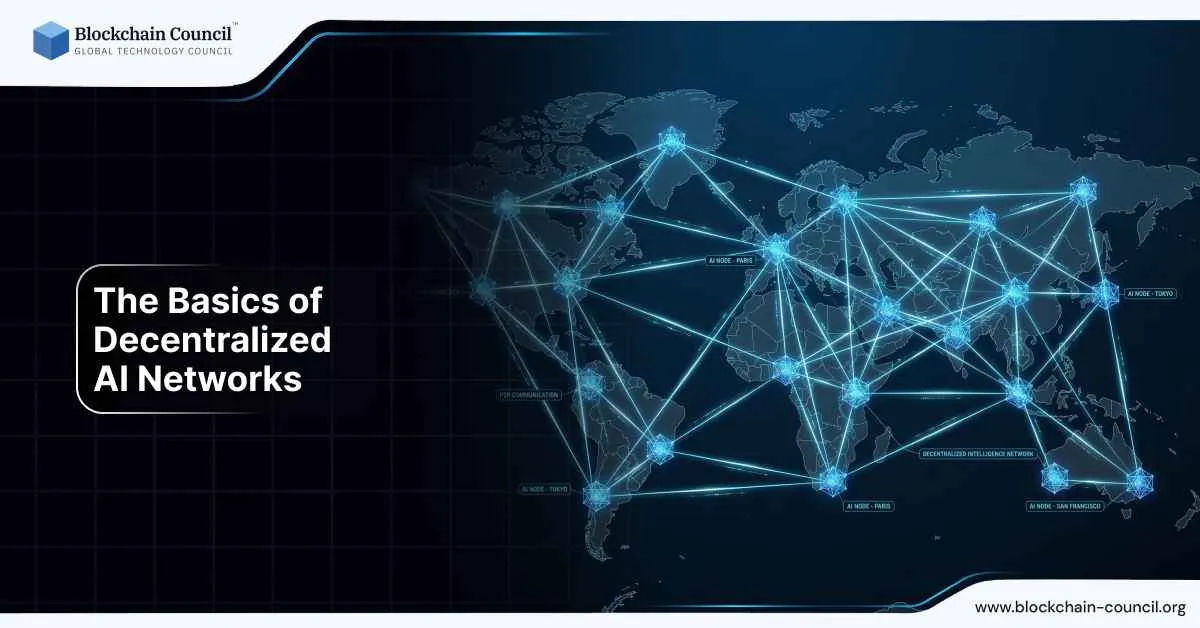
Introduction
Artificial Intelligence (AI) has become one of the most powerful technologies driving innovation across industries. From healthcare and finance to logistics and digital marketing, AI systems help organizations analyze large datasets, automate complex processes, and make smarter decisions.
However, most modern AI systems rely on centralized infrastructure, where a single organization controls data, computing power, and algorithm development. While centralized AI has enabled rapid technological progress, it also raises several challenges related to data ownership, privacy, transparency, and monopolization of resources.

To address these challenges, the concept of Decentralized AI Networks is gaining attention. Decentralized AI networks combine artificial intelligence with blockchain technology to create distributed ecosystems where multiple participants collaborate to build, train, and deploy AI models.
In decentralized AI systems, data, computing power, and algorithms are shared across a network rather than controlled by a single entity. Blockchain technology ensures transparency, trust, and secure data management within these networks.
As this new technological model continues to grow, professionals who understand both blockchain and artificial intelligence are becoming highly valuable in the technology industry. Certifications such as the Blockchain Expert certification from Blockchain Council and the Agentic AI Expert program from Blockchain Council provide the expertise required to design and manage decentralized AI systems.
In this article, we will explore the basics of decentralized AI networks, how they work, their benefits, and why they represent the future of intelligent digital ecosystems.
What Are Decentralized AI Networks?
A Decentralized AI Network is a distributed system where artificial intelligence development and operations occur across multiple independent participants rather than a single centralized authority.
In traditional AI systems, large technology companies control most of the data, infrastructure, and machine learning models. In decentralized AI networks, these resources are shared across a distributed ecosystem.
Participants in decentralized AI networks may include:
- data providers
- AI developers
- computing resource providers
- model trainers
- application developers
Blockchain technology provides the infrastructure that allows these participants to collaborate securely and transparently.
The result is an open ecosystem where AI models can be developed, improved, and deployed collectively.
Key Components of Decentralized AI Networks
Decentralized AI systems rely on several technological components that work together.
Blockchain Infrastructure
Blockchain acts as the backbone of decentralized AI networks. It provides:
- transparent transaction records
- secure data storage
- decentralized governance
- immutable logs of activities
Every action within the network can be recorded on the blockchain, ensuring transparency and accountability.
Distributed Data Sources
AI models require large datasets to learn patterns and make predictions.
In decentralized networks, datasets may come from multiple contributors. Blockchain helps track the origin and usage of these datasets.
This ensures that data remains authentic and properly attributed.
Distributed Computing Resources
Training AI models requires significant computing power.
Decentralized networks allow participants to contribute computing resources such as:
- GPUs
- CPUs
- cloud computing infrastructure
Participants may be rewarded for providing computing power.
Smart Contracts
Smart contracts are automated programs stored on blockchain networks.
They help manage the rules of decentralized AI networks, including:
- data-sharing agreements
- payment distribution
- model validation processes
- network governance
These contracts allow decentralized AI systems to operate without centralized control.
How Decentralized AI Networks Work
Decentralized AI networks follow a collaborative process involving multiple participants.
Step 1: Data Contribution
Participants contribute datasets to the network. Blockchain records the origin and ownership of these datasets.
This ensures transparency and prevents unauthorized modifications.
Step 2: Model Training
AI developers use distributed computing resources to train machine learning models using the available datasets.
Blockchain can record the training process and maintain a history of model updates.
Step 3: Model Validation
Other participants in the network validate the performance and reliability of AI models.
Smart contracts may automate the validation process and ensure fairness.
Step 4: Deployment and Usage
Once validated, AI models can be deployed across applications within the decentralized ecosystem.
Users may pay tokens or fees to access AI services within the network.
Benefits of Decentralized AI Networks
Decentralized AI networks offer several advantages compared to traditional centralized systems.
Increased Transparency
Blockchain records all activities within the network, allowing participants to track how data and models are used.
This transparency improves trust in AI systems.
Improved Data Privacy
Decentralized networks allow participants to control how their data is shared.
Sensitive data can remain private while still contributing to AI training processes.
Reduced Centralized Control
Decentralized AI networks reduce dependence on large technology companies.
Multiple participants contribute to the ecosystem, creating a more balanced distribution of power.
Enhanced Security
Blockchain’s cryptographic security helps protect datasets and model records from tampering.
This ensures that AI models are built using reliable and verified data.
Incentivized Collaboration
Participants in decentralized AI networks may receive rewards for contributing data, computing power, or algorithms.
This incentive structure encourages collaboration and innovation.
The Role of Agentic AI in Decentralized Networks
The future of artificial intelligence is moving toward Agentic AI, a new generation of AI systems capable of operating autonomously.
Agentic AI systems can:
- analyze information
- plan tasks
- make decisions
- execute workflows independently
In decentralized AI networks, autonomous AI agents may interact with each other and perform complex tasks across digital ecosystems.
Blockchain can support these systems by:
- recording agent actions
- maintaining transparent activity logs
- verifying data sources
- enabling decentralized governance
Professionals interested in building these systems can develop their expertise through the Agentic AI Expert certification from Blockchain Council, which focuses on designing and deploying autonomous AI agents.
Infrastructure Technologies Supporting Decentralized AI
Building decentralized AI platforms requires strong backend infrastructure.
Technologies such as Node.js and Python play important roles in developing scalable systems.
Node.js for AI Platforms
Node.js enables developers to build scalable server-side applications that support AI services.
Developers use Node.js to:
- build APIs for AI models
- process real-time data
- integrate machine learning frameworks
- manage distributed applications
The Node.js certification from Global Tech Council helps developers learn how to build scalable applications for modern AI ecosystems.
Python for AI Deployment
AI systems must be continuously updated and deployed across distributed environments.
Python supports these processes through automation, scripting, and integration in AI workflows.
professionals work with:
- automation scripts
- data processing
- model integration
- testing and performance optimization
The Python certification from Global Tech Council equips professionals with the skills required to build, support, and maintain reliable AI systems.
Digital Marketing and Decentralized AI Platforms
Even the most advanced technologies require effective communication and promotion.
Digital marketing helps organizations educate audiences about decentralized AI solutions and their benefits.
Marketing strategies often include:
- SEO-driven educational content
- thought leadership articles
- product marketing campaigns
- social media engagement
Professionals with expertise in Digital Marketing can help organizations promote AI platforms and reach global audiences.
A Digital Marketing Expert certification equips marketers with the skills required to promote innovative technology solutions effectively.
Real-World Applications of Decentralized AI Networks
Several industries are exploring decentralized AI models.
Healthcare
Decentralized AI networks allow medical institutions to collaborate on research without sharing sensitive patient data directly.
Finance
Financial institutions can build AI models collaboratively while maintaining data privacy.
Supply Chain
AI systems analyze logistics data across multiple organizations while blockchain verifies transaction records.
Smart Cities
Decentralized AI networks can manage infrastructure systems such as transportation, energy distribution, and public services.
These applications demonstrate the potential of decentralized AI ecosystems.
The Future of Decentralized AI
The growth of decentralized AI networks is expected to accelerate as organizations seek more transparent and collaborative technological solutions.
Future developments may include:
- global AI marketplaces
- decentralized data-sharing platforms
- autonomous AI-driven organizations
- blockchain-based AI governance systems
These innovations will create new opportunities for businesses, researchers, and technology professionals.
Certifications such as the Blockchain Expert and Agentic AI Expert program from Blockchain Council, along with Node.js and Python certification from Global Tech Council, provide the knowledge required to participate in these emerging ecosystems.
Conclusion
Decentralized AI networks represent a new model for developing and deploying artificial intelligence systems. By combining blockchain technology with distributed AI infrastructure, these networks enable secure collaboration, transparent governance, and improved data privacy.
Unlike traditional centralized AI systems, decentralized networks allow multiple participants to contribute data, computing resources, and algorithms while maintaining trust and accountability.
As artificial intelligence continues to evolve, decentralized AI networks will play an increasingly important role in building open and collaborative digital ecosystems.
Professionals who develop expertise in blockchain, AI infrastructure, Python, and digital marketing will be well-positioned to lead the next generation of technological innovation.
FAQs
1. What is a decentralized AI network?
A decentralized AI network is a distributed system where multiple participants collaborate to develop and deploy AI models without relying on a central authority.
2. How does blockchain support decentralized AI?
Blockchain provides secure data storage, transparent records, and decentralized governance for AI networks.
3. Why are decentralized AI networks important?
They reduce centralized control, improve transparency, and enable collaborative AI development.
4. What are the main components of decentralized AI networks?
Key components include blockchain infrastructure, distributed data sources, computing resources, and smart contracts.
5. How do decentralized AI networks share data securely?
Blockchain tracks data ownership and usage while encryption protects sensitive information.
6. What industries use decentralized AI networks?
Healthcare, finance, logistics, cybersecurity, and smart city infrastructure are exploring decentralized AI models.
7. What is Agentic AI?
Agentic AI refers to autonomous AI systems capable of making decisions and performing tasks independently.
8. How does blockchain support Agentic AI systems?
Blockchain records AI agent actions and ensures transparency in autonomous decision-making.
9. Why is distributed computing important for AI?
AI model training requires significant computational power, which can be shared across decentralized networks.
10. What role do smart contracts play in decentralized AI?
Smart contracts automate governance, payments, and data-sharing agreements within the network.
11. What is the role of Node.js in AI platforms?
Node.js helps developers build scalable backend systems that support AI services.
12. Why is Python important for AI systems?
Python is important for AI systems because it supports data processing, model development, automation, deployment support, and monitoring for AI applications.
13. How do decentralized AI networks encourage collaboration?
Participants can contribute data, computing resources, and algorithms while receiving incentives.
14. How can professionals learn decentralized AI technologies?
Professionals can gain knowledge through certifications, training programs, and practical projects.
15. What is the future of decentralized AI networks?
The future includes decentralized AI marketplaces, autonomous AI systems, and global collaborative AI platforms.