How Blockchain Enhances Cybersecurity Measures
 Blockchain Council
Cybersecurity threats are growing. From data breaches to identity theft, digital systems are under constant attack. Traditional security tools are helpful, but they aren’t always enough. Blockchain brings a fresh and powerful approach to protecting data and systems — one that’s already changing how businesses and governments defend themselves.
This article breaks down how blockchain helps improve cybersecurity, where it’s being used, what challenges it faces, and why this technology is likely to shape the future of online safety.

Why Blockchain and Cybersecurity Work Well Together
Blockchain is a type of digital ledger. It records data in “blocks” that are connected and locked in sequence. Once something is added, it’s nearly impossible to change.
That’s what makes blockchain ideal for cybersecurity. It’s transparent, secure, and decentralised. It stores data across many computers instead of one server, making it much harder for attackers to break in or manipulate information.
Immutable records
Once a record is created on a blockchain, it can’t be deleted or edited. This helps prevent fraud and makes it easier to track who did what — and when.
Decentralisation
By spreading data across a network, blockchain eliminates single points of failure. This protects systems from full-scale crashes or ransomware attacks.
Transparency with control
Everyone on the blockchain network can verify actions. But access to data is still controlled through cryptographic keys, so privacy isn’t lost.
Where Blockchain Is Already Helping Cybersecurity
More companies are adding blockchain to their security plans, and the benefits are clear across several areas.
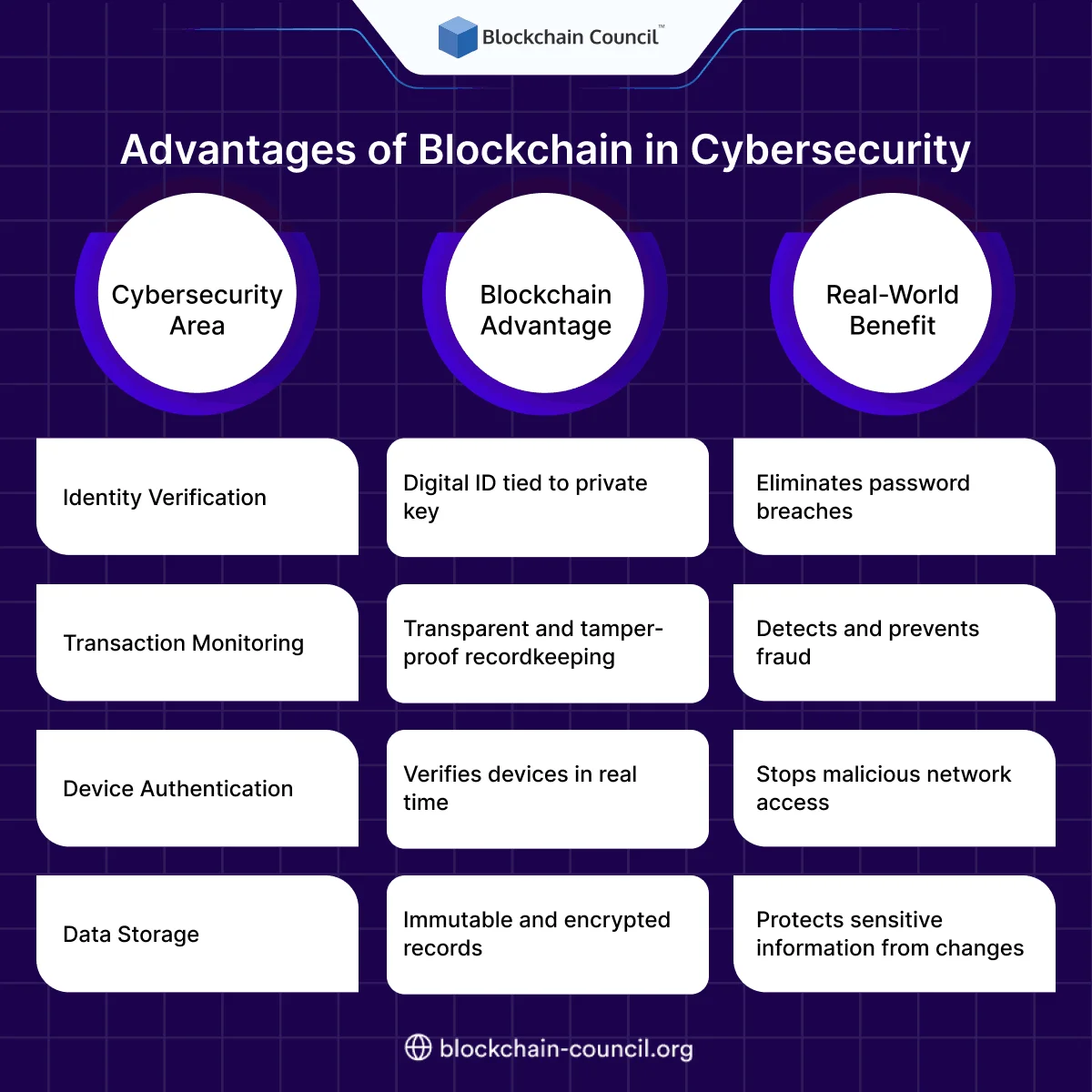
Identity verification
Passwords are one of the weakest links in cybersecurity. Blockchain replaces them with digital identities. Each user controls their own private key, so they don’t need to trust a company to protect their login details.
These identity systems are already being used in sectors like banking, healthcare, and logistics. Many professionals are learning how to build them through upskilling programs like a Blockchain Certification, which help developers and IT teams apply this technology effectively. And to make the most of it in the cybersecurity space, enroll into an expert-led cybersecurity certification.
Fraud prevention in financial services
Banks and fintech firms are using blockchain to track transactions in real time. Every action is logged and verified, making it very hard to hide fraudulent activity.
This is especially helpful in sectors like digital payments and cryptocurrency, where transactions move quickly and bad actors try to exploit gaps.
Device and network security
The Internet of Things (IoT) is a growing part of our world. Everything from fridges to security cameras is connected to the internet. But these devices are easy targets for hackers.
Blockchain can secure device-to-device communication. It verifies each connection and ensures data isn’t tampered with along the way.
Protecting sensitive records
In healthcare, education, and supply chains, private data must be stored and shared securely. Blockchain allows information to be stored with proof of its origin — but without giving direct access to the data itself.
Even in marketing and operations, business leaders are exploring blockchain to manage sensitive workflows. Professionals in those areas often benefit from programs like a Marketing and Business Certification that help them understand the tech from a strategy point of view.
Advantages of Blockchain in Cybersecurity
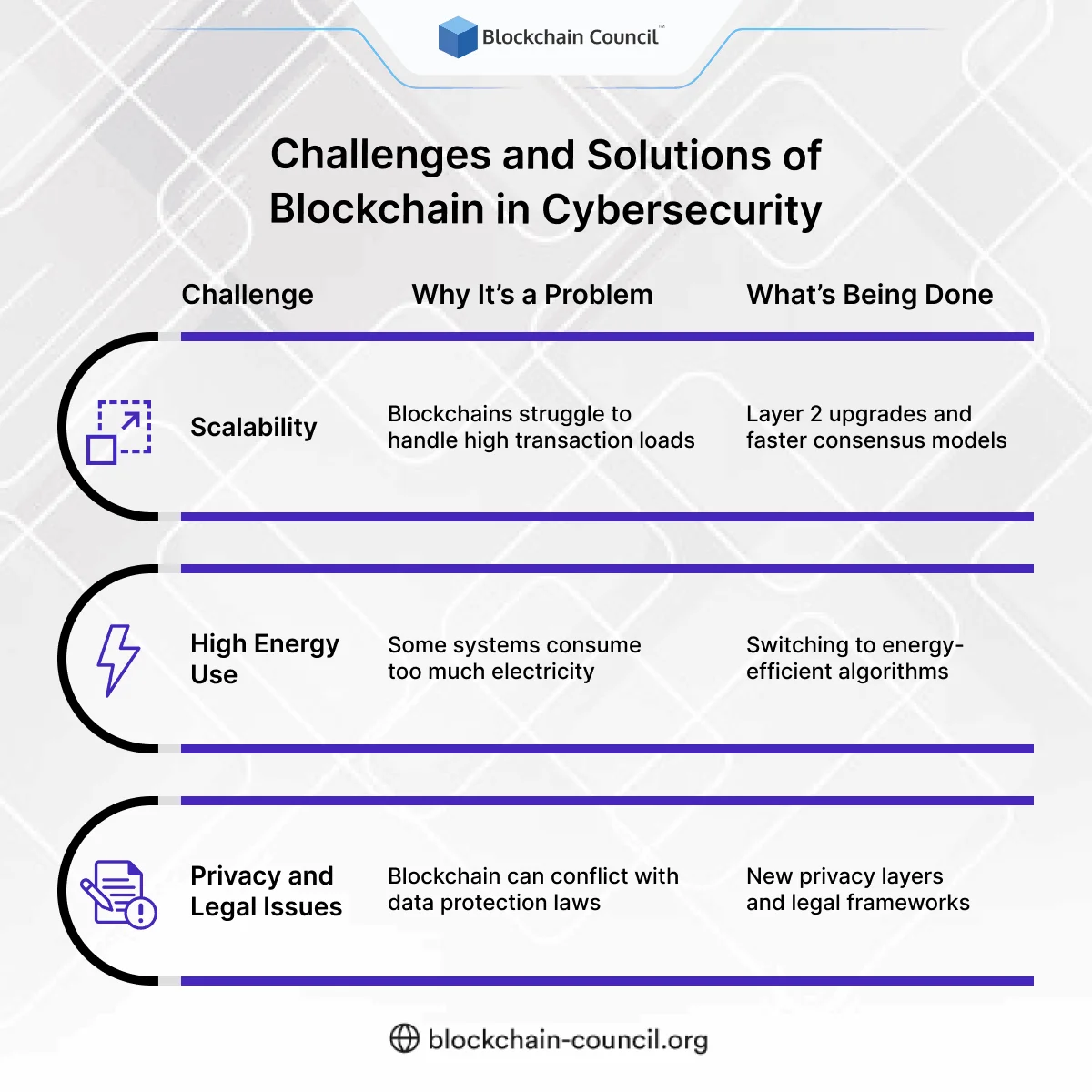
Common Challenges and What’s Being Done About Them
Blockchain isn’t a perfect fix. Like any technology, it comes with trade-offs and challenges.
Scalability and performance
Most blockchains can only handle a limited number of transactions per second. That can slow things down when large systems are involved.
But developers are solving this with new technologies like “layer 2” solutions and faster consensus models. If you’re in data-heavy fields, a Data Science Certification can help you understand how to build secure, scalable systems using blockchain and AI together.
Energy consumption
Older blockchain systems like Bitcoin’s are known for using a lot of energy. But newer platforms now use methods like Proof of Stake, which use far less power and are more environmentally friendly.
Compliance and regulation
Regulations around privacy, like GDPR, don’t always line up with blockchain’s permanent record-keeping. This can make adoption tricky, especially for global companies.
Industry groups are working on frameworks to help companies balance blockchain with data protection laws.
Challenges and Solutions of Blockchain in Cybersecurity
Why This All Matters Now
The rise of digital services, mobile banking, AI tools, and connected devices has made cybersecurity more important than ever. At the same time, attacks are getting smarter — and costlier.
Blockchain isn’t just a buzzword anymore. It’s a practical, working solution to some of the biggest gaps in digital security. It’s being used in everything from cloud storage to password-free authentication systems.
And as more companies make cybersecurity a priority, they’ll need people who understand both the threats and the tools to stop them. Blockchain is one of the most promising tools available right now.
Conclusion
Blockchain changes how we protect systems, users, and data. It brings a level of trust, transparency, and control that older tools just can’t match.
By verifying every action, securing identities, and stopping tampering before it starts, blockchain makes digital life safer for everyone — from individuals to global enterprises.
And as adoption grows, professionals who understand how blockchain supports cybersecurity will lead the way in building the next generation of safe, smart, and trusted technology.