
3 Claim Models for Tokenized Assets on Blockchain

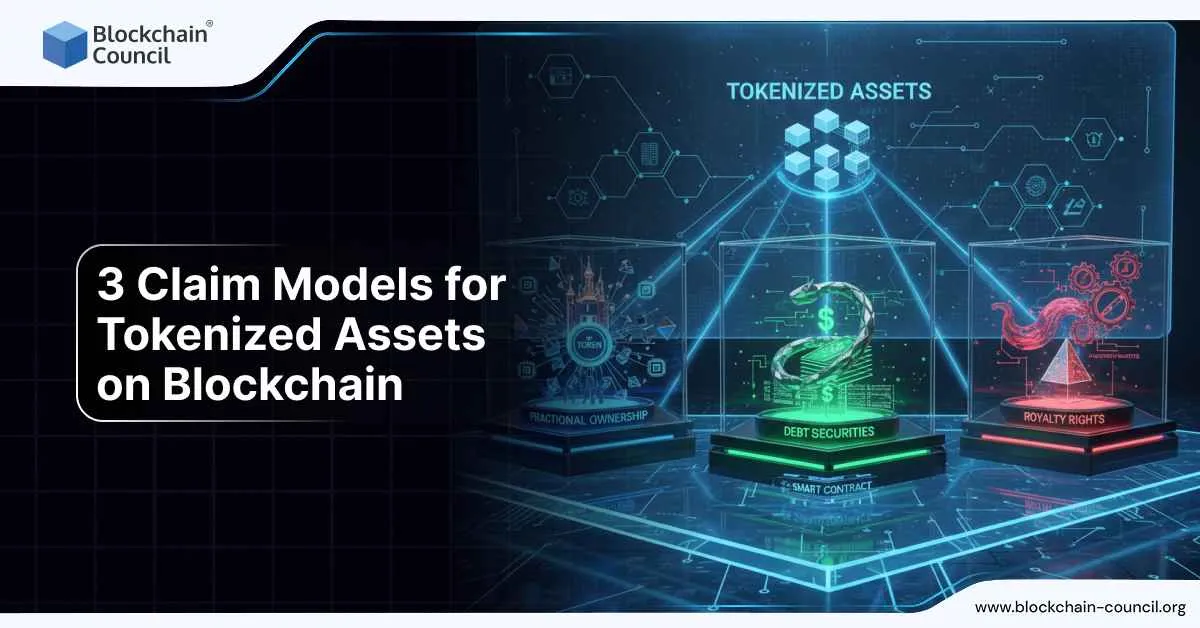
Intro
A tokenized asset lives or dies on its claim model, not the blockchain it sits on. The claim model is the legal reality: what you actually own, who you have a claim against, and what happens if an intermediary fails. Regulators have repeatedly warned that token structures can confuse investors into thinking they own the underlying asset when they may only hold an entitlement, a wrapper claim, or something closer to a promise. If you want to evaluate tokenized assets without getting tricked by glossy UI, a Blockchain course helps because it forces you to map technical structure to legal ownership.
What a “claim model” means
A claim model answers three basic questions:
Where does legal title actually live.
Who is your direct counterparty.
Can you redeem into the underlying asset in a contractual, enforceable way.
Most confusion in tokenization comes from people treating the token format as ownership by default. It is not. The token is just a representation of some legal arrangement. The arrangement is what matters when things break.
Model 1: Direct claim on the issuer
This is issuer-native or issuer-sponsored tokenization. The issuer, or an agent acting on its behalf, tokenizes the security so the token itself is intended to represent the security interest. On-chain ownership is part of the issuer’s official recordkeeping approach, meaning the token is meant to be the security or a formal class of it rather than a third-party proxy.
Regulatory framing matters here. This category is explicitly described as issuer-tokenized securities, meaning tokenized by or on behalf of the issuer.
Practical implications:
The model aims to align the token with traditional shareholder or bondholder rights, including voting and distributions, while changing the technology used for issuance and recordkeeping.
The critical point is that changing the technology does not change the legal regime. Securities laws still apply, and regulators have emphasized that tokenization does not exempt an instrument from those requirements.
Who this model is best for:
Issuers that want on-chain issuance and lifecycle management while keeping the legal relationship directly between issuer and holder.
Market infrastructure designs where the issuer wants the chain to be part of the official register.
Model 2: Security-entitlement claim
This is the custodial or broker-style claim model. The underlying asset stays in custody or in the traditional book-entry system. The token is primarily a mechanism to record or represent beneficial ownership or entitlements under a custody framework.
A key distinction in this model is that the security itself remains held by the custodian, and the token is merely the mechanism the custodian uses to record ownership.
Practical implications:
Your core claim is against the custodian or broker framework and governed by that regime and its protections.
The blockchain token is a new interface and transfer and record layer, but it does not magically eliminate custodial risk.
The main risk concentration is custody, operational controls, and legal enforceability around the entitlement structure, not just smart contract safety.
Who this model is best for:
Institutions and platforms that need compatibility with existing custody and broker-dealer style processes.
Use cases where keeping the underlying in established systems is operationally necessary, while tokenization improves transfer, visibility, or integration.
Model 3: Indirect claim via a structure or synthetic exposure
This is the “token is not the asset” category. It is extremely common, and it is the category most likely to confuse users because the token can look like ownership while legally being something else.
This model has two common variants.
Model 3A: Backed or representational claim
A third party, not the underlying issuer, issues a token that is backed by holding the underlying asset on behalf of token holders. This is often implemented through a legal wrapper such as an SPV or trust.
Your claim is against the token issuer or the wrapper structure, not against the underlying issuer. That claim depends on custody, redemption rights, audits or attestations, and how insolvency is handled.
Practical implications:
You need to assess the issuer and the legal structure, not just the underlying asset.
Key questions become whether the asset is truly held, where it is held, how frequently the backing is verified, and whether redemption is contractually enforceable.
In a failure scenario, insolvency treatment decides whether token holders have a clean claim to the underlying or become unsecured creditors.
Model 3B: Synthetic exposure
In this variant, the token provides price exposure without the issuer holding the underlying asset. This is where investor misperception risk spikes, because people may assume the token is backed by the underlying when it is not.
In synthetic structures, the token can amount to a promise by the issuer rather than a claim on a held underlying asset. Some tokens in this bucket are effectively new assets representing a new claim against the issuer, not a representation of an existing asset held for the token holder.
Practical implications:
Counterparty risk becomes the central risk, because performance depends on the issuer’s ability and willingness to pay or settle.
Redemption mechanics are critical, because “exposure” without enforceable settlement terms is just unsecured credit risk dressed up as a token.
If the issuer fails, token holders can be left with an empty instrument even if the referenced asset performed well.
How to classify a tokenized asset quickly
Ask three questions and you usually know the bucket immediately.
Where does legal title live
On-chain issuer register points to Model 1.
Custodian or book-entry title points to Model 2.
Third-party wrapper or issuer structure points to Model 3.
Who is your direct counterparty
The issuer points to Model 1.
The custodian or broker points to Model 2.
A token issuer, SPV, trust, or derivatives counterparty points to Model 3.
Can you redeem into the underlying
Enforceable redemption helps separate backed representation from synthetic exposure inside Model 3. If there is no underlying held, redemption is either impossible or purely contractual as a promise, which is exactly the synthetic risk profile.
Why these models matter in real life
When everything is calm, all three models can look similar in an app. When something breaks, they behave completely differently.
- Model 1 tends to align most closely with direct investor rights against the issuer, but still lives under full securities-law obligations.
- Model 2 can deliver familiar protections and workflows, but custody and operational risk become the center of gravity.
- Model 3 can scale quickly and offer broad access, but relies heavily on issuer integrity, structure quality, custody proof, and insolvency design, with synthetic variants carrying the highest misperception risk.
If you are building tokenization infrastructure, a Tech certification helps because these models translate directly into system architecture choices around custody, settlement, identity, and auditability.
If you are positioning tokenized products for users, a Marketing certification helps because the biggest failure mode in tokenization is misleading framing, whether intentional or accidental.
Conclusion
Tokenized assets are not one thing. The claim model determines what you own, who you can sue, and what you get in a failure scenario. The three dominant claim models in real tokenization designs are direct issuer claims where the token is intended to be the security, security-entitlement custodial claims where the token represents beneficial ownership while the underlying stays in custody, and indirect claims where a third-party structure issues a representational backed token or offers synthetic exposure without holding the underlying. If you cannot answer where legal title lives, who your counterparty is, and whether redemption is enforceable, you do not understand the asset you are buying.